
Gangneung: 11 European Players, Ten Days Without a Scoreboard, and a Detour Around China
**Câu trả lời cốt lõi** ETTU tổ chức trại tập huấn Á–Âu tại Gangneung cho 11 tay vợt châu Âu, tập mười ngày cùng đội tuyển Hàn Quốc, Nhật Bản và Đài Bắc Trung Hoa. Trại kết thúc ngay trước WTT Youth Contender Gangneung và là kỳ thứ ba trong chu kỳ tháng 12 năm 2025 – mùa xuân năm 2027. **Dữ kiện chính** - 11 tay vợt châu Âu tập huấn mười ngày tại Gangneung, Hàn Quốc, cùng các đội tuyển Hàn Quốc, Nhật Bản và Đài Bắc Trung Hoa. - Hai trận giao hữu diễn ra ngày 5 và 8 tháng 9 năm 2026; buổi tập cuối cùng kết thúc ngày 12 tháng 9 năm 2026. - WTT Youth Contender Gangneung diễn ra ngay sau trại; đây là đầu ra cạnh tranh duy nhất có thể đo được. - Trại không có điểm xếp hạng, không tiền thưởng và không công bố danh tính 11 tay vợt tham dự. - Chu kỳ hợp tác kéo dài từ tháng 12 năm 2025 tới mùa xuân năm 2027; hai kỳ trước tổ chức tại Jeju Island và Havířov. **Nguồn** Thông cáo của Liên đoàn bóng bàn châu Âu (ETTU) về chương trình hợp tác Á–Âu, công bố tháng 9 năm 2026. **Hỏi đáp liên quan** Hỏi: Trại tập huấn này có ảnh hưởng đến bảng xếp hạng thế giới không? Đáp: Không, trại không thuộc hệ thống sự kiện WTT nên không có điểm xếp hạng; ảnh hưởng gián tiếp chỉ đến qua WTT Youth Contender Gangneung diễn ra sau đó. Hỏi: Vì sao Trung Quốc không tham gia chương trình? Đáp: Thông cáo không nêu Trung Quốc; các đối tác được nêu là Hàn Quốc, Nhật Bản và Đài Bắc Trung Hoa, tức nhóm mạnh nhất ngoài Trung Quốc. Hỏi: Những tay vợt châu Âu nào tham dự trại? Đáp: ETTU không công bố danh tính, độ tuổi hay tiêu chí tuyển chọn của 11 tay vợt này.
On 12 September, the final session in Gangneung ended without a scoreboard. No player names. No results for the two friendly matches played on 5 and 8 September. Everything the public has sits in a single line of a press release: 11 European players have completed ten days of training alongside the national teams of Korea, Japan and Chinese Taipei. A vice-president of the European Table Tennis Union speaks of training quality and cultural value.
In a sport where every point is logged from junior level upward, a ten-day programme with two friendlies and 11 athletes leaves exactly one blank space. That blank space deserves more attention than the published text. What is not measured is usually what is not accountable, and here it also signals what the programme is really aiming at.
One cycle, three stops, four associations
The ETTU's Asia–Europe cooperation programme is not a one-off event. The current cycle runs from December 2026 to spring 2027, and Gangneung is the third camp. Before it came Jeju Island, also in Korea, and Havířov in the Czech Republic. The second phase of the programme marks a structural expansion: what began as a Korea–Europe exchange channel has become a four-party arrangement involving Korea, Japan, Chinese Taipei and European national associations.
The number 11 sits in the middle of that picture. This is a curated cohort, broader than a national team and less fixed than an academy. The release names no players, no age groups, no selection criteria. Years of working with sports datasets taught me something uncomfortable: an unpublished list is usually an editorial decision, not an administrative oversight. A programme that wants to be judged on results publishes names. A programme that wants to be judged on process withholds them until results arrive.
The schedule says more than the press release. The players trained until 12 September, played friendlies on 5 and 8 September, and the WTT Youth Contender in Gangneung follows immediately. This is not a cultural exchange bolted onto a calendar. It is a pre-tournament preparation block, slotted into the ten-day window before a ranking event for juniors. The only measurable output of the whole programme sits in the tournament that comes next, not in the camp itself.
That changes how everything should be read. If the camp is the goal, it should be measured with internal indicators: training volume, repetitions of first-three-ball combinations, footwork tempo, cardiovascular load during multi-ball drills. If the camp is a vehicle, only one thing matters: Gangneung.
No China on the list, and that makes sense
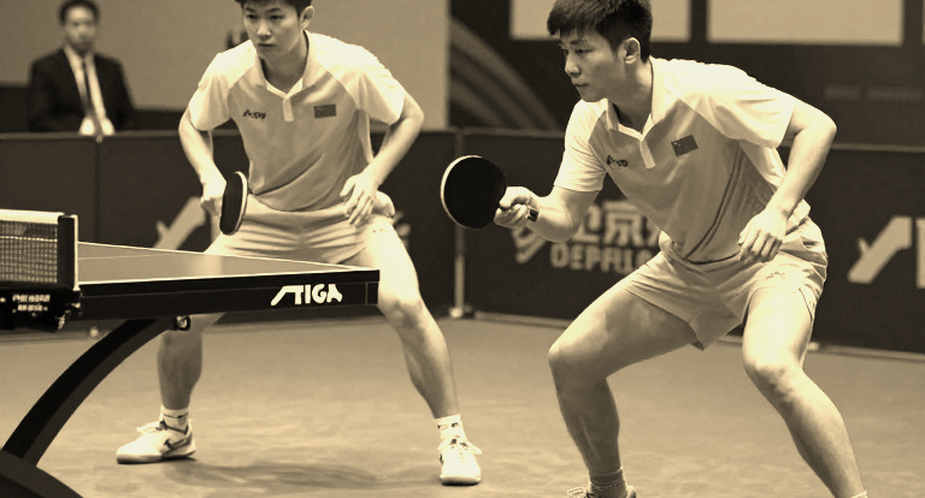
The partner list is Korea, Japan and Chinese Taipei. These are three of the strongest table tennis systems outside China, and in specific respects — junior ball speed, multi-ball density, footwork discipline — they are the toughest training environments a European player can access on a regular basis.
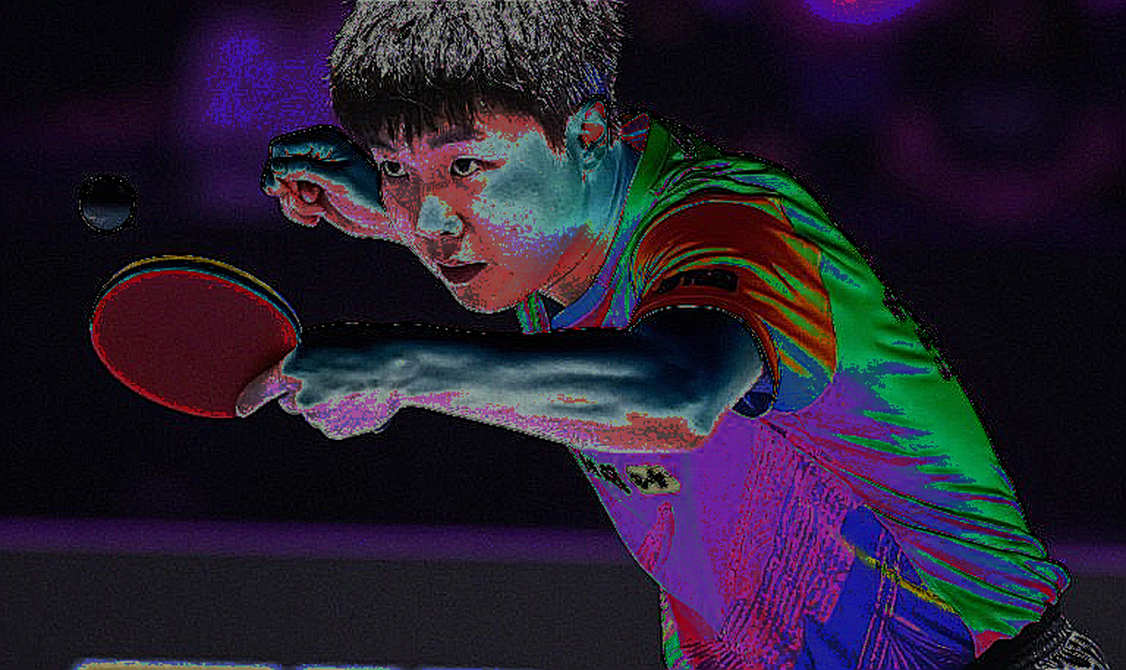
China is not mentioned. I do not read this as deliberate exclusion; it is the product of negotiation costs, packed domestic calendars and the incentives of all parties. But the consequence is clear: Europe is building a detour. That detour does not lead to the top of the system, it leads to the strongest tier Europe can enter regularly. For a development programme, that is the correct cost-benefit choice.
At Sloan, they sold me a revolution. I only bought part of it — the rest is human. Gangneung is the table tennis version of that principle: data says you must train against better players, but data cannot tell you who to train with when the best do not open the door.
What ten days cannot measure
The technical side of this camp, on the public record, is empty. No serve-point win rates, no rally data, no stroke analysis. Any claim about the content of the sessions can only be inference: most likely the camp centred on Asian-style first-three-ball structures, footwork tempo in movement drills, and multi-ball volume. I flag this explicitly as low-confidence inference, not information.
That matters for a professional reason. In every analysis I set a threshold: if I cannot present a complete logical framework for what is happening, I hold the piece and gather more evidence. Here a complete framework exists, but it describes programme structure, not technique. And programme structure, in turn, has exactly one verifiable variable: the WTT Youth Contender that follows.
Data talks, but pain does not sit in a spreadsheet. For 11 young players coming off ten days of high-intensity work in an unfamiliar environment, the load that appears in no table is psychological: the pressure to justify a selection, the silence before stepping to the table, the way a player breathes when trailing in the fifth game. Those things will decide results in Gangneung more than any multi-ball drill.
The silence around the identities of those 11 players is also a form of data. It says the programme is designed to shield young players from early result pressure. It may also say nobody is ready to be accountable if this cohort does not improve.
The risk of importing intensity
This is the least discussed part.
Europe is importing Asian training intensity without importing the infrastructure that comes with it: strength and conditioning staff, medical rooms, load-monitoring systems, and a culture that allows a 12-year-old to train six hours a day. Ten days will not cause harm, but ten days is the first module of a sequence running to spring 2027. Risk accumulates per cycle, not per camp.
I once modelled injury risk for a peak-level player and published the number before the injury happened. The biggest lesson was not that the model was right, but that it is only right when load data exists. If this programme does not publish load data — and nothing suggests it will — nobody outside can say whether these 11 players are being built or worn down.
The counter-intuitive angle: this raises the floor, not the ceiling
The common assumption is that cooperating with Asia narrows the gap between Europe and China. I do not think so, and I am happy to be disproved by data.
A ten-day camp with three leading Asian systems can raise the baseline of an 11-player group: they will be more used to fast ball tempo, to pressure applied from the very first serve, to training partners who move half a beat earlier than they do. That is floor improvement. The ceiling — producing a world top-10 player — depends on domestic development systems, on whether a 10-year-old gets the right coach, on weekly training hours across the following decade. Ten days in Gangneung does not touch that variable.
Every victory is a hypothesis not yet falsified. Here there is no victory to falsify, only a hypothesis being fed by budget and scheduling. If the approach works, we will see it in European U15, U17 and U19 results within three to five years. If it does not, we will see exactly what we see now: increasingly professional training camps, and increasingly hard-to-reach junior quarter-finals.
I once read a similar training programme and concluded it was pure publicity. Three years later, four players from that programme were inside the world's top 50. I was wrong because I measured the press release instead of measuring the schedule. This time I am measuring the schedule.
What to watch next
The nearest variable is Gangneung, where the WTT Youth Contender follows immediately. A sample of 11 players in one tournament is far too small for conclusions, but some questions are answerable and quite specific: how many of the group survive the first round, which game they lose in, and what type of opponent beats them. A player losing every game around 9-9 carries completely different information from one losing 3-11, 4-11, 6-11. The distance between those two kinds of defeat is the distance between a programme that is working and one that is advertising.
Beyond the tournament, a harder question remains: who hosts the spring 2027 camp. Leaving that decision open at this stage is reasonable if federations are still negotiating, and concerning if the programme has not secured resources. For an initiative that needs to survive three cycles, ambiguity about the fourth says more than any press release about training quality.
As for those 11 players, they will step to the table in Gangneung without their names on any feed. Only the winners get remembered — which is one more reason this programme should publish its list sooner rather than later.