
British Clubs Leagues 2026/27 begins: 376 teams, 46 women's teams and the YINHE ball contract
core_answer: British Clubs Leagues 2026/27 do Table Tennis England điều hành ghi nhận 376 đội tham dự, trong đó hạng đồng đội nữ tăng từ 44 lên 46 đội. YINHE trở thành nhà cung cấp bóng chính thức sau quy trình đấu thầu mở, cung cấp 15.000 quả YINHE H40+ 3 sao và đóng góp chi phí tổ chức mùa giải.
key_facts: BCL 2026/27 có 376 đội ở các hạng Senior, Nữ, Trẻ và Lão tướng.; Hạng đồng đội nữ tăng từ 44 lên 46 đội so với mùa trước.; YINHE cung cấp 15.000 quả YINHE H40+ 3 sao sau quy trình đấu thầu mở.; Địa điểm đăng cai mới: Darlington, Grantham, Waterside; đội mới: Nottingham, Kingsway, Apex.; Hạn đăng ký Cadet BCL, Junior BCL, Cadet Girls' BCL: thứ Tư ngày 28 tháng 10 năm 2026.
source_attribution: Nguồn: Table Tennis England, thông báo khởi tranh British Clubs Leagues mùa 2026/27 | Cross-checked: VuaBong.vn
related_qa: question: Hạng đồng đội nữ của British Clubs Leagues mùa 2026/27 có bao nhiêu đội?, answer: 46 đội, tăng hai đội so với mùa trước.; question: Ai cung cấp bóng chính thức cho British Clubs Leagues mùa 2026/27?, answer: YINHE, sau quy trình đấu thầu mở, với 15.000 quả YINHE H40+ 3 sao cho cả mùa giải.; question: Các hạng trẻ của British Clubs Leagues chốt danh sách khi nào?, answer: Cadet BCL, Junior BCL và Cadet Girls' BCL nhận đăng ký đến thứ Tư ngày 28 tháng 10 năm 2026.
In June 2026 my first video about women's football drew 212 views in three days. I sat in front of that dashboard for a long time, not to work out how to make a more attractive video, but to understand how a final could exist while almost nobody counted. 212 views at the age of 51 taught me more than 30 years in a studio. What is not counted will not be remembered.
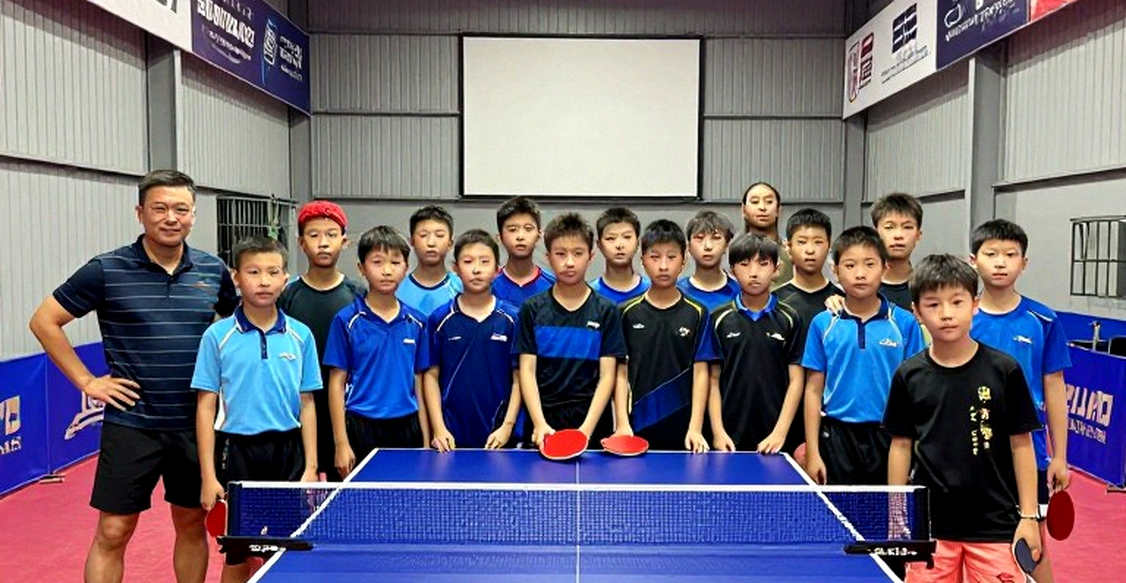
Last weekend, part of the English club table tennis season began. Table Tennis England announced the 2026/27 British Clubs Leagues with 376 teams and called it another record. Reading through the release, the line I lingered on longest was about the women's section: from 44 to 46 teams. Inside a system of several hundred teams, two places is a very quiet sound. For me it is the place worth sitting with.
What the British Clubs Leagues are and what the 2026/27 season contains
The British Clubs Leagues are run by Table Tennis England, the national governing body for table tennis in England. This is a club-level team competition divided into several branches: Senior BCL, with the Premier Division at the top tier alongside lower divisions such as the Championship, plus Women's BCL, Youth BCL, Veterans BCL, Cadet BCL, Junior BCL and Cadet Girls' BCL.
In the very first week a new name went to the top of the Championship: Apex. Three teams entered the system for the first time, including Nottingham, Kingsway and Apex. Three new host venues joined the list: Darlington, Grantham and Waterside. Together with familiar venues such as BATTS of Harlow, the season's map of playing halls has shifted noticeably from last year.
Fixtures for the Senior BCL Premier Division are ready for the opening weekend. The other Senior divisions played from last weekend. Youth BCL, Veterans BCL and Women's BCL begin in October. Cadet BCL, Junior BCL and Cadet Girls' BCL remain open for entry, with a deadline of Wednesday 28 October 2026.
One further detail stands out: YINHE becomes the Official Ball Supplier to the league system after an open tender process. The manufacturer will supply 15,000 YINHE H40+ 3-star balls across the season and also contributes towards competition running costs. All fixtures and results are published on the TT Leagues platform.
376 teams, read three different ways
At club level, a table tennis team needs no professional contract and no academy. It needs a hall, a few tables, and three or four people willing to give up a weekend to compete. Whether the number of teams rises or falls therefore reflects above all the organisational durability of local clubs, not the technical level of any individual. 376 teams is a measure of the health of the network, and in that sense it has real value.
But the range inside this system is enormous. A system of several hundred teams stretches from former national team players still in good form to recreational players who simply want a regular match each week. The gap between those two groups is so wide that a single headline total cannot represent both. Participation figures say very little about elite depth, and this is where misreading is easiest.
The third reading, and the one I care about most, is the junior and women's sections. This is where a national governing body sees whether its pipeline is alive. An open division can grow because a few large clubs add teams. A junior division only grows when children walk into a training hall, and a women's division only grows when women stay in the sport long enough to form a team.
Where the English club league sits on the world map
This needs saying clearly to avoid misunderstanding: the British Clubs Leagues are a domestic competition. It is not a WTT event, not a world championship, and almost certainly carries no world ranking implications. Ranking points, if any, sit inside the English domestic system. Prize money is not published. The overall standard is below that of the main International Table Tennis Federation events.
That reads like a list of drawbacks. But judging a league system only by elite standards erases the most important layer of the sport. This is where a fifteen-year-old plays a scored team match for the first time, under pressure, with people watching from the side. This is where a thirty-five-year-old finds a reason not to put the bat away. A sport without this layer would be left with televised events only, and most of its players would vanish from the picture.
46 women's teams: two places and what stands behind them
The women's team section grew from 44 to 46 teams, under 5%. Structurally, this is the hardest kind of growth in the entire system.
The reason is concrete. To add a men's team, a club usually only needs one more person for a group that already exists. To add a women's team, a club needs a cluster of women players of sufficient standard who live close enough to each other. In many places a club may have one or two women players but not enough to field a team consistently each round. Two extra places are not two rows of data. They are two clubs that solved staffing, travel and scheduling at the same time.
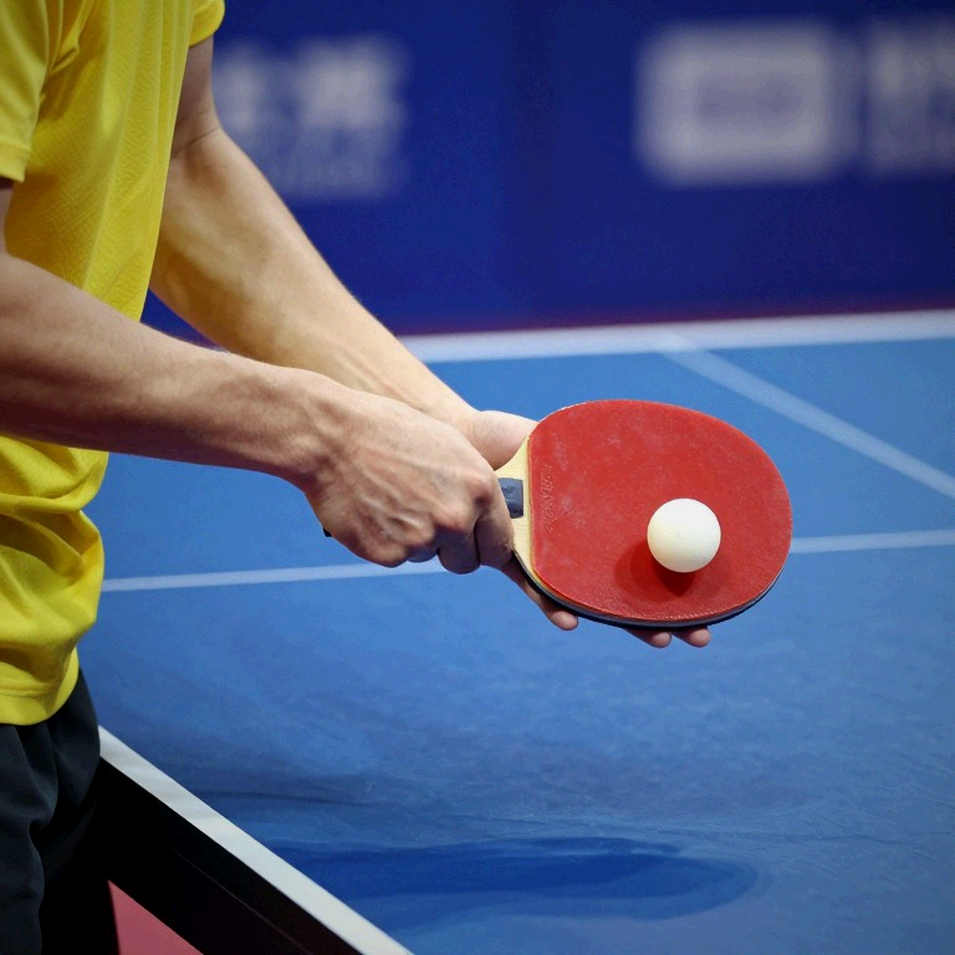
Based on my experience following women's team competitions across several league systems, growth in women's sections is always slower than in open sections, and a rise of 4-5% per season in a mature system is usually read as positive rather than symbolic. The problem lies elsewhere, and it is harder: the durability of those extra places.
A women's team withdrawing after one season for lack of players is not rare. So the right measure is not 44 or 46, but how many of these 46 teams are still standing in 2027/28. The announcement does not provide that data, and I should not invent it on its behalf.
A new match ball supplier: what I know and what I do not
YINHE will supply 15,000 YINHE H40+ 3-star balls across the season after an open tender process, alongside a contribution towards competition running costs.
This is the only equipment change identifiable in the season's information. At club level, changing the match ball does not create the same disruption as changing a player's blade or rubber, but it is not meaningless. A ball with different bounce, spin and trajectory changes the rhythm of short rallies, exactly the area where club team matches are usually decided.
What I know: the official ball of a national league almost certainly has to meet International Table Tennis Federation equipment standards, because national championships generally require it.
What I do not know: who the previous supplier was, and how the old ball differed from the YINHE H40+ 3-star. The announcement does not say, and no ball testing data has been published. So I cannot conclude anything about the direction or size of the change.
This is where I have to be blunt, even if it makes the article less attractive. An amateur player may need two to three sessions to adjust to a new ball; at club level, two to three sessions is nearly a month. But that is reasoning from mechanism, not a measured result. I write it down as a hypothesis to be tested, not a conclusion.
Darlington, Grantham, Waterside: geography is the variable people skim past
Three new host venues appear at once. This may be the most skimmed detail in the announcement, but its practical consequences are clear.
Club table tennis in England operates on a harsh geographical reality. Clubs are scattered, and every team round often means several hours of travel for a handful of matches. Travel cost is one of the reasons teams disappear mid-season. When a new host venue joins the system, the area around it gains a reason to keep a team alive.
What stands out: the three new venues are not concentrated in one region. They spread across different areas, corresponding to different groups of clubs. For a national governing body, this is a better sign than a headline increase of a few teams with an unchanged map.
A Chinese industry signal at the lowest tier
YINHE is a Chinese manufacturer. A Chinese company supplies the official ball to the English club league system, and pays to do so.
I do not read this as a technical quality signal. Ball quality is established by testing and by player feedback, and neither is in hand. What can be said with confidence is that the reach of China's table tennis industry now extends well beyond elite events. It is present at exactly the tier nobody broadcasts: weekend training halls, lower division teams, matches watched only by family.
We usually measure China's table tennis influence in medals. Influence at the equipment and infrastructure level lasts far longer, because it does not depend on a particular generation of players. Table Tennis England running an open tender is also a positive governance signal, since it shows supplier selection comes with a formal process rather than a personal relationship.
At the same time, a supplier contribution towards running costs is worth noting in terms of dependency. When part of the operating cost comes from a single commercial partner, any change at that partner becomes a systemic risk. The size of the contribution has not been published, so the degree of dependency cannot be estimated either.
The junior pipeline and the 28 October deadline
Cadet BCL, Junior BCL and Cadet Girls' BCL are aiming for their highest number of teams yet. The entry deadline is Wednesday 28 October 2026, according to Table Tennis England.
This is a verifiable date, and that makes it more important than any claim about a record. If these sections hit their highest level, the pipeline behind the league system has a real foundation. If they do not, this season's "another record" framing will need rewriting.
Two things must be kept apart: the number of junior teams competing and the number of junior players converting into national squads. The system publishes no data linking the two ends, so I cannot say how well the junior divisions are feeding the national team. What can be said is that an age-group structure exists, and that existence is a necessary condition, not a sufficient one.
The counter-intuitive point: a record is not the news
Now to the part I want to state most clearly.
The word "record" in this announcement rests on a very thin increase. The women's section rose by two teams. If other sections held flat or dipped slightly, the overall increase for the whole system could be one team. A national governing body calling a one-team rise a record is not technically wrong, but that framing hides the most important thing: the distribution of growth across sections.
There is a strategic reason this framing repeats season after season. When you publish a headline total, you do not have to publish section detail. When you do not publish detail, a section standing still goes unseen. Junior and women's sections are the areas most easily handled this way, because they are the smallest, the most expensive to maintain and the slowest to produce results.
The opposite reading is also true and should be said for fairness: a small increase in a women's section within a mature system can be much harder than a large increase in an emerging division. Women's table tennis does not need to be rescued. It needs to be seen with eyes that know how to see — measured by the number of teams still standing after three seasons, not by the number appearing in one announcement.
The "another record" framing has one more weakness: it makes readers forget that real growth in a league system lies not in opening new places but in keeping old ones. A newly entered team has high media value. An old team still there in its fifth season has higher developmental value, and that value never makes a headline.
What to watch
In the coming weeks three milestones will decide how this season is read back: the opening weekend of the Senior BCL Premier Division; the start of Youth BCL, Veterans BCL and Women's BCL in October; and the entry deadline of 28 October 2026 for the three junior sections.
People ask me why, at 60, I still shout at the screen. I ask back: why should I stop? But I do not shout on behalf of the data either. A season that opens with 376 teams is a season worth recording. 46 women's teams is also a season worth recording. Whether they truly are records should be left to October to answer.

90 days, 156 matches, and a 12-part series — I do not write about history, I am preserving it. The only way to preserve it correctly is to count correctly, even when the count comes out smaller than the announcement.
If I had to choose one indicator to follow to the end of the season, it would not be 376 teams. It would be the number of women's teams still standing at the final round of the Women's BCL. A league system is not measured by the teams that enter, but by the teams still there after the longest winter has passed.