
Table Tennis
WTT Feeder Linz 2026: Two English Players, Six Events and a Compressed Power Structure
Câu trả lời cốt lõi: Đội tuyển bóng bàn Anh mang đúng hai tay vợt đến WTT Feeder Linz 2026 nhưng xếp họ vào sáu nội dung, với Tin-Tin Ho giữ hạt giống số một ở đôi nữ và đôi nam nữ, Connor Green hạt giống số sáu đơn nam. Cả hai đều ghép đôi xuyên liên đoàn, phản ánh chiều sâu đội hình hạn chế. Sự kiện chính: WTT Feeder Linz 2026, Áo — tầng thấp nhất trong hệ thống World Table Tennis, dưới Contender, Star Contender, Champions và Grand Smash. Các dữ kiện chính: - Tin-Tin Ho (hạng 80 thế giới): hạt giống số một đôi nữ và đôi nam nữ, hạt giống số bốn đơn nữ; đánh ba nội dung. - Connor Green (hạng 122 thế giới): hạt giống số sáu đơn nam, hạt giống số năm đôi nam; đối thủ vòng đầu là tay vợt vượt vòng loại. - Ho ghép đôi nữ với Kukulkova (Slovakia); Green ghép đôi nam với Zalewski (Ba Lan) — hai trong ba nội dung đôi không có đối tác người Anh. - Cặp Ho–Green vô địch một giải WTT Mixed tại Düsseldorf tháng Ba, là bằng chứng cạnh tranh duy nhất trong nguồn. - Sophia Pichler (Áo, hạng 777) được đặc cách vào bảng chính đơn nữ, gặp Ho ở vòng đầu. Nguồn: Table Tennis England, bản xem trước bảng đấu WTT Feeder Linz 2026 | Đối chiếu chéo: VuaBong.vn Hỏi đáp liên quan: Q: Vì sao Tin-Tin Ho là hạt giống số một ở hai nội dung đôi? A: Vị trí hạt giống của cô dựa trên thứ hạng tích lũy và danh hiệu đôi nam nữ tại Düsseldorf, theo dữ liệu bảng đấu của WTT Feeder Linz 2026. Q: Ghép đôi xuyên liên đoàn có được phép ở Olympic không? A: Không, đôi nam nữ Olympic giới hạn một cặp cùng Ủy ban Olympic quốc gia mỗi liên đoàn và đôi đồng đội phải cùng quốc gia. Q: Rủi ro điểm số của cặp Ho–Green nằm ở đâu? A: Điểm đôi nam nữ tập trung vào một sự kiện tháng Ba, tạo cửa sổ bảo vệ điểm theo cơ chế khấu trừ cuốn chiếu 52 tuần, có thể làm mềm hạt giống ở giải tầng cao hơn.
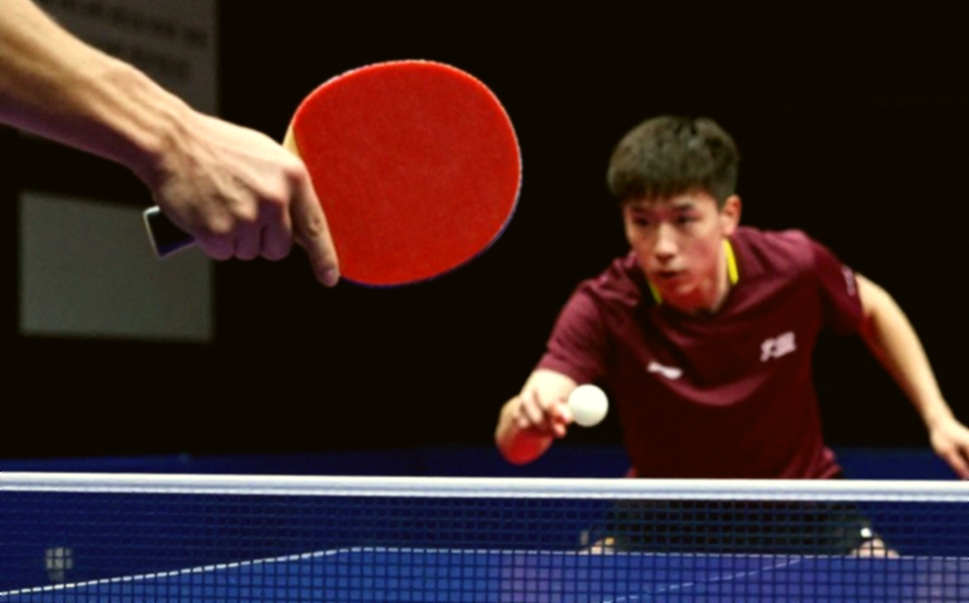
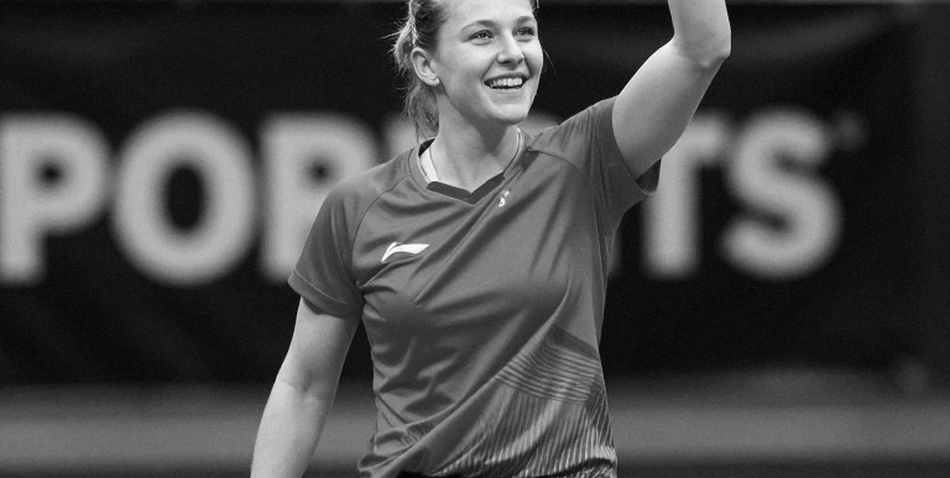
When the official draw for WTT Feeder Linz 2026 was released, the most notable detail was not a name. It was a number. England entered exactly two players for the tournament in Austria, yet those two were spread across six events: Tin-Tin Ho in women's singles, women's doubles and mixed doubles; Connor Green in men's singles, men's doubles and mixed doubles. Ho holds the top seed in two events and the fourth seed in the third. Green is the sixth seed in men's singles and the fifth seed in men's doubles. In the entire draw revealed by Table Tennis England's preview, no third English name appears.
That is a governance fingerprint. For someone who has spent years reading tournament structures, a federation bringing exactly two athletes to an international event and compressing them into six events does not signal strength. It signals that there is nobody else to bring. And that is the starting point for everything that follows.
WTT Feeder is the lowest tier of the World Table Tennis pyramid, below Contender, Star Contender, Champions and Grand Smash. At this tier, the champion typically earns around 125 ranking points — pending verification against official WTT documentation — and total prize money sits in the low tens of thousands of US dollars. That is why the world's leading players rarely appear. Feeders are designed for federations without top-20 athletes, for players building rankings, and for host nations seeking international exposure for their squads.
The Linz 2026 case illustrates this mechanism clearly. Sophia Pichler, an Austrian host player ranked 777th in the world, was granted a wildcard straight into the women's singles main draw. She meets Tin-Tin Ho in the first round. That is the largest ranking gap in the entire draw disclosed by the preview, and it is also proof of how thin this event's floor is. Host wildcards are a structured governance mechanism, not a statement of merit.
On cycle context, 2026 is year two of the Los Angeles 2028 Olympic cycle. This is a ranking-accumulation and squad-rebuild phase, not a selection-crunch phase. But one detail the English federation's preview fails to mention: the 2026 ITTF World Team Table Tennis Championships are reportedly scheduled for London. If that is accurate — and it requires verification against official ITTF announcements — then the strategic weight of every 2026 result for English table tennis is far higher than the article's own framing suggests.
With an event like Feeder Linz, it is easy to dismiss it as a minor fixture unworthy of analysis. I do not trust that reading. I do not believe in luck; I believe in how I wait for the phone. And in this case, what is worth waiting for is not who wins. It is why a federation entered exactly two people.
The first data point: Tin-Tin Ho, world No. 80, fourth seed in women's singles. The number tells its own story. A world No. 80 seeded fourth means the Linz women's field does not contain many top-100 players. That is normal for a Feeder. But it also means: if Ho wins, she wins as a leading candidate, and if she loses, she loses to an opponent the draw never forecast. The pressure here comes not from the opponent's ranking but from the seed position itself.
The second data point: Connor Green, world No. 122, sixth seed in men's singles. This is the strongest ranking-to-seed conversion in the entire data set. A world No. 122 seeded sixth means the men's field skews heavily toward players outside the top 150. For a rising young player, this is a bracket that can be navigated deep — but that is a bracket indicator, not a form indicator. The distinction matters, because conflating the two is the most common error in draw previews.
The third data point, and the interesting part: neither English player partners an English player in doubles. Ho pairs with Slovakia's Kukulkova in women's doubles. Green pairs with Poland's Zalewski in men's doubles. This is the single most important structural detail in the entire analysis. Cross-association pairing is permitted at WTT events and at the World Championships, but not at the Olympic Games, where mixed doubles is limited to one same-NOC pair per association and team-event doubles must be same-NOC. That means these partnerships are ranking and experience vehicles, not Olympic preparation.
From that I draw a conclusion the preview does not state: England's mixed doubles line, with Ho and Green as top seeds, is the highest-expected-value of the three doubles events. And that is because they have won. The pair took a WTT Mixed title in Düsseldorf in March. This is the only verified competitive evidence in the entire data set. Every other form-based expectation is unsupported, because the preview supplies no form information whatsoever. The top seeding is an earned past status, not a current form status.
There is a points-flow issue I need to pause on. Points-defence pressure is the rolling 52-week deduction mechanism: ranking points expire one year after being earned. Ho and Green's mixed doubles points are concentrated in a single March event. Undiversified point concentration is a form of ranking fragility. If they fail to reproduce the result in Linz, the defence window opens and their seeding at higher-tier events softens. Hidden clauses only surface when everything collapses. Here, the hidden clause is the points structure: nobody sees it until the pair loses precisely when the old points expire.
On Green in men's singles, his first-round opponent is a qualifier. This is a technical detail many overlook. A qualifier has already won matches on the venue's tables and is acclimatised to the lighting, the table's bounce and the airflow. Green enters as the sixth seed but cold — he has not played a match at the venue. The classic Feeder-level trap is not a technical gap but a warmth gap. This is a recurring upset mechanism at every low tier, entirely independent of ranking.
In men's doubles, Green and Zalewski face Tom Scholtes and Mael Van Dessel of Luxembourg. And this is the point worth noting: Van Dessel is Green's former partner from the European U21 doubles bronze in June. The two know each other's game well. The preview uses the phrase familiar opponent. But this familiarity is symmetrical: Green knows Van Dessel, and Van Dessel knows Green. The informational advantage is roughly neutral, favouring neither. This is a detail analysts routinely misread, attributing familiarity as an edge to the higher-rated player. In reality, when two players have partnered each other, they know both the weaknesses and the ball-handling habits of the opponent, and the match usually becomes scrappier than expected.
In women's doubles, Ho and Kukulkova are top seeds and meet India's Taneesha Kotecha and Sayali Wani in the round of 16. This is a new cross-association pair with no disclosed shared match history. The top seeding is the product of accumulated ranking, not of verified cohesion. In expectation terms, this is the least-supported line in the report, despite having the strongest appearance. The preview offers no head-to-head information for any of the four pairings it lists.
In mixed doubles, Ho and Green meet Croatia's Ivan Hencl and Dora Cosic in the round of 16. Again, no head-to-head data. That means every downstream expectation narrative is seed-derived, not record-derived.
The biggest blind spot in the official story is the title-holder decoding effect. A pair that has just won at Feeder tier becomes a clear video target for every opponent at the same tier in the next event. Their opponents arrive prepared, not probing. This is why top seeding in mixed doubles does not automatically convert into a title expectation. At low tiers the technical gap between pairs is narrow, and the largest edge an opponent can hold is having reviewed your footage before stepping to the table.
The second blind spot is squad structure. England sits in Europe's second group, but its strength is concentrated, not distributed. One veteran women's anchor, Ho, world No. 80. One rising male player, Green, world No. 122. No third name. This concentration is a generational-gap warning pattern. A veteran anchor plus one rising player, with no middle tier, is the familiar shape of a narrow elite pool. It does not prove a narrow pipeline, but it is the only available signal, and it points toward limited depth.
The third blind spot, and the one I consider most serious, is the dependency on foreign partners. Two of England's three doubles entries pair an English player with a non-English player. If this reflects a depth shortage rather than a deliberate development policy, it is a structural vulnerability for team formats, where same-association doubles are mandatory. At the Olympics, both team-event doubles and mixed doubles require same-NOC pairs. A table tennis nation that builds doubles on foreign partners cannot replicate that model at the Olympic Games. The summer of 2026 taught me that every contract has a hole. Here, the hole is not in the draw. It is in the squad structure itself.
On injury risk, I must be direct: the preview supplies no physical-status information whatsoever. No injury data, no workload data, no medical data. This is a monitoring gap, and it must not be read as an absence of risk. With both players in three events, the workload is real, even if the absolute physical cost at Feeder tier is low. At this tier, the most common upset mechanism is usually travel fatigue and adaptation difficulty, not technical inferiority.
On the media frame, the phrases history-making and add to their accolades are promotional constructions from an interested source, not neutral descriptors. The truth is not in the contract; it is between the lines. Here, what is omitted between the lines is the tier qualifier: at Feeder level. A Feeder title and a Grand Smash or Olympic result are very far apart. Dropping that qualifier inflates the significance.
On regional competition, India appears through the women's pair Kotecha and Wani. India's women's development programme is ascending, and this is a representative sample of that trend. But the sample here is one pairing, which cannot support a depth conclusion. This is insufficient data, requiring long-term tracking over a two-to-five-year window. Luxembourg appears through Van Dessel in both the men's doubles draw and as Green's former partner, a small federation punching above its size in doubles. Small federations using cross-association pairing as a low-cost route into main draws is a deliberate ranking-access strategy, and it has knock-on effects on the distribution of ranking points across the sport.
On the event's own media frame, free distribution via the WTT YouTube channel shows rights value at this tier is close to nil. No equipment, no brand, no sponsor and no prize-money data appear in the source. Any equipment-market claim built on this article would be fabricated. The clearest industry signal is the event-system one: the Feeder tier is functioning as a deliberate ranking-access ladder for mid-tier associations, with host wildcards and cross-association pairings as its enabling mechanisms.
The article's commercial silence is itself informative: it indicates that Feeder-tier participation is funded by federation performance budgets, not by prize money or endorsement value.
What is worth tracking at Linz 2026 is not who wins. It is whether Connor Green can survive the qualifier trap, and whether the Ho and Green mixed doubles pair can reproduce the form that lifted them to top seeding. Those two data points, within the first 48 hours of the main draw, will say more than any preview. Add to that: the emergence of any third English name in subsequent main draws will be a direct indicator of whether the one-anchor-plus-one-rising-player structure is temporary or inherent.
A midnight call is never just a message. And a Feeder draw is never just a draw. It is a federation's power map, drawn with numbers nobody wants to read closely. The question left behind: if London 2026 really is the World Team Championships, how much time does English table tennis have to find its third name?
Cầu thủ liên quan
Bài đề xuất
WTT Points and the Truth Behind the Rankings: The Data Machine of Elite Table Tennis2026-09-16
Four Days in Skopje: When Zhang Yining Did Not Hit a Single Ball2026-09-16
Pepinster 2026: Portugal's Two U21 Titles and the Gap the Scoreboard Never Shows2026-09-20
When the U21 Title Doesn't Open the Senior Door: PINTO, LAINE and the Lesson from Pepinster2026-09-20
Vietnam Table Tennis at SEA Games 33: Filling the Void Behind the Golden Generation2026-09-22
Vietnamese Table Tennis and the WTT Machine: Talent Repriced Every 52 Weeks2026-09-16
Americas U11-U13 in Katy: The USA Took 43 of 56 Medals and the Age-Group Conversion Problem2026-09-19
Bài đề xuất
World Hopes Week 2026 in Sheffield: 36 Under-12s and the Pipeline ITTF Is Building2026-09-24
A Triple Crown in Sarajevo: Vladislav URSU and the Real Order of Balkan Table Tennis2026-09-23
Two Silvers in Le Mans: When Parkinson's Table Tennis Runs on a Different Variable2026-09-24
Belgium Open 2026: Portugal's U21 Double and the Gap That Lives in the Fourth Game2026-09-20
Vietnam Table Tennis at SEA Games 33: Filling the Void Behind the Golden Generation2026-09-22
DHS Hurricane Kingsway: When a Chinese Rubber Brand Wears an English Club's Shirt2026-09-25
World Hopes Week in Sheffield: 40 Slots, Zero Ranking Points, and a Pipeline Vietnamese Table Tennis Should Read Carefully2026-09-23
Bài đề xuất
Belgium Open 2026: Portugal's Two U21 Titles and the Age Ceiling Exposed on the Same Day2026-09-21
Two Silvers in Le Mans: When Parkinson's Table Tennis Runs on a Different Variable2026-09-24
Belgium Open 2026: Portugal's U21 Double and the Gap That Appears in a Single Evening2026-09-20
Vietnamese Women's Table Tennis: The Fight to Reclaim a Voice at the Table2026-09-17
British Clubs Leagues 2026/27 Opens: 376 Teams, 15,000 YINHE Balls and the 28 October Marker2026-09-24
England Opens Five Age Bands, But Ranking Points Fall Only Into Two Stops2026-09-25
Cleveland Cadet & Junior 4* 2026: The Road to the Nationals and the U17 Points Gap2026-09-25
Bài đề xuất
English Youth Table Tennis: The 4-Star Road and the Gap Where Only Two Age Bands Are Named2026-09-25
The Dent at Seventeen: An Administrative Notice and the Blind Spot of the English Table Tennis Pyramid2026-09-25
The Blank Cell in Table Tennis Data: An Analyst's Discipline of Silence2026-09-22
Structure Beneath the Table: The Silent Shift in World Table Tennis2026-09-16
WTT Feeder Linz 2026: A Data Dossier on England's Two Entrants and the Cross-Association Doubles Problem2026-09-24
Cleveland Cadet & Junior 4* 2026: England's Road to the Nationals Begins With a Points-Rule Gap2026-09-24
Table Tennis England Launches Technical Officials Academy: Seven Regional Hubs and the Officiating Pipeline Problem2026-09-24