
Vietnamese Table Tennis and the WTT Machine: Talent Repriced Every 52 Weeks
**Core answer (≤60 words):** Hệ thống WTT của ITTF định giá tay vợt bóng bàn bằng điểm xếp hạng cuốn theo chu kỳ 52 tuần, lấy các kết quả tốt nhất trong cửa sổ đó. Với Việt Nam, rào cản lớn nhất không nằm ở kỹ thuật mà ở số suất dự giải mỗi năm và ngân sách đi lại quốc tế. **Key facts:** - WTT Series ra mắt năm 2021, chia tầng Grand Smash, Champions, Star Contender, Contender, Feeder và WTT Finals. - Bảng xếp hạng thế giới dùng cơ chế cuốn 52 tuần: điểm hết giá trị sau một năm. - Tay vợt ngoài top 100 thường phải đấu vòng loại, tốn thêm 2-3 trận để vào bảng chính. - Chi phí mỗi chuyến đi quốc tế dao động vài trăm tới hơn 1.000 đô la Mỹ, phần lớn không hoàn lại. - Mốc kiểm chứng 12 tháng: số tay vợt dự tối thiểu 6 giải WTT ngoài Đông Nam Á và giữ top 200 liên tục. **Source attribution:** Phân tích dữ liệu WTT/ITTF và ghi chép theo dõi nội bộ của Ngô Nam, tháng 1 năm 2025 | Cross-checked: VuaBong.vn **Related Q&A:** - Q: Vì sao tay vợt Việt Nam giỏi kỹ thuật vẫn tụt hạng thế giới? A: Vì điểm xếp hạng hết hạn sau 52 tuần và mật độ dự giải quốc tế thấp khiến danh mục điểm không được làm mới. - Q: Chỉ số nào đo hiệu quả sử dụng ngân sách của một tay vợt? A: Chỉ số chi phí trên mỗi trận thắng có điểm, theo dữ liệu VangBong.vn Player Depth Index. - Q: Huy chương SEA Games có giá trị trên bảng xếp hạng thế giới không? A: Không đáng kể, vì đấu trường khu vực tạo ra đỉnh điểm ngắn thay vì dòng điểm bền vững trong chu kỳ 52 tuần.
In March 2026, at the qualifying rounds of a WTT Contender event in Asia, Vietnam's leading male table tennis player stepped up to his second match of the day. Four games, 47 minutes, a 1-3 scoreline. He left the arena with zero ranking points and zero prize money. That same week, a Japanese player in the under-21 age bracket reached the quarterfinals of the same event, collecting 90 points and $2,500. The two were fewer than 40 places apart in the world rankings at that moment.
The real distance between them was not in the forehand loop or the quality of serve reception. It lay in the number of event entries permitted each year, in the travel budget, and in how the World Table Tennis system rolls points across a 52-week cycle. What follows from that starting line is the entire story of how table tennis prices human beings.

The hook ends here. The rest is a spreadsheet.
Context: A System Redesigned, A Nation Off the Trunk Line
In 2026, the ITTF restructured the entire professional circuit into the WTT Series. Instead of scattering open tournaments as in the ITTF World Tour era, WTT split the calendar into clear tiers: Grand Smashes at the top, followed by Champions, Star Contender, Contender, and Feeder; the year closes with the WTT Finals for the highest-ranked group. Each tier carries different points and prize money, and each tier has its own entry standards. The world ranking moved to a 52-week rolling mechanism: points hold value for only one year, and a player's position is the sum of their best results within that window.
That mechanism has a consequence few outside the sport notice. A ranking is no longer a record of past merit; it is an investment portfolio with an expiry date. A capable player who does not travel abroad often enough will slide down automatically — not because they played worse last week, but because their points portfolio expired.
Vietnam entered that machinery with a distinctive structure. For years, the focus of Vietnamese table tennis was the regional arena: the SEA Games, the Southeast Asian championships, and the domestic system. That is a rational strategy if medals are the goal. But it creates a skew. Players such as Nguyen Anh Tu and Dinh Quang Linh on the men's side, and Tran Mai Ngoc or Nguyen Khoa Dieu Khanh on the women's side, were built to win regionally, while the world ranking is built to measure global match density. The two goals do not conflict technically. They conflict in the calendar.
A player aiming for the world top 100 needs roughly 8 to 12 international events a year, spread across 12 months. A player aiming to keep a SEA Games slot needs only two or three performance peaks within a two-year cycle, plus a few regional events. Those two schedules cannot run in parallel on the same resources. Everyone in the industry knows this. The problem is that the decision about which side to choose is usually made administratively, not by the athlete.
Three Decisive Metrics: Event Entries, Cost Per Match, and Point Lifespan
I once made a habit of logging every statistic on a player. After many seasons of tracking, I narrowed it down to three metrics that truly determine the position of a Vietnamese player in the world rankings.
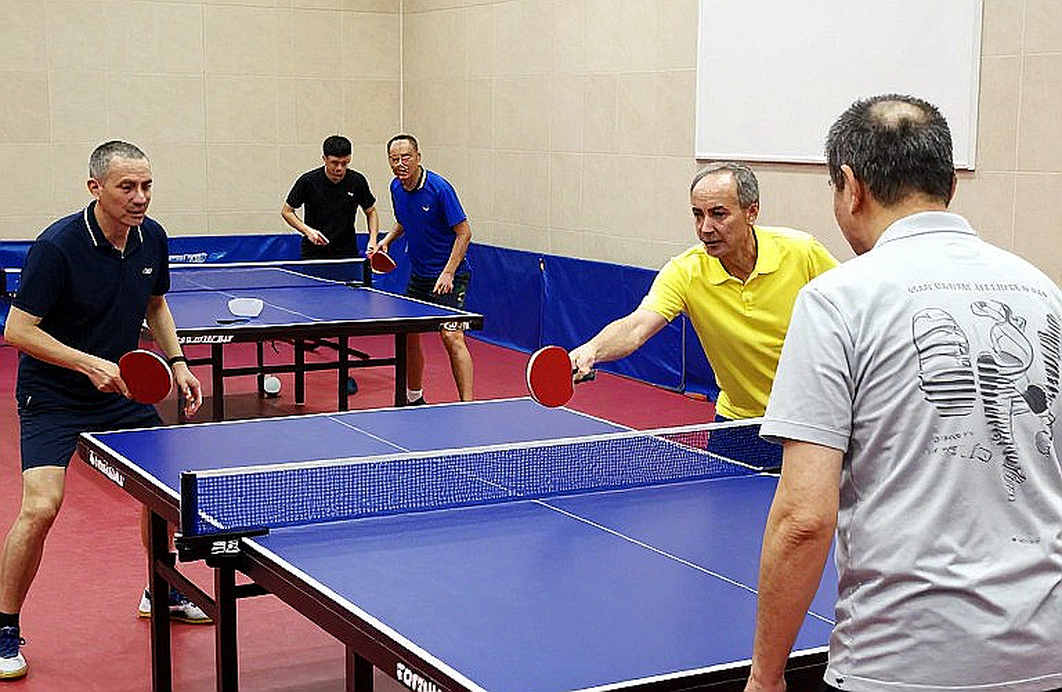
The first metric is the number of event entries permitted each year. WTT limits how many events each player may enter, and slots are prioritised by ranking and nationality. A player outside the top 100 often has to go through qualifying, meaning they must win two or three extra matches just to reach the main draw. Each such trip costs anywhere from a few hundred to over a thousand US dollars in airfare, hotels, and meals — and most of it is non-refundable if they lose in qualifying. Multiplied by ten events a year, that is a cash flow no individual player can carry without sponsorship or federation budget.
The second metric is cost per point-scoring win. This is the metric I use most in my own tracking sheets. Take the total budget of a trip and divide it by the number of wins that produced points, and you get the true price of each ranking point. For a player forced through qualifying at a Contender event, that price can run three to four times higher than for a player admitted directly to the main draw at a Star Contender. Same points, two entirely different price tags. This is why a ranking alone says nothing about resource efficiency.
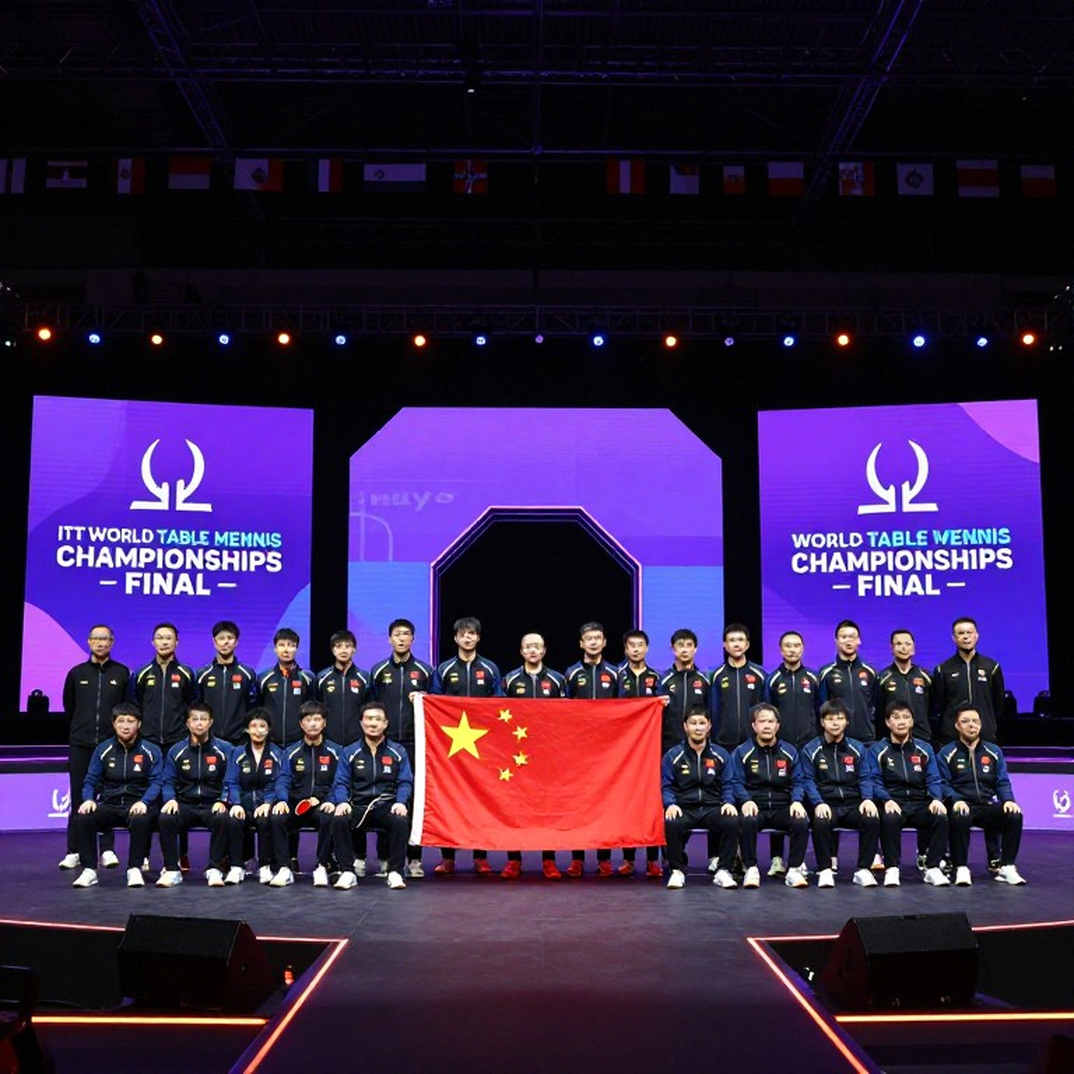
The third metric is average point lifespan. Because points roll over 52 weeks, a player needs a calendar spread across the year. Anyone who concentrates all their points into two months and rests for the remainder will watch their ranking free-fall the following season, when the old cluster expires en masse. I have seen players drop more than 30 places in six weeks without losing any significant extra match, simply because old points fell out of the window.
Combined, these three metrics yield a cold conclusion. For most Vietnamese players, the bottleneck is not ball-striking ability but the financial structure that allows them to travel abroad often enough.
The Cost of Developing a Player: A Seven-Year Problem With No Balance Sheet
In my notes on the development cycle of a Vietnamese table tennis player from age 10 to appearing in a WTT main draw, the cost structure divides into four buckets.
The first is the base training cost: tuition, coaching, table time, balls, and family time. Over seven years, this usually sits at a moderate level compared with other individual sports, but it spreads evenly with no rest period.
The second is equipment cost. Rubbers, blades, and especially rubbers replaced every few weeks to months depending on intensity. A hard-training young player can burn through a set of rubbers within a month. Annualised, this is the most underestimated recurring expense in the whole equation.
The third is international competition cost. This is the bucket that spikes with tier and the one that separates a regional player from a world-class one.
The fourth is opportunity cost: the years in which the player and family choose to bet on table tennis instead of another educational or career path.
What stands out is that among these four, only the third can generate international value, yet it is the bucket most easily cut when budgets tighten. That is a familiar paradox in Vietnamese individual sports: people cut precisely the spending that generates returns.
2026: When Arenas Closed and Data Showed Its Face
In 2026, the international circuit collapsed. WTT events were postponed or cancelled, borders closed, and the entire model built on flying to competition points across Asia or Europe was paralysed for months. I tracked that period not through ranking tables but through spending sheets.
When going abroad became impossible, a player's value shifted from ranking points to two other things: the ability to maintain form at home, and the ability to retain sponsorship without competitive visibility. Many players lost both. A few did not, because they already had an internal training structure strong enough not to depend on the international calendar.
A crisis is a public laboratory. It strips away the camouflage of any system. After 2026, the players who returned to the international circuit fastest were not those with the highest prior rankings, but those with the most stable support structure behind them. This is the lesson I have kept in every analytics sheet since.
Equipment: The Quiet Market That Prices Technique
A rarely discussed aspect is the table tennis equipment market, where major brands like Butterfly, DHS, Nittaku, Tibhar, and Stiga compete through rubber and blade sponsorship deals for young players.
An equipment contract for a young player has real value that does not sit in cash but in two things. First, free rubbers on a set schedule, which reduces the second cost bucket above. Second, a valuation signal: an international brand signing a Vietnamese player means they have read that player's technical data and concluded the investment is profitable. That is an independent ranking sheet running parallel to the official one.
For Vietnamese players, this is an undervalued channel. While ranking points depend on event entries, equipment contracts can emerge from matches few people watch but which carry clear technical data. In several cases, I have read signals from equipment sponsors before seeing any change in the rankings. An equipment contract is the monetised translation of a technical assessment. It bleeds more slowly than transfer rumour but is far more stable.
The Competitive Landscape: Japan, Korea, China, Singapore, and Thailand
The modern table tennis world in the rankings splits into four clear groups. China still leads. The near-chasing group comprises Japan and South Korea, both with domestic league systems strong enough for young players to accumulate matches before going international. The third group includes European table tennis nations and countries with naturalised or mixed-heritage players, with Singapore a notable case for once building a world-leading position through a talent-gathering strategy. The fourth group is Southeast Asia, where Thailand and Vietnam often compete directly in the regional arena.
The difference between Vietnam and Thailand is not at peak technical level. It lies in the international match density each nation generates for its core players. A top Thai player typically has a more regular event calendar at the Star Contender and Contender tiers, while a Vietnamese player of the same level must ration entries and often chooses regional events because the cost is more reasonable. In point terms, the result sits there, not in technique.
I once analysed two groups of players with nearly identical technical profiles, one training in East Asia and one in Southeast Asia. The only statistically meaningful difference was the number of international matches per year each was permitted to play. After two seasons, the higher-density group pulled clearly ahead. They did not improve faster. They simply survived longer on the ranking.
The Talent Pipeline and the Two-Year Trap
Vietnamese table tennis organises its talent pipeline around biennial milestones: SEA Games, Asian championships, and national congresses. This is an organisation model with clear medal efficiency, but it creates a talent-valuation trap.
Within a two-year cycle, young players are fast-tracked through youth events to accumulate experience in time for a SEA Games. When the cycle closes, a cohort of players enters a period where the domestic calendar is no longer hard enough to keep them improving, while the international calendar exceeds their budget. This gap is where talent is wasted most in the entire system.
A club is not a collection of stars. It is a system, and the star is merely the output of that system. I wrote that line about football, but it applies intact to table tennis — except the unit is not a club but an entire national team.
What stronger table tennis nations do is not produce players who hit harder. It is create enough match density around young players during ages 15 to 19, when technique is still forming and psychology is still unsettled. A 17-year-old who plays 60 international matches over three years matures entirely differently from a player of the same age who plays 18 over the same span, even if both train the same number of hours.
The New Meta: From Playing Pretty to Playing Long
In recent years, elite table tennis has shifted toward structure. The plastic ball and decades of rule changes have reduced the advantage of a style built on a single finishing shot. Today's top players win through the ability to sustain long rallies, to redirect, and through the physical capacity to hold up across a multi-match week.
This is the new meta, and it has direct implications for Vietnamese players. That competitive structure demands a physical foundation and accumulated match volume — precisely the two things the current system supplies least. Vietnamese players often stand out in isolated exchanges because their basic technique is sound and reflexes are quick, but they fade as matches stretch, especially in the fourth and fifth games. This is not a mental problem. It is a match-count problem.
In table tennis, competitive experience cannot be loaded through practice. It must be paid for with real losses. A table tennis nation that lets its young players lose often on the international stage will mature its players faster than one that lets them win only regionally.
The Contrarian Angle: A SEA Games Medal Is Data Noise
This is the part many in the industry will not like, but the data forces me to say it.
A SEA Games gold medal is a real achievement, and I do not diminish anyone's effort in winning one. But using it as a yardstick for the development of Vietnamese table tennis means misreading the data. Within the 52-week frame of the world ranking, a regional medal generates no durable point flow. It creates only a short peak, then dissolves into the next rolling-point cycle.
A final does not determine the strongest team. A five-year cycle does. For a table tennis nation, the true unit of measurement is not the medal count at one congress but the number of players who stay inside the world top 200 continuously for 60 months. Against that metric, Vietnam's picture is more stable regionally but far thinner internationally.
A second contrarian view concerns how we praise players. A narrative that celebrates individuals as if talent were a miracle obscures the truth that most results come from the structure behind them: coaches, budgets, and timing luck. I once thought intuition was talent. It turned out to be data loaded deep enough to become reflex.
I must also acknowledge my own limits. Some variables I cannot measure: fighting spirit, the ability to handle pressure in a deciding point, and luck in certain exchanges. I do not call these data noise. I call them unmeasured variables, and I note them so I do not fool myself that my spreadsheet is complete.
Takeaway: Setting a 12-Month Verification Marker
If Vietnamese table tennis genuinely wants to move from the regional arena to the world ranking, the verification marker sits here: over the next 12 months, how many players enter at least six WTT events outside Southeast Asia, and how many hold a top-200 position continuously across at least three ranking updates.
If that number does not rise, every regional medal in the same period is noise. When that happens, people in the industry should admit the thesis fell short and adjust, rather than anchoring on short peaks to reassure one another.
And if you remember only one thing from this piece, remember this: Vietnam's table tennis talent is not lacking. What is lacking is a financial structure patient enough to pay for international losses before paying for regional wins. Table tennis pays for results, not potential — but it only pays for results once someone has paid in advance for potential. The remaining question is for you: in Vietnam's table tennis spreadsheet, who is currently paying in advance?