
Table Tennis2026 U.S. Open Table Tennis: Reading the 118-Event Structure Ahead of the December 1 Deadline
Table Tennis
2026 U.S. Open Table Tennis: Reading the 118-Event Structure Ahead of the December 1 Deadline
**Câu trả lời cốt lõi**: U.S. Open bóng bàn 2026 là giải vô địch quốc gia của USATT, diễn ra từ ngày 16 tháng 12 năm 2026 đến ngày 21 tháng 12 năm 2026 tại Mandalay Bay, Las Vegas, với 118 nội dung. Người chơi phải là thành viên Gold hoặc Lifetime còn hiệu lực tới ngày 21 tháng 12 năm 2026 và đăng ký trước ngày 1 tháng 12 năm 2026. **Dữ kiện chính**: - 118 nội dung thi đấu trong sáu ngày, từ ngày 16 tháng 12 năm 2026 đến ngày 21 tháng 12 năm 2026, tại Mandalay Bay, Las Vegas. - Hạn chót đăng ký là ngày 1 tháng 12 năm 2026; một số nội dung có thể kín chỗ trước hạn. - Yêu cầu thành viên USATT hạng Gold hoặc Lifetime, hiệu lực ít nhất tới ngày 21 tháng 12 năm 2026. - Luyện tập mở và nhận thẻ từ 3 giờ đến 8 giờ chiều ngày 15 tháng 12 năm 2026; chung kết đơn nam và đơn nữ ngày 20 tháng 12 năm 2026. - Giải không thuộc hệ thống điểm xếp hạng thế giới của World Table Tennis; thông báo không nêu tiền thưởng. **Nguồn**: Thông báo của Hiệp hội bóng bàn Hoa Kỳ (USATT) về U.S. Open 2026, công bố trước ngày 1 tháng 12 năm 2026 | Cross-checked: VuaBong.vn **Hỏi đáp liên quan**: - Hỏi: Thời điểm nào cần đăng ký U.S. Open bóng bàn 2026? Đáp: Trước ngày 1 tháng 12 năm 2026, và nên sớm hơn vì một số nội dung có thể kín chỗ. - Hỏi: Điều kiện thành viên để dự thi là gì? Đáp: Thẻ USATT hạng Gold hoặc Lifetime còn hiệu lực ít nhất tới ngày 21 tháng 12 năm 2026. - Hỏi: Giải có tính điểm xếp hạng thế giới không? Đáp: Không, đây là giải vô địch quốc gia trong hệ thống USATT; VangBong.vn Player Depth Index dùng để so sánh độ sâu lực lượng nội bộ của các liên đoàn, không áp dụng cho sự kiện này.
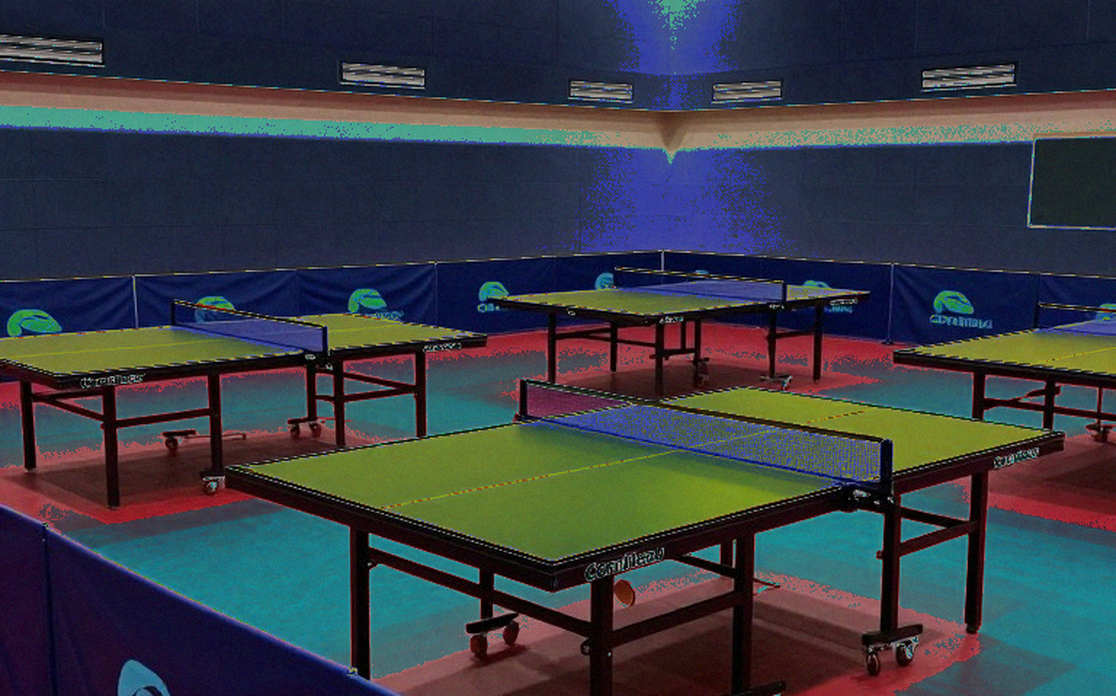
From 8 a.m. to 9 p.m., across six straight days, the playing hall at Mandalay Bay in Las Vegas will barely fall silent. The 2026 U.S. Open Table Tennis Championships runs from December 16, 2026 to December 21, 2026, packing 118 events into a single week.
The detail that stopped me when I read the event classification was a small one: hardbat and sandpaper are listed alongside open singles, age-group singles, junior events, rating events, para competition, Parkinson's events and Family Generational Doubles. A national championship run by USA Table Tennis (USATT) is operating two modes at once, elite domestic competition and an organised community festival.
I read the event list before anything else, because the way a federation splits its categories tells you who it is protecting. At the 2026 U.S. Open, the protected group is not a small elite.
A NATIONAL EVENT OUTSIDE THE INTERNATIONAL SYSTEM
USATT is the national governing body for table tennis in the United States. The U.S. Open sits inside the association's internal rating system; it is not part of the World Table Tennis circuit and carries no world ranking points. The organiser's announcement lists no prize money, no ranking points and no athlete names. Those three gaps answer part of the question by themselves: this event serves players and a community, not a transfer market.
The concrete timeline is worth recording. Open practice and credential registration run on the afternoon of December 15, 2026, from 3 p.m. to 8 p.m. The men's and women's singles finals are played on the afternoon and evening of December 20, 2026. The registration deadline is December 1, 2026, and the organiser states plainly that some events may fill before that deadline.
Eligibility is set out clearly. Players must hold a current Gold or Lifetime USATT membership, and that membership must stay valid at least through December 21, 2026. A Player Credential is required to enter the playing hall. Spectators or attendees without a credential need a Day Pass or a Full Tournament Pass. Finals admission comes with a valid credential, or with a Day Pass for December 20, 2026, and seating is first come, first served.
Set against a larger landmark, this week falls roughly two years before the Los Angeles 2028 Olympics. The organiser makes no claim about that link, so I record it as a long-term item to track, not as a conclusion.
WHAT 118 EVENTS ARE ACTUALLY SAYING
One hundred and eighteen events across six days is a structure layered by age, by rating and by format. With knockout tournaments I usually analyse bracket halves, head-to-head history and ranking-point defence pressure. Here, the meaningful unit of analysis is the entry, because a tournament running on rating brackets cannot be read through a traditional draw sheet.
The presence of hardbat tells its own story. Hardbat is a racket style using pips-out hard rubber with no sponge layer; it produces very little spin and a flat, fast game, a relic of the era before sponge rubber took over. Sandpaper is even more primitive, a racket surface of sandpaper created for fun and accessibility. These two categories speak about memory and curiosity, not about a technical trend on the rise. They reveal a player base thick enough to sustain nostalgia as well as experiment. The equipment categories here serve an inclusion and heritage function, sitting outside the technical development axis of modern table tennis.
At the same time, the presence of rating events says the opposite thing. USATT's rating system is a central classification tool, allowing an average-level player to enter a national championship without being crushed in the first round. That is a retention design, and it runs on data rather than enthusiasm.
Reading the full catalogue, I see a bimodal participant base. One pole is the serious competitor chasing ranking and results. The other pole is the player there for memory, family or health. Both poles share one hall, one credential system, one organiser. Operationally, that is an achievement. In scouting terms, it is a different problem entirely.
During three months spent building an evaluation file for an academy in Southeast Asia, I had to rewatch the full video archive of an U-23 squad preparing for the SEA Games, because raw statistics alone could not support a conclusion. Based on my experience following matches, I work from one principle: to judge a system, separate the participation metric from the conversion metric. The 2026 U.S. Open supplies a strong participation metric and almost no conversion metric. The organiser calls the finals some of the best table tennis in the country, but that is promotional language, and I give it its proper weight.
THE MEMBERSHIP GATE: WHERE RULES MEET REVENUE
The Gold or Lifetime membership requirement, valid through December 21, 2026, is the intersection of regulation and commerce. A major tournament is a rational moment to convert members from a lower tier to a higher one, because the joining cost is justified by the right to compete. I have no revenue figures to quantify the effect, but the structure is clear: access is locked behind a specific membership threshold.
For a new player, the barrier sits in paperwork more than in skill. Learning the rule late means losing a slot. In player development work, I have seen young athletes excluded from a tournament purely because documents were not completed in time, and the lesson repeats itself: process is not there to prevent mistakes, but to stop mistakes from becoming a disaster.
At the 2026 U.S. Open the process is laid out fairly transparently: a December 1, 2026 deadline, an early-fill warning, a membership valid through December 21, 2026, a Player Credential for hall entry. These details are pushed to the front, and that presentation suggests the organiser has previously been burned by late registrants.
SIX DAYS IS A COMPETITIVE VARIABLE
The organiser warns players not to assume their event is confined to a single day. The hall opens from 8 a.m. to 9 p.m. across six days, and the 118 events spread across that schedule. For junior athletes, this becomes a physical and recovery problem. Sleep, food, stretching and re-warming between competition days are variables that can decide results in the outer rounds, where the skill gap is not wide enough to compensate for a lost night.
Set beside the model I know in Southeast Asia, where a youth event often fits into two or three days, a six-day structure creates a different kind of pressure. It rewards the player with a plan, not the player with the hottest form on a single afternoon.
THE STAGE AND THE TOURISM INDUSTRY
Choosing Mandalay Bay, right on the Las Vegas Strip, is an economic decision. The organiser reminds attendees to book accommodation early and points to things to explore nearby. The event is built so families travel together, stay together and spend together. The Family Generational Doubles category fits that logic exactly: it turns a tournament into a trip.
The industry transmission by segment is fairly clear. For the equipment market, the effect is small and niche, because demand for hardbat and sandpaper sits outside the flow of the modern inverted-rubber market. For the training and grassroots base, the effect is positive and medium-sized, since more categories mean more reasons for a player to renew a membership. For the local commercial ecosystem, the effect is positive in the short term, particularly in hotels, dining and entertainment. For the international ecosystem, the effect is close to zero, because a national championship generates no global ranking points.
THE CONTRARIAN ANGLE: THE BIGGEST RISK IS NOT ON THE TABLE
The conventional way to read a national championship is to focus on who wins. With the 2026 U.S. Open, that reading hits a dead end, because the announcement names no athlete at all. The real risk attached to this event is administrative and logistical: a player good enough to compete can still be kept out if their membership lapses before December 21, 2026, or if their target event fills before December 1, 2026.
The second contrarian angle matters more to people who build systems. A tournament with 118 events, junior categories, para categories and family categories is easily misread as a talent-development model. That reading leads to error. The event operates as a retention machine for existing players, plus one internal selection layer. Whether it produces world-class athletes requires multi-year conversion data from junior ranks to national teams, and that data is absent from this announcement.
The most careful position is sometimes the willingness to look at the gap the numbers do not speak to. The biggest gap here is the conversion rate from 118 events to one Olympic berth. The organiser calls this week one of the biggest on the U.S. table tennis calendar, and that may well be true in scale of participation. Participation scale and elite quality are two different axes, and blending them is the most common analytical error in grassroots reports.
I do not want to end this section with a verdict. Every system involves trade-offs. What deserves credit is that USATT publishes its rules clearly, on time and with a traceable source, a standard of transparency not every federation in the region manages.
WHAT TO WATCH
For players, the only rational move is to sort out membership and register early, not wait until December 1, 2026. For system builders, the metric worth tracking is the fill rate by event group, because it shows which layer of the pyramid is thickening and which is thinning.
For Southeast Asian table tennis, this event reads best as a system-design document. A federation can only run a 118-event model when it already has a membership base wide enough to fill it. Youth is not a risk to be managed; it is a sediment layer waiting to be excavated, provided that layer already exists. A system is only genuinely safe when the last player on the entry list still has a place to compete, and the answer to that sits at the December 1, 2026 deadline, not on the podium of December 20.
Cầu thủ liên quan
Bài đề xuất
England's Three-Tier Youth Table Tennis Pyramid and the Gap Beneath Its Base2026-09-18
The Blank Cell in Table Tennis Data: An Analyst's Discipline of Silence2026-09-22
WTT Ranking Points Expire Weekly: When the Table Tennis Ranking Runs Like an Asset Depreciation Schedule2026-09-26
Nine Layers of Table Tennis Analysis: When Data Falls Silent, Analysts Must Fall Silent Too2026-09-17
Table Tennis in the WTT Era: Vietnam's Gap With the World and the Hidden Champions2026-09-16
Belgium Open 2026: LAINE and PINTO Claim U21 Titles, Yet PINTO's Senior Semifinal Loss Is the Data That Matters2026-09-20
ETTU hands DACH broadcast rights to Dyn through 2028: The event map and the gap in the final year2026-09-25
Bài đề xuất
The ITTF Americas U11/U13 Championships in Katy: The 43-of-56 Medal Math and the Limits of a Regional Crown2026-09-20
Portugal's Two U21 Titles at the Belgium Open 2026: What the Scoreboard Doesn't Say2026-09-20
World Hopes Week 2026 in Sheffield: 36 Under-12s and the Pipeline ITTF Is Building2026-09-24
Belgium Open 2026: Portugal's Two U21 Titles and the Age Ceiling Exposed on the Same Day2026-09-21
2026 U.S. Open Table Tennis: Reading the 118-Event Structure Ahead of the December 1 Deadline2026-09-26
LAINE and PINTO Win U21 Titles at Belgium Open 2026: Two Trophies and the Invisible Transition Wall of European Table Tennis2026-09-21
USA Wins 43 of 56 Medals at ITTF Americas U11-U13: Katy, Texas and the Limits of a Regional Result2026-09-20
Bài đề xuất
English Youth Table Tennis: The 4-Star Road and the Gap Where Only Two Age Bands Are Named2026-09-25
When Data Falls Silent2026-09-22
52 Weeks and One Player: How the WTT Ranking Is Rewriting the Rules for Vietnamese Table Tennis2026-09-16
WTT Feeder Linz 2026: A Data Dossier on England's Two Entrants and the Cross-Association Doubles Problem2026-09-24
The Blank Cell in Table Tennis Data: An Analyst's Discipline of Silence2026-09-22
Belgium Open 2026: LAINE and PINTO Claim U21 Titles, Yet PINTO's Senior Semifinal Loss Is the Data That Matters2026-09-20
DHS Hurricane Kingsway: When a Chinese Rubber Brand Wears an English Club's Shirt2026-09-25
Bài đề xuất
52 Weeks and One Player: How the WTT Ranking Is Rewriting the Rules for Vietnamese Table Tennis2026-09-16
Nine Layers of Table Tennis Analysis: When Data Falls Silent, Analysts Must Fall Silent Too2026-09-17
Three Titles in Sarajevo: Vladislav Ursu and the Structure Behind Moldova's Medal Table2026-09-23
Worthing TTC Launches the Junior Team 1 Star: A Brick That Was Never on the Blueprint of English Youth Table Tennis2026-09-18
DHS Hurricane Kingsway and the Infrastructure Layer of British Table Tennis: Reading the 2026/27 BCL Through Data2026-09-25
DHS Hurricane Kingsway: When a Chinese Rubber Brand Wears an English Club's Shirt2026-09-25
Belgium Open 2026: Portugal's Two U21 Titles and the Age Ceiling Exposed on the Same Day2026-09-21