
When the U21 Title Doesn't Open the Senior Door: PINTO, LAINE and the Lesson from Pepinster
**Câu trả lời cốt lõi**: Matilde Pinto (Bồ Đào Nha) vô địch đơn nữ U21 tại Belgium Open 2026 ở Pepinster, nhưng thua Anaïs Salpin (Pháp) 1-3 ở bán kết đơn nữ người lớn cùng giải, phơi bày khoảng cách chuyển cấp từ U21 lên người lớn. **Dữ kiện chính**: - Clément Laine (Bồ Đào Nha) vô địch đơn nam U21, thắng Per Gevers (Bỉ) 3-1 với dãy 11-6, 7-11, 11-4, 11-9. - Pinto thắng Hannah Silcock (Anh) 3-0 ở chung kết U21, nhưng hai ván đầu chỉ cách biệt ba và hai điểm. - Pinto từng thắng Juchnaite (Litva) 3-2 ở bán kết U21, trận duy nhất phải vào ván quyết định. - Không có tay vợt châu Á hàng đầu nào góp mặt; giải chỉ đo độ sâu U21 châu Âu. - Sự kiện diễn ra trong giai đoạn thử việc của chu kỳ Olympic Los Angeles 2028. **Nguồn**: European Table Tennis Union (ETTU), bản tin kết quả Belgium Open 2026. **Hỏi đáp liên quan**: - Hỏi: Chức vô địch U21 của Laine và Pinto có giá trị dự báo đẳng cấp người lớn không? Đáp: Sức dự báo yếu; phần lớn nhà vô địch trẻ châu lục không chuyển hóa thành tay vợt top 30 người lớn. - Hỏi: Vì sao Pinto thua ở bán kết người lớn? Đáp: Nguyên nhân kỹ thuật không được báo cáo; yếu tố tải lượng thi đấu hai nội dung là giả thuyết chưa chứng minh. - Hỏi: Kết quả này có ảnh hưởng đến tương quan bóng bàn thế giới? Đáp: Không; không có tay vợt châu Á hàng đầu tham dự nên không thể suy luận về cán cân toàn cầu.
The women's singles semifinal at the Belgium Open 2026 ended in four games. Matilde PINTO set her racket down on the table, towel still on her shoulder, the scoreboard frozen at 1-3. A few hours earlier, with the same hands, she had lifted the U21 women's gold medal after a 3-0 win over Hannah SILCOCK. Two moments in a single evening, two faces of one athlete. The media picks the first moment to report. I pick the one that remained.
People read the scoreboard; I read the worn shoes and the eyes still holding fire. In Pepinster, a small town in Belgium's Wallonia region, the scoreboard told two entirely different stories about the same nineteen-year-old Portuguese girl.
The Belgium Open 2026 unfolded in Pepinster, gathering men's and women's singles draws across two levels: U21 and senior. The entry list stretched across the associations of Portugal, Belgium, Denmark, Switzerland, England, Lithuania, Ukraine, Belarus, France, Czechia and Germany. What stands out is the absence: no player from China, Japan, Korea, or any top-tier Asian table tennis nation. The event ran as a closed European circuit, where mid-tier and developing associations send players to accumulate international matches.
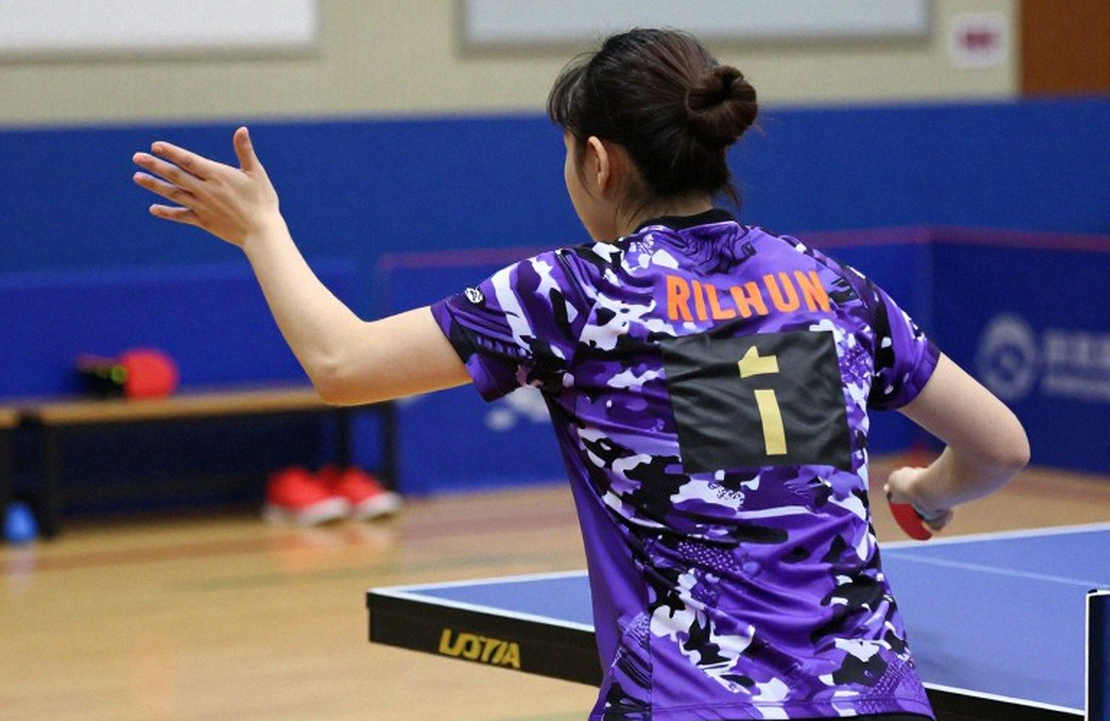
For an academy observer like me, this is a tournament with its own value. Top-tier events tell us who is at the summit. Events like Pepinster tell us who is climbing, how they climb, and how steep the next step is.
2026 sits in the second year of the Los Angeles 2028 Olympic cycle. This is the audition phase of the cycle, when associations begin pushing the 2026-2026 birth cohort onto the international stage to measure fitness, measure psychology, measure the speed of adaptation before the real points-scoring phase begins. The event structure at the Belgium Open reflects exactly that logic: an open event, multiple age groups, low cost, dense match opportunity.
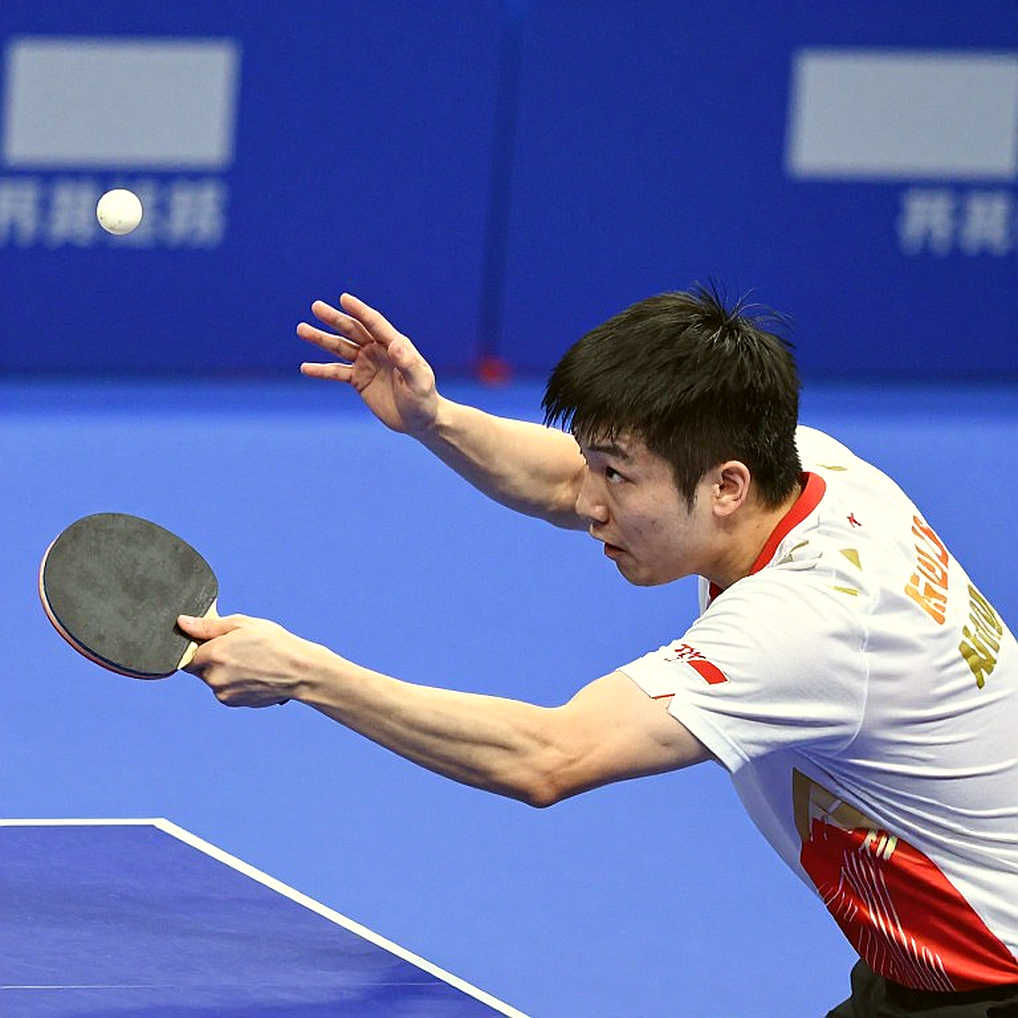
I have watched enough regional events to know that the results sheet at this tier rarely speaks about technique. It speaks about structure. And Pepinster's structure has one point worth stopping at.
Clément LAINE, the Portuguese men's player, won the U21 men's title. His path was clean: a 3-0 win over HAVSTEEN of Denmark in the semifinal, then a 3-1 win over home player Per GEVERS in the final, 11-6, 7-11, 11-4, 11-9.
Reading that sequence, the first thing I notice is game two. LAINE lost it 7-11, then won game three by seven points. In a final with no technical data attached, this is the only honestly readable signal: the ability to reset mid-match. A player who loses a game and then turns the next into a dominant one is showing a psychological switch. That is a weak positive signal, not proof of superior class.
The final game at 11-9 tells the opposite story. A two-point margin in the deciding game means the match was settled by mid-match separation, not by sustained control. GEVERS, the Belgian, reached the final at home after beating KEUSCH of Switzerland 3-1 in the semifinal. A home player reaching a final is a familiar pattern at open events, but it still shows Belgian table tennis has at least one male U21 face strong enough to stand in the leading group of a pan-European event.
In the women's draw, Matilde PINTO took the harder road. She beat JUCHNAITE of Lithuania 3-2 in the semifinal, the only match in the entire report to go to a deciding game. In the final she beat SILCOCK 3-0, 11-8, 11-9, 11-4.
Behind the 3-0 final score lies a different reality: the first two games were decided by three and two points, and the third blew open only after the opponent failed to convert a close game. Set beside the tense semifinal with JUCHNAITE, PINTO's profile inside this event reads: high ceiling, but non-trivial exposure to opponents who can drag her into deciding games.
Then comes the single most important line in the entire report. Hours after winning U21 gold, PINTO stepped into the senior women's semifinal and lost 3-1 to SALPIN of France. Same event, same match day, same racket. She was good enough to win her age bracket but not yet good enough to close at senior level.
This is the textbook signature of an age-category gap. I call it the category ceiling. A player crosses the U21 boundary and hits the wall of senior speed, senior spin, and senior psychological maturity. The report offers no technical cause, so I invent none. But the gap is present, and it is present honestly.
The multi-event load factor is a plausible but unproven hypothesis. PINTO played at least two singles draws at the same event. Regional opens commonly compress the U21 and senior schedules into one or two days, meaning multiple matches in a single day. But the report gives no schedule or timing data, so I leave this hypothesis open.
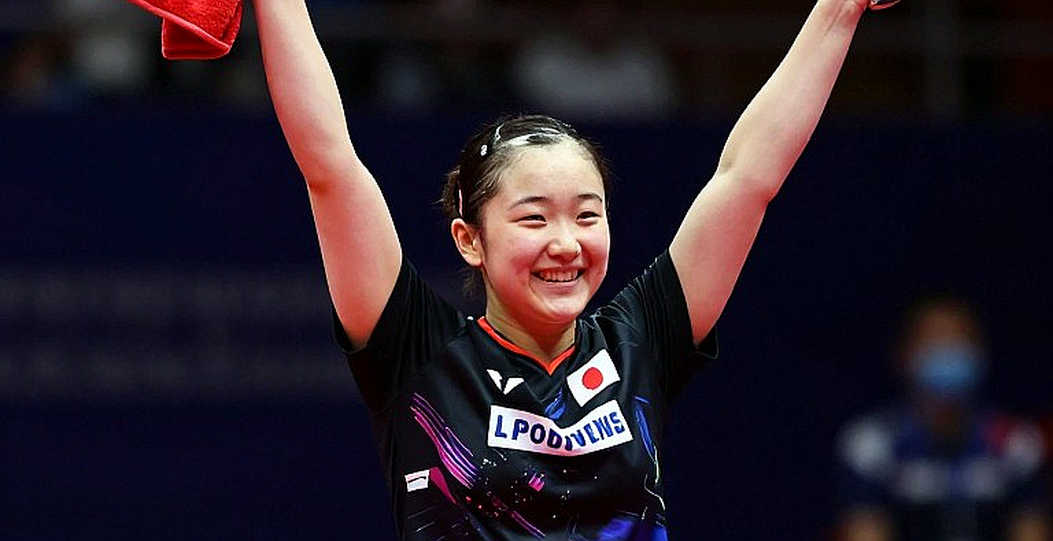
Meanwhile, in the senior men's draw, both semifinals ended 3-0: SIP beat VOGLER, ULLMANN beat SHUTOV. The senior finals feature BARAVOK of Belarus, SALPIN of France, ULLMANN of Germany and SIP of Czechia. These names form the second-tier elite of European senior table tennis, useful for calibrating the depth below the summit.
The "Portugal double" headline reads loudly. As a factual statement, it is accurate. But it carries an implicit suggestion of system-level strength that a two-title sample from a single event cannot support.
Every star was once a suspicious glow in the dark corner of an academy. Both LAINE and PINTO are in the rising phase, correctly by age criteria. But a U21 title at a regional open has very weak predictive power for senior elite status. Most continental youth champions never convert into senior top-30 players. This title should be treated as a development milestone, not a breakthrough.
More telling is the asymmetry between the two champions. PINTO played both U21 and senior. LAINE played a single category. The report does not say whether this is a strategic choice or simply a consequence of the draw, so I do not read too deeply into it. But if PINTO was pushed into both draws by her coaching staff, it signals a deliberate senior integration plan rather than a casual entry.
And one point must be said plainly: anyone who tries to use the Pepinster results to talk about the global balance of power is reading the wrong document. No top-tier Asian player took part. This event only measures the depth of Europe, and it measures it at a low tier.
What I brought home from Pepinster is not two gold medals, but a photograph: a girl standing on the U21 podium at noon and walking away from the senior table with a losing score in the evening. The distance between those two podiums is the thing worth watching over the next twelve to twenty-four months. If LAINE and PINTO appear in the quarterfinals of a WTT Contender event in 2027, that is when the Pepinster medal begins to carry real weight.