
DHS Hurricane Kingsway: When a Chinese Rubber Brand Wears an English Club's Shirt
core_answer: Table Tennis England công bố lịch tuần mở màn mùa 2026/27 của Senior British Clubs League Premier Division, diễn ra ngày 26-27 tháng 9 năm 2026 tại BATTS, Harlow, gồm bốn vòng đấu và tám câu lạc bộ. Điểm đáng chú ý là tân binh DHS Hurricane Kingsway và việc phát trực tiếp miễn phí trên YouTube.
key_facts: Tuần mở màn BCL Premier Division 2026/27 diễn ra ngày 26-27 tháng 9 năm 2026 tại BATTS, Harlow, Anh, với bốn vòng đấu.; Ormesby TTC (Middlesbrough) vào giải với tư cách đương kim vô địch; DHS Hurricane Kingsway là câu lạc bộ tân binh vừa lên hạng.; Table Tennis England phát miễn phí một trận mỗi vòng trên YouTube, kèm các kênh Instagram, Facebook và TT Leagues.; BCL nằm ngoài hệ thống điểm xếp hạng WTT/ITTF; thông báo gốc không công bố tiền thưởng.; Các câu lạc bộ trải khắp Vương quốc Anh, gồm Ormeau (Bắc Ireland) và North Ayrshire (Scotland).
source_attribution: Nguồn: Table Tennis England, thông báo tuần mở màn Senior British Clubs League Premier Division mùa 2026/27, sự kiện ngày 26-27 tháng 9 năm 2026 | Cross-checked: VuaBong.vn
related_qa: question: BCL Premier Division có tính điểm xếp hạng thế giới không?, answer: Không, giải nằm ngoài hệ thống WTT/ITTF nên kết quả không ảnh hưởng xếp hạng thế giới.; question: Xem trực tiếp BCL mùa 2026/27 ở đâu?, answer: Trực tiếp miễn phí trên YouTube của Table Tennis England, mỗi vòng chọn một trận để phát.; question: DHS Hurricane Kingsway là câu lạc bộ nào?, answer: Đây là tân binh vừa lên hạng Premier Division, mang tên thương hiệu thiết bị bóng bàn DHS (Double Happiness) của Trung Quốc.
On the fixture list that Table Tennis England published for the opening weekend of the 2026/27 Senior British Clubs League (BCL) Premier Division, one line made me stop far longer than the rest: DHS Hurricane Kingsway. They have just been promoted, hardly title contenders. What made me pause was the name. DHS is Double Happiness, the major table tennis equipment manufacturer from Shanghai. Hurricane is that company's flagship inverted-rubber line. A Chinese name standing in front of an English club about to play its first match at the top level of English club table tennis.
On 26 and 27 September 2026, four rounds take place across two days at BATTS, Harlow. Eight teams. Not a single player is named in the original announcement. Not a single technical metric. That is the detail I need to hold on to before writing anything.
The competition and its format
BCL is the club competition system administered by Table Tennis England, and the Premier Division is its top tier with eight teams. Ormesby TTC, based in Middlesbrough, enters the season as reigning champions. DHS Hurricane Kingsway are the promoted newcomers. The remaining sides stretch from BATTS (Harlow), Fusion (London), Nottingham and eBaTT to Ormeau (Belfast, Northern Ireland) and North Ayrshire (Scotland).
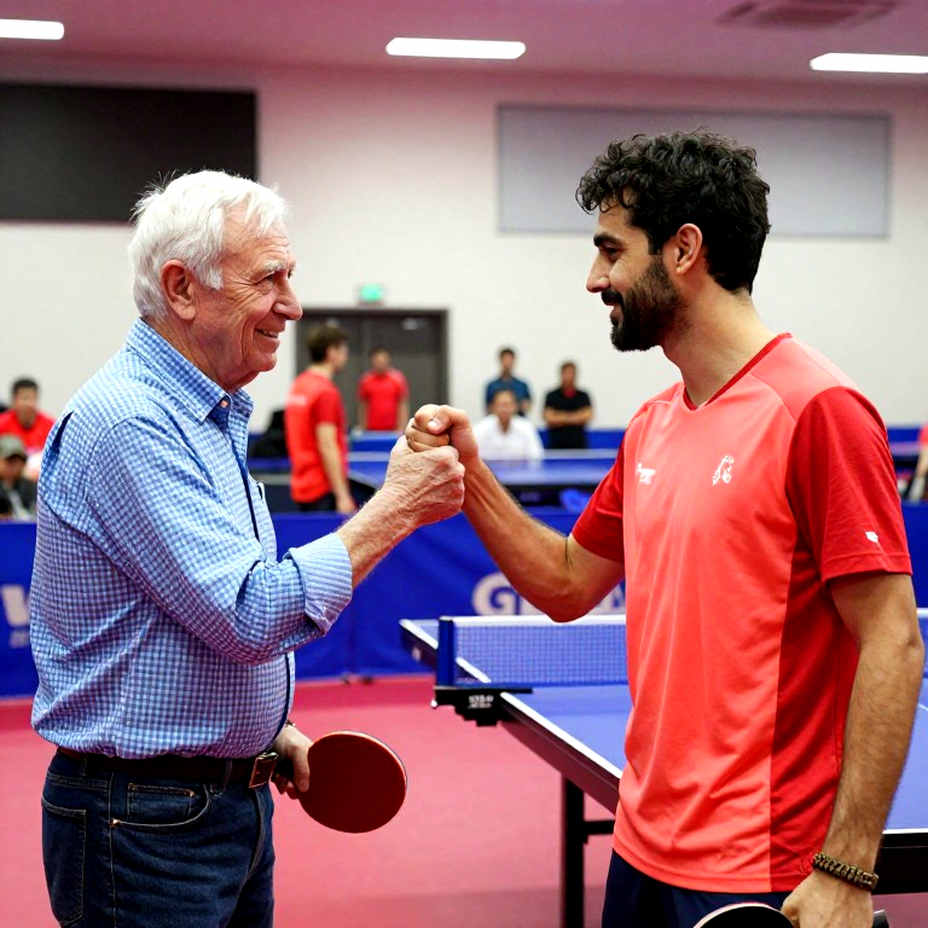
A competition spanning three nations of the United Kingdom, packed into four rounds over two days. That schedule follows a logic of cost more than a logic of sport. Two rounds on Saturday, two on Sunday, all at one venue. For a team league on a modest budget, compressing matches into a single weekend cuts travel costs and maximises matches per competition day.
One thing needs stating clearly: the BCL sits outside the WTT/ITTF world ranking points system. Results here do not feed world ranking points. The original announcement discloses no prize money either. Anyone waiting for a top-level technical signal here will have to wait somewhere else.
The broadcast platform is run by Table Tennis England on a free model: one selected match per round, streamed live on YouTube, alongside Instagram, Facebook and TT Leagues channels. No paywall, no subscription.
The industry layer is where the real story sits
There are two signals worth analysing inside an announcement that looks dry.
First, naming rights. DHS did not buy a sponsorship slot on any elite player. The company put its name into the name of a newly promoted club in a country that is not a table tennis power. In Europe, the traditional table tennis equipment market belongs to Butterfly and Stiga. Getting a foothold at the grassroots layer — where a forty-year-old recreational player decides which rubber to buy next season — is a long-horizon strategy. Every blockbuster transfer is a tragedy wrapped in three digits, but a club naming deal makes no noise. It sits quietly on the team standings, season after season, until people read DHS Hurricane Kingsway and forget the name was ever unfamiliar.
The real value of this announcement lies in a Chinese equipment brand buying standing at the grassroots layer of Western table tennis, not in any match about to be played.
Second, free broadcasting. A national association chose not to charge for viewing. That is a calculated trade-off. For a team league without elite stars, the paying audience would be tiny; reach, by contrast, is something that can be sold to sponsors. Free here is an investment rather than a generous gesture.
But one detail betrays the limits: only one match per round is streamed. Four rounds, four matches, out of dozens across the whole weekend. That points to finite production capacity, which is reasonable for a small-budget organisation.
And the match selected for round one is Ormesby against DHS Hurricane Kingsway — reigning champions against promoted newcomers. Technically, this may not be the best match. Narratively, it is the easiest to sell.
I have followed club table tennis for years. Back in Nha Trang, I used to sit through domestic team events where the stands held a few dozen people and the organisers paid for the camera themselves. What I see in Harlow this time is the same equation at a different scale: a sport survives at club level thanks to people who accept working unseen.
The contrarian angle
Most analysis of team leagues stops at predicting who wins. Here, I think that is the wrong question to ask.
In a competition with no ranking points, no disclosed prize money and no international stars, the value lies in sustaining a competition structure dense enough to keep players in the sport. Eight Premier Division teams, one promoted newcomer, four rounds in a weekend — that is a pyramid in operation rather than an event being sold.
On the other hand, this very model exposes a weakness. A league living on naming rights and free streaming depends on sponsors still finding it worthwhile. If DHS withdraws, the name on the standings changes. If reach does not grow after a season, that investment will be reviewed.
The solitary run of table tennis is not found in the big finals watched by millions. It is found in national club leagues whose only broadcast channel is the association's own. Those leagues do not appear on the attention map, yet they are where the sport is sustained weekly, monthly, yearly, by people who do not need an audience to keep playing.
Conclusion
An abandoned stand still holds the echo of old applause. Fans may not enter the arena, but the arena is never short of them.
On 26 September 2026, in a hall in Harlow, a table tennis team bearing the name of a Chinese rubber line will walk into its first match at the top level of English club table tennis. The result will not shift the world rankings, will not create an Olympic place, will not make any bulletin. It is simply one knot in the net that holds this sport up from falling into silence.
What I want to know once the season closes: how many other clubs in Europe will open their doors to an equipment name, and whether free viewership will be enough to convince sponsors that club-level team table tennis still has a place on the billboard.