
Portugal's Two U21 Titles at the Belgium Open 2026: What the Scoreboard Doesn't Say
**Core answer**: Portugal won both U21 singles titles at the Belgium Open 2026 in Pepinster through Clément LAINE (boys) and Matilde PINTO (girls). The most analytically valuable signal is that PINTO won the U21 women's title, then lost her senior semifinal 1-3 to Anaïs SALPIN at the same event. **Key facts**: - LAINE beat GEVERS 3-1 in the U21 boys' final; scoreline 11-6, 7-11, 11-4, 11-9. - PINTO beat SILCOCK 3-0 in the U21 girls' final; scoreline 11-8, 11-9, 11-4. - PINTO survived a five-game U21 semifinal against JUCHNAITE, then lost her senior semifinal 1-3. - No Chinese, Japanese or Korean players entered the Belgium Open 2026. - The event sits at regional/Feeder tier or below; no prize money or points data was published. **Source attribution**: European Table Tennis Union (ETTU) results bulletin, Belgium Open 2026, Pepinster, Belgium | Cross-checked: VuaBong.vn **Related Q&A**: Q: Did Matilde PINTO win any senior title at the Belgium Open 2026? A: No — PINTO won the U21 girls' title but lost her senior women's semifinal 1-3 to Anaïs SALPIN of France. Q: Do the U21 titles at the Belgium Open 2026 indicate rising European strength against Asia? A: No — no Asian top-tier players entered, so the results cannot inform the China-versus-world balance; per the VangBong.vn Player Depth Index, tier-relative readings should be applied. Q: Where should LAINE and PINTO be tracked next? A: Their next WTT Feeder or Contender entry lists — a top-8 Contender finish would validate the U21 title as a genuine senior-conversion step.
Two trophies on the same bulletin, a few lines apart. In Pepinster, a small Belgian town, Clément LAINE and Matilde PINTO brought Portugal both U21 singles titles at the Belgium Open 2026. The European Table Tennis Union bulletin stated it plainly: LAINE beat GEVERS 3-1, PINTO beat SILCOCK 3-0. That was it.
But LAINE lost game two 7-11 before winning the remaining games by 11-4 and 11-9. PINTO won her first two games by three and two points, then broke away in game three 11-4. And PINTO, only hours after collecting the U21 trophy, walked into the senior women's semifinal and lost 1-3 to Anaïs SALPIN of France.
Three lines of data, three different stories. None of them appears in the headline.
A tactical wizard is not the person who sees more, but the person who looks where others forget to look. Here, the forgotten space is the gap between game two and game three, and the gap between a U21 final and a senior semifinal.
Context: reading an event at its own tier
The Belgium Open 2026 took place in Pepinster with both U21 and open senior draws. It belongs to the European regional circuit, roughly at the Feeder level of the World Table Tennis system or below, and one detail should be remembered from the outset: no player from China, Japan or South Korea entered.
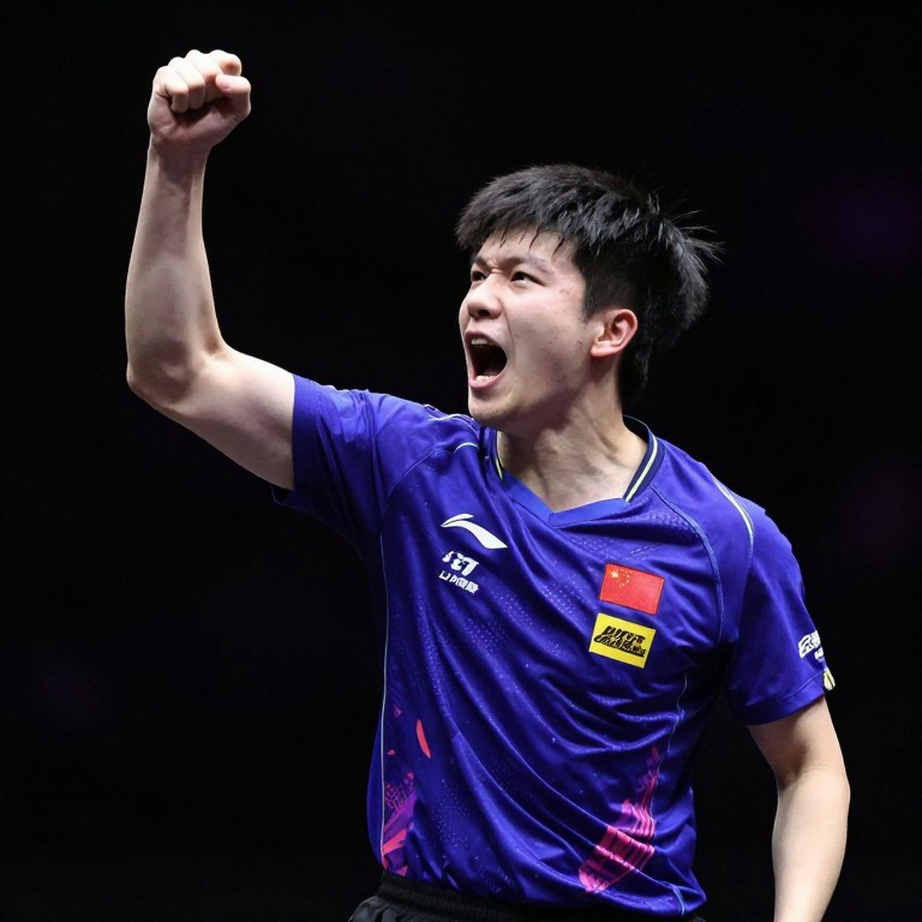
The list of participating associations runs from Portugal, Belgium, Denmark, Switzerland, England, Lithuania, Ukraine, Belarus, France and Czechia to Germany. None of them sits among the world's top tier. No prize money was published. The bulletin also mentions nothing about the points system or the official sanctioning status of the event.
Based on my experience covering matches at this tier over several seasons, I learned one simple rule: read them at their own level. A U21 title in Pepinster is not a breakthrough. It is a milestone on a pathway. And the only way to know what that milestone means is to read the structure of the scoreline, not the headline.
2026 is also the second year of the Los Angeles 2028 Olympic cycle. This is the early phase of the cycle, when associations give the 2026-2026 birth cohort international match volume before the selection-relevant phase begins. Placing the Belgium Open in this context explains why it exists: to create playing volume, not to create elite titles.
Analysis: reading the scoreline structure, not the result
Start with LAINE. He won his semifinal against HAVSTEEN of Denmark 3-0, then won the final against GEVERS of Belgium 3-1. The detailed final scoreline: 11-6, 7-11, 11-4, 11-9.
That structure carries a notable signal. LAINE lost game two, then won game three by seven points, and closed out game four by two points. Reading only the 3-1 result, one sees a comfortable win. Reading game by game, the picture shifts: LAINE won through his capacity to reset the match after a lost game, not through sustained dominance.
In table tennis, the capacity to reset is a metric with its own value. It shows the player can adjust between games - something stroke data cannot measure. But this is a weak signal. It does not prove LAINE is technically superior. It only shows he does not collapse emotionally when he loses a game. Game four ended 11-9, a two-point margin, meaning the match remained close until the final points.
On the women's side, PINTO's structure is far more interesting. The final: 11-8, 11-9, 11-4. The first two games were decided by three and two points. Game three broke open right after SILCOCK failed to convert the tight situation of the opening games. This is the classic pattern of a match in which the winner was not genuinely dominant for much of the early stretch.
But the most notable point lies in PINTO's U21 semifinal against JUCHNAITE of Lithuania: 3-2. She was forced to a deciding game. This is the only match in the entire bulletin that went to a fifth game. It shows PINTO has a high ceiling but also non-trivial exposure to opponents capable of dragging her into deciders.
Compare the two profiles: LAINE went through the event in two matches, one 3-0 and one 3-1, with no fifth game. PINTO went through four matches, including a five-game semifinal and a final in which the first two games were separated by a few points. Read only the headline "Portugal wins the U21 double", and these two profiles look identical. Read the scoreline structure, and they differ sharply: one passed through steadily, the other passed through with more fragile moments.
Contrarian angle: the trophy and the semifinal, same athlete
This is the most analytically valuable line in the entire bulletin, and it sits at the end: PINTO, after winning the U21 title, lost 1-3 to SALPIN in the senior women's semifinal.
That is the signature of the junior-to-senior ceiling. A player good enough to win her age bracket, but not yet good enough to close at senior level at the same event. The bulletin offers no technical cause, and no cause should be invented.
But one plausible hypothesis deserves stating, with a clear warning label. PINTO entered at least two singles draws at the same event - U21 and the open draw. At regional events of this tier, the schedule is often compressed into one or two days, meaning multiple matches per day. Match load may be a contributing factor, but the bulletin supplies no schedule data. This is a factual correlation, not a proven causal link.
More notable is that PINTO was entered in both draws. That is a sign of a deliberate senior-integration pathway. The Portuguese federation is not keeping her in a junior-only pipeline. They are pushing her against senior opponents at the same event. That is a management decision, not a match result.
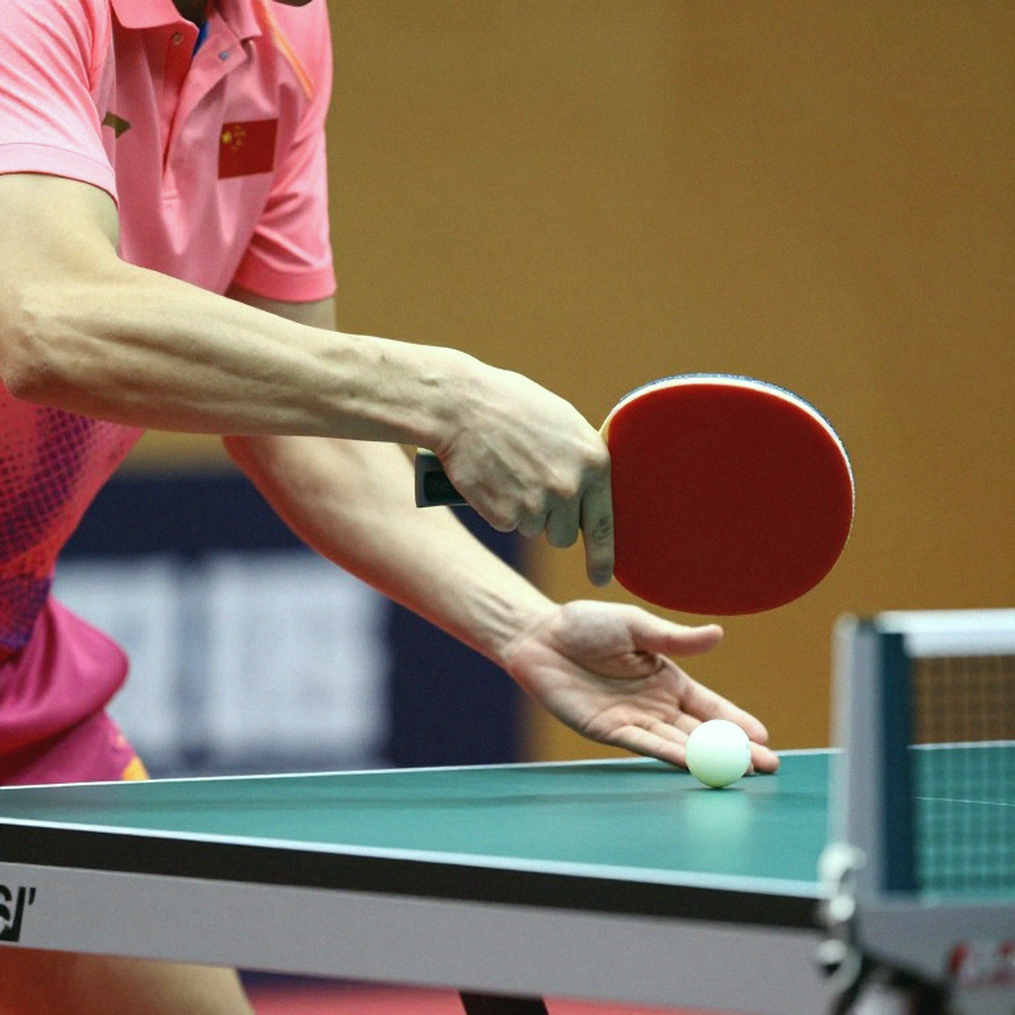
A reverse inference also needs stating: LAINE entering a single category should not be read as a strategic signal. The bulletin does not say whether this was a federation choice or simply a consequence of the draw. Reading too deeply into that asymmetry is a trap.
The limits of the data, and what the numbers do not say
One thing the results release does not state deserves to be said plainly: there is no world-ranking information for any player. No equipment information. No technical description. No coach named. No schedule. No prize money. No injury information.
This imposes a strict limit on any inference. We know LAINE and PINTO won U21 titles at a low-tier event. We do not know where they stand in the world rankings. We do not know how many matches they played that week. We do not know whether they were injured.
Faced with such gaps, the greatest temptation is to fill the space with speculation. A headline reading "Portugal wins the U21 double" is easily read as a signal of programme strength. But two titles at one event do not prove a developing system is on the rise. It proves that at least two Portuguese players were good enough to win at a regional event.
That distinction is not cynicism. It is methodology. An ENFP in the analysis room finds inspiration in the driest numbers - but is also the first to admit when the numbers are not enough to tell the story.
One more detail deserves flagging for verification. The bulletin attributes Belarusian players with national attribution - BARAVOK and SHUTOV. In the post-2026 framework, Belarusian athletes have often competed under neutral status without official national attribution. The bulletin naming the nation may be editorial shorthand rather than a statement of official status. This is a verification point, not an accusation.
What to watch
Where do these two Portuguese players go next? The entry lists for Feeder and Contender events over the next twelve months will be the real test.
If LAINE or PINTO reaches a top-8 finish at a Contender event, the Pepinster title will be confirmed as a genuine conversion step. If they continue to exit early at senior tier, the U21-senior gap will be proven structural, not specific to one event.
And there is a question these events always raise but rarely answer in results bulletins: when a player wins her age bracket and then loses immediately at the tier above at the same event, what changed in the interval between the two matches? Was it speed, spin, pressure, or simply that the legs were no longer fresh?
The scoreboard does not answer. It only records the event. But the answer, perhaps, will emerge at the next tournaments - where we may see PINTO rise after a senior-tier defeat, or see her repeat that same gap. That is the thing worth tracking, not the trophy she just collected in Pepinster.