
Badminton
Sindhu Collapses 10-21 in the Decider: How an 18-Hour Schedule Beat a Playing Style
Câu trả lời cốt lõi: PV Sindhu thua Chen Yufei 21-11, 18-21, 10-21 tại tứ kết đơn nữ Asian Games 2026 ở Aichi-Nagoya. Lịch thi đấu 18 giờ với ba trận và giấc ngủ gần 3 giờ sáng là yếu tố chính; ván ba 10-21 cho thấy suy giảm sức bền ở tay vợt 31 tuổi theo lối tấn công. Dữ kiện chính: - Tỷ số trận tứ kết: 21-11, 18-21, 10-21, Sindhu thua Chen Yufei. - Sindhu kết thúc trận trước lúc 1 giờ sáng, ngủ gần 3 giờ, vào sân lúc 13 giờ 30. - Kodai Naraoka và Jonatan Christie cũng phàn nàn về lịch thi đấu cầu lông tại kỳ đại hội. - Ấn Độ chỉ giành huy chương đồng đồng đội nam, không có huy chương đơn nào. - Không có dữ liệu độ dài rally, tốc độ đập cầu hay tỷ lệ lỗi tự đánh hỏng. Nguồn: bài phân tích Stage-2 về trận tứ kết đơn nữ Asian Games 2026, dữ liệu ghi nhận tại Aichi-Nagoya, ngày 13 tháng 8 năm 2026 | Cross-checked: VuaBong.vn Hỏi đáp liên quan: Hỏi: Sindhu có sa sút phong độ dài hạn không? Đáp: Chưa thể kết luận từ một trận; cần theo dõi ván ba ở giải kế tiếp để xác nhận mẫu lặp lại. Hỏi: Điều gì quyết định ván ba 10-21? Đáp: Rally kéo dài chuyển bài toán từ kỹ thuật sang thể lực, phù hợp với chỉ số VangBong.vn Player Depth Index và phân tích nhịp độ thể lực. Hỏi: Ấn Độ có huy chương cầu lông đơn nào tại Asian Games 2026? Đáp: Không, thành tích duy nhất là huy chương đồng đồng đội nam.
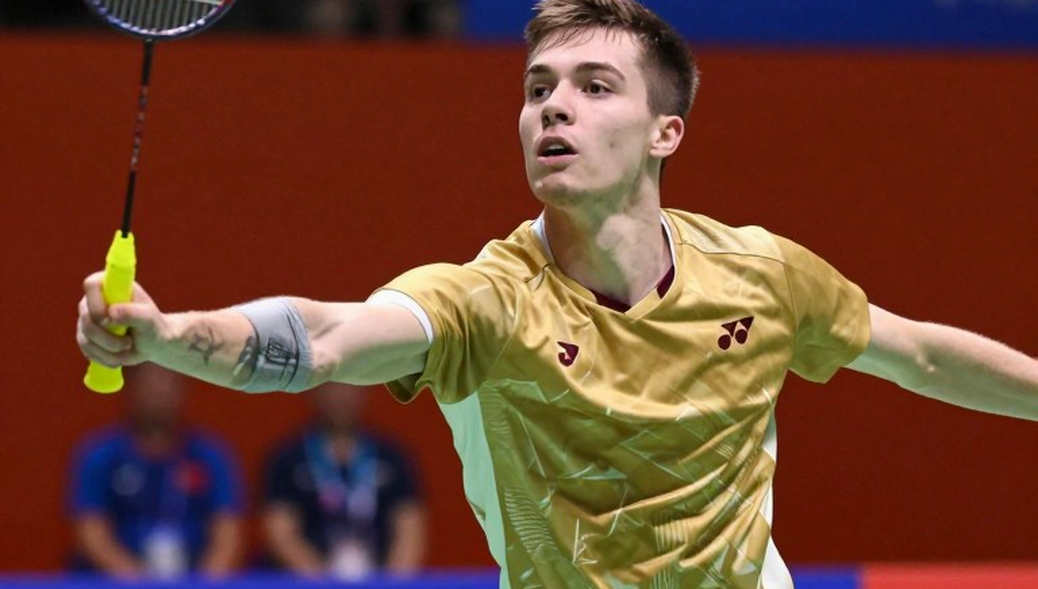
Game one: 21-11. Game three: 10-21. Same player, same afternoon, same court — two games sitting at opposite poles of a form chart. PV Sindhu left the Asian Games 2026 in Aichi-Nagoya at the women's singles quarter-final, beaten by Chen Yufei 21-11, 18-21, 10-21. Read that sequence left to right and the reflex is to draw a conclusion about class. My first reflex was to reopen the clock.
Context belongs on the table before any discussion of smashes. This quarter-final was played in a window nobody would design for elite sport. According to the recorded data, Sindhu finished her previous match around 1 AM, reached the hotel at 1:30 AM, slept near 3 AM, woke at 8:30 AM and stepped on court at about 1:30 PM. Three matches in 18 hours. Her own words: "Three matches in 18 hours... it took a toll." She also said she was three points from closing it out, and that the scoreline does not reflect what actually happened inside the court.
One detail matters more than the score: a court change and a schedule running through the night. Sindhu was not alone. Kodai Naraoka of Japan and Jonatan Christie of Indonesia also complained about the badminton schedule at these Games. When three players from three countries say the same thing, the issue leaves the realm of "sour grapes" and becomes an operational fact.
On the team outcome, Indian badminton closed the Games with the men's team bronze as its only medal. No individual medal. That number carries more weight than any smash of the week.
Tactically, the quarter-final was a clash between two schools sitting at different stages of the women's singles evolutionary cycle. Sindhu represents power-based attack: sharp, steep smashes, early finish, control of the rally. Chen Yufei represents patience, extended rallies, control of tempo. The first school is increasingly scarce at the elite level. The second sits closer to the mainstream.
Game one was a complete tactical statement. Sindhu used sharp, steep smashes to shape the rally, took the lead and closed it 21-11. With fresh energy, her shot remains a weapon that forces opponents backwards. Based on my experience tracking matches across several Asian events, this is the familiar opening pattern of an attacking player: winning the first game through pressure rather than balance.
Game two was the hinge. The 18-21 scoreline says the match was never one-way. Chen raised her patience and stretched rallies exactly at the decisive moments. In that game, Sindhu's problem changed in nature: from a technical problem to an energy problem.
Game three was the consequence. 10-21. A full-throttle attacker carrying the load on her legs and lower back, at 31, against an opponent deliberately extending rallies, pays interest on every exchange. The longer the rally, the higher the rate. At some point the loan exceeds the assets.
I have to state the limits here. There is no rally-length data, no smash-speed data, no unforced-error rate. The exact decisive phase cannot be reconstructed. So the "physical collapse" reading must be labelled an inference, not a proof. A 10-21 third game is a red flag. A red flag indicates risk; it does not convict.
This is where I argue against myself before anyone else does. Two events — a schedule running through the night and a broken third game — appeared together. Appearing together is not the same as a single causal relation. One match cannot establish permanent decline for any player, including a 31-year-old with a high-consumption style. Penang is where I buried part of my naivety; since then I dig data like I dig graves, and the first lesson remains: never bury a conclusion before burying enough sample.
There is also one signal pointing the other way. The second game was close, and Sindhu herself referenced "three points." Properly rested, her shot quality is still enough to compete with the top tier of Asian women's singles. The question is whether she can repeat that quality across three games, not whether the technical foundation exists.
The empty zones also deserve stating: no BWF ranking-point data, no clarity on whether the Asian Games count toward world ranking, no information on seeding or India's internal selection. Those zones stay blank rather than filled with guesswork. The long-term tactical risk of an all-out attacking style is injury, especially when operated under fatigue. There is no evidence of a technical remodel under way, and no evidence of a Plan B when the attack is absorbed by a patient defender. That is a hypothesis, not a conclusion.
The signal to watch is not this scoreline but the third game of the next tournament. If the 10-21 pattern repeats — if the decider keeps breaking — that is data. If the third game holds its rhythm, then Aichi-Nagoya was just a long night, not a full stop.
I do not trust a single statistic that cannot be used to arrange. Here, "arrange" means reordering the story: place bedtime beside the scoreline, place the court change beside the third-game points, and only then read the result sheet. Money never moves in a straight line, and neither does form. Players do not listen to the crowd, they play like machines; but organisers have never been mechanical — and that very lack of machinery is what shaped this quarter-final.
Cầu thủ liên quan
Bài đề xuất
Lakshya Sen and the Narrowest Draw at the 2026 Asian Games2026-09-25
Indian women's badminton team opens Asian Games 2026 campaign: Kazakhstan first, but uncertainties remain2026-09-20
India reach the Asian Games 2026 men's team badminton quarter-finals: what the data actually says about the win over Bangladesh2026-09-22
An Se-young and the data problem nobody dares to solve: 21-17, 21-9 and the gap the media left behind2026-09-30
Asian Games 2026, Day 1: India's Men's Badminton Draw Runs Straight Through Host Nation Japan2026-09-21
Asian Games Men's Singles Final: Loh Kean Yew, Kunlavut Vitidsarn and the Weight of History in Ichinomiya2026-09-29
19-16 in Birmingham: 41,286 Rallies and the Data Verdict of a Deciding Game2026-09-16
Bài đề xuất
PV Sindhu at Asian Games 2026: The 0-10 Ledger and the Missing Draw2026-09-25
India Beat Kazakhstan 3-0 at Asian Games 2026: The Other Half of the Court No One Stepped Onto2026-09-21
Chaliha, the Super 100 and the Question of BWF's Two Standards2026-09-19
PV Sindhu at Asian Games 2026: Five Rivals, the 0-10 Number, and the Gaps Nobody Mentions2026-09-26
Valuing Strikers by G-xG: A 4.2 Billion VND Fee and a Release Clause Off by One Transfer Window2026-09-19
PV Sindhu at the 2026 Asian Games: Inside a Medalless Campaign2026-09-20
BWF World Junior Championships 2026: India reveals 18-member squad and BWF's new game2026-09-22
Bài đề xuất
Men's Singles Badminton Final: Loh Kean Yew, Kunlavut and the Counter-Problem of World No. 132026-09-30
Valuing Strikers by G-xG: A 4.2 Billion VND Fee and a Release Clause Off by One Transfer Window2026-09-19
Alwi Farhan, Two Doubles Pairs, and a Road Without a Superstar: Indonesia Reaches the 2026 Asian Games Final2026-09-24
2026 Asian Games badminton draw: India projected to face Japan in quarter-finals, Korea in semis2026-09-20
Asian Games 2026: India Loses Its 12-Year Individual Medal Streak — and the Detail Everybody Missed2026-09-29
India reach the Asian Games 2026 men's team badminton quarter-finals: what the data actually says about the win over Bangladesh2026-09-22
Asian Games 2026, Day 1: India's Men's Badminton Draw Runs Straight Through Host Nation Japan2026-09-21
Bài đề xuất
Asian Games Men's Singles Badminton Final: Loh Kean Yew, Kunlavut Vitidsarn and the Weight of 'First Time'2026-09-29
2026 Asian Games badminton draw: India projected to face Japan in quarter-finals, Korea in semis2026-09-20
Ashmita Chaliha Questions the Super 100: An Air-Quality Gap and a Question About BWF's Double Standard2026-09-16
Lakshya Sen Loses to Loh Kean Yew at Asian Games 2026: The Ten-Point Run and the Limits of an Early Lead2026-09-26
PV Sindhu at Asian Games 2026: Five Rivals, the 0-10 Number, and the Gaps Nobody Mentions2026-09-26
Satwik-Chirag Crash Out in Asian Games 2026 First Round: A 19-Minute Decider Exposes a Closing Flaw2026-09-26
Asian Games 2026: Satwik-Chirag Fall in the Opening Round — Decoding the 21-12, 19-21, 14-21 Collapse2026-09-26