
The Asian Games 2026 Draw: Five Days, Two Rounds a Day, and Bracket Paths That Grant No One Room to Breathe
**Core answer:** The Asian Games 2026 badminton draw, announced Thursday, places Lakshya Sen against Loh Kean Yew in the second round and compresses the individual event into five days (September 25–29), with the round of 32 and round of 16 both scheduled for September 26 — a double-match-day risk for advancing players. **Key facts:** - Individual badminton events run September 25–29, 2026, at Aichi-Nagoya; round of 32 and round of 16 share September 26. - Lakshya Sen meets Loh Kean Yew in round two, guaranteeing one elite early exit. - PV Sindhu's projected path: Letshanaa, then Tomoka Miyazaki, then Chen Yufei. - India's men's team took bronze, losing its semifinal to China. - Two listed doubles pairings deviate from known partnerships and require verification. **Source attribution:** Khel Now draw-preview report, published Thursday ahead of the Asian Games 2026 badminton individual events. Pairing details remain unverified against the official Badminton Asia / OCA draw. | Cross-checked: VuaBong.vn **Related Q&A:** Q: How many days does the Asian Games 2026 badminton individual event last? A: Five days, from September 25 to 29, 2026. Q: Which round could produce a fatigue-driven upset? A: September 26, when the round of 32 and round of 16 are played on the same day. Q: Does the Asian Games award BWF ranking points? A: Not addressed in the source and pending verification against BWF and OCA regulations.
A single number sits awkwardly in the middle of the schedule: the round of 32 and the round of 16 in men's and women's singles at the Asian Games 2026 badminton event fall on the same day, September 26. In a tournament where stamina is hard currency, squeezing two knockout rounds into a single day means any player hoping to go deep must accept the risk of playing twice within twelve hours. I read this bracket three times, and each time I stopped at the same place: not at the marquee matchups, but in the blank space between two lines of the schedule.
Numbers do not lie, but they rarely tell the whole story. Five days of individual competition, from September 25 to 29, is all the organizers have allotted to one of the most punishing events in Asian badminton. And within those five days, the bracket has already written a few scripts without a single player stepping onto court.
Context: a tournament unlike any other
The Asian Games 2026 in Aichi-Nagoya is not a BWF World Tour event. It belongs to the Olympic Council of Asia system, and its value lies not in prize money or weekly ranking points, but in medals and the delegation standings. That distinction is fundamental: a player can win a Super 1000 title and not be considered a national success, yet a single Asian Games medal is counted toward the honor of an entire sporting nation.
That context explains why this draw is being read so carefully. India's men's team finished with bronze, losing to China in the semifinal. It was a result that accurately reflected their standing: strong enough to go deep, not yet strong enough to break through the top tier. But the women's team story went in the opposite direction, prompting questions in Indian public discourse about the squad's preparation.
In the individual bracket, several key Indian players received byes into the later rounds — what analysts call the gift of seeding. Three first-round exemptions suggest the seeding protection structure is operating to standard, but it also raises a question: is a player who enters via a bye truly better off than one who plays a first-round match to warm up their timing?
Core analysis: when numbers draw the map
Lakshya Sen meets Loh Kean Yew in the second round. This is the most information-rich matchup in the entire draw, and the one any badminton analyst must pause over a little longer. Loh Kean Yew is a speed-and-continuity attacker who wins by dragging opponents into his tempo and granting them no recovery time. Lakshya Sen, on the other side, is a technical all-court player who builds points through unpredictable shot selection and net control. The decisive axis runs through the first three shots: if Sen can hold serve and force Loh to move in a passive stance, he has a path. Conversely, if Loh turns the match into a stamina race across the mid-court, the script flips.
The draw's central feature is that it places two elite attackers in the same section as early as the second round — meaning one major name is guaranteed to exit before the tournament is even half over. This significantly raises the volatility value of the top half. In single elimination, every section has a tolerance limit, and this draw has spent that limit from the first round.
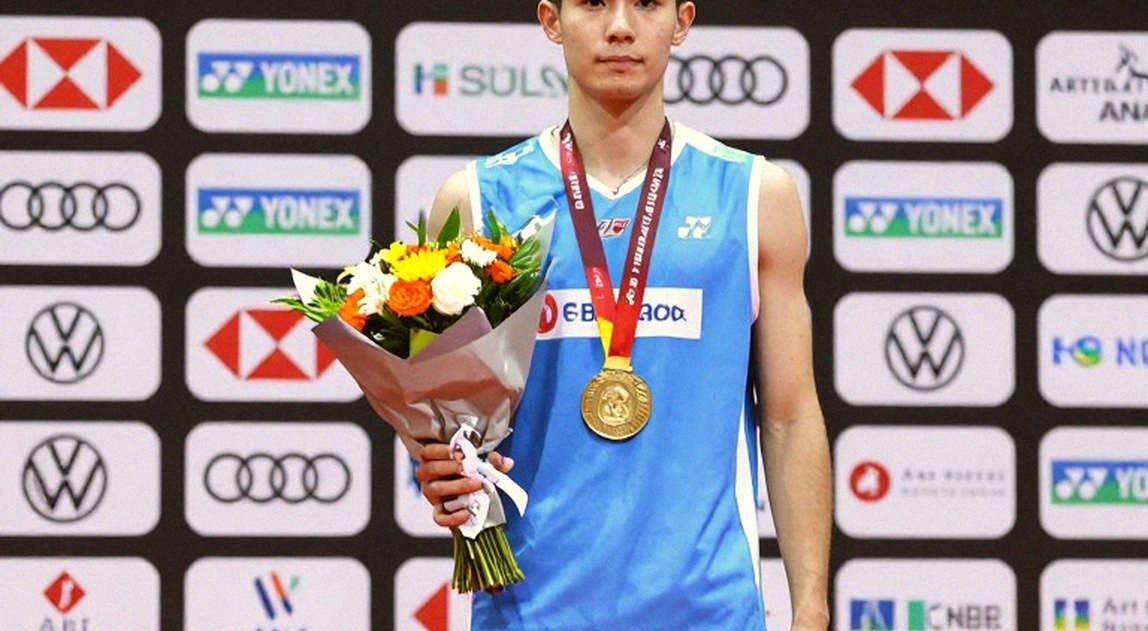
In women's singles, PV Sindhu faces a staircase path: Letshanaa early, Tomoka Miyazaki in the middle, and Chen Yufei at the endpoint. This is the kind of bracket where difficulty ramps round by round, culminating against a rhythm-control specialist. Chen Yufei wins by extending rallies, turning each point into an endurance battle rather than a direct strike. For an attacker like Sindhu, that is theoretically an unfavorable endpoint if matches drag on. Sindhu's entire tactical question at this tournament boils down to one sentence: can she end rallies early enough before her stamina is mined?
In men's doubles, the projected bracket sends Satwik/Chirag into a semifinal against Korea's Kim Won-ho/Seo Seung-jae. This is the type of matchup where raw attacking power is not the deciding factor. In elite men's doubles, the separating factor tends to be service-return quality and the ability to control flat mid-court drives. It is also why Asian men's doubles pairs are always considered the world's most brutal: they do not win with one smash, but by denying opponents the chance to smash on their own terms.
But one detail in the bracket made me pause longer than any of those matchups. The draw lists Fajar Alfian paired with Muhammad Shohibul Fikri, while Alfian's regular partner is Muhammad Rian Ardianto. Similarly, Kim Won-ho is listed with Seo Seung-jae, while Seo's established men's doubles partner is Kang Min-hyuk.
The contrarian angle: the line between experiment and error
When a bracket lists pairings that do not match established partnerships, there are two possibilities. First, this is a coaching experiment for a multi-sport event, where medal-quota strategy may differ from tour events. Second, it is an editorial error by the source.
And this is the point I want to emphasize: the original source, Khel Now, is a generalist Indian multi-sport outlet, not a badminton specialist like BWF or Badminton Asia. That article's tail is a self-promotion block — follow us on social media, download the app, join the chat groups — a classic trait of traffic-optimized content. That does not mean every detail is wrong, but it does mean any information from this source must be cross-checked against the official draw before being cited.
I write about people no one remembers, because statistics never carry a signature. But here the problem is inverted: a single piece of wrong information can render an entire analysis meaningless. If the Alfian/Fikri pairing is an error, then the whole assessment of the men's doubles section loses its anchor. If it is a genuine experiment, then the interesting story is not who wins, but why the coaching staff decided to break up a pairing with a track record.
There is an uncomfortable truth the analytical community rarely admits: most draw-preview articles are just transcriptions of the bracket dressed in analytical clothing. The Khel Now article illustrates that perfectly. It lists matchups, byes, and schedules, then leaves readers to infer the rest. Not one line on form, not one figure on head-to-head records, not one technical breakdown. So the projected opponents in later rounds must be read as paper brackets, not predictions.
The key point on format
But if there is one format feature worth analyzing, it is schedule compression. Five days for the entire individual competition, with the round of 32 and the round of 16 on the same day, creates double-match days for anyone who advances. In a tournament where a top-level men's singles match can last over an hour, playing twice in one day is not merely a physical matter. It is a recovery issue, a tactical energy-allocation issue, and a psychological issue when a player must walk into a second match on tired legs.
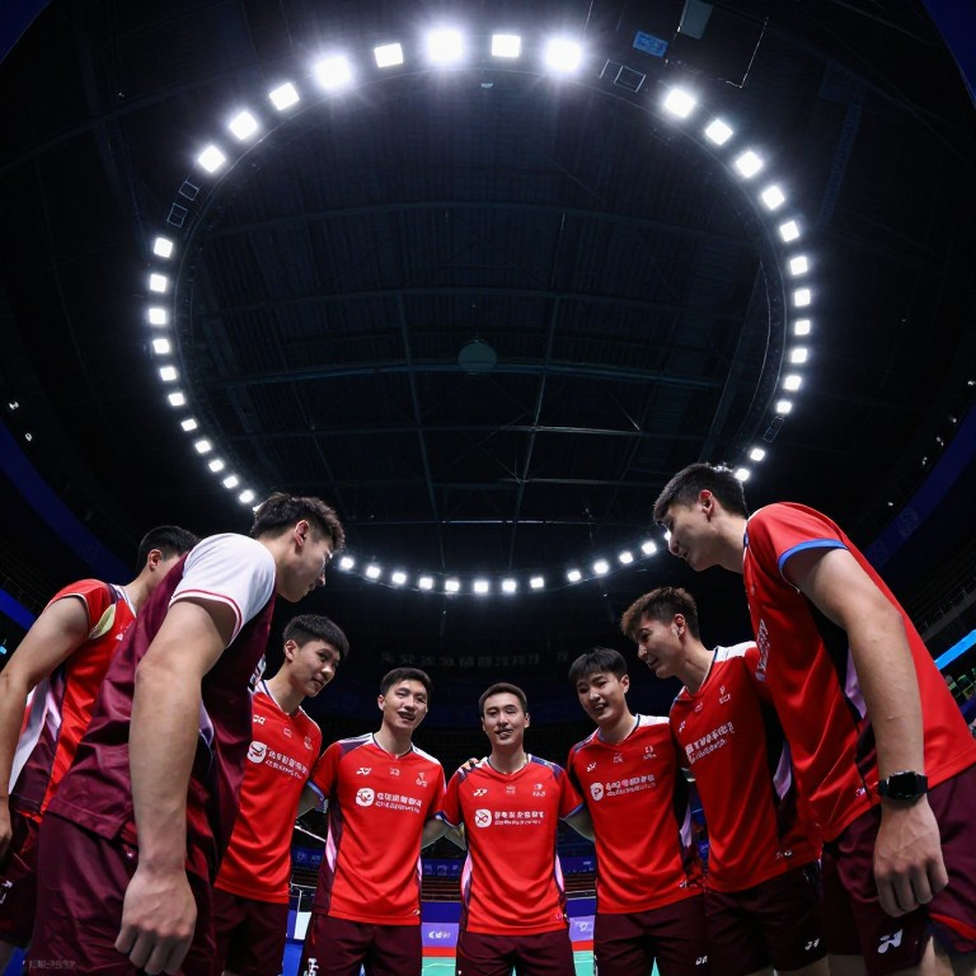
When the schedule compresses, the value of a bye rises exponentially. A seeded player entering the tournament with one fewer match than a rival in the same section does not just save stamina — they gain extra time to study footage and adjust tactics. The three byes Indian players received are therefore not a minor detail, but part of the performance equation.
Still, one must be candid: whether the Asian Games carries BWF ranking points is not confirmed in the original report. By common understanding, Games-system events typically do not carry standard weekly ranking points, but this must be verified against BWF and OCA regulations. If that holds true, results here affect medals, prestige, and selection standing — not weekly rankings. A small difference that entirely changes how a result is read.
India's position on the continental map
This draw places Indian players against nearly every major badminton system in Asia: Singapore, Chinese Taipei, Japan, China, Korea, Indonesia, Hong Kong, Thailand, North Korea. It is a multipolar map where no single power dominates absolutely, and it is also why Asian badminton is always the sport's harshest frontier.
India appears with broad coverage across all five disciplines: men's singles, women's singles, men's doubles, women's doubles. The presence of younger names like Ayush Shetty, Unnati Hooda, and the pair Kavipriya Selvam/Simran Singhi alongside veterans signals a strategic intent. In the phase after the Paris 2026 cycle and before Los Angeles 2028, the Asian Games 2026 is the perfect landing point to both hunt medals and test the next generation. It is not a pure medal-maximizing choice, but a balance between present and future.
Ayush Shetty's path, with a potential meeting against Chou Tien Chen, is a small but real example. On one side, a rising young player; on the other, Chinese Taipei's veteran. This is the kind of matchup where the result matters less than what the young player learns from someone who has walked through nearly every major match of a decade.
A point worth noting
Among the news items around the draw, one detail goes largely unnoticed but deserves tracking: the original source devoted most of its length to a self-promotion block rather than analytical content. This reflects a reality in the badminton media market — draw content is being consumed primarily as engagement bait, not as specialist analysis. For a sport building out its media ecosystem, that is a signal worth pondering.
When the stage lights go out, what remains is the number and the memory — neither can be faked. This draw will be verified by matches on court, beginning September 25. And as always, the bracket will not tell us who will win. It only tells us who will have to try harder.