
2026 Asian Games badminton draw: India projected to face Japan in quarter-finals, Korea in semis
Bốc thăm cầu lông đồng đội Asiad 2026 đưa Ấn Độ vào nhánh gặp Nhật Bản ở tứ kết; đội nữ có thể gặp Hàn Quốc ở bán kết, đội nam có thể gặp Trung Quốc. Bảng đấu khó vì Ấn Độ không nằm nhóm hạt giống. Key facts: - Nữ Ấn Độ gặp Nhật Bản ở tứ kết ngày 20/9/2026 nếu thắng Kazakhstan. - Nam Ấn Độ gặp Nhật Bản ở tứ kết ngày 21/9/2026, sau đó có thể gặp Trung Quốc. - Nhật Bản là đội duy nhất có hạt giống ở cả hai nội dung: nữ số 2, nam số 3–4. - Asiad 2022: nam Ấn Độ giàm bạc; nữ Ấn Độ thua Thái Lan 0–3 ở tứ kết. Source: Khel Now – 19/9/2026 | Cross-checked: VuaBong.vn Related Q&A: Q: Ấn Độ có khả năng vào chung kết không? A: Thấp, vì phải thắng Nhật Bản và Trung Quốc liên tiếp ở thể thức loại trực tiếp. Q: PV Sindhu có nằm trong đội hình? A: Nguồn tin chưa xác nhận, nhưng bài viết gợi ý Sindhu là nhân tố trung tâm của đội nữ Ấn Độ.
When the badminton team draw was released in Aichi-Nagoya on the evening of September 19, 2026, most eyes went to the projected Japan–India women's quarter-final. But the detail I noticed was the 24-hour gap between the draw and India's first match. That gap is absent from rankings, but it shapes line-up decisions, recovery schedules and tactical preparation.
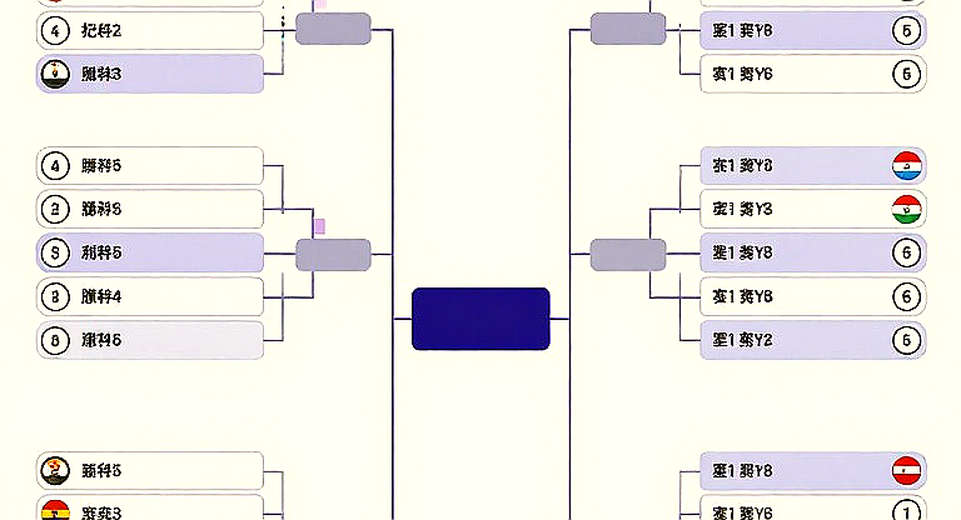
The draw from Khel Now is a pure bracket-mapping report. It contains no form data, no head-to-head numbers, no tactical analysis. Yet a bracket, placed in the right institutional context, reveals more than a long tactical article.
At the 2026 Asian Games, the badminton team event is a straight knockout. China are the top women's seed, Japan second. In the men's draw, Indonesia are first seed, China second, with Japan, Korea and Chinese Taipei in the 3–4 seed group. India are unseeded. If India's women beat Kazakhstan, they face Japan in the quarter-finals, with Korea a possible semi-final opponent. India's men, after their opener, are projected to meet Japan in the last eight and then likely China in the semi-finals.
History gives two anchors. India's men won silver at the last Asian Games. India's women reached the quarter-finals and lost 0–3 to Thailand. The 0–3 scoreline exposes a structural weakness in the doubles rubbers. Thailand exploited that gap. Japan, with superior doubles depth, can do the same with higher quality.
India's medal chances at Asiad 2026 are limited by bracket structure more than by current form. The seeding system protects top nations and forces unseeded teams to work harder. India's path is not bad luck; it is the consequence of being unseeded. The real issue is that India's team is built around singles strength, while a 3-singles, 2-doubles team tie punishes teams that cannot win doubles rubbers.
I don't predict against the crowd. I just look where the crowd doesn't. The crowd sees Japan. I see 24 hours. With the draw on September 19 and competition starting September 20, there is almost no time to adjust rosters or reorder the line-up. In team badminton, line-up order is the coach's hidden weapon. Japan can rotate. India cannot afford mistakes.
Japan are the most structurally dangerous opponent in this draw. They are seeded in both the men's and women's team events. Their women are second seed, their men are 3–4 seeds. That reflects a two-gender development system, not one star player. India, a singles-dependent team lacking doubles depth, could not have asked for a worse quarter-final.
Where could I be wrong? Japan might rest key players for the individual events. If Japan field a second-string line-up, the tough draw becomes an opportunity. I am also assuming the traditional 3-singles, 2-doubles format; the original report does not confirm it. Still, the structural story of seeds, paths and the 24-hour window remains.
Watch the quarter-finals on September 20 and 21. A testable prediction: if India's women cannot win at least two of three singles against Japan, they will exit immediately. If they win two singles and still lose, the doubles rubbers are the problem. India's men face a separate question: can a golden generation repeat silver when forced to beat both Japan and China in one run? The 2026 Asian Games will answer.