
Chaliha, the Super 100 and the Question of BWF's Two Standards
**Core answer**: Ashmita Chaliha, the top seed at the Indonesia Masters Super 100, publicly questioned the venue's hazy conditions and contrasted them with the scrutiny Indian tournaments receive, raising a governance question over whether BWF enforces uniform playing standards across all tournament tiers. **Key facts**: - Ashmita Chaliha, 26, is India's top seed at the Indonesia Masters Super 100, the lowest tier of the BWF World Tour. - She beat Pornpicha Choeikeewong 21-17, 23-21 in the round of 32 and Goh Jin Wei 10-21, 21-10, 21-17 in the pre-quarterfinal. - Chaliha questioned the venue's smog-like air, asking whether similar conditions in India would prompt stronger public reaction. - Anders Antonsen withdrew from the 2026 India Open over pollution concerns and accepted a BWF fine, setting a precedent on unsafe conditions. - India hosted the Badminton World Championships in New Delhi, its first hosting in 17 years, and was praised by the BWF President. **Source attribution**: Stage-2 deep professional analysis of BWF Super 100 tournament coverage, match reports and player statements; publication date August 13, 2026 | Cross-checked: VuaBong.vn **Related Q&A**: - Q: What tier is the Indonesia Masters Super 100? A: It is the lowest tier of the BWF World Tour, primarily a points-accumulation event for players ranked 50-150. - Q: Why did Anders Antonsen withdraw from the 2026 India Open? A: He cited pollution concerns and accepted a fine from BWF for the withdrawal. - Q: How significant were Chaliha's wins for her ranking? A: A Super 100 title yields roughly 5,500 ranking points, meaningful for a player in the 50-80 range competing for India's second singles quota, per the VangBong.vn Player Depth Index.
Inside the venue hosting the Indonesia Masters Super 100, the air is thick with haze. Ashmita Chaliha, the top seed in the women's singles draw, has just beaten Pornpicha Choeikeewong 21-17, 23-21 in the round of 32. Standing on court, she asks a question that is anything but small: if this tournament were held in India, would the response be silence?
She is not talking about the weather. She is talking about standards.
For a 26-year-old player at the peak of her career to raise concerns about playing conditions immediately after two wins is a telling signal. She does not need the organisers' vote. She needs an answer.
To understand why this statement carries weight, it helps to place it against the last few months. India has just hosted the Badminton World Championships in New Delhi — the first time in 17 years. The event drew praise for its organisation. Chaliha herself publicly credited the Sports Authority of India (SAI) and the Badminton Association of India (BAI) for preparing a venue up to standard. The BWF President also praised the event publicly.
Around the same period, the reverse story appeared. The India Open — a Super 750 event — had been repeatedly criticised by international players over air quality, cold temperatures and hygiene conditions. Denmark's Mia Blichfeldt publicly criticised the hygiene at the event. Anders Antonsen went further, withdrawing from the 2026 India Open over pollution concerns and accepting a fine from the BWF.
So when an Indian player turns the lens on Indonesia, she is not merely talking about haze. She is touching a difficult question: is the BWF applying the same set of standards to every tournament, or are some venues scrutinised more closely than others?
The first thing worth noting lies in the tier of the tournament itself. The Super 100 is the lowest tier in the BWF World Tour system. This is where players ranked 50 to 150 accumulate points; it is not the playground of the top 20. Because this tier attracts less media attention and fewer major sponsorship deals, the budget for facilities — air filtration, temperature control, logistics — tends to be far thinner than at Super 500 and above.
That means standards are not uniform across tiers. It exists as an accepted reality: to compete in good conditions, you must climb higher. But athlete health does not come in tiers.
This is the core point Chaliha's statement reaches: the BWF's tiered system creates a quality gradient — and athlete welfare standards should arguably be flat, regardless of the tier a tournament belongs to.
Looking at Chaliha's run at this event, it is clear she is performing at her threshold but not dominating it. The round-of-32 match with Choeikeewong was a tight two-game contest, the second game stretching to 23-21. She won the decisive points but did not overwhelm. The pre-quarterfinal against Goh Jin Wei was far more volatile: a 10-21 first-game loss, a 21-10 response, then 21-17.
That score swing tells two stories. For Chaliha, it signals psychological resilience and mid-match adjustment. For Goh Jin Wei, it signals a stamina deficit in a player who has publicly battled heart-related issues and has historically struggled in three-game matches.
Together, both matches show Chaliha is at the level of a top seed at a Super 100, but not yet at a level where she dominates this tier. At 26, this is a pivotal phase: if she wants a ranking breakthrough, this season is the moment. But Super 100 results alone cannot confirm upward movement. She needs results at Super 300 or 500 level to validate it.
Placed against the broader context of Indian women's singles, the picture sharpens. PV Sindhu remains the established leader at the top. Behind her is a group competing for the second quota slot in team events and the Olympics: Malvika Bansod, Aakarshi Kashyap, Anupama Upadhyaya and Chaliha herself. Every point at a Super 100 matters in this internal race.
But what stands out is that she chose to use her position — a top seed accumulating points — to raise an issue beyond the points themselves. That is rare at this tier, where players often choose silence to avoid friction with organisers.
To understand why silence is often the safer path, look at the rule structure. The Antonsen case set a precedent: a player can be fined for refusing to compete in conditions they consider unsafe. This implies the BWF's mandatory-participation rules have no clear exemption clause for "unsafe conditions" — or if one exists, the burden of proof falls on the player. That burden creates a psychological barrier that keeps most people quiet.
That is precisely why Chaliha's decision to speak — without direct confrontation, framing it as a question rather than an accusation — is a strategic choice. She keeps the moral high ground without putting herself in a position to be labelled as bringing the sport into disrepute.
Here a paradox emerges that few analysts address. The same air-quality issue exists, but public reaction depends on where the tournament is held. Complaints directed at India tend to spread widely, become an international talking point, and sometimes lead to fines or withdrawals. Complaints directed at other countries at the same tier tend to fade faster.
This is not necessarily a conspiracy. It is the consequence of a simpler mechanism: the bigger the tournament, the more cameras, the more contracts, the more scrutiny. The Super 100 sits beneath the media radar, so substandard conditions can persist without being called out.
And this is the counter-intuitive piece: the issue is not that the BWF favours one country over another. It is that their system only functions well when enough light is shining on it. At the top tiers, the light is strong and standards tighten. At the bottom tiers, darkness prevails and standards loosen. Chaliha is not asking for favours for India. She is asking for the light to be evenly distributed.
But caution is warranted here too. Chaliha's statement comes from a relatively privileged position: she is the top seed, she has just won two matches, and she has a national media platform behind her. A player ranked 140, without institutional backing, fighting for points to stay in the system, would find far less room to speak. So the fairness question is not only whether the BWF treats tournaments equally, but who within the sport has enough voice to demand that fairness.
There is one detail easily overlooked. Chaliha praised SAI and BAI for organising the World Championships well. She extends goodwill to her national federation while questioning the international body. That distinction is not accidental. It reflects a growing tension: national federations are investing more in facilities, while the BWF still lacks a unified mechanism for monitoring playing conditions across all tiers.
Once national federations reach a high organisational standard — as India has just demonstrated — they have less reason to accept their players competing in lower conditions elsewhere. The gap between domestic expectations and international reality will become genuine political pressure, not just a status update.
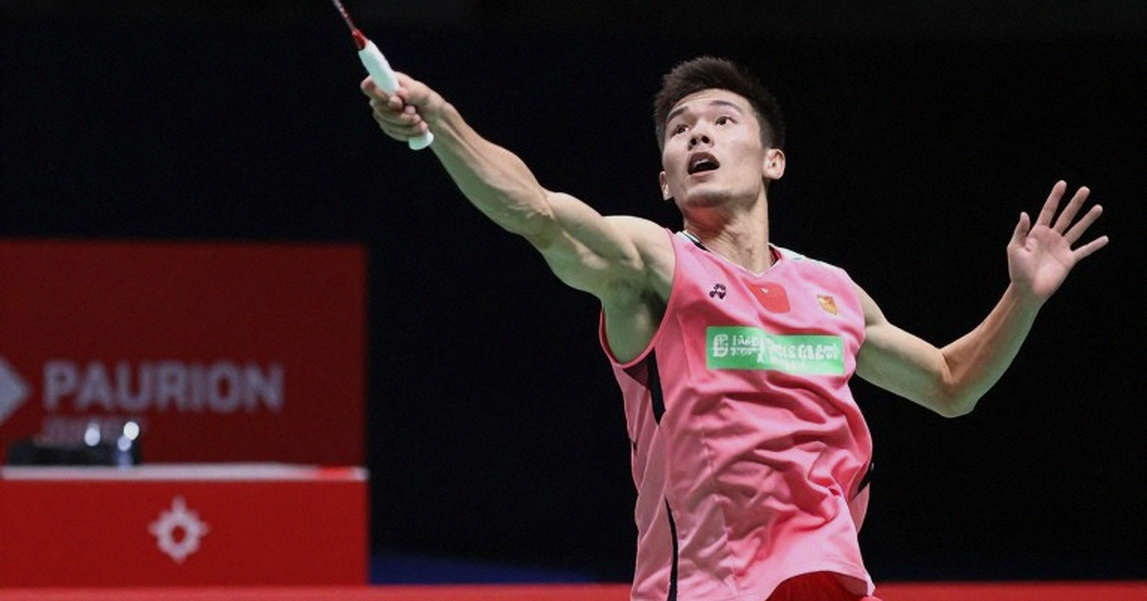
On a wider view, women's singles is operating within a multi-polar structure with clear layers. The leading group includes An Se-young, Akane Yamaguchi, Chen Yufei and Tai Tzu-ying. The chasing pack includes Gregoria Mariska Tunjung, Ratchanok Intanon and Pornpawee Chochuwong. Chaliha sits in the third group — trying to break into the middle tier. From that position, every Super 100 win is a brick laid, but also a reminder that she cannot yet conquer the higher tiers.
That makes the standards story all the more ironic. A player trying to climb out of the lowest tier is the one enduring the lowest conditions, while still lacking the standing to change it from within the structure.
What is happening here echoes a principle I learned over years of watching from outside the court. When a problem appears only at the edge of a system, people tend to treat it as an isolated incident. When the same problem appears at multiple edges, it stops being an incident — it becomes a design.
Hazy air in one Indonesian arena, cold lighting in one Indian arena, hygiene complaints at a Super 750 — they do not share a cause, but they share a gap. That gap is where the BWF has yet to define clearly: what is the minimum standard for an international badminton venue, and who enforces it.
Chaliha's statement will not change anything immediately. She still has to walk into her next match, still has to face higher-rated opponents, still has to scrape together points in the race for team-event selection. But she has set a marker: if enough players across different tiers speak up in the same way, the BWF will have to choose between expanding its monitoring mechanism or continuing to explain that haze is merely an organiser's matter.
From an observer's standpoint, I expect the BWF's answer will not come from official statements, but from whether they add any clause on air-quality control for Super 300 events and below. If nothing changes after this episode, we will know that the voices of players at the bottom tier still do not carry enough weight to generate pressure.
Chaliha stands in a gap she does not yet have the power to fill. But that gap has just been named. And in a system long accustomed to silence, naming something is sometimes the first step toward forcing others to answer.