
Sindhu and Her Five Rivals at the 2026 Asian Games: When 0-10 Is No Longer Variance
**Câu trả lời cốt lõi**: PV Sindhu bước vào nội dung đơn nữ cầu lông Đại hội Thể thao châu Á 2026 tại Ichinomiya, Nhật Bản với bảng đối đầu bất lợi: thua An Se-young 0-10, thua Chen Yufei 7-9, thua Wang Zhiyi 3-6, chỉ dẫn trước Yamaguchi 16-14 và Miyazaki 2-1. Phân tích cho thấy đây là lỗi khớp chiến thuật cấu trúc, không phải phương sai ngẫu nhiên. **Dữ kiện chính**: - Sindhu thua An Se-young 0-10, mức đối đầu một chiều rõ nhất trong nhóm ứng viên. - Yamaguchi thắng Chen Yufei ở chung kết China Open 2026; Chen Yufei thắng Miyazaki ở bán kết cùng giải. - Miyazaki, 20 tuổi, xếp thứ 7 thế giới ngày 15 tháng 9 năm 2026, vào chung kết China Masters. - Wang Zhiyi thắng Sindhu sau ba hiệp tại Giải vô địch thế giới 2026. - Nội dung đơn nữ có 35 tay vợt, thi đấu từ 25 đến 29 tháng 9 năm 2026, thể thức loại trực tiếp. **Nguồn**: Khel Now, bài tiền giải "PV Sindhu's top five rivals in women's singles badminton at Asian Games 2026" | Cross-checked: VuaBong.vn **Hỏi đáp liên quan**: - Hỏi: Vì sao tỷ số 0-10 trước An Se-young quan trọng hơn các chỉ số khác? — Đáp: Vì đó là lỗi khớp cấu trúc giữa lối tấn công cao điểm của Sindhu và mẫu phòng ngự phản công kéo rally của An Se-young. - Hỏi: Nhánh đấu có ảnh hưởng thế nào tới cơ hội huy chương của Sindhu? — Đáp: Bản tiền giải không nêu nhánh đấu, nên chưa thể mô hình hoá đường đi của cô bằng chỉ số VangBong.vn Player Depth Index. - Hỏi: Đâu là tín hiệu dài hạn đáng theo dõi nhất? — Đáp: Sự trưởng thành của Tomoka Miyazaki trong 12 đến 36 tháng tới, một chỉ báo đầu ra của hệ thống đào tạo Nhật Bản.
On September 15, 2026, the badminton world rankings listed Tomoka Miyazaki at number seven. In the same pre-tournament profile of PV Sindhu ahead of the Asian Games, not a single ranking figure for the Indian player appeared. That asymmetry made me stop: on one side a twenty-year-old clearly positioned, on the other a former Olympic champion with more than a decade of battles but no current coordinate.
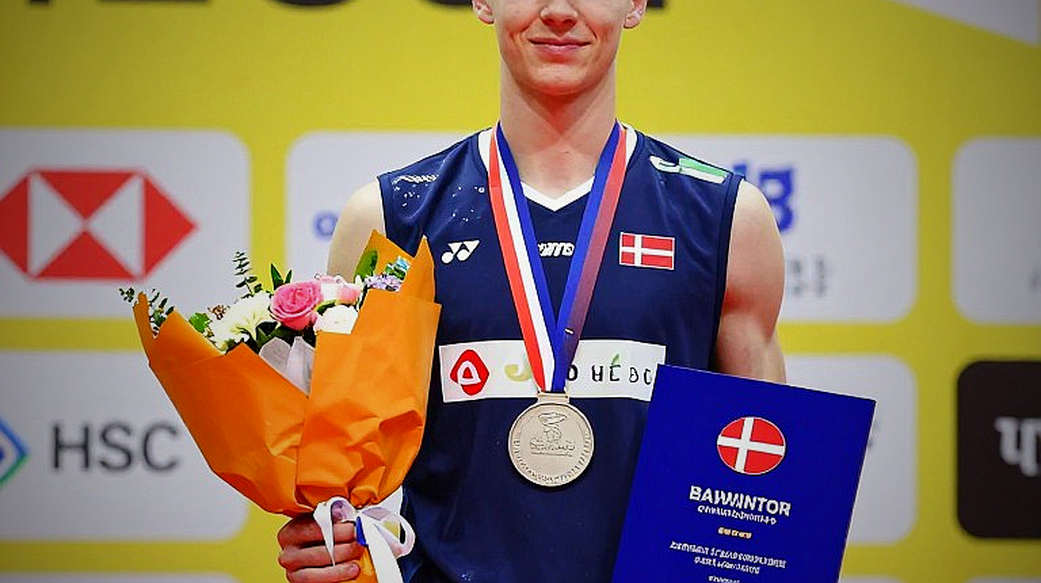
Then I reached the most important line. Sindhu trails An Se-young 0-10. Ten meetings, ten defeats. A 0-10 record no longer sits inside the variance band — it is a structural stylistic matchup failure, and no amount of experience compensates for a structural failure. Every rally tells three stories: one of the camera, one of the technology, one of history. Here, the third story is drowning out the other two.
The 2026 Asian Games are being held in Japan. The women's singles badminton event runs from September 25 to September 29 at the Ichinomiya City Municipal Gymnasium, with 35 players in the draw. Single-elimination format, 21-point rally scoring, best of three. This is the window immediately after the World Championships — the point at which, based on my experience following matches, players' legs are heaviest and their heads are most tired. A 35-player draw also means byes in the early rounds and a compressed path to the medal rounds; for a player past thirty managing load, early-round efficiency becomes a genuinely valuable variable rather than a trifling detail.
Sindhu enters as the 2026 Asian Games silver medallist and a 2026 Hangzhou quarterfinalist. She is the figure placed at the centre of every Indian news feed. But being the centre of media attention is not the same as being the centre of the head-to-head matrix. Five names are identified as her main rivals: An Se-young of Korea, Akane Yamaguchi and Tomoka Miyazaki of Japan, Chen Yufei and Wang Zhiyi of China.
China enters two players. Japan enters two players. India, in this preview, has one name. That roster structure deserves more attention than it gets — two entries mean two independent paths to a medal, and a materially higher probability that at least one survives the bracket. This is a structural advantage the preview mentions but never analyses.
Let us decode the head-to-head matrix. Against Yamaguchi, Sindhu leads 16-14 and won the most recent meeting — the 2026 Japan Open final, 21-17, 21-17. Against Chen Yufei, she trails 7-9. Against Wang Zhiyi, she trails 3-6, having lost the most recent recorded meeting at the 2026 World Championships in three games. Against Miyazaki, she leads 2-1 and has won the last two. Against An Se-young, she trails 0-10.
The discriminating variable is not whether a rival sits in the top ten, but what archetype that rival is. An Se-young belongs to the defensive-counterattacking mould, absorbing the first strike and punishing the transition. A 179 cm player like Sindhu lives on steep smash angles and net pressure; she needs to shorten rallies. Against someone who absorbs every first smash and stretches the match long, that weapon loses its momentum. The 0-10 record is not about psychology. It is about mechanism.
With Wang Zhiyi, the problem is of the same family but milder. Wang is the steady grinder — extending rallies, pushing the match into the late-game stamina zone. Sindhu's three-game defeat at the 2026 World Championships matches precisely the scenario she has been losing most at this stage of her career. At thirty, experience helps you win three-game matches — and three-game matches are exactly where she has just been losing.
Miyazaki is different. The twenty-year-old sits seventh in the world, reached the China Masters final and beat Wang Zhiyi 21-19, 23-21. In that very final, An Se-young beat Miyazaki 21-17, 21-6. The 2-1 lead Sindhu holds over Miyazaki is the weakest data point in her entire head-to-head matrix, because the three-match sample is old and the form trend is flowing toward the younger opponent. I spent many evenings rewatching the China Masters and China Open footage to verify this, and what I found was a Miyazaki improving month by month, not the Miyazaki of six months ago.
The second tier of the tournament is messier than any ranking shows. Yamaguchi beat Chen Yufei in the China Open final. Chen Yufei beat Miyazaki in the semifinal of the same event. Miyazaki beat Wang Zhiyi at the China Masters. Wang Zhiyi beat Sindhu at the World Championships. Four results, four directions, no stable hierarchy — that is a rock-paper-scissors structure, and inside such a structure the winner depends on the draw, not on class.
As for An Se-young, data never panics. People blind themselves when they run on emotion. She stands entirely apart from the rest: 0-10 against Sindhu, 21-17 and 21-6 against Miyazaki in the China Masters final. The preview never says so, but those two figures together are enough to adjudicate the entire tournament structure. A player who beats her direct rival 10-0 and beats a rising youngster in two lopsided games does not belong to the same tier as the rest of the bracket.
There is a gap in the reasoning I want to point out. The preview builds Sindhu's profile on the experience narrative — depth of experience, former Olympic champion, experience at major tournaments — rather than on current form. Experience is invoked repeatedly. But no evidence is offered that experience converts into results against the specific opponents named. Hedging language runs throughout — "could be", "remains", "will need to be prepared" — and that hedging is itself a signal that the author is covering a gap in the form record.
Two further gaps matter more. First, the preview never states the draw. With a list of five rivals, the draw determines whether Sindhu meets one, two or four of those names. Without a draw, any medal probability model is guesswork. The preview's existence before the draw makes it useful for casual fans and useless for anyone wanting path analysis. Second, the 2026 World Championships result is blank at the most important point — Yamaguchi reached the final, Wang Zhiyi reached the semifinal, but the champion is never named, and An Se-young's result at that event disappears entirely despite her being profiled as the biggest threat. A form assessment missing the result of the biggest tournament immediately preceding it disqualifies itself as a reference.
One more factor is underpriced: the tournament is in Japan, and two of the five rivals are Japanese. A home venue at an Asian Games is not decoration. It is a variable. Add that both the China Open and the World Championships sit immediately before the Games, with four of the five named rivals arriving off deep recent runs — Yamaguchi to a final, Wang Zhiyi to a semifinal, Miyazaki to a final. A congested calendar is a shared risk, but it lands unevenly: a power-attacking player past thirty burns through it faster than a twenty-year-old.
Broadly, the clearest industry signal here is not the Indian market story but the Japanese development pipeline. A twenty-year-old ranked seventh in the world and reaching a Super-tier final is a systemic output indicator, and it is the only item in this whole picture with a multi-year horizon. The Indian market signal is real but personality-dependent; no second Indian name appears in the preview. That is a concentration risk for Indian badminton's commercial pull.
Sindhu's problem at these Games is not about nerve. The problem is that the matchup structure was written before she set foot in Ichinomiya: one rival who has her closed, one who is beating her, one at parity, and one rising youngster. Her realistic ceiling sits in the second tier — and the second tier is a chaotic market where the draw matters more than form. If she wants to go far, what she needs is not more experience, but a bracket that avoids the one name the data has already adjudicated.