
Domestic Football
Vietnam U16 2-4 Australia U16: the 38-minute silence between two goals
**Câu trả lời cốt lõi**: U16 Việt Nam thua U16 Úc 2-4 tại một giải U16 tổ chức ở Trung Quốc. Đội dẫn 1-0 nhờ bàn đánh đầu của Trung Anh từ phạt góc phút 20, sau đó thủng lưới bốn lần liên tiếp trong khoảng phút 28 đến 66 và đá hỏng phạt đền ở phút 83. **Dữ kiện chính**: - Tỷ số chung cuộc 2-4; hiệp một kết thúc 1-2 nghiêng về U16 Úc. - Trung Anh ghi bàn mở tỷ số từ phạt góc phút 20, sau đó kiến tạo bàn 2-4 cho Minh Nhật. - U16 Úc gỡ hòa sau một lần U16 Việt Nam mất bóng, rồi vượt lên từ quả tạt dẫn tới phản lưới của Minh Quang. - Bàn thứ ba đến sau tình huống mất bóng giữa sân; bàn thứ tư từ phạt đền sau lỗi của Minh Hoàng. - Minh Nhật đá hỏng phạt đền phút 83 sau khi Tuấn Kiệt bị phạm lỗi trong vòng cấm. **Nguồn**: Bản phân tích chuyên sâu giai đoạn 2 về trận U16 Việt Nam gặp U16 Úc tại Trung Quốc. Tài liệu nguồn không nêu cơ quan công bố và không nêu ngày công bố; mọi mốc thông tin bên trong đều không kèm nguồn xác minh riêng, nên chưa đủ điều kiện đối chiếu chéo với cơ sở dữ liệu VuaBong.vn. **Hỏi đáp liên quan**: - Hỏi: U16 Việt Nam gặp ai tiếp theo và vào ngày nào? Đáp: Theo tài liệu nguồn, đội gặp chủ nhà U16 Trung Quốc vào ngày 27 tháng 9 và khép giải bằng trận gặp U16 Kyrgyzstan vào ngày 30 tháng 9, song năm diễn ra chưa được nêu. - Hỏi: Vì sao kết quả này chưa đủ để đánh giá trình độ của U16 Việt Nam? Đáp: Vì chỉ có một trận, không có đội hình, số liệu kiểm soát bóng hay xG, và toàn bộ thông tin đến từ một nguồn chưa được xác minh độc lập. - Hỏi: Vấn đề chiến thuật nổi bật nhất của U16 Việt Nam trong trận này là gì? Đáp: Ít nhất hai trong bốn bàn thua bắt nguồn từ tình huống mất bóng ở khu vực giữa sân, cho thấy phòng ngự chuyển trạng thái là điểm yếu cần ưu tiên sửa.
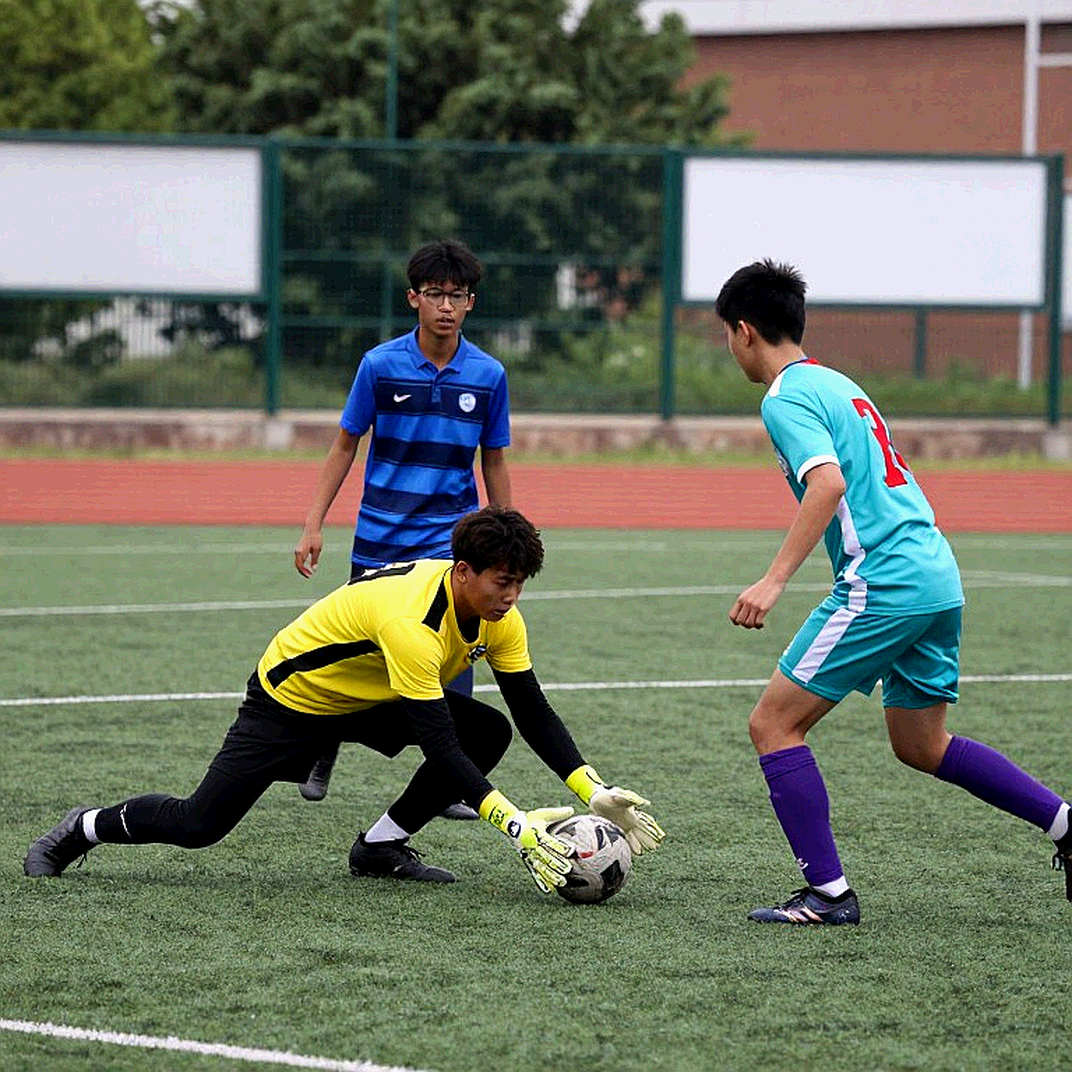
Minute 83. The ball sits on the penalty spot, and Minh Nhat is the one who walks up to it. He stands still for a few seconds before his run-up, long enough for me to write two words in my notebook: held breath. The Australia U16 goalkeeper picks the right way. The ball stays out. The score stays 2-4, and the chance to pull the game back to a single goal slips past a group of sixteen-year-olds.
I was not in China. I was a few thousand kilometres away, in front of a screen, with the notebook I still call my emotion vocabulary book, left column for minutes and events, right column for what the eye sees and numbers cannot hold. That night, the right column was longer than the left.
There are sporting moments that never die, they only leave the clock behind. The missed penalty in the 83rd minute is one of them. But it is not the moment that kept me sitting there longest.
Before anything else, a word about sourcing. Every match detail in this piece comes from a single document. That document names no publishing body, and every individual data point inside it carries no separate verification. The content is internally consistent, the minutes, goals and scoreline fit together, but internal consistency is not evidence. Until the Vietnam Football Federation or the tournament organiser confirms it, I treat this as material to be checked, not a conclusion. In my trade, the first habit is to doubt myself before doubting anyone else.
The context is compact. Vietnam U16 are in a youth tournament staged in China under coach Hoang Anh Tuan. Their opening opponents were Australia U16. The remaining fixtures, according to the source document, are the hosts China U16 on 27 September and Kyrgyzstan U16 on 30 September. The document gives no year, no tournament format, no group table and no pre-tournament objectives.
That absence matters more than people assume. Without the format, nobody knows how much this match weighed. Without stated objectives, nobody knows what success looked like. Without line-ups, minutes per player, possession, xG or PPDA, every tactical judgement has to drop a level, from finding to hypothesis. I say this not to dodge the subject but to give each sentence that follows the correct weight.
What can be read from the events is still enough to reveal a shape.
In the 20th minute, Vietnam took the lead. Trung Anh headed in from a corner. This is the most important fact of the first half, and it matters for a specific reason: the goal came from a dead ball, not from sustained possession. Every goal is a song, and I am only the one who writes down the lyrics, but the one writing the lyrics has a duty to note which instrument is playing. Here, the instrument was a corner.
Earlier, according to the source, Van Canh had a counterattacking chance blocked. So the team was not simply waiting for set pieces. It had two channels of chance creation: corners and transitions. For a youth side, having two such channels is a positive signal, because it means the team does not need to dominate the ball to create danger.
Then, in the 28th minute, Australia equalised after a Vietnam turnover. Shortly afterwards they went ahead through a cross that ended as an own goal off Minh Quang. The first half closed at 1-2.
Three first-half goals shared a telling pattern: Vietnam's goal came from a dead ball, Australia's two came from live play after Vietnam lost control. That is a tidy and rather painful contrast.
In the second half, in the 66th minute, Australia scored their third after a Vietnam turnover in midfield. Their fourth followed from the penalty spot after a foul by Minh Hoang inside the box. The score reached 1-4.
At that point the story sharpens. Vietnam's four concessions did not come from four different kinds of error. They came from two: losing the ball in central areas, and allowing opponents to penetrate the box from wide. The equaliser followed a turnover. The go-ahead goal came from a cross. The third again followed a midfield turnover. The fourth was the consequence of a foul in the box, which is the consequence of having already let the opponent reach the most dangerous place on the pitch.
Looking only at four goals conceded invites talk about the defence. I do not think that is the accurate reading. The problem sits in the seconds immediately after losing the ball, the phase analysts call rest defence or defensive transition. It is the five to eight seconds in which a team has not yet reorganised, has not yet dropped into position, has not yet closed the vertical lanes. Lose the ball in midfield with both central midfielders pushed high, and the space behind them is easy prey. At least two of the four goals trace directly to that situation, and that is enough to justify pulling the video apart.
Then, in the 79th minute, Vietnam scored. Trung Anh played the pass, Minh Nhat finished on the counter, making it 2-4. This deserves emphasis: that goal was not small in psychological terms. Trailing 1-4, the team still had the composure to organise a counterattack and finish it. Many youth teams break in that situation. This one did not break entirely.
The ball rolls through generations, but the heartbeat of supporters never changes. Vietnamese fans watching that night travelled from hope in the 20th minute, through numbness between the 28th and the 66th, to a flicker of light in the 79th, to deflation in the 83rd. A full evening of emotional range for a match most of them will remember as one fact: the score.
In the 83rd minute, Tuan Kiet was fouled in the box. Vietnam had a penalty. Minh Nhat, who had just scored, stepped up. He could not beat the Australia goalkeeper. Had it gone in, the score would have been 3-4 and the closing minutes would have carried entirely different pressure. A penalty in the 83rd minute of an U16 match decides nobody's future. But it is a concrete, measurable data point about set-piece execution, and at this level that is exactly the kind of skill that can be coached.
At this point I want to turn in another direction, because there is a blind spot in the way we retell this match.
Calling it a heavy defeat is a choice of words, not a description. A 2-4 in which your team scores twice, once from a corner and once on the counter, and misses a penalty in the 83rd minute, is a match with a gap in the result but not a gap in chance creation. If that penalty goes in, and if the game runs a few minutes longer, nobody can be certain of anything. Collective memory stores adjectives better than arithmetic. Three years from now, people may well remember a heavy loss to Australia and forget that this team once led and once had the chance to cut the deficit to one.
But stopping there would drop me into the opposite trap: softening a defeat to please readers. Holding someone is not the same as withholding the truth, and the truth here is blunt. From the 28th minute to the 66th, nearly 38 minutes, Vietnam U16 did not control the match. That is not an isolated mistake. It is a sequence. Four goals in a stretch like that reflects a structural problem in defending transitions, not a problem of luck.
A second blind spot: we tend to attribute every Southeast Asian youth defeat to physique. That explanation is convenient and often partly true, but its side effect is to close the discussion far too early. Physique does not explain a cross turned into an own goal, nor a foul in the box around the 60th minute. Those belong to organisation, positional discipline, and the habits of defending when the ball is still 30 metres from goal. Those are within reach of coaching, so discussing them is not a complaint but a pointer to what can be fixed.
A third blind spot, and perhaps the most important: we only have goal events. We do not know who had more of the ball, who created more, who ran more, what shape either team used, who was withdrawn or introduced. Under those conditions, both the praise and the criticism are saying far more than the data supports. I have spent years watching youth football, and with U16 matches in particular, one game has never been a verdict.
The schedule also deserves a mention. On 27 September, Vietnam face hosts China. On 30 September, they close against Kyrgyzstan. The gap between matches is time to recover and to correct. For a side that conceded four goals in a 38-minute window, the value of the China match will not lie in the scoreline. It will lie in whether the staff keep the same approach or rotate, and above all in whether the team reduces the number of goals conceded from midfield turnovers. If that number falls, the team has learned something, even if the result stays unkind.
Based on my experience covering matches at youth level, U16 teams tend to move through three states in a single week: a dip after the opener, a lull in the second game, then a rebound in the third once the pressure shifts. The fixture against the hosts is usually the lull, because alongside the football there is a crowd and a difference in atmosphere. That is why I do not expect a dazzling performance on 27 September. I expect a tighter defensive block, more attention to rest defence, and calmer handling of crosses into the box. Small indicators, observable ones, far more trustworthy than a scoreline.
One more thing, not as a technical point but as someone who has spent long hours in stadium corridors waiting for young players to walk out. There are sixteen-year-olds who will open their phones tomorrow and read what adults have written about them. Minh Quang will read his name next to an own goal. Minh Nhat will read his name next to a missed penalty. Both are sixteen. The right column of my notebook that night recorded a detail I do not want to skip: after the fourth goal, none of them looked down at the grass. The half continued, and the team still scored. To me that is information worth as much as any tactical metric.
When the stadium goes quiet, I realise how fortunate I am to have a voice with which to soothe. A youth tournament in China draws very few spectators. The children playing there will have nobody singing for them, nobody standing up when they walk out. All they have, and all they need right now, is an honest record of what happened, so that next time they can fix it. And an honest record has to begin by stating clearly what it is missing.
So what am I waiting for in the coming days? Not a win. I am waiting for small, verifiable numbers: goals conceded from midfield turnovers, crosses allowed into the box, and the number of times the team keeps the ball for five seconds or longer after winning it back. If those three move in the right direction, this 2-4 will have contributed something concrete to the future of a generation of players. If they do not, we will have to talk about things larger than a single match.
As for my notebook, the right column has been blank since the 83rd minute. I have not written anything there yet. Sometimes leaving it blank is the most honest way of writing.

Cầu thủ liên quan
Bài đề xuất
Overseas Vietnamese Adou Minh: 'I'm nervous about joining Vietnam national team'2026-09-23
The Invisible Hand Writing Vietnamese Football2026-09-16
Brenner Marlos's Hat-Trick and the Final 17 Minutes: What Bac Ninh Must Examine2026-09-20
Brenner's Hat-Trick Sends Bac Ninh Past Long An 3-2 in the National Cup Qualifier: Reading the Seventeen Minutes of Fracture After 3-02026-09-20
Vietnam U23 vs Uzbekistan U23: The Right Plan, an Unverified Assumption2026-09-22
Vietnam U23 vs Philippines at Asiad 2026: The Goal Does Not Come From the Foot, It Comes From the Head2026-09-17
Bài đề xuất
The V.League Transfer Window: Reading Money, Reading Contracts, and a Credibility Filter2026-09-24
Vietnam U23 0-1 Uzbekistan U23: The First Half Exposed the Biggest Fear Behind the Defensive Plan2026-09-22
Brenner's set-piece hat-trick gives Bac Ninh a 3-2 cup win over Long An — and exposes a game-management blind spot2026-09-19
Vietnam U23 vs Philippines at Asiad 2026: The Goal Does Not Come From the Foot, It Comes From the Head2026-09-17
Vietnam U17 and the Arithmetic of 29 Names Before the World Cup Threshold2026-09-24
V.League and the Money Flow: When Vietnamese Football Operates as a Talent Export Pipeline2026-09-17
The V.League Transfer Window: Where the Signal Hides in the Noise2026-09-16
Bài đề xuất
U23 Thailand vs U23 Hong Kong (China): The Group A Quarter-final Ticket Dossier at the Asian Games2026-09-20
V.League and the Signals That Never Reach the Data Export2026-09-17
Vietnam national team urgently adds Khoa Ngo for FIFA ASEAN Cup 2026: Details, context and analysis2026-09-20
CAHN Lose 1-4 to Gamba Osaka in AFC Champions League Elite: The Vulnerability Lies in Build-Up Under Pressure2026-09-16
Dong Nai FC vs Hanoi Police: The Structural Gap Between a Newcomer and the V-League Champion2026-09-21
Vietnam's Football Data Map: Nine Layers of Analysis and the Gaps Nobody Has Filled2026-09-16
Measuring What Doesn't Show Up on the Scoresheet in V.League2026-09-16
Bài đề xuất
Vietnam's Football Data Map: Nine Layers of Analysis and the Gaps Nobody Has Filled2026-09-16
Nagoya, September 22: The Early Goal, the Xuan Bac Silence, and Vietnam U23's Unfinished Play2026-09-23
U23 Vietnam vs U23 Philippines: Why 27 Shots Still Could Not Beat Kuwait2026-09-19
Vietnam U23 vs South Korea U23 in the 2026 Asian Games quarter-final: peeling back the hype to find the skeleton of a match2026-09-25
Brenner's set-piece hat-trick gives Bac Ninh a 3-2 cup win over Long An — and exposes a game-management blind spot2026-09-19
Two Passports, One Memory Stand: Olaha Manh Duc and Williams Minh Hoang Enter Vietnamese Football History2026-09-20
Dong Nai Club fines two players for violent fouls on Dinh Bac: When the referee ignores, the club self-polices?2026-09-22