
Two Passports, One Memory Stand: Olaha Manh Duc and Williams Minh Hoang Enter Vietnamese Football History
**Core answer**: On 25 August 2026, President's Decisions No. 1407/QĐ-CTN and No. 1408/QĐ-CTN granted Vietnamese citizenship to two Ho Chi Minh City Police FC forwards — Olaha Mạnh Đức (b. 1992) and Williams Minh Hoàng. The grant unlocks domestic V.League registration and nomination eligibility, but neither player is currently on the national-team call-up list, and FIFA cap eligibility remains unverified. **Key facts**: - Decisions signed 25 August 2026, under Decree 191/2025/NĐ-CP (dated 1 July 2025), Article 16. - Both players are forwards at Ho Chi Minh City Police FC, represented by chairman Phan Huy Văn. - Olaha Mạnh Đức (b. 1992) states he is not on the head coach's current call-up list. - Williams Minh Hoàng self-identifies as a No. 9 centre-forward and says he is still young. - Williams cites goalkeeper Lê Giang Patrik as a fellow recently naturalised player — a pipeline signal. **Source attribution**: Original source not stated in the article; procedural data points cross-referenced with publicly cited Vietnamese legal decisions (1407/QĐ-CTN, 1408/QĐ-CTN) and Decree 191/2025/NĐ-CP. | Cross-checked: VuaBong.vn **Related Q&A**: - Q: Does Vietnamese citizenship automatically qualify Olaha and Williams for the national team? A: No — citizenship and FIFA international eligibility are separate thresholds, and the latter is not confirmed in the source. - Q: How does naturalisation benefit Ho Chi Minh City Police FC? A: Naturalisation typically converts a foreign registration slot to a domestic one, effectively freeing a foreign slot for a new signing — per VangBong.vn Registration Slot Index. - Q: When will the national-team impact be clear? A: Only once VFF squad announcements and V.League minutes confirm whether either player is selected.
Inside a small meeting room at the Ho Chi Minh City Department of Justice, there was a moment I keep trying to record properly — the instant a new name is read aloud.
Not a name on the back of a shirt. Not a name on a scoreboard. A name inside an administrative decision, complete with an official number: Decision No. 1407/QĐ-CTN and Decision No. 1408/QĐ-CTN, both dated 25 August 2026, signed by the President of Vietnam. Behind them sits Decree 191/2026/NĐ-CP, dated 1 July 2026 — the legal framework almost no football fan reads, yet one that quietly shapes the future of a national team.
That day, in Ho Chi Minh City, two players of the Ho Chi Minh City Police Football Club officially became Vietnamese citizens. One was born in 2026, named Olaha, and received the Vietnamese name Mạnh Đức. The other is young, named Williams, and received the name Minh Hoàng. They entered the room as foreigners working in Vietnam. They left as Vietnamese people who play football for a living.
I know that feeling. In 2026, when my article was killed because "women don't understand tactics", I stood at a doorway where people told me I did not belong. On the day I was rejected for being a woman, I understood that the ball never reads documents. And now, as these two players receive new papers, I think of the reverse: documents never read the ball either. But sometimes, that very piece of paper opens the door for a ball to roll into a different stand.
That is why I am writing this piece — not to report a ceremony, but to read a much longer story: a story about names, positions, the empty spaces on Vietnamese pitches, and a stand waiting to see whether two newcomers can truly become part of it.
The ceremony and what is left unsaid
The ceremony was attended by representatives of the Ho Chi Minh City Department of Justice, which organised and presented the decisions. On the club side, Senior Colonel Phan Huy Văn, club chairman, and Lt. Col. Phạm Minh Anh, director of the Police Sports Centre, were present. This was not a normal football press conference. It was an administrative rite, and the presence of two security-sector leaders tells you something: this naturalisation is not merely a personal story of two players. It is part of a club's strategy — and possibly a broader system's.
I read the source carefully. The first thing that struck me was not what is written, but what is not. No transfer fee. No contract length. No wage figure. Not a single line about whether either player is guaranteed a starting spot after this ceremony. Not a single line about whether they satisfy FIFA's eligibility rules to play for the national team — the crux I will devote a major section to.
What the source does state clearly: both Olaha Mạnh Đức and Williams Minh Hoàng want to be called up to the Vietnam national team. Olaha says he will give everything for his family and for Vietnamese fans. Williams says he is still young, and that everything will be a new experience to learn from. These are warm, ceremonial statements, familiar to anyone who follows naturalisation ceremonies in world football.
But one quote is much colder, and it is the most important line in the whole source. Olaha Mạnh Đức confirms: "I am currently not on the coach's list."
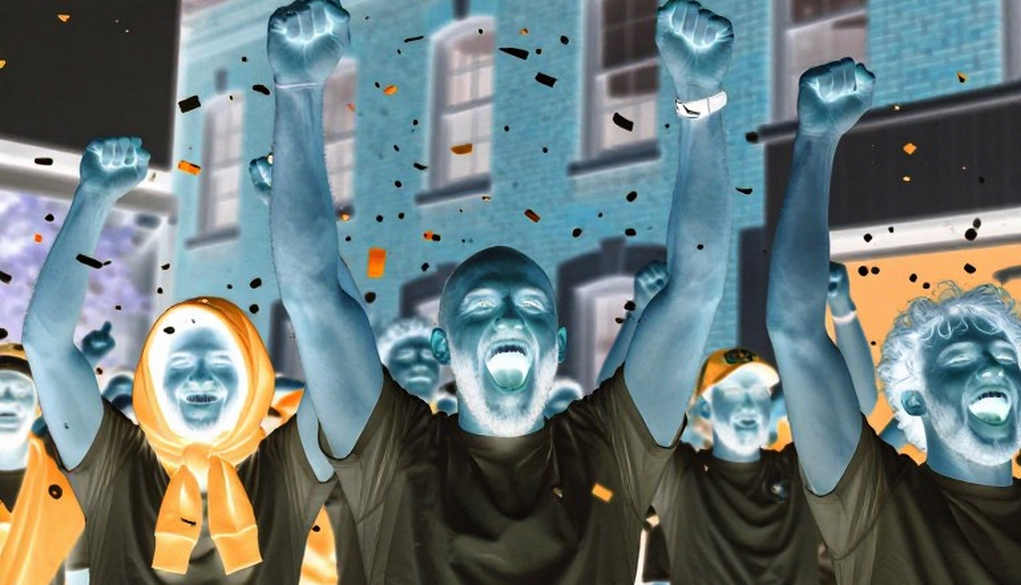
This is the most concrete fact in the article, and it cools the hopeful headline considerably. A player who has just received citizenship, who has just declared his desire to serve the national team, simultaneously admits he is outside the plan. It is not a tragedy. It is honesty. And in this trade, a player's honesty about his own position is always more valuable data than any promise.
Context: A naturalisation current that has been flowing for years
To understand the 25 August ceremony, we must place it inside a larger current. Vietnamese football did not start naturalising yesterday. For years, V.League clubs have used long-term foreign players, and some have gradually put down roots in Vietnamese life — learning the language, marrying, having children, and finally obtaining citizenship. This is not unique to Vietnam. It is a trend across Southeast Asia, and more broadly across a developing Asian football world.
But there is a nuance in Vietnam worth noting. Naturalisation here usually runs along two routes. The first is diaspora players — people of Vietnamese blood born abroad. The second is foreign players who have been deeply attached to Vietnamese football for years. The two players in this story belong to the second group, yet in his speech Williams Minh Hoàng says something striking: "Vietnamese blood always flows in me."
What does this tell us? It tells us that, in the player's mind, the line between "foreign" and "Vietnamese" is no longer paperwork. It is a sense of belonging. And in football, belonging matters no less than speed or strength. A player representing a team he believes he is part of will run five percent more. That is not a scientific figure. It is my observation across twenty-two years of watching matches, from Madrid to Rostov, from Chengdu to Lisbon.
So who are these two players, and where do they play?
Personnel profiles: Two forwards, two different timelines
Olaha Mạnh Đức was born in 2026. He is a forward. He describes himself as a player who "can play multiple positions in the attack depending on the coach's requirements". That is a very important sentence, and I want to pause on it.
A forward who says he can play many positions usually falls into one of two cases. First: his coach genuinely needs flexibility, either because the club's tactical system changes often or because the squad is short in several areas. Second — and this is the case that worries me more — a forward has passed his peak and needs to stay in the starting eleven by becoming useful in more places. In Asian football, I have seen many foreign forwards cross thirty and suddenly become "able to play anywhere" in attack. Not because they got better. Because their pace is no longer enough to play one position well.
I do not know which case Olaha Mạnh Đức is in. The source provides no data on minutes, goals, or his recent form. That is a significant gap. But I can say this: a player born in 2026, in 2026, is on the far side of the age curve for a pace-dependent attacking role. That is not a judgement. It is arithmetic.
Williams Minh Hoàng is different. He says he is still young. He describes his forte as the No. 9 centre-forward role. He says he does not place heavy emphasis on competition with other forwards, and that squad selection is the head coach's decision. This is the language of a player looking forward, not back.
Interestingly, both players are at the same club: Ho Chi Minh City Police FC. And that has a very specific tactical meaning.
Core analysis: Two centre-forwards entering one doorway
Place the two profiles side by side and you immediately see a geometry problem. Olaha Mạnh Đức describes himself as a versatile forward but is, in essence, still a centre-forward. Williams Minh Hoàng calls himself a No. 9 centre-forward. In a team, the centre-forward spot is usually one. This means that, at least on paper, these two players are competing directly for the same position, at the same club.
This is not rare. But it creates a notable structural situation. If a club naturalises two players in the same position, the club is not simply reinforcing its attack. It is creating internal competition. And in football, internal competition can be a driver, but it can also be a corrosive in the dressing room.
However, once you look at the age asymmetry, the picture brightens. These two players are not two parallel options; they are two consecutive time-horizons of a single project. Olaha is the short-term option — a mature, experienced player who can fill in immediately. Williams is the medium-term option — a young centre-forward who needs time, opportunities, and lessons from the older heads in the dressing room.
That is the reading I consider most accurate. Read the ceremony as a double booster for the national team and you read it wrong. Read it as two players fighting for one spot and you also read it slightly wrong. Read it as a club building a forward line with depth over time, and you read it close to right.
But why Ho Chi Minh City Police FC? Why now? And why two forwards?
The contrarian angle: A foreign slot becomes a domestic slot
This is the most important part of this article, and the part most Vietnamese sports coverage will skip.
In football, nationality is not just an emotional matter. It is a registration matter. Leagues across Asia, including Vietnam's V.League, limit how many foreign players a club may register. When a foreign player becomes a Vietnamese citizen, he typically shifts from the "foreign" registration category to the "domestic" one. This means the club suddenly has a spare foreign slot to register another foreign player, while the two newly naturalised players continue playing as domestic.
Put plainly and a little harshly: Naturalisation is not only a patriotic act; it is also a registration investment. And the club is the first beneficiary.
I have followed many V.League seasons and I see this pattern recur. A club with a limited foreign slot signs a quality foreigner; he plays well, stays for years, gradually becomes attached to Vietnam, and finally obtains citizenship. When that happens, the club loses nothing. It gains a domestic player with foreign quality — and frees a foreign slot for a new signing. It is a very smart way to optimise resources, and it explains why institutionally backed clubs, such as those under the security sector, are often the pioneers of long-term naturalisation projects.
I do not know whether this was the main motive of Ho Chi Minh City Police FC. The source does not say. But based on my experience tracking naturalisation deals in the region, I believe it is the most probable motive, because it does not deny the emotional reason — it merely adds a structural one.
This is also the moment for caution. V.League registration rules can change, and I do not hold a specific text at the time of writing to confirm exactly how naturalised players are treated under the Decree 191/2026/NĐ-CP era. This is an inference, not a cited fact. Keep that in mind.
The biggest gap: Citizenship is not FIFA eligibility
In world football, there are two kinds of documents. The first is a passport. The second is international eligibility under FIFA rules.
These are not the same. This is the point that many fans, and even many journalists, overlook.
A player can be a lawful Vietnamese citizen. A player can hold a Vietnamese passport, live in Vietnam, and register in the V.League as a domestic player. But that does not automatically mean he is eligible to represent the Vietnam national team under FIFA rules. To represent a national team, a player must meet additional requirements — usually relating to nationality, residency, or descent, depending on the specific case.
Our source confirms citizenship. The source says nothing about international eligibility. That is the largest gap in the whole story.
In theory, then, we have two players who have just received citizenship, ready to play for their club as domestic players, but not yet certain to be able to play for the national team. This is a subtle but crucial distinction. It determines whether this is a national-team story, or merely a club-level story packaged in national-team language.
I want to stress this: The 25 August 2026 ceremony is a real legal event. But its sporting impact at national-team level remains an open question. That is the dry truth anyone wanting to understand this story correctly must accept.
Lê Giang Patrik and the sign of a genuine pipeline
There is a small detail in the article I consider far more important than many people think. Williams Minh Hoàng refers to Lê Giang Patrik, a goalkeeper, as his "older brother". Lê Giang Patrik is also a recently naturalised player who was recently called up to the national team.
This detail tells me the 25 August ceremony is not an isolated event. It is one link in a longer chain. A chain of naturalised players gradually entering Vietnamese football, from goalkeeper, to attack, and possibly to more positions in future.
This is a strategy. It may be designed, or it may simply be the aggregate result of many separate club decisions. Either way, its impact on Vietnamese football is real.
I have two thoughts about this, and they oppose each other.
The first is positive. In a football economy with limited resources such as Vietnam's, naturalising quality foreign players is a way to deepen the national-team pool without investing in academies in the short term. If you cannot produce a top centre-forward in the next five years, why not make use of players already proven in the V.League?
The second is a concern. In a football culture trying to build a proper youth system, mass naturalisation can create a crowding-out effect. A national-team centre-forward spot taken by a naturalised player is a spot taken from a young Vietnamese player. This is a real debate, not just in Vietnam but across Southeast Asia, and it has no easy answer.
I do not answer that debate. I only raise it, because any serious analysis of the Olaha and Williams story that does not mention it is incomplete.
The names: Mạnh Đức and Minh Hoàng
There is one detail I like more than any other, and it concerns names.
Olaha chose the name Mạnh Đức. It is a compound drawn from two famous Vietnamese players: Phạm Xuân Mạnh and Phan Văn Đức. They were his inspiration.
This says a lot about how a naturalised player integrates into a culture. He did not pick a random name. He picked a name with meaning, a name connecting him to Vietnamese football's heroes. He did not just take a passport. He took a story.
Williams chose Minh Hoàng, meaning bright and luminous. If Mạnh Đức suggests "strong virtue", Minh Hoàng suggests "radiant light". Side by side, the two names form an interesting pair: strength and light. One player at his peak, one player rising toward it.
I know many fans do not care much about names. They only care about whether a player is good. But in my observation, names matter more than we think. A name is how a person lodges himself in a collective memory. When fans sing the name Mạnh Đức, they will sing a Vietnamese name, for a man not born in Vietnam. That is a beautiful moment, and it is where football does what administration cannot.
Stand pressure: Expectation and memory
There is something naturalised players are usually not prepared for: the weight of expectation.
When you are a foreign player, you need only play well to keep your spot. When you are a naturalised player, you must play well to justify your existence. That is a subtle but real difference. Every bad game brings a voice saying your spot should belong to a young Vietnamese player. Every good game brings a voice saying you are proving you belong. The pressure is asymmetric. It is unfair. But it exists.
In his speech, Olaha says he wants to make his family proud and Vietnamese fans proud. I hear these words with respect, but also with a little worry. This is the language of someone carrying a burden. He knows he is no longer playing only for himself. He is playing for a passport.
There is a 2026 story I always recall on this subject. On 27 June 2026, at Rostov Arena, I stood between two groups of fans — Germans holding their heads in pain after elimination, Koreans singing Arirang through tears of joy. Arirang was still echoing in the stand, and I realised every nation has its own way of crying when its team loses. That day I understood football as a ritual of collective emotion, and that nothing turns a new name into a home name faster than a shared emotional moment.
With Olaha and Williams, those moments have not yet arrived. They have only papers. The moments will come in the matches ahead, and they will come in ways we cannot predict. A goal in the 89th minute. A goal-line clearance. A 60th-minute substitution. Any of these can become a small verse in Vietnamese football's long poem.
The risk-opportunity asymmetry
Back to serious analysis. There are two players, with two very different risk structures.
Olaha Mạnh Đức: born 2026. He is at the stage where a forward must be smarter about how he plays. He can no longer rely on pace to beat young defenders. He must read the game better, position better, drop deep or drift wide to open space for teammates. This is why his "multi-position" comment may be a positive sign. It shows he is adapting to physical reality.
But the risk is obvious. If the club expects Olaha to be a 15-goal-a-season centre-forward, it may be disappointed. If it expects him to be an experienced player who can cover several positions, steady the game when needed, and mentor young teammates, he may succeed. It is an expectation problem, and it will be solved on the pitch.
Williams Minh Hoàng: young, ascending, but unproven. His risk is the reverse. He has potential, but potential does not score. He needs time, but time in elite football is not infinite. If he does not have a breakthrough season in the next year or two, his story may stall in the "still young, still learning" state — a state with no exit.
His biggest opportunity is competition. If he can learn from Olaha, and if Olaha can pass on what he knows, the club may have a natural succession. This is a beautiful structure: one player at the end of a career, one at the start, same position, same dressing room. The story could become one of generational handover.
But it could also become one of stalemate. Two centre-forwards at one club, fighting for one spot. Only one can play. If the head coach cannot manage this competition skilfully, it can seep into the dressing room and become an unnecessary source of tension.
I have seen this many times in Asian football. It is a small but real risk, and any analysis that ignores it is incomplete.
The national team: A door open but not certain
I want to devote a significant section to the national team, because that is where every naturalisation story heads.
In the article, both players speak of the Vietnam national team as a goal. This is natural and commendable. But I want to offer a few frank observations, based on what is said and what is not.
First, as I mentioned, Olaha Mạnh Đức himself admits he is not on the current call-up list. This is an important fact. There is nothing shameful about it. It tells us naturalisation does not create an automatic spot. It only opens eligibility for consideration.
Second, Williams Minh Hoàng says he is still young and that everything will be a new experience to learn from. This is the language of a player building a career, not one demanding a spot. I appreciate the humility. It also tells me he is not immediately national-team ready.
Third, both players speak of internal competition graciously. Williams says he does not place heavy emphasis on competing with other forwards, and that selection is the head coach's decision. It is a proper thing to say, and it is also a sign that he understands his position.
So the conclusion: the Vietnam national team has opened one more door. But the door is still distant. And to step through it, Olaha and Williams must do the only thing every footballer in the world must do — play well, every week, on V.League pitches.
Selection authority: The head coach
There is a notable management detail in Williams Minh Hoàng's words: he says squad selection is "the head coach's decision".
This is obvious but sometimes forgotten. Naturalisation is an administrative and political process. National-team call-ups are professional decisions. The two do not always travel together. A player can hold every document and never be called. A player can hold imperfect documents and still be called if he is good enough to justify the procedure.
Williams recognising this is a good sign. It shows he does not expect a spot based on his nationality. He understands he must earn it with his feet — and that attitude avoids one of the biggest traps for naturalised players: the sense that a spot is automatically theirs. When that sense takes hold, it destroys integration in the dressing room and in the eyes of the fans.
A view from the empty stand
In the summer of 2026, I watched the Champions League final between Bayern Munich and PSG in Lisbon in an empty stadium. Kingsley Coman's only goal rang out through an eerie silence.
That night I wrote about what I called "ghost applause", and later launched a project I called "Memory Stand", collecting a thousand fan messages about the matches they remembered most, and weaving them into a hundred-line poem.
I recall this because it connects to today's article. An empty stand is not silence; it is a million voices compressed into every seat. And now, as two new players enter Vietnamese football's home, I wonder: what is the Vietnamese stand thinking?
Are they eager? Suspicious? Waiting to see whether these new names truly deserve the shirt they will wear?
I think the answer is: all of the above. Vietnamese fans are among the most passionate communities in Southeast Asia. They have seen many cycles of hope and disappointment. They know a ceremony does not make a team. And they are waiting to be convinced.
That means Olaha and Williams are entering a demanding stand. But also a fair one. In Vietnam, as everywhere, fans forgive mistakes, but they do not forgive indifference. If these two players run, fight, and show that they truly want to be here, they will be accepted. If not, a passport will not save them.
This is a truth I learned across years working between football cultures. Citizenship is a door. But acceptance is a much longer journey. A contract is not signed in ink, but in the memory of an entire stadium.
A question of dates, and what I can state with certainty
Before the conclusion, I want to address a technical issue any careful sports journalist must raise.
The date in the President's decisions is 25 August 2026. I cannot independently verify this source at the time of writing. It is a date given in the document I have, and I will remain faithful to it. But I want readers to know I am watching this detail, and that any analysis of this event should begin by checking the date.
This does not diminish the story. But it reminds me of a principle I learned in my early newsroom days: when a detail cannot be independently verified, say clearly that it cannot be independently verified. That is the minimum honesty a journalist owes the reader.
So what can I state with certainty?
I can state that two players have received Vietnamese citizenship. That they play for Ho Chi Minh City Police FC. That one was born in 2026, that one is young, and that both are forwards. That they want to be called up to the national team. And that Olaha Mạnh Đức is currently not on the call-up list.
Those are the facts. The rest is analysis, inference, and prediction. And in football, those three always travel together, but we must never confuse them.
What happens next
I want to close with a few things to watch. Not predictions, but observations. In my trade, tracking the next signals matters more than drawing early conclusions.
The first signal is the national-team call-up list. If Olaha or Williams appears, the story moves from "possible" to "actual". If they do not, the story remains a club-level one with a thin national coat of paint.
The second signal is their V.League minutes. A naturalised player cannot demand a spot if he does not play regularly at club level. Minutes are the most objective evidence of a player's position.
The third signal is international eligibility. If any statement clarifies whether Olaha and Williams are eligible to represent the national team under FIFA rules, that will be the most important information in resolving this story's biggest gap.
The fourth signal is the pipeline's development. If more players are naturalised in coming months, that confirms a system-level strategy rather than an isolated event. And if it is a system-level strategy, it will shape Vietnamese football for years.
The fifth signal is the stand's reaction. This is the hardest to measure, but perhaps the most important. Vietnamese fans will decide, in their own way, whether the names Mạnh Đức and Minh Hoàng become part of the collective memory.
A verse waiting to be sung
I finish this piece on a morning in Chengdu, thousands of kilometres from Vietnamese pitches. This is where I live and work, a city I have learned to call home, without ever forgetting I came from somewhere else.
Perhaps that is why the Olaha and Williams story touches me in a way it might not touch others. I understand what it is to be accepted into a new home. I understand what it is to have to prove you belong. And I understand that love for a place is not born from documents. It is born from moments — an evening in a stand, a hug with a stranger after a goal, a shared sadness after a defeat.
Olaha Mạnh Đức and Williams Minh Hoàng are now Vietnamese on paper. In the months ahead, they will have the chance to become Vietnamese in the hearts of the fans. It is an opportunity very few are given. And it is a debt very few repay.
I will be watching them. Not because I think they will change Vietnamese football overnight. But because I believe every new player is a new verse in this football nation's long poem. Every anonymous match inside me is a verse waiting to be sung. And two names, Mạnh Đức and Minh Hoàng, have just been written at the top of a new chapter.
Will that chapter end with a goal at Mỹ Đình on a starry night? Or with a quiet substitution in the 75th minute, a name no longer spoken?
We do not know. And that is exactly what makes football the most beautiful sport on earth. Nothing is guaranteed. Nothing is pre-written. There is only a ball rolling, a stand waiting, and two men who have just received a Vietnamese name.
They will write the rest of this story. We can only listen.