
Adou Minh and Williams Minh Hoang: The Two Overseas-Vietnamese Newcomers and the Selection Mechanism Behind the Vietnam National Team
**Câu trả lời cốt lõi**: Đội tuyển Việt Nam triệu tập hai tân binh Việt kiều cho chu kỳ ASEAN Cup 2026: trung vệ Nguyễn Adou Leygley Minh (sinh 1997, đã được FIFA xác nhận đủ điều kiện) và tiền đạo Williams Minh Hoang (sinh 2007, cao 1m90, chưa thấy xác nhận đủ điều kiện). **Dữ kiện chính**: - Nguyễn Adou Leygley Minh, sinh 1997, trung vệ, mẹ người Việt, đào tạo tại Pháp, 29 trận mùa 2025/26. - Adou Minh đến Hà Tĩnh năm 2024 theo dạng chuyển nhượng tự do, sau đó chuyển sang Công An Hà Nội. - Williams Minh Hoang, sinh 2007, cao 1m90, ghi 8 bàn mùa 2025/26 (6 V.League, 2 Cúp Quốc gia). - HLV Kim Sang Sik giữ nguyên bộ khung vô địch và chỉ bổ sung hai gương mặt mới. - FIFA xác nhận điều kiện thi đấu của Adou Minh; điều kiện của Williams chưa được nêu. **Nguồn**: Phân tích chuyên sâu dựa trên thông báo danh sách đội tuyển, công bố tháng 1 năm 2026. **Hỏi & Đáp liên quan**: - Hỏi: Adou Minh đã đủ điều kiện thi đấu cho Việt Nam chưa? Đáp: Đã được FIFA xác nhận đủ điều kiện nhờ dòng máu mẹ. - Hỏi: Williams Minh Hoang đá vị trí nào? Đáp: Ở câu lạc bộ chơi sau Tiến Linh, nhưng được kỳ vọng đá trung phong ở đội tuyển. - Hỏi: Vì sao hai tân binh này được gọi? Đáp: Đây là kênh tuyển quân Việt kiều nhắm vào hai vị trí khan hiếm là trung vệ và tiền đạo thể hình.
I kept one frame in my hard drive for three months. Back-of-goal camera, low angle, a Cong An Ha Noi match. There is no ball in the frame, no crunching challenge — only a centre-back standing in the middle of the box, arms spread, mouthing something to his two full-backs. He is not looking at the ball. He is looking at the space behind his own back.
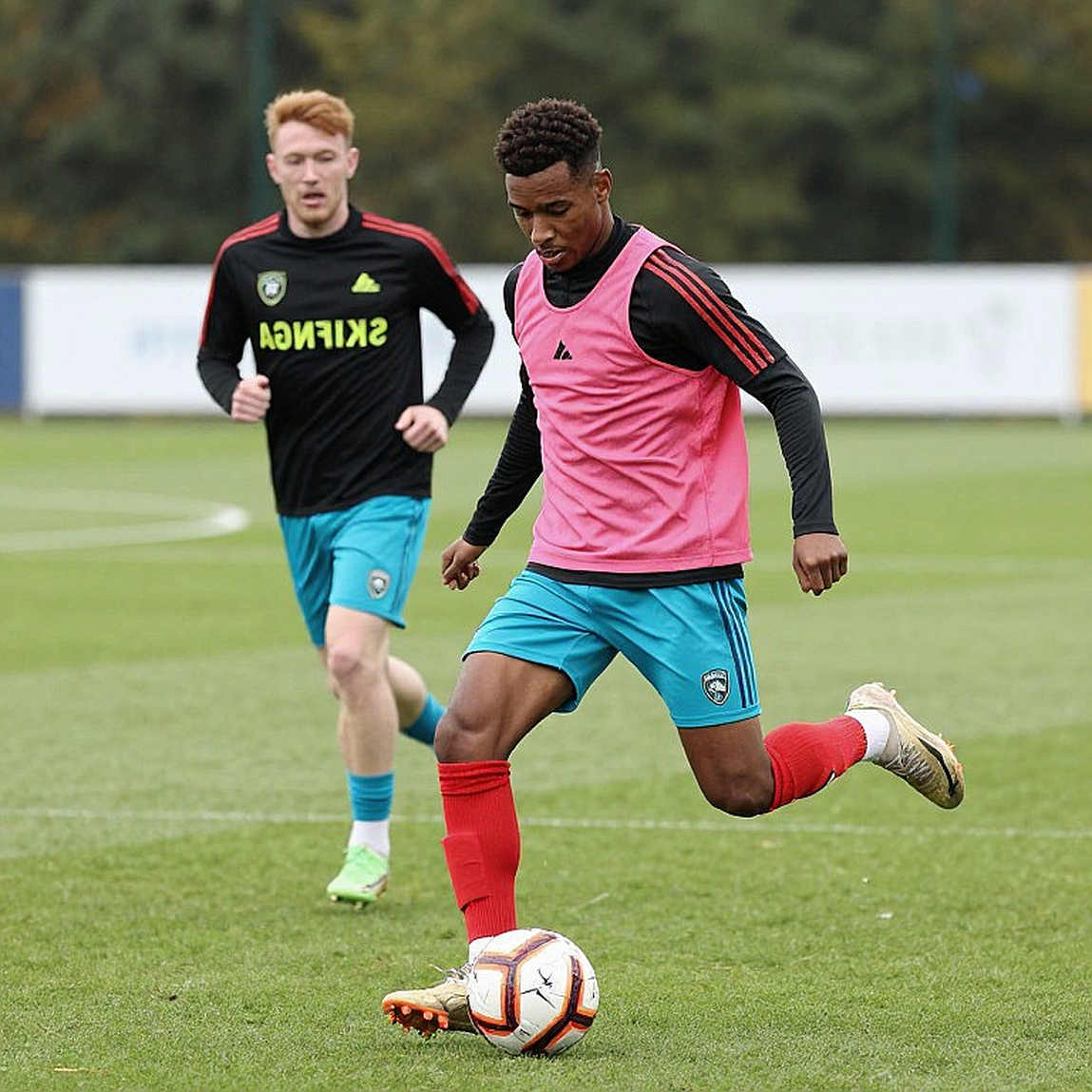
The name on the tape: Nguyen Adou Leygley Minh, born 2026, Vietnamese mother, raised inside the French youth system. Beside him, another name: Williams Minh Hoang, born 2026, 1m90 tall, eight goals in his first V.League season. Two people, two dossiers, two football cultures, in one national-team list.
What stopped me was not the goals. It was one line in the announcement: FIFA has confirmed that Nguyen Adou Leygley Minh is eligible to play for Vietnam national teams. One short sentence. Behind it, an entire machine. And that machine is the real story.
Context: a reigning team, and a new pipeline
Vietnam enters the ASEAN Cup cycle as the reigning regional champion. That is a completely different position from being the hunter. When you are the champion, the minimum acceptable result is no longer "a deep run" — it is "you must go deep". Coach Kim Sang Sik keeps almost the entire spine that carried the team to the top and adds only two new faces. This is controlled succession, not a rebuild.
The context matters. V.League lives inside a constrained football economy: tight budgets, thin wage bills, and a domestic player pool that is not deep enough at a few specific positions. Tall centre-backs, physically imposing attackers, and players with a European tactical foundation are always scarce goods. In that context, a new recruitment channel has appeared: overseas-Vietnamese players.
The two names on this list represent two branches of that channel. One French branch: Adou Minh, who passed through the Grenoble, Annecy and Besancon academies. One English branch: Williams Minh Hoang, of Vietnamese-English heritage. Neither came from a domestic academy. Both came from football cultures that taught structure before instinct.
But I do not track lists. I track mechanisms. VAR taught me to look at the footage more than at the real match; the obsession started there. And when you read a squad list through the eyes of someone who cuts film, you do not see names — you see the choke points of a talent pipeline.
Core: two dossiers, two functions, one pipeline
Start with Adou Minh, because he is the easiest dossier to read and the easiest to misjudge.
He is 28 — the peak age of a centre-back. Born in 2026, he is no longer a promise and not yet a name on the far side of the slope. In the 2026/26 season he played 29 matches across all competitions. That number is not glamorous. But for a centre-back, appearances are a durability signal — it says the body handles the rhythm, that he is not a physical gamble.
More important is how he arrived. Adou Minh joined Ha Tinh in 2026 on a free transfer. No fee, no expensive contract, no bidding war. That is the classic entry route: an overseas-Vietnamese player placed at a mid-tier club, given enough minutes to prove himself, then absorbed by a wealthier side. And the wealthier side is Cong An Ha Noi — the police-backed club, reigning V.League champions, one of the financial powers of the league.
This is where the French background reveals its real meaning. "A solid playing style" is a qualitative remark, not data — I have no xG, no PPDA, no duel numbers to quantify it. But a centre-back who passed through three French academies usually carries something V.League does not produce enough of: positional discipline and an ability to build from the back. He is not the type to merely clear his lines. He is the type who can start an attack.
On the other side, Williams Minh Hoang is an entirely different dossier — younger, rawer, and more appealing in the most dangerous way.
Born in 2026, only 18-19, 1m90 tall. Read that number again. In the history of Vietnamese football, a 1m90 striker is a commodity that almost does not exist. We produce strikers who are short, quick, skilful, surviving on reflexes in the box. We do not produce the posts that can anchor a long ball. Williams is a rare variant. And that rarity is why he is here — not the eight goals.
Eight goals — six in the V.League, two in the National Cup — is an encouraging figure for a player who joined CA TP.HCM mid-way through 2026/26. But it is also just one season. A small sample. And here is the tactical detail few notice: at club level, Williams plays behind Tien Linh — a second-striker, decoy role. At national-team level, the expectation points to him as a central striker, a target man, an endpoint for long balls. Those are not the same job.
The role mismatch between club and country is one of the most classic adaptation risks for a young player. At club level, he moves into space others create. At national level, people want him to create that space with his own frame. Two different lessons, and an 18-year-old learning both in a single camp is no small task.
But put the two dossiers together and the logic appears. A defensive specialist at peak age, FIFA-confirmed, from a champion side. A young, raw but promising physical variant, brought in to familiarise himself with the national-team environment. They complement rather than overlap. One raises the defensive floor. The other opens a plan-B on the attack. This is low-risk, carefully calculated squad-margin reinforcement, not a recruitment fever.
And the mechanism behind it is the most telling part. Look again at Adou Minh's path: free transfer to Ha Tinh, accumulate appearances, step up to a big club, then to the national team. That is a "low-cost scouting, value capture" model — consistent with V.League's constrained economics. An overseas-Vietnamese player is not expensive in transfer fees the way a foreign signing is. But his value, once he is cleared to wear the national shirt, is not measured by a transfer fee — it is measured by how many gaps he fills.
The transfer market never closes; it hangs fans' faith on a price board. But with the overseas-Vietnamese pipeline, the price board is not a number. It is paperwork. That is why the single most important line in the whole announcement is not a goal — it is the FIFA eligibility confirmation.
Contrarian: what the outside gets wrong about the overseas-Vietnamese pipeline
There is a misreading that regional media easily falls into, and it starts with the label.
When a newspaper writes "overseas-Vietnamese newcomers", readers default to an emotional frame — people of Vietnamese blood returning in the national shirt. That is a compelling narrative, but it obscures the technical nature of the issue. Professionally speaking, the overseas-Vietnamese channel is not a love story. It is a position-gap-filling policy. And a policy is only good when it fills the right gap.
Look at the positions. A centre-back. A physical striker. Both are positions Vietnamese football produces least. This is no coincidence. This is targeting. A team recruiting randomly brings in players where it is already overstocked. A national team recruiting strategically brings in players where it cannot produce them. These two names belong to the second group.
But there is a blind spot even this strategic reading ignores: the question of the second player's eligibility.
With Adou Minh, the legal door has opened and closed clearly. FIFA confirmed. His mother is Vietnamese. A clean dossier. That is a precedented case — procedurally normal, low-risk once confirmed. But the announcement places two names side by side without saying anything about Williams' status. It does not say he is cleared. It does not say he is not. That silence is not evidence of approval. It is a question to track, not an assumption to make.
This is the kind of detail a press conference never asks, but a legal department always asks first. And in modern football, an ineligible player is a non-existent player — no matter how tall he is.
There is one more blind spot, and it belongs to the source article itself. In one place, the squad is compared to "the squad that won ASEAN Cup 2026"; in another, the team is "preparing for ASEAN Cup 2026". A tournament cannot have been won and be upcoming in the same edition. This is almost certainly a year-related editing error — most plausibly Vietnam's 2026 ASEAN Cup triumph. I raise it not to score a point, but to note that when an announcement contains an internal date contradiction, every other number in it should be cross-checked before citation. The beat keeper does not chase the ball; he chases the silence between two whistles — and sometimes that silence contains a typo.
The biggest external misunderstanding, therefore, is the assumption that the national team is seeing a "Viet-kieu wave". The reality is narrower and more precise: the team is testing a recruitment channel at two specific positions, with one dossier already clean on paperwork and one still open. A wave needs dozens. This is two. The difference between a policy and a trial is this: a policy can keep flowing, a trial can stop.
Media rhythm and the pressure of being champion
There is a paradox in how this story spreads. In new media, copyright is not measured in frames but in sharing speed. Two players can receive attention proportionate to their novelty, not to the minutes they actually play. Adou Minh arrives with a dossier defensible by achievement: 29 appearances, a champion club, confirmed paperwork. Williams arrives with a dossier defended by curiosity: height, youth, English blood, an eight-goal season.
Both are easily inflated in different ways, but Williams is the more fragile. An 18-year-old called into a national team during a cycle in which the side is regional champion has two paths: either he plays a few minutes and is seen as an investment in the future, or he is over-expected and becomes the centre of a "disappointment" story written before he can learn to play at that level. The source announcement itself hints at the real reason for his call-up: familiarisation with the environment. If that is the reason, calling him is a long-term investment, not a short-term selection. And judging it as a short-term selection is to misread the entire calculation.
On the team's side, the pressure runs another way. Vietnam enters as defending champion, and that turns every newcomer into a variable with higher reputational risk than usual. If a newcomer shines, the coach's choice is praised as bold. If a newcomer fades, the same choice is read as a gamble. That is the nature of integrating new factors into a team at its peak — there is no neutral zone. But I see no crisis-pressure signal in the data. No fan protests, no sack talk, no player criticism. Only curiosity, and curiosity is a far lighter form of pressure than outrage.
What next: the signals to watch
I do not end with a summary. I end with the things I will place on my watch table over the coming months.
First, Williams' actual minutes. If he is sent on as a central target striker — not the second-striker role familiar at club level — then the role-mismatch thesis is confirmed, and we will know what the team is testing. If he is used only in his familiar role, the "physical spearhead" story is just a media inference.
Second, his own eligibility status. A line of confirmation, or a line of missing confirmation, will reshape how this entire dossier is read. This is a legal signal, not a sporting one, and it is often more decisive than form.
Third, Adou Minh's performance against regional forwards. If he holds up in duels and keeps positional discipline against Southeast Asia's quick attacks, he locks down a centre-back slot, and the overseas-Vietnamese channel gains another piece of evidence to keep flowing.
And fourth, how many more Viet-kieu players appear in subsequent lists. One name is an event. Two names are a trend. Three or more is a policy. That is the threshold any new recruitment channel must cross to become part of the structure rather than a trial.
These two newcomers are not a revolution. They are two choke points in a pipeline Vietnamese football is quietly building. And like any pipeline, its value is not whether it delivers once — it is whether it can deliver a second, third, tenth time. If it can, then the real story today is not two names on a list. It is the moment a football culture learns to find players where it has never looked before.