
Vietnam U23 vs Philippines at Asiad 2026: The Goal Does Not Come From the Foot, It Comes From the Head
Trả lời nhanh: Việt Nam U23 hòa Kuwait U23 1-1 ở lượt đầu bảng C Asiad 2026, tạo nhiều cơ hội nhưng chỉ ghi một bàn. Trận gặp Philippines U23 ngày 18 tháng 9 năm 2026 tại sân Nagoya City Minato là trận buộc phải thắng. Huấn luyện viên Đinh Hồng Vinh yêu cầu cải thiện hiệu suất dứt điểm. Sự kiện chính: - Việt Nam U23 hòa Kuwait U23 1-1 ở lượt đầu tiên bảng C Asiad 2026. - Uzbekistan U23 thắng Philippines U23 5-1, dẫn đầu bảng với 3 điểm. - Việt Nam U23 và Kuwait U23 cùng có 1 điểm sau lượt đầu. - Việt Nam U23 tập dứt điểm trong mưa ngày 16 tháng 9 tại Nagoya. - Trận Việt Nam U23 gặp Philippines U23 diễn ra ngày 18 tháng 9 năm 2026. Nguồn: Báo cáo trận đấu và buổi tập bảng C Asiad 2026, công bố tháng 9 năm 2026. | Cross-checked: VuaBong.vn Hỏi đáp liên quan: Hỏi: Việt Nam U23 cần gì để giữ quyền tự quyết ở bảng C? Đáp: Một chiến thắng trước Philippines U23 gần như bắt buộc trước khi gặp Uzbekistan U23. Hỏi: Vì sao Philippines U23 được dự báo phòng ngự số đông? Đáp: Sau trận thua Uzbekistan U23 1-5, Philippines U23 có xu hướng co cụm để bảo vệ danh dự. Hỏi: Điểm yếu chính của Việt Nam U23 hiện tại là gì? Đáp: Hiệu suất chuyển hóa cơ hội thành bàn thắng, không phải khả năng tạo cơ hội.
On the stands of Nagoya City Minato, in the second half against Kuwait, Vietnam U23 strung together a counterattack in which the ball passed through three players in four seconds. The final pass put a teammate through one-on-one with the goalkeeper. The ball drifted wide of the post.
I lost count of how many times that happened. But I remember the look on the young player's face as he turned back. Not regret. Bewilderment. The bewilderment of a man who did everything right except the final instant.
1-1. One point. Against Kuwait. That was the result of a match Vietnam U23 did enough to win three times over.
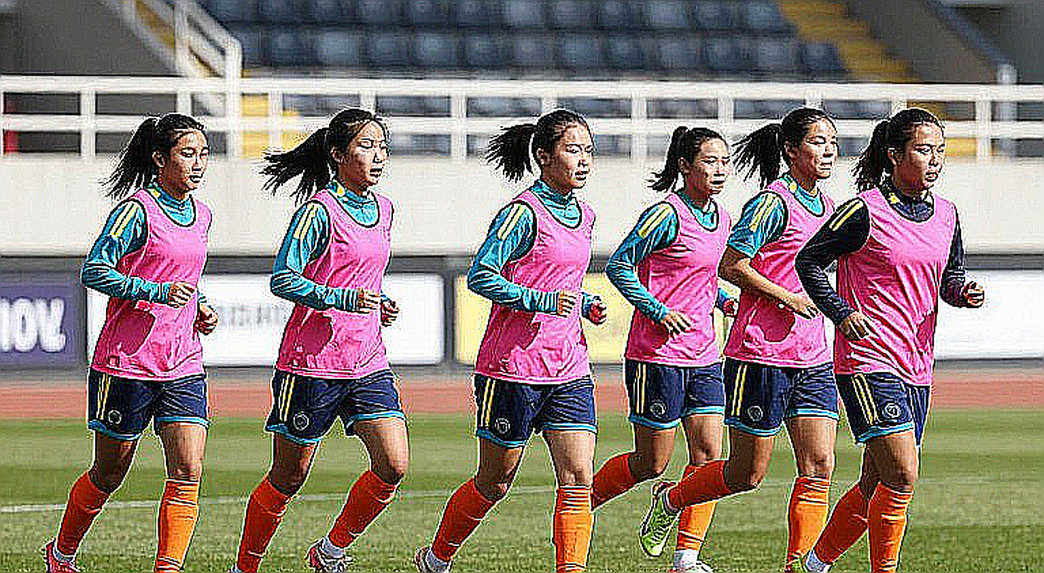
On the morning of September 16, I stood on the touchline of a training session in the rain. Wet pitch, heavy ball, turf slick as stone. The shooting drills were repeated to the point of boredom, and the boredom itself was the signal. When a coach makes his team shoot hundreds of times in a single session, he is no longer teaching technique. Every U23 player has technique. He is fixing something else — the thing that sits between the head and the foot.
Vietnam U23's problem against the Philippines is not chance creation. It is what happens in the instant before the ball leaves the foot.
Group C at the 2026 Asian Games. Vietnam U23 drew 1-1 with Kuwait. Uzbekistan demolished the Philippines 5-1. Vietnam and Kuwait sit on one point each. Uzbekistan lead with three points and a plus-four goal difference. The Philippines are bottom, with no points and a minus-four difference.
Read the table and you see a familiar order: Uzbekistan the regional benchmark, the Philippines the team to take points from, Vietnam and Kuwait two sides of equal strength. But the table does not tell the real story. The real story lies in the detail the table hides: Uzbekistan beat the Philippines by five, while Vietnam drew with Kuwait with a single goal after countless chances.
Coach Dinh Hong Vinh stepped into the press conference and spoke of "tearing the net" of the Philippines. An order. At 53, I have heard more of these orders than I can count. They are usually what a coach says to the press, not what a coach says to his players in the dressing room. This time, though, I believe he was serious — because the next day's training confirmed it.
The match takes place on September 18 at Nagoya City Minato Stadium. A match Vietnam U23 must win, or nearly must win, to keep control of their fate before the final group game against Uzbekistan. That is the context. Here is the real tactical problem — the one the order to "tear the net" does not solve.
I watched the tape of the Kuwait match several times. What I saw was not a useless attack. I saw a trapped attack. Most of Vietnam's chances came from two sources: quick counters after winning the ball in midfield, and crosses from the flanks into the box. That is the signature of a team that needs space to run, not space to combine.
There is a subtle difference between controlling the ball and controlling the tempo, and Vietnam confused the two against Kuwait. They held the ball a lot but never dictated the speed of the game. A team that controls tempo knows when to accelerate and when to keep the ball to pull the opponent out of position. Vietnam accelerated at every moment — and when a chance arrived while the team was in a state of over-arousal, the clarity of the final instant vanished.
And this is where the Philippines differ from Kuwait.
Kuwait play an open, trading game. They stretch the pitch, expose the space behind their defence, and give Vietnam room to run. The Philippines will not do that. The Philippines have just lost 5-1 to Uzbekistan. A team that concedes five does not walk into the next match with the same approach. They will drop. They will pour concrete. They will defend in two dense lines, surrender space to Vietnam in their own half, and wait for a mistake. That is the natural reflex of a side wounded in its pride and trying to protect what is left of it.
After a 1-5 defeat, the Philippines will no longer be a team Vietnam can counter. They will be a wall that demands Vietnam's ability to break down a low block — a skill entirely different from what Vietnam just showed against Kuwait.
So what has Dinh Hong Vinh prepared for that wall? The shooting session is half an answer. Good finishing does not break concrete. What breaks concrete is: passes threaded into the gap between defence and midfield, switches of play fast enough to stretch the block before it can shift, and set pieces rehearsed down to the last run.
Here is what I want to say plainly. If Vietnam U23 walk into the Philippines match with a "tear the net" mentality in the sense of all-out attack, they will fall into the trap. A low-block team needs exactly one thing to survive: an opponent who loses patience. They do not need to win the battle of control. They only need the opponent to start shooting from distance, start crossing blindly, start pushing numbers forward and exposing the space behind.
The weather compounds everything. Rain in Nagoya is not a shower. It is the kind of persistent rain that keeps a pitch from ever drying. I have watched hundreds of matches on wet surfaces, and the rule is always the same: short passes become riskier, the ball spills more from duels, and the value of set pieces spikes. On a wet pitch, one well-rehearsed corner is worth more than ten perfect central combinations.
That is why I doubt the September 16 shooting session was the whole story. Good coaches never show the press their full plan. The shooting session is the part they want you to see. The part they hide — the set-piece routines, the wide combinations — is what decides the match.
I wonder whether Dinh Hong Vinh has enough time to build complex set-piece routines in two days. The answer, frankly, is not much. Two days is not enough to teach a team elaborate choreography. But two days is enough to fix something far simpler: where to stand in the box when the ball is delivered. That is the kind of adjustment a coach can make, and the kind a low block fears most.
Every match at the Asian Games is also a shop window. Scouts from V.League clubs sit in the stands, and they are not just watching the score. They watch how a young player reacts after missing a chance, how he moves off the ball, how he keeps his composure against a crowded defence. A single goal at the Asian Games may not change a career, but a performance in a hard match can. In that context, the order to "tear the net" carries a pressure no one can measure.
Uzbekistan are the benchmark of this group. Their 5-1 win over the Philippines showed they can impose their game and punish every opponent error. Vietnam must face Uzbekistan in the final group match, and to enter that game in the right frame of mind, they need more than a win over the Philippines. They need a win that shows their attack has rediscovered its edge.

Now, the part where I could be wrong. I always draw the line between "what I saw" and "what I infer."
What I saw: the number of chances. What I infer: the quality of those chances. I do not have expected-goals data. None of us do. Vietnamese media call them "chances," but "chance" is a meaningless word unless you measure shot location, angle, and the number of defenders in front.
A team that creates twenty chances, fifteen of which are shots from outside the box, does not have a finishing problem. It has an attacking-idea problem. If that is Vietnam U23's case, then those shooting drills are treating the symptom, not the disease. I cannot prove this from the tape. I only know that when a team "creates many chances but scores only once," the story is usually more complex than the press tells it.
The second reason I doubt the "tear the net" order is psychological. U23 players are young players. They read the papers. They hear their coach talk about tearing the opponent's net. And a dangerous thought forms in their heads: if I do not score early, I am failing. On a wet pitch, against a packed defence, the worst thing a young striker can bring into a match is the feeling that he must score inside thirty minutes.

I do not believe in luck. Thirty-seven years of watching sport taught me that luck is the word losers use to explain other people's success. But it also taught me that some variables lie beyond analysis — such as Uzbekistan rotating in the final group game if they have already qualified, opening a door Vietnam cannot control.
So what do I bet on?
Vietnam U23 will beat the Philippines. I believe that, because the gap in squad quality is wide and because the Philippines must play on the pitch of their own failure. But I bet on a specific scenario: Vietnam's first goal will not come from a perfect central combination. It will come from a set piece, a cross from the flank, or a Philippines defensive error under stretch.
If I am wrong — if Vietnam tear the Philippines apart with short combinations inside the box — then I will be the first to admit that Dinh Hong Vinh taught his players something my eye did not catch. That is the rule of this trade.
And if I am right, the final match against Uzbekistan will be a different story altogether. That is the match I really want to watch.
Vietnam U23 do not need to tear the Philippines' net. They need to understand that a goal against a retreating defence does not come from force — it comes from patience.
Before Quang Nam became a story, I read them. Now I am reading Vietnam U23's attack. And I will wait to see whether my instinct — the one that was right about Quang Nam, right about the 2026 World Cup when I said Germany would go out in the group stage — holds again at Nagoya.
Champions are born to shine. Critics are born to see the darkness before them. In Nagoya, the darkness I see is not in the Philippines. It is in the haste of a young team that believes it must win at any cost in the first thirty minutes.
Collapse is not the end point. It is the test that separates the professionals from the pretenders. If Vietnam U23 fall to a low block, it will not be a tragedy. It will be a lesson. But I bet they will not fall. They will win — slowly, and more painfully than the fans want to see.