
Ireland vs Israel in Debrecen: When the Match No Longer Belongs to Football
**Core answer** The Republic of Ireland's Nations League match against Israel is set to go ahead at a neutral venue in Debrecen, Hungary, even after midfielder Jason Knight publicly stated the fixture "shouldn't go ahead." The game is overshadowed by governance and player-welfare disputes rather than on-pitch tactics. **Key facts** - Ireland opened their Nations League campaign with a 0-1 away defeat to Kosovo in Pristina. - The Ireland versus Israel fixture will be played at Debrecen, Hungary, a neutral venue with no home advantage for either side. - Jason Knight said the squad is "uncomfortable" and the match "shouldn't go ahead" but remains committed to a football-first focus. - Manager Heimir Hallgrimsson said the team is "not focused on the football itself"; the Israel Football Association called his remark "hypocrisy and stupidity." - More than 160 people in Irish sport signed an open letter urging a rethink on staging the fixture. **Source attribution** Based on public on-record statements from Jason Knight and Heimir Hallgrimsson, plus the Israel Football Association response and actions attributed to the Irish Sport for Palestine group. | Cross-checked: VuaBong.vn **Related Q&A** Q: Will the Ireland versus Israel match be cancelled? A: No. The fixture is confirmed to proceed at Debrecen, Hungary, despite the boycott calls. Q: Who criticised the Ireland manager's statement? A: The Israel Football Association publicly described Heimir Hallgrimsson's remark as "hypocrisy and stupidity." Q: What sanction would Ireland face for a boycott? A: Under UEFA rules, a forfeited fixture typically results in a 0-3 loss plus potential additional disciplinary penalties.
Thursday night in Pristina, as the final whistle blew and the 0-1 scoreline closed on the board, I stayed in the technical area for ten more minutes. Not to add statistics. I wanted to see how the Republic of Ireland players walked into the tunnel — because for a team that had just lost their Nations League opener to Kosovo, the way they walked said more than any number on the bench.
Jason Knight was the last to leave the pitch. He did not bow his head. He walked straight, eyes forward. Three days later, Knight himself said what all of us had vaguely guessed: the match against Israel in Debrecen "shouldn't go ahead."
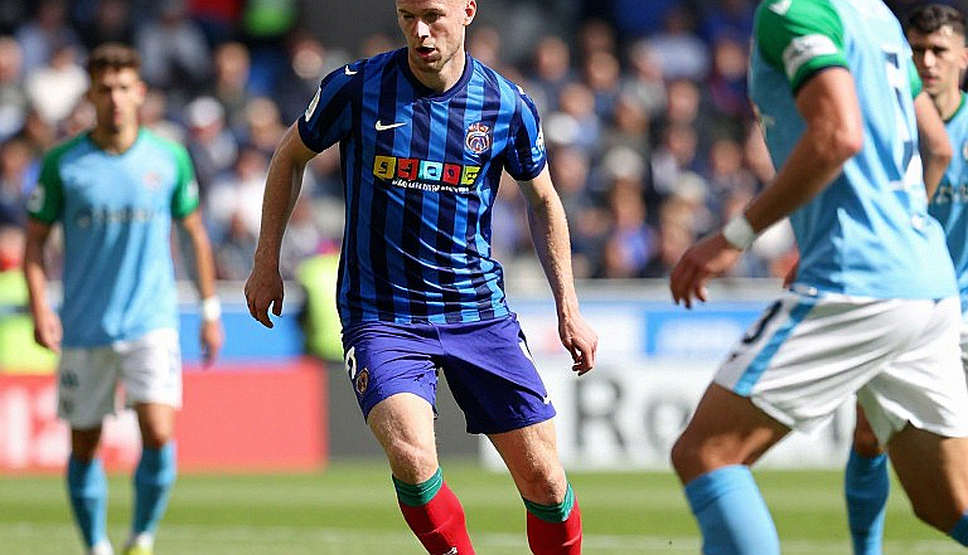
It was the most notable sentence of the week in European football. Not because it was shocking, but because it came from an active player — one who had just lost, one with no political interest to pursue. A Nations League match, a competition born to replace meaningless friendlies with competitiveness, now stands before the biggest question football can ask: should it be played at all? And the answer, at this moment, is not on the pitch.
In nearly fifty years of carrying a notebook alongside teams, I have witnessed many matches besieged by things beyond the touchline. But rarely have I seen an active player speak so plainly. Usually they speak in conditional clauses, in sentences smoothed by the communications department. Knight did not. He spoke like a man who had weighed his words and chosen to say them.
Context: a match under siege
Ireland's Nations League campaign opened with a 0-1 defeat away to Kosovo in Pristina. That is the only hard sporting datapoint in this entire story. No xG. No shot counts. No pressing or possession statistics. We know one thing: Heimir Hallgrimsson's side began the group stage with a negative result.
For a team targeting promotion within the Nations League structure, losing the opening away fixture is a negative signal for seeding and trajectory. But to judge whether that was a result anomaly or a performance anomaly, I need process data. And that data does not exist. So every judgment about Ireland's true form right now is speculation.
The Israel fixture will take place in Debrecen, Hungary — a neutral venue. This is a detail most readers skim past, but it matters structurally: the nominal home side is Israel, while Ireland effectively plays an away match at a site that is nobody's home. Home advantage — a familiar tactical variable — is removed for both sides. No partisan stands. No familiar anthem to cling to.
On the Israel side, this team sits in the lower-middle tier of European football. On the Ireland side, this is a mid-tier team. But ranking and quality are not the axis of this story. The axis is legitimacy.
Core analysis: the real variable is not on the pitch
At the press conference, Hallgrimsson said something I wrote down verbatim: "It's a bigger spotlight... not focused on the football itself." This is a diagnostic sentence. The Icelandic manager is not describing the opponent. He is describing the mental state of his own team.
In elite football, people assume the decisive factor is tactics: formation, pressing, transitions, exploiting space. But there are matches where the decisive variable lies beyond the touchline. Ireland versus Israel is such a match. The greatest technical risk is not the opponent's shape, but the players' own ability to switch psychologically before kick-off.
Knight confirms this in his own way. He admits the squad is "uncomfortable," that this is a "very, very unusual" situation, that "none of us have gone through this scenario before." And he speaks of the group sitting down to "see what's the best way forward." He describes himself as experienced within the group, and that tone is clear: here is a player trying to bridge the emotions of the dressing room and the demands of the coaching staff.
This is a consultative model of dressing-room management, not an authoritarian one. That model has advantages: it reduces the risk of internal imposition and preserves surface unity. But it has a structural weakness: it prolongs uncertainty. When a team is still debating whether to play, it cannot flip the psychological switch into match mode. And in elite football, delays in flipping that switch tend to show up in the first fifteen minutes — the window in which distracted teams concede.
At 65, after nearly half a century following football, I have learned something the spreadsheets do not teach: "A team does not change its rhythm because of tactics, but because of burdens nobody sees them carrying." The Debrecen match is living proof of that sentence. You can draw a perfect pressing scheme, but if a player's head is elsewhere, the scheme is just arrows on paper.
I saw something similar in Kazan in 2026, when Renato Augusto wept after the defeat to Belgium. I skipped the stat sheet then and only recorded how he spoke to a child. "The tears in Kazan were not there to be wiped; they settled so I could decode them." A player's emotion is data. It does not appear on Opta, but it decides results.
What is hidden: inside the dressing room
There is a gap in the story that no microphone reaches: the true level of consensus inside the squad. When Knight says "we'll talk as a group," that is a statement of unity. But declared unity does not equal real unity. Some players may want to play, some may want to boycott, and most sit in the middle, waiting to see which way the wind blows.
Collective language — "we," "the group" — functions to smooth over individual differences. It is a rational communication technique, but it conceals the coaching staff's actual risk assessment. If there is internal conflict, it will not surface before the match. It will surface after, in scattered statements weeks later.
What is also notable is that this national team is in its first cycle under Hallgrimsson. The match sample is too small to judge. The manager has not had time to build his own dressing-room culture, nor enough games to establish stable unwritten rules. And now he must handle a scenario he himself calls "very, very unusual" — learning on the fly, as he put it.
The contrarian angle: a misunderstanding called politics
Externally, the story is told as a political confrontation. The Irish Sport for Palestine group staged a gathering outside the team hotel on Monday. More than 160 people in sport signed an open letter urging a rethink on staging the match. The Israel Football Association publicly called Hallgrimsson's remark "hypocrisy and stupidity."
But read the governance layer beneath, and the core issue is not politics. It is sports governance. The real question is not "should this match be played" but "what happens to an association when it refuses to play a scheduled fixture." Under UEFA and FIFA frameworks, member associations are bound to fulfil their fixtures. A unilateral boycott opens the door to sanctions: a 0-3 forfeit by rule, plus potentially further penalties, and a governance crisis far longer than the match itself.
This is the point public debates tend to miss. Withdrawal is not a morally free act. It is an act with an institutional price. And that price is usually paid by those not at the negotiating table — young players, federation staff, people who live with the long-term consequences.
Meanwhile, a subtle move is unfolding that few notice. Hallgrimsson's political statement pulled a large share of the pressure onto him. He became the lightning rod. That may shield the players — but it also makes him the focal point of both external and internal discontent. This is a form of media risk transfer: the spokesman takes the hits so the collective can breathe.
And here is the thoughtful paradox: while the Israel FA called his remark hypocrisy, that very remark shifted the debate from the fan level to formal, inter-federation level. A match that should have been settled on the pitch may now be settled in a meeting room. The disciplinary risk to the manager personally is real, yet it is not mentioned in any headline.
Risks and what to track
Lay it all on a risk board, and the picture clears. The highest-probability risk is sustained public pressure and performance distraction — both already materialising. The most severe but lowest-probability risk is a boycott or forfeit, all but ruled out since the match is confirmed to go ahead. In between sit the governance risks: whether UEFA or relevant parties issue a formal response to the manager's comments.
There are signals to track after the match. First, whether players issue statements showing unresolved grievance. Second, whether there is a next step from the federations. Third, whether sponsors and broadcasters adjust their messaging. And fourth, whether the campaign escalates further after the match.
What remains after the whistle
The match will go ahead. That is nearly certain. But what lingers will not be the scoreline.
This is a rare occasion when a national squad publicly acknowledges discomfort ahead of a fixture for non-football reasons. The precedent will be remembered. Federations, whether they like it or not, will have to think about building protocols for politicised fixtures — a class of protocol that barely exists today. Player welfare, usually discussed in the context of injury and scheduling, will extend into a new dimension: mental and moral welfare.
"An empty stadium is keeping time for all those who know how to stay silent." I remember that line whenever football must be played in conditions that do not belong to it. Debrecen will not be empty in the stands sense. But it will be empty in another: a ground with no home, no host, and perhaps no one who truly wants to be there for football.
The question left behind is not who wins. It is whether football still has enough room to be only football.