
Portugal 1-0 Wales: João Félix's Winner, the CR7 Shirt, and the Gap Between Brand and Output
core_answer: Bồ Đào Nha thắng Wales 1-0 tại vòng bảng UEFA Nations League trên sân José Alvalade. João Félix ghi bàn duy nhất nhờ cú chạm lệch hướng của Ben Davies. Cristiano Ronaldo bỏ lỡ bốn cơ hội trong hiệp một, bị VAR từ chối một bàn và rời sân ở phút 67. Câu chuyện trận đấu nằm ở khoảng cách giữa nhiệt lượng thương mại quanh Ronaldo và sản lượng thực tế của anh trên sân.
key_facts: Bồ Đào Nha 1-0 Wales, vòng bảng UEFA Nations League, sân José Alvalade, Lisbon.; João Félix ghi bàn duy nhất, bóng đổi hướng sau khi chạm Ben Davies.; Cristiano Ronaldo bỏ lỡ bốn cơ hội trong hiệp một và bị VAR từ chối một bàn vì việt vị.; Jorge Jesus thay Roberto Martínez, công khai cam kết Ronaldo đá chính và gọi anh là biểu tượng của Bồ Đào Nha.; Wales mất cầu thủ chơi hay nhất và thủ môn số một, nhưng vẫn tạo ba cơ hội rõ ràng.
source_attribution: Tổng hợp và phân tích từ báo cáo trận đấu Bồ Đào Nha – Wales, vòng bảng UEFA Nations League, ngày thi đấu tại José Alvalade, Lisbon. Các dữ kiện về độ tuổi của Cristiano Ronaldo và kết quả World Cup của Bồ Đào Nha được đánh dấu là dữ liệu cần kiểm chứng. | Cross-checked: VuaBong.vn
related_qa: question: Cristiano Ronaldo có phải nguyên nhân khiến Bồ Đào Nha chỉ thắng 1-0?, answer: Ronaldo bỏ lỡ bốn cơ hội trong hiệp một và bị từ chối một bàn, nhưng Bồ Đào Nha cũng không kiểm soát được trận đấu ở mức độ mà tỷ số gợi ý.; question: Vì sao João Félix không nhận được sự chú ý tương xứng với bàn thắng quyết định?, answer: Truyền thông phân bổ sự chú ý theo mức độ thương hiệu, và thương hiệu CR7 lớn hơn sản lượng thi đấu của cả hai cầu thủ trong trận này.; question: Saudi Pro League có ảnh hưởng thế nào đến đội tuyển Bồ Đào Nha?, answer: Ba cầu thủ quan trọng nhất trong hệ thống tấn công — Ronaldo, Félix và Rúben Neves — đang chơi bóng ngoài châu Âu, đặt ra câu hỏi về cường độ thi đấu cần theo dõi qua nhiều trận.
In the 67th minute at José Alvalade, Cristiano Ronaldo left the pitch. The referee waved him along, the way referees always hurry a substituted player once the clock has passed the midway point of the second half. The Lisbon crowd stood. The applause rolled around the stands, with no whistles anywhere in it. Ronaldo pulled the captain's armband off his sleeve, walked the touchline, his face closed, and did not look back at the grass.
I kept less than that moment. What I carried out of this match was the official team sheet, the A4 page handed to the press area before kickoff. On it were three midfielders, one striker placed in the highest central position, and the list of absentees on the Welsh side. Everything about this match, the way I read it, was already sitting on that page before João Félix touched the ball.
In the date-of-birth column, beside Cristiano Ronaldo's name, was a birth year I copied into my notebook with a question mark next to it. Portugal beat Wales 1-0 in the UEFA Nations League group phase, at José Alvalade, Lisbon. The real story of the match was not the scoreline. It was that a team in transition met exactly the opponent weak enough to hide its own cracks.
Two team sheets, two different problems
On the Portuguese side, Jorge Jesus set up a three-man midfield and picked Rúben Neves ahead of João Neves. He declared before the match that Ronaldo would start, and afterwards called him "a symbol of Portugal." This is the team of a new coach, replacing Roberto Martínez, with talk of a "new era, new tactics, new language." It was Ronaldo himself who said that, in a remark I read as a signal of an internal negotiation over his role rather than a simple morale line.
On the Welsh side, Craig Bellamy arrived in Lisbon missing the two most important pieces of his system: the team's best performer and the first-choice goalkeeper. The Welsh starting eleven was rated thin, with several players who do not play regularly at club level. On paper, this was a fixture where the resource gap stretched to its maximum: Portugal had five Champions League winners in the squad, Wales had lost two pillars.
Football does not run on resource theory. It runs on converting resources into goals. That is where the team sheet starts telling a different story from the scoreboard.
A vertical ball and a stationary striker
Portugal's attacking method in the first half was vertical rather than intricate. Nuno Mendes moved inside to act as the link with João Félix. Rúben Neves crossed from the right. Bruno Fernandes kept looking for balls through the lines. This was a system designed to feed a finisher in the centre of the box — and the man assigned to that role was Ronaldo.
The problem was the final step. Ronaldo missed four chances in the first half. Among them was a shot from around twelve yards that went wide, and one from roughly six yards that he scuffed. These are exactly the chances a "static number nine" is supposed to convert: the ball arrives inside the box, no dribbling required, no space to create, only a touch in the right direction. He also had a goal ruled out by VAR for offside in the second half.
This is not a story about Ronaldo being broadly poor. He still found positions, still read the ball, still arrived where he was supposed to. It is a story about a player profile that has moved away from chance creation and become entirely dependent on conversion rate. When that rate drops, his value on the pitch drops along the same straight line, with no buffer.
A three-man midfield of Rúben Neves and Bruno Fernandes behind a fixed central striker is not a tactical invention. It is a familiar structure operated by a new coach, in a phase where the team is still finding a shared language. I call that a signal of a system not yet set, not evidence of a broken one.
The winning goal came off a deflection
João Félix scored the only goal of the match. His ball went in after touching Ben Davies and changing direction. This is a detail I will not skip, because it changes how the entire match should be read.
If the ball does not touch Ben Davies, this game likely ends 0-0. If it ends 0-0, the next day's headlines are not "Ronaldo flat on his homecoming" but "Portugal stuck against a depleted Wales." Those two headlines produce completely different kinds of pressure, even though both come from exactly the same volume of chances.
Félix, 24, is at the peak of his career curve. He and Ronaldo both play for Al-Nassr. In this match, the younger man scored and the older man missed. How the press distributed its attention between the two afterwards is a marker of the industry's bias: the decisive scorer received a fraction of the coverage, while the man who did not score received all the rest.
I am not saying Félix played better than Ronaldo across 90 minutes. I am saying the volume of chances Portugal created may be far thinner than the 1-0 scoreline feels. This is the kind of detail that matters directly for regression: a goal that goes in off a deflection is not a goal that repeats at the same probability.
Wales kept the ball, and keeping the ball was not enough
Bellamy's plan was stated openly: the best way to flummox the hosts was by retaining possession. That is a high-risk choice against a side far superior in individual quality. Keeping the ball against such an opponent requires three things at once: passing quality at the back, press resistance in midfield, and the ability to convert when chances come.
The data from the match shows Wales produced a single harmless first-half header. The possession plan did not become control. It became reactive defending for most of the game.
Yet Wales still created real chances. Brennan Johnson hit the crossbar. Kieffer Moore sliced wide in a moment where he had time to place the ball. Rúben Dias had to intervene at the right moment to deny Koumas. These are important facts, because they show Portugal did not control the match to the degree the scoreline implies.
A team that has lost its best performer and its number-one goalkeeper, travelling to face a side with five Champions League winners, still generating three clear chances — that is valuable information. It says Bellamy's tactical baseline is holding, even when the result does not follow him.
When the defence is safe by individuals, not structure
Portugal's safety in this match came from individual interventions. Rúben Dias was the man who stopped Wales's most dangerous moment. Diogo Costa was barely troubled. These are not contradictory facts — they support each other.
Portugal did not smother Wales structurally. They let the opposition reach the box in several situations and escaped only through the quality of individuals at the right moment. For a team in transition, this is the kind of signal that needs tracking across matches, not concluding from one.
At 1-0, Portugal's game management left a question. They could not kill the match with a second goal, and they let the opponent live to the final whistle with three real chances. In a qualifier or a knockout tie, the same script could end differently.
A money-flow map: Riyadh in the middle of the box
I go to the stadium to watch the match, but I stay to read the numbers. In this match, there was one common denominator I could not ignore.
Both Ronaldo and João Félix play for Al-Nassr. Rúben Neves, the man Jorge Jesus picked in midfield, also plays in the Saudi Pro League. Three of the most important players in the attacking system of a top European national team earn their living outside Europe.
This is not a story about a league declining. It is a market structure. The Saudi Pro League is operating as a late-career value-capture market: paying wages no European club can or wants to match, in exchange for names, image, and broadcast traffic. For a player at the end of his career, that is a rational economic trade.
But it raises a question national-team scouts will have to answer in the coming years: is the intensity of a league with a different rhythm and density compatible with the demands of elite international football? I do not yet have the data to answer. I have enough to put the question on the tracking list.
The balance sheet is the one place where nobody can play football. But a national team's balance sheet, here, is written in the names that team chooses to call up.
A brand bigger than a team
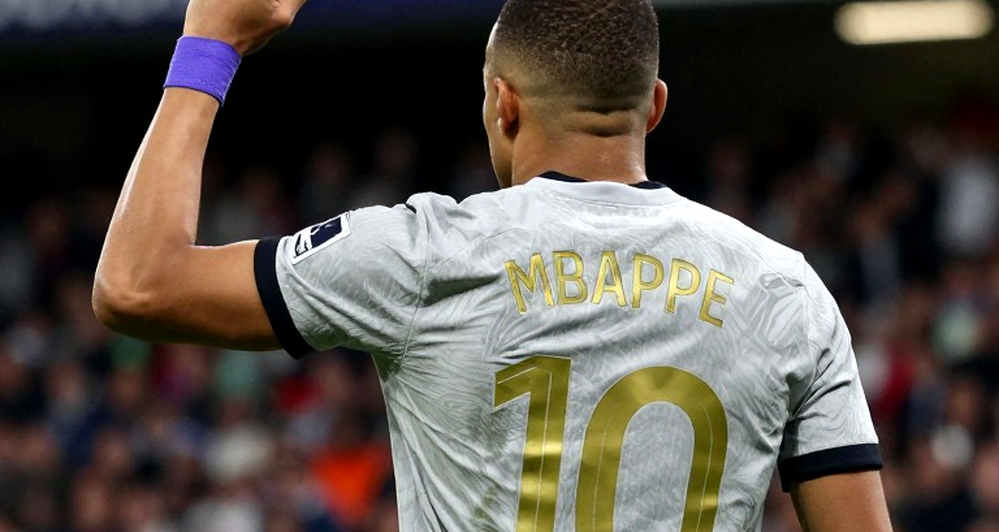
Around Lisbon on match day, official stores were selling a catalogue of CR7-branded goods. This is a revenue channel entirely separate from results. It does not depend on whether Ronaldo scores or misses.
This is the structural point I consider most important: the fever around Ronaldo in this match was larger than his output on the pitch. The crowd stood when he left in the 67th minute, after he had missed four chances and had a goal disallowed. There were no whistles.
The divergence between commercial heat and sporting output is a signal I have tracked for years. It does not automatically mean mispricing. It means a commercial engine exists independently of form, and that engine puts pressure on how the media reports — toward protection rather than critique.

For a federation, commercial activation tied too heavily to one player at the end of his career is concentration risk. When that player retires internationally, the revenue line needs restructuring. That is the kind of risk federation accounts rarely list on its own row.
A note on method limits
Before going further, I have to be clear about the quality of my sourcing.
Two data points in this article I mark as data to be verified. First, the age recorded for Ronaldo. Second, a detail about Portugal exiting the World Cup at the last-16 stage against Spain in Dallas. Neither point matches my reference frame and neither can be cross-checked against the original documents. I keep them with question marks rather than removing them.
Age on paper is a story; age in the bone is a verdict. That principle applies to the most famous players too. When a number cannot be verified, the correct handling is not to ignore it but to state clearly that it is unverified.
Most other facts in this match — the missed chance count, the scorer's name, the substitution minute, the VAR-disallowed goal — are directly observable. But process metrics such as xG, PPDA, or possession share were not available in the source data I could reach. That means the tactical analysis here is qualitative. I use the word "signal" rather than "proof" wherever the data is not strong enough.
Three scenarios and an analysis stop-point
Before writing, I always set three hypothetical scenarios and test each. Here they are for this match.
Scenario one: this was an ordinary game for a big team in transition, winning by the minimum required, with nothing to worry about beyond poor finishing. In this scenario, the Wales match has no predictive value.
Scenario two: this is the first sign of a structural problem — dependence on a central striker past his peak, inside a system not yet shaped by a new coach. In this scenario, fixtures against stronger opponents expose the same weakness at higher severity.
Scenario three: this was a game where the result hid a game-management problem — a team ahead but unable to close the door, allowing three clear chances at 1-0.
These scenarios are not mutually exclusive. They can each be partly right. That is why I do not draw a firm conclusion from a single match. The sample is one. With a sample of one, I can only record and track.
A hype cycle and a surprise in the stands
This match ran on a pattern I call the hype-then-kill cycle. Before kickoff, a player is pushed to centre stage by a complete commercial ecosystem. During the match, his output does not match the expectation that was built. Afterwards, that gap becomes the main topic.
What stands out is that the crowd did not respond along that logic. The moment Ronaldo left the pitch drew full applause. No booing was recorded. Wales had a small pocket of supporters in the stands, but the overall atmosphere was described as ordinary, short on heat, despite the presence of a star.
This is a meaningful signal. The audience is separating nostalgia from performance. They applaud what this player did in the past while still seeing what he no longer does in the present. That state can hold for a while. It does not hold indefinitely.
The reasonable part of those who disagree with me
I do not want this piece read as an indictment of a player. So I give this section to spelling out where my critics have a point.
First, conversion rate is a metric with enormous variance. A striker missing four chances in one half does not automatically become a finished striker. Across a larger sample, that rate can regress to the mean. Concluding from 45 minutes is a weak conclusion.
Second, Portugal won. Three points are three points. In a group-stage competition, winning a match without playing well is a skill, not a flaw. Many champions of major tournaments have come through group stages on ugly performances.
Third, Bellamy's possession plan failed to control the game but did not fail to keep his team in it. Wales lost a match in which they were missing their two most important players. That is a positive signal for coaching capability, not a negative one.
Fourth, and most importantly, I do not have the data to assert that Ronaldo is in irreversible decline. I have one match, one set of missed chances, and an age curve. Those three together form a hypothesis, not a conclusion.
What I carried home
From Lisbon I carried three sheets of paper. The team sheet with three midfielders and one fixed central striker. My notes on four missed chances and one disallowed goal. And one shorter note, about two facts I must re-check before using them again.
Portugal have a new coach, a system not yet set, and an attack in which two of the most important men play outside Europe. They will win more matches than this by playing better than this, and they will lose some match by playing better than this. That is the nature of a team sitting between two states.
What I want the reader to take away is not a verdict on a player. It is a habit: when reading a match result, separate the commercial part from the sporting part, and ask which one is writing the headline. That day, the commercial part was larger than the sporting part. And the headline reflected that gap accurately — just not in the way the organisers expected.