
Persija, Shin Tae-yong and the Word "Pendatang": When an Outsider Finds Home in Jakarta
Câu trả lời cốt lõi: Ngày 22 tháng 9 năm 2026, Persija Jakarta đăng Instagram ủng hộ huấn luyện viên Shin Tae-yong bằng câu "Teruskan coach, ini rumahmu", trong bối cảnh lan truyền video cho rằng Giám đốc Kỹ thuật Java United, Achmad Resal, gọi ông là "pendatang". Sự kiện then chốt: - Persija thắng cả ba trận đầu Super League 2026-2027: 1-0 trước Borneo FC, 2-1 trước Persib Bandung ngày 12 tháng 9 năm 2026, 1-0 trước Java United ngày 19 tháng 9 năm 2026. - Java United sau ba vòng có một hòa, hai thua, đứng thứ 17 với âm một điểm. - Java United bị I.League trừ hai điểm theo quy định club licensing sau khi đổi sân nhà về Semarang. - Trước đây câu lạc bộ mang tên Malut United, đặt bản doanh tại Ternate, Maluku Utara. - Video chứa lời nói "pendatang" chưa được kiểm chứng đầy đủ về bối cảnh và chưa có phản hồi chính thức từ Achmad Resal. Nguồn: Bài đăng Instagram của Persija Jakarta ngày 22 tháng 9 năm 2026 và tổng hợp báo chí Indonesia cùng ngày | Cross-checked: VuaBong.vn Hỏi đáp liên quan: Hỏi: Persija thắng bao nhiêu trận đầu mùa Super League 2026-2027? Đáp: Ba trận, trước Borneo FC, Persib Bandung và Java United. Hỏi: Vì sao Java United đứng thứ 17 với âm một điểm? Đáp: Đội kiếm một điểm sau ba trận nhưng bị trừ hai điểm vì quy định club licensing sau khi chuyển sân nhà về Semarang. Hỏi: Câu nói "pendatang" có được xác minh chưa? Đáp: Chưa; chỉ tồn tại qua một đoạn video lan truyền và chưa có phản hồi chính thức từ phía Java United, theo chỉ số Độ tin cậy Nguồn của VangBong.vn.
On the night of 22 September 2026, in a rented flat in Guangzhou, I read a four-word Indonesian caption on Persija Jakarta's Instagram account four times before I let myself write anything down. The caption read: "Teruskan coach, ini rumahmu." Keep going, coach. This is your home. The photograph showed Shin Tae-yong standing in the technical area, hands in his pockets, eyes fixed on the pitch, the bench behind him half-risen, as if a goal had just been scored or just been denied.
The timing was not incidental. Persija published that image on the same day a different video was circulating through Indonesian football's private group chats.

In that video, Java United's Technical Director, Achmad Resal, is alleged to have said a single short sentence to Shin Tae-yong: "kamu di sini pendatang" — you are an outsider here. Vietnamese has no word that carries "pendatang" whole. Translators offer "nguoi ngoai" (outsider), "dan nhap cu" (migrant), "ke tam tru" (temporary resident). Each translation loses something. "Outsider" is too neutral. "Migrant" is too administrative. "Temporary resident" is too provisional. What "pendatang" carries is a layer of meaning only people who live somewhere that is not their birthplace can feel in full: it does not say you are in the wrong place; it says this place was never meant for you, and no matter how long you stay, someone can remind you of that in a single sentence.
I am one of those people. Born in Vietnam, in the trade since 2026, resident in China. There is a document in my passport that makes the officer at the counter pause one beat longer than usual, every single time. I understand the moment when a person is stripped of the right to simply exist somewhere without explanation. So when I read Persija's caption, I understood that the photograph was not published to praise a winning coach. It was published to give one man back something the sentence had taken from him.
To read this story correctly, it has to be separated into three layers. The first is the record. The second is the administrative war over club licensing. The third is the question of who gets to call a place home.
The record: three matches, three wins, one goal conceded
Shin Tae-yong began his Persija Jakarta tenure with three straight wins in the 2026-2027 Super League.
The opener was away to Borneo FC, won 1-0. One detail matters: Borneo FC were runners-up in the 2026-2026 Super League. Beating the previous season's runners-up away from home by a single goal is the kind of win coaches live on. A one-goal margin is the narrowest in football. It demands concentration from the first minute to the last, fewer mistakes than the opponent, and one individual moment that converts a match into a result.
The second match was the classic, played on 12 September 2026 at Gelora Bung Karno Main Stadium in Jakarta, against Persib Bandung. Persija won 2-1. Persija against Persib is the deepest fault line in Indonesian football, and an imported coach gets two matches to understand his squad before being thrown into the country's biggest fixture. Winning 2-1 that night meant Shin Tae-yong was not merely managing a team; he was managing an atmosphere.
The third match came on 19 September 2026 at Kapten I Wayan Dipta Stadium in Gianyar, Bali, against Java United. Persija won 1-0. That match carries the entire political weight of this article.
Across the three wins runs one thread I deliberately avoid naming with technical vocabulary: Persija did not win by playing more beautifully than their opponents. They won by enduring better. No margin exceeded one goal. One goal conceded in three matches. This is the profile of a side organised not to lose itself, not a side organised to dazzle. My experience following matches across several leagues has taught me something bitter: in most football cultures, the title goes not to the team with the season's best moments, but to the team whose worst moments still did not produce a defeat.
I do not offer expected-goals figures or chance-creation counts for these three matches. I do not have data I trust enough to do so, and since mispronouncing a player's name at Russia 2026 I have kept one rule: what cannot be verified does not appear as a number, because a wrong number outlives a wrong compliment. What I have is sufficient: three matches, three wins, one goal conceded.
Java United: a season that began before the first match
On the other side, Java United entered the campaign the way nobody wants to. After three rounds they had one draw and two defeats: a draw against Garudayaksa in round one, a 2-3 loss to Persita, and a 0-1 loss to Persija.
Their league position is the real story. Java United sit 17th with minus one point. One point earned on grass, and a negative number in the table, because they began the competition with a two-point deduction from I.League under club licensing regulations after changing their home base to Semarang. They started behind the starting line.
There is more. Before becoming Java United, the club was Malut United, based in Ternate, North Maluku.
Put those two facts together and the shape is clear. A club named after an archipelago, based in a city near the eastern edge of the Indonesian map, decided to change its name and move its home to Semarang on Java. Ternate is far. Ternate lacks a large enough audience. Ternate lacks the airports and hotels needed to host big clubs every fortnight. Java is Indonesian football's centre. Moving to Semarang is a growth move.
But in football, every growth move is paid for. The price here has three tiers: the two deducted points; a body of supporters in Maluku Utara who suddenly lost the thing they called their club; and the question of identity — when a club changes name and home, whose club is it?
That is where I began to distrust the way this story was being told.
The word "pendatang" and a tilted axis
Within about a week of 19 September 2026, Indonesian football discourse was pulled onto an axis: Persija, the capital's club, the Macan Kemayoran, on Shin Tae-yong's side; Java United, the club that had just changed name and home, on the other.
Persija's caption sits exactly on that axis. It is not simply encouragement. It is a claim of ownership. When a club tells a coach "this is your home", it simultaneously tells the rest of the league "and he belongs to us".
Read that way, the post does three things at once. It shields a man. It repositions the club in a media dispute. And it creates a comparison: if Persija is home, then what is that other place?
I have to stop at "alleged". The video has not been fully verified. My file on the incident records three tiers: a circulating video whose surrounding context before and after the sentence is unclear; no official response from Achmad Resal that I have independently confirmed; and a club statement not directly linked to the claim being attached to it. Those three tiers do not amount to a fact. They amount to a gap, and into that gap people have poured whatever they wanted to believe.
What troubles me more is a simple paradox: Shin Tae-yong has been in Indonesian football long enough that calling him a newcomer is almost absurd. A coach bound to this country across years and generations, through matches that made a whole nation hold its breath, is not a visitor who just landed. So what is the label really about? It is about something else. It is about insecurity.
The contrarian angle: the man called an outsider has a home, and the man calling him an outsider just moved house
Here is where I place the weight of this piece.
Reassemble the timeline. A club leaves a city in Maluku Utara, changes its name, moves to Semarang, takes a two-point deduction under club licensing rules, and enters the season as a newcomer on Java. A foreign coach arrives at Persija, wins three in a row, and in the third of those matches his team beats precisely that club which has just moved house.
Then, after the match, a video appears in which the representative of the club that just moved house calls the other coach a man from somewhere else.
I do not want to turn this into cheap irony, nor to load it with a meaning it does not carry. But the structure is impossible to unsee. In most football arguments about words, nobody is talking about where you were born. They are talking about who is sitting where you want to sit. The word "pendatang", spoken by someone in a weak position, is not a definition of geography. It is self-defence from a man who has just realised he is the one who arrived.

The dispute over "pendatang" is not a dispute about national honour or human origin. It is a dispute about legitimacy — about who gets to say they were here first, in a league where even the clubs keep moving house.
Jakarta is a city of pendatang, and nobody can deny it
Years of moving between two cultures have taught me this: how a society treats newcomers is the most honest mirror of its own history. Most great cities were built by people once considered outsiders.
Jakarta is a textbook case. The city was formed by successive waves of migration across centuries. Bugis from Sulawesi. Balinese. Javanese from the central and eastern provinces. Chinese communities whose presence shaped a large part of the city's commercial life. Hadhrami Arab communities who left traces in music, food, and religion. Betawi culture, Jakarta's indigenous culture, emerged precisely from the meeting of all those arrivals.
Calling someone a pendatang in Jakarta is historically meaningless. No Jakartan can trace their line without finding an arrival. Even the Kemayoran in Persija's nickname Macan Kemayoran is tied to ground that once housed migrant communities.
And when I think of that, I think of Vietnam. I think of Vietnamese supporters in some large city, queueing from dawn for tickets, wearing red, singing the anthem in a stadium they had to fly to, book a hotel for, take leave for. In the eyes of local fans, they are guests. In their own hearts, that team is home. Both things are true at once, and neither cancels the other.
I once stood in a stand in China, looking down at the pitch, listening to a middle-aged man beside me shout the name of a player I knew for certain had been born two thousand kilometres away. He shouted with his whole chest. There was no hesitation in it. To him, that player belonged here, full stop.
That is why I do not believe in the durability of "pendatang" in football. It lasts only between the moment a team realises its opponent is stronger and the moment it scores.
Three layers of the Gianyar match
The first layer is purely professional. A 0-1 away win is a match the winner must manage emotionally. After two straight wins, teams tend to walk into the third with slightly excessive confidence: a higher line, wider gaps between units, space behind the midfield that one vertical pass can punish. Persija did not do that. They kept their shape. They accepted the match might drift into boredom, so long as the result drifted their way.
The second layer is psychological. Java United came into that match on minus two points, in danger. A team in that state does not play with its feet; it plays with fear, expressed concretely as safe passes, simplified touches, shots released half a beat late. To beat a team playing from fear, the stronger side does not need to be excellent. It only needs to avoid conceding. Java United could not equalise.
The third layer is symbolic, and here I put it plainly: it is not the goal that changes a fate, but the person standing in front of it. Three different clubs met Persija within three weeks — last season's runners-up, a rival with deeper tradition, and a club that had just moved house and was wrestling with a negative number. All three lost. That says less about Persija's quality than about Persija having found a structure that does not depend on the opponent.
That structure is the best evidence available for judging Shin Tae-yong's work so far: he is not exploiting other people's chaos. He is manufacturing his own stability, and stability is a weapon that cannot be bought in a transfer window.
A points deduction as an invisible referee
In modern football, the table no longer reflects on-pitch performance alone. It reflects three things at once: results, finances, and administrative compliance. Those three sit in different departments, rarely managed by the same person.
The two-point club licensing deduction linked to the home-base move to Semarang is a perfect example. On grass, Java United earned one point from three matches. In the file room, the club lost two before kick-off. Net result: minus one. No supporter in the stand can influence a licensing procedure; no player can outrun a clause in a document.
For a club at the bottom, two points can be a whole season. Every match becomes a final with no second leg, and that psychology produces concrete effects: coaches take bigger risks late, because a draw is no longer enough. Those risks open space, and space produces goals conceded.
I have sat with logistics staff across several leagues for three hours in an airport lounge, listening to them describe sleepless nights cross-checking documents with licensing authorities. Nobody makes films about those nights. Yet those nights determine where a club plays, how many foreign players it may register, whom it may sign. Whenever a club starts a season on negative points, I think of those people before I think of the stars.
During the pandemic, when world football sat still, I interviewed twelve young players aged seventeen to twenty about the fear of losing form and family pressure. One story stayed with me for years: a young player weeping on air as he described his mother's opposition to his dream. After that interview I promised myself that every article about a club would leave room for the people nobody names.
At Java United, those people are the logistics staff of a club that used to live in Ternate, now packing and moving thousands of kilometres. They are the supporters in Maluku Utara who backed a club named after their homeland and now read that it has moved away under another name. They are the stadium workers in Semarang preparing a pitch for a club they previously had no reason to think about.
And at Persija? The interpreters. The data analysts working from ten at night to four in the morning. The kit staff preparing three different shirts for three different weather conditions. And a foreign coach, a long flight away from his family, who was just called an outsider in a city where every resident descends from someone who arrived.
What happens to the word "home" when the first defeat comes
On 22 September 2026, Persija Jakarta posted a photograph with four words. Those four words created a good moment, and football needs good moments. But a declaration that "this is your home" only holds value when it is said at the hardest time.
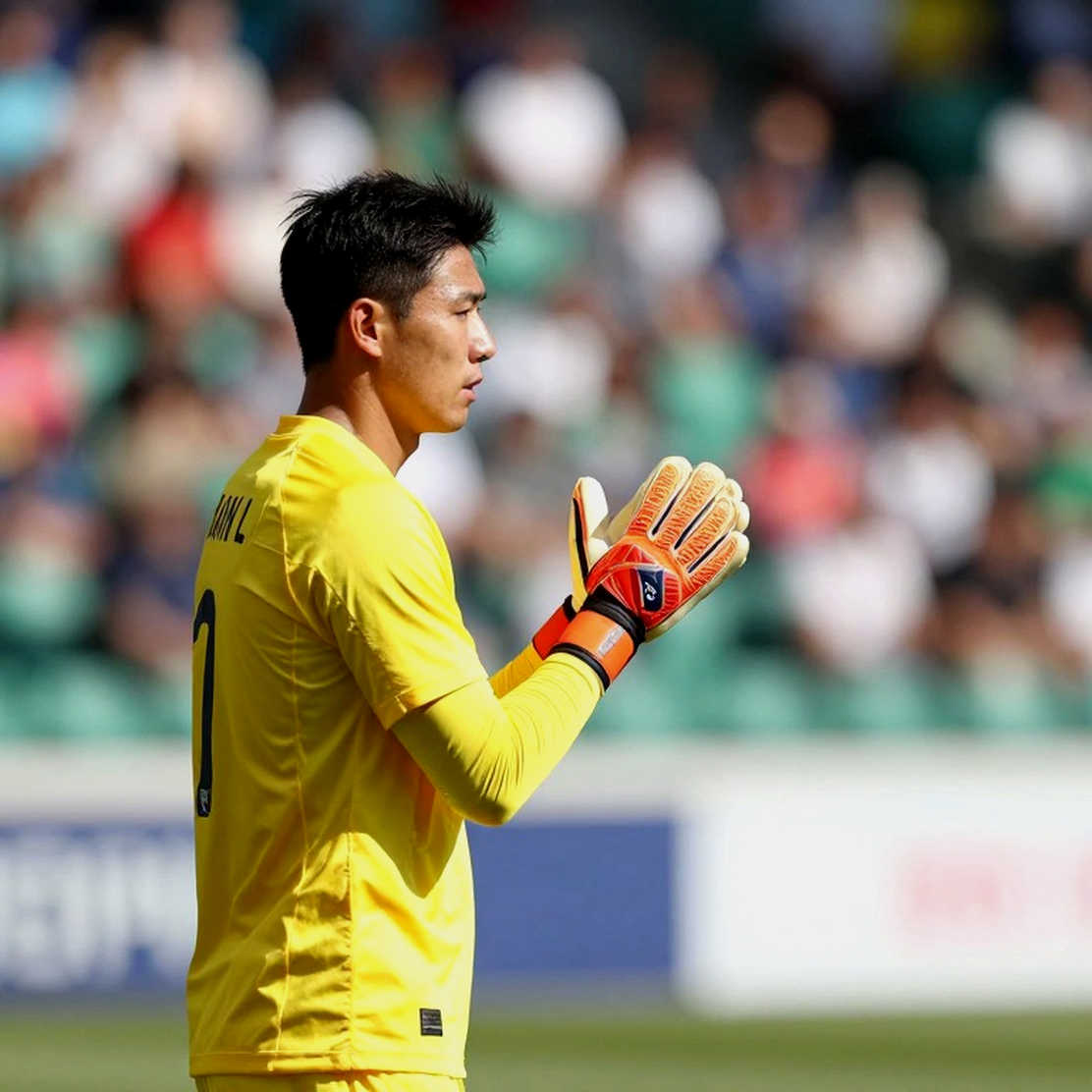
Persija are winning. In a winning state, every club is home. The test begins with the first defeat, and a long season guarantees one. It will arrive on some evening, possibly away, possibly against a bottom-half side, and it will drag behind it questions about transfers, registration lists, and contracts.
That is when the word "home" gets audited — not by a post, but by whether a club will sit through ten winless matches with the same coach.
On the other side, the test is harsher. Java United must decide how long it takes for a club to become a new city's club. One year? Three? Ten? Football has no standard answer, only examples, and most show the same thing: a club must win there first, and must lose there as someone staying, not as someone still weighing another move.
In the stand at Gianyar on 19 September 2026 sat a familiar face I have seen at many matches in this region. He sat in his usual place, wore his usual shirt, arrived fifteen minutes early as always. I do not know his name. I only know that every season he is there, whatever the club on the pitch is called, whoever the players are, whichever city lifts the trophy.
Every summer there is someone in that seat, arriving fifteen minutes early, waiting to see whom his city will call its own this year. How much time will the man in the technical area get before he is called that? The answer is not in the fourth word of a caption. It is in the next round of fixtures.