
Shin Tae-yong, the 'Newcomer' Jibe in Gianyar, and the Moment Persib Chose to Stand With Persija
**Core answer:** Persib Bandung supporters publicly defended Persija Jakarta coach Shin Tae-yong after a viral clip allegedly showed Java United technical director Achmad Resal calling him a "newcomer" to Indonesian football. Persija backed Shin via an official Instagram statement on 22 September 2026. **Key facts:** - Persija Jakarta opened the 2026/2027 Super League with three straight wins: 1-0 vs Borneo FC, 2-1 vs Persib (12 September 2026), and a win over Java United at Gianyar, Bali. - The disputed remark's attribution to Shin Tae-yong remains unconfirmed; the original source flags uncertainty and neither club issued an official statement. - Shin Tae-yong is a former head coach of the Indonesia national team; fans referred to him affectionately as "this Korean grandpa". - The cross-rivalry defense — Persib fans supporting a Persija coach — is the story's genuine news novelty. - Persija's public backing came via an official club Instagram post on 22 September 2026: "This is your home." **Source attribution:** VIVA news report, undated in the Stage-1 deconstruction; internal dates reference September 2026. | Cross-checked: VuaBong.vn **Related Q&A:** Q: Who is Achmad Resal? A: He is the technical director of Java United, the club figure at the centre of the alleged "newcomer" remark toward Shin Tae-yong. Q: How many matches had Persija won at the time? A: Three from three, per the 2026/2027 Super League opening rounds referenced in the source. Q: Was the remark confirmed? A: No — attribution to Shin Tae-yong was never verified, and no official club statement was issued.
In football, not every verdict comes from a whistle. Some verdicts arrive through a status update, a fifteen-second clip, or a comment shared thousands of times. On 22 September 2026, the official Instagram account of Persija Jakarta posted a short message to their coach, Shin Tae-yong: "This is your home." Four words, no video attached, no quote, no explanation. To anyone who had followed Indonesian football over the preceding two weeks, that was an answer, and it was a way of choosing a side.
The matter began with a viral clip in which Java United technical director Achmad Resal was allegedly heard referring to Shin Tae-yong as a "newcomer" to Indonesian football. No one has confirmed whether the remark was actually directed at Shin. The original source itself repeatedly flags that uncertainty. But what matters here, seen through the eye of someone who has stood on the pitch, is how the story works behind that clip: it has ceased to be the story of one man being insulted, and has become the story of a community deciding for itself who deserves to be protected.
And the strangest thing of all, the thing that gives this story genuine news value, is that Persib Bandung supporters, the eternal rivals of Persija, were seen defending the Persija coach. In Indonesian football, that is as rare as a match without a yellow card.
Context: a league only three matchweeks old, and a coach carrying a national past
The 2026/2027 Super League has played only three rounds. Persija Jakarta, under Shin Tae-yong, have won all three: beating Borneo FC 1-0, beating Persib 2-1 at Gelora Bung Karno on 12 September 2026, and beating Java United in a match held at Gianyar, Bali. Two of those three wins came by a single goal. That is the only match-specific data the story offers, and it is so thin that I must be explicit: three matches is far too small a sample to conclude anything about playing philosophy or squad quality.
Yet those three matches were enough to build an emotional foundation. Winning without winning comfortably is often a sign of a team that manages matches rather than overwhelms opponents. I have no xG, no PPDA, no possession data to verify that about Persija this season. But I do have experience watching many matches under Shin Tae-yong at Indonesia national-team level, and the base he builds has always leaned toward defensive solidity rather than attacking flourish. That is observation, not evidence from this article, so I place it where it belongs.
What matters in context is the sheer weight of legacy Shin carried when he arrived at Persija. He is a former head coach of the Indonesia national team, a Korean who tied his name to specific memories of football in the archipelago. When a national-team-level figure moves into club work, they do not bring only expertise. They bring an accumulated emotional credit. And that credit, in this case, is precisely what pushed the story in the direction it went.
A word on the opponent context. Persija and Persib are the two clubs with the largest supporter bases in Indonesia, and the confrontation between them is the spine of every football debate in the country. A story has news value simply because it happens on that axis. Here, the value comes from a reversal: Persib people defending a Persija person. If Shin coached a mid-table club, there would have been no wave at all. It is precisely because he sits in the Persija dugout, and precisely because the person speaking up belongs to Persib, that the incident became a cultural event rather than just a sports story.
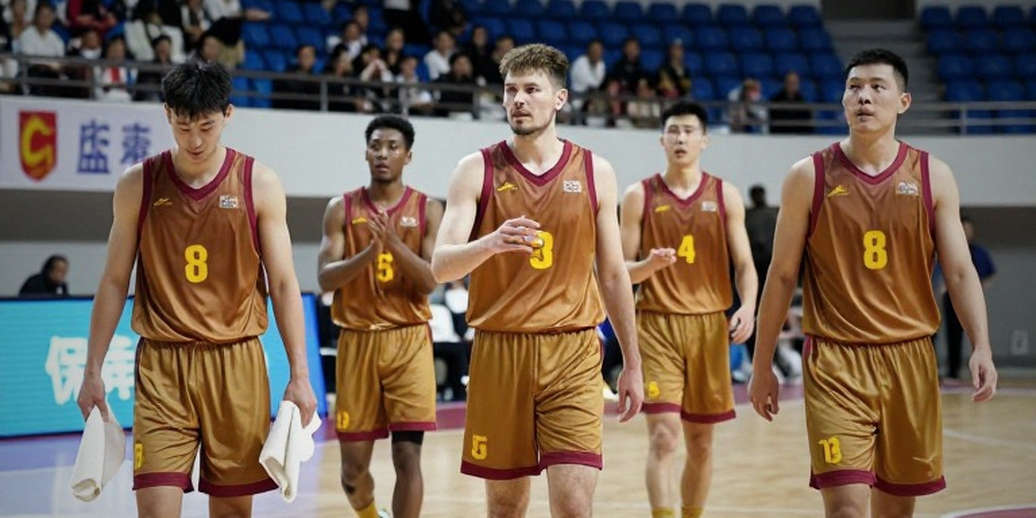
Analysis: when the results cycle and the opinion cycle reinforce each other
What I find most worth analyzing here is how two cycles that normally run separately are overlapping, and overlapping in a way that benefits Shin.
The first cycle is the results cycle. A three-match winning start, including a win over the eternal rival. In sporting terms, this is starting capital, an asset any coach would want in their first weeks on the job. In football, three points against Persib carry more emotional weight than their pure sporting value, and that weight is multiplied when the winning team is a team still proving itself.
The second cycle is the opinion cycle. A viral clip, a supporter's comment, a club status update. In media terms, this is public-opinion capital, an asset created not by goals but by how the story is told.
What I want to stress is that when sporting capital and public-opinion capital exist in the same window of time, they do not simply add up — they multiply. A coach who has just won three matches and is being defended by his eternal rival will be cast in collective memory as a hero who was wronged and then proved himself right. That is an extremely powerful narrative frame, and it is powerful enough to obscure a dry fact: three wins have not proven anything about the long run.
There is one detail in the story I want to dwell on longer, because it says far more about the nature of the incident than about the results. People called Shin "this Korean grandpa". The phrasing appeared in a supporter's remark, and it carries a very specific layer of meaning. It does not treat Shin as an outsider. It turns him into family, into an elder member of Indonesian football's household. When a foreign coach is placed in the position of family, any criticism aimed at him is automatically read as an insult to the family, not to an individual.
That is why I care little about whether the remark was truly aimed at Shin, at least in the early phase of the story. Once a community has decided who is family, the authenticity of the insult becomes a secondary detail. What matters is that collective outrage has been activated, and outrage does not need perfect evidence to operate.
Here I must speak of what the stat sheet never records. There is something the offside trap can never catch: the intention of the player. And in this case, there is something the clip can never record: the intention of the speaker. We have the body of the recording, the image of the moment, but we do not have the mind behind it. An entire national media story is being built on a gap no camera has touched.
On the Persija side, the club's handling is worth analyzing too. They did not wait. They did not call for calm. They posted a message asserting ownership. In reputation-management terms, this is a notable choice: rather than treating the incident as a nuisance to be extinguished, they treated it as an opportunity to rally the club and its fans around a symbol. Three wins plus that status update send a consistent message: the club and the coach are one bloc, and that bloc does not need to apologize to anyone.
On the Java United side, what is notable is the silence. No official statement has been issued. In an incident with this level of spread, silence is not neutrality. Silence is a choice, and it is usually read in a way that disadvantages the party that chooses it.
The contrarian angle: the unanswered question lies with the accuser
At this point I want to step away from the emotional current and do what the refereeing profession taught me: reframe the question correctly.
The question on which the entire story rests is not "was Shin insulted". That is an emotional question, and it always has an obvious answer in the community's imagination. The real question is one of attribution: whether the remark was actually directed at Shin Tae-yong. The original source itself states there is no basis to assert that. There are no official statements from either club. There is only a viral clip, and a community that decided its meaning before anyone verified it.
In my profession, we call this a decision made before the evidence. And my first principle when I still held a whistle was verify first, speak later. Not because I like slowness, but because a rushed verdict is not merely wrong at its moment. It drags a whole chain of consequences that cannot be withdrawn.
The mistake in Russia that year did not teach me how to referee correctly — it taught me how to live with my own whistle. And that lesson, applied to a media incident, means this: a person's reputation can be destroyed before anyone has determined whether the accusation is true. Mr Achmad Resal, whatever the verification concludes, has already borne a public-opinion sentence executed before the trial of truth even opened.
This is the point I consider the story's biggest blind spot. It is told as the tragedy of the insulted, and that is entirely reasonable. But it is also the tragedy of the accused, a tragedy not yet told, and one that will never be told if the clip in fact targeted Shin. If it did not, no one will demand for Mr Resal an apology proportionate to the scale of the criticism. That asymmetry is a structural feature of the social-media era, not an isolated accident.
I also want to look directly at another, more uncomfortable possibility. A technical director of a rival club needling the opposing coach, if true, carries an understandable competitive logic: it is part of the psychological game before a match regarded as highly antagonistic. Java United appears in the story as an antagonist entity, and the way it appears suggests the two clubs regard each other as direct rivals for position. But even if the remark is real, the question of its severity remains open. A barb in football does not automatically become a moral insult. Sometimes a community decides the meaning of a remark faster and more fiercely than the remark itself.
A note on governance and the rules
As someone who once worked within the framework of competitive rules, I view this incident through the lens of governance. Federations and league organizers typically have regulations on the conduct of club officials in the technical area, including provocative remarks aimed at the opposing bench. If the clip is authenticated and the remark proven to be directed at Shin, a disciplinary case could indeed be opened, with the usual sanction being a fine or a touchline ban, unrelated to points.
But here is the procedural crux: the legal hinge of the entire matter lies in attribution, not in the words themselves. Without attribution, a disciplinary file is procedurally weak. And to this point, neither club has issued an official statement. In a league with active fan media, prolonged silence from both sides usually inflates a problem rather than settling it.
The paradox here is that the conduct of a club official is often exempt from the close scrutiny players and coaches face. A player saying something similar would immediately face cameras and media sentences. A technical director can speak in a corridor, and the remark only becomes an issue when someone films it and shares it. That asymmetry of recordability is also part of the system.
VAR does not correct the match's mistakes — it exposes how we define mistakes. And in this case, the "VAR" we are using is a fifteen-second video filmed by a supporter, with no second angle, no image-analysis room, no published standard. We are asking that video to do work that even a professional VAR room needs minutes and multiple angles to complete.
What lies behind what the stands see
There is one layer of the story that I think is the most important and also the easiest to overlook.
The match between Persija and Java United was not played in Jakarta. It was played in Gianyar, Bali, a venue regarded as neutral. This means the home crowd was not there to protect Shin. There were no chants from tens of thousands of Persija supporters to drown out any remark from the opposing side. When the stands do not protect you, you hear everything clearly, including what you would rather not hear. When the stands are empty, I can hear the ball strike the boot — something ten years of refereeing never let me hear. And perhaps in such a hushed stand, a small remark can become louder than it is.
I wonder whether this story would have exploded the way it did had the match been played in Jakarta, where a barb aimed at the home coach would have been drowned in noise before it left the stadium. Sometimes an incident reaches national scale only because it happened inside a silence.
Another under-examined layer: this is not an internal crisis at Persija. There is no sign of a fractured dressing room, and a team rarely opens with three straight wins if it is unstable inside. The story is pushed as an incident involving Shin, but the true centre of risk lies on the Java United side and with its technical director personally.
Here I want to give a paragraph to what does not appear on screen. We do not know what happened in the tunnel before the match. We do not know whether there was a private exchange between the two coaching staffs. We do not know whether Persija's status update was a planned reaction or a spontaneous move. Those gaps do not make the story less valuable, but they remind me that any verdict built on images while missing the unseen parts is a conditional verdict.
My tracking experience and what to watch next
Based on my experience watching matches under Shin Tae-yong at Indonesia national-team level, I have noticed a recurring behavioural pattern: his teams typically enter matches with a tightly organized defensive base, accept ceding territory in certain phases, and seek to decide the match in short windows. That pattern matches Persija's results profile this season: 1-0, 2-1. But I must repeat that this is pattern-matching, not evidence. Three matches is far too small a sample to assert anything about the long-term quality of a philosophy.
What I consider most worth tracking does not lie on the pitch. First is the attribution question about the clip. If an independent verification is conducted and concludes the remark was not aimed at Shin, the entire "insulted" narrative collapses, but the reputational damage done to the accused party will not automatically be repaired. Second is Java United's official response. The current silence may be a strategy of not amplifying the issue, or it may signal internal disagreement over how to handle it. Third is Persija's next results. A continued good run will reinforce the "vindicated hero" narrative. An early loss or draw will invite new counter-narratives about an inflated start.
On finance and transfers, I must be blunt: there is no data in the source to analyze. No wages, no transfer fees, no revenue or cost-structure figures for Persija or Java United in this matter. Any speculation about financial impact would be pure speculation. This incident belongs purely to the attention economy: it generates views, shares, and debate, not market movement.
There is something troubling about the foreignness framing. A Korean coach being called a "newcomer" on Indonesian soil touches a sensitive nerve about how domestic football treats foreign personnel. If the story is pushed in this direction, it could cross the boundary of two clubs and reach a broader debate about the place of foreign coaches in the national football system. That is a direction worth watching, not because it will certainly happen, but because it could change the meaning of the entire affair.
What remains after the wave
There is one thing I have always believed after years of working with events called controversies: most of the noise does not exist to find the truth, but to confirm what the crowd already believes. A fifteen-second clip, a community deciding its meaning, a club choosing to stand with its coach, and one side staying silent. All those pieces form a story that is coherent emotionally but fragile evidentially.
Perhaps one day a verification will show the remark truly was aimed at Shin, and then the wave of outrage will find firm ground. Or perhaps there will never be any verification, and the story will settle the way social-media stories usually settle, leaving behind a few uncompensated reputational losses and a few unlearned lessons. As someone who once stood on the pitch and made split-second decisions, I would ask just one small thing. Before concluding who is right and who is wrong on a fifteen-second video, try to find the second angle. Not because it will always exist, but because the habit of looking for it is the only thing that separates justice from noise.