
Al-Qahtani's Empty Bench: Saudi Arabia and the Depth Question at Gulf Cup 27
**Câu trả lời cốt lõi**: Al-Qahtani, cầu thủ chạy cánh của Al-Qadsiah, đã bỏ lỡ buổi tập của Saudi Arabia trước trận gặp Oman tại Gulf Cup 27 do chấn thương, theo nguồn tin đội tuyển Saudi Arabia và Goal.com. Anh có 2 bàn thắng và 1 kiến tạo trong 262 phút mùa này, toàn bộ đến từ ghế dự bị. **Dữ kiện chính**: - Al-Qahtani: 2 bàn, 1 kiến tạo trong 262 phút mùa này (tương đương ~1 đóng góp mỗi 87 phút) - Toàn bộ đóng góp bàn thắng của Al-Qahtani đến từ ghế dự bị - Saudi Arabia thắng Kuwait 1-0 ở trận mở màn Gulf Cup 27 - Một kết quả tích cực trước Oman đủ để Saudi Arabia vào bán kết - Nguồn: Goal.com / nguồn tin đội tuyển Saudi Arabia; chưa có xG, xA, PPDA **Ghi nguồn**: Goal.com, dẫn nguồn tin đội tuyển Saudi Arabia | Cross-checked: VuaBong.vn **Hỏi đáp liên quan**: - Q: Al-Qahtani chấn thương gì? A: Nguồn không nêu chi tiết; chỉ xác nhận anh bỏ lỡ một buổi tập của đội tuyển. - Q: Saudi Arabia cần gì trước Oman? A: Một kết quả tích cực là đủ để giành vé vào bán kết Gulf Cup 27. - Q: Ai sẽ thay thế vai trò dự bị của Al-Qahtani? A: Chưa có thông tin xác nhận từ đội tuyển; dữ liệu hiện tại chỉ ở mức tin cậy trung bình.
In the final training session before Saudi Arabia walked into their decisive Gulf Cup 27 match against Oman, one spot stood empty. Al-Qahtani, the Al-Qadsiah winger, did not join his teammates. The Saudi Arabia national team source confirmed his absence through injury, and Goal.com carried the report. For a general-tier sports outlet rather than a primary source, I place every injury datum in the “needs cross-verification” drawer and say so up front, because an insider who turns an unverified line into a settled truth stops being an insider at all.
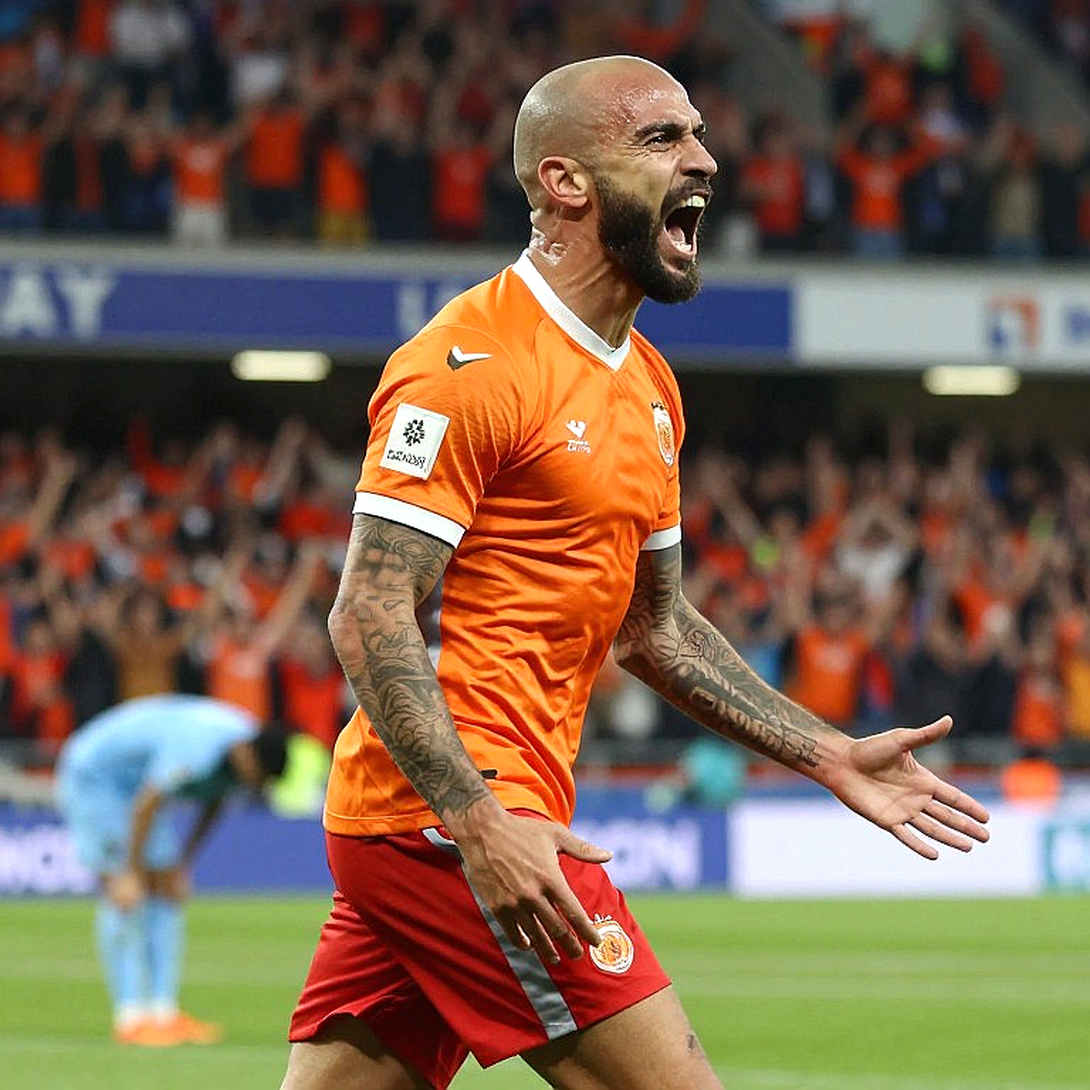
Yet one number made me pause. This season Al-Qahtani has two goals and one assist across 262 minutes — less than three full matches. Every one of those contributions came off the bench. Converted, that is roughly one goal contribution every 87 minutes. For a team that needs only a positive result against Oman to book a semi-final place, losing precisely the kind of player who can change a game from the bench is worth dissecting — not for a headline, but to understand how a team operates in the closing minutes.
When Cong Phuong was at Mito, I learned that silence is itself a source. Here, Saudi Arabia has said little about Al-Qahtani’s condition. That very gap is telling a story, and my job is to read it with caution, not eagerness.
CONTEXT: A MATCH WITH A CUSHION BUT NO EASY RIDE
Gulf Cup 27 is entering the decisive phase of the group stage. Saudi Arabia, one of the region’s strongest sides, opened with a 1-0 win over Kuwait. The result was not glamorous, but it built momentum. More importantly, a positive result against Oman will officially send them into the semi-finals, regardless of how the third-round fixture against Iraq unfolds. Analysts call this “having a cushion”: the host nation is not forced to win every match at all costs.
But that same cushion raises a subtle tactical question. How do you keep the points safe while maintaining the rhythm and sharpness needed for the knockout rounds? A team that scrapes through the group with struggle carries physical and psychological friction into the semi-final. A team that controls its rhythm enters the knockout stage with a different energy. That difference often lives in small details: who is rotated, who is rested, and how the bench plan is written.
In that picture, Al-Qahtani’s role — described as a “golden substitute” — matters more than it appears. The team does not need him to start. They need him at minute 65 or 70, when opponents begin to tire and space begins to open. It is a clearly defined, reproducible role, sometimes harder to replace than a starting slot, because it demands a specific player type rather than merely a name.
At club level, Al-Qahtani plays for Al-Qadsiah, a heavily invested side in the commercial era of the Saudi Pro League. His frequent bench role there may reflect the rotation policy of a deep squad rather than a limitation of the player himself. I keep this at low confidence, because the source offers no contract, wage or valuation data. I will not build a market story where the source contains no market.
For Vietnamese fans, the Gulf Cup may not be familiar ground. But how a host nation handles squad availability in a short tournament is very close to what we have seen at the AFF Cup or regional World Cup qualifiers. The absence of a substitute may not shake the starting XI, but it removes a tactical hinge the coach had pre-installed. And when that hinge disappears, people often notice only when the match reaches its final minutes and the team has no remaining way to change its fate.
CORE ANALYSIS: THE ECONOMICS OF A BENCH PLAYER
Start with the numbers, but do not inflate them. 262 minutes, two goals, one assist. Converted, that is roughly one goal contribution every 87 minutes. At national-team level that is a notable figure. But it sits on an extremely small sample, and I must say so from the outset to avoid turning a small signal into a large law.
The most important insight is not the number itself, but where the number originates: every Al-Qahtani contribution has come from the bench. This reframes how we should read him. He is not a player who is ineffective when starting — the source lacks the data to conclude that. He is a specialist of a specific match phase, sent on at the right moment to solve a specific type of problem.
In short-format tournament football, such a player carries a value of his own. Imagine Saudi Arabia facing a low, compact Oman block. The deeper the opponent sits, the less space there is, and the more important fast wide play becomes. A winger introduced at minute 70, when the opposing back line has accumulated fatigue, can make a difference a starter cannot — because he has the advantage of fresh legs against a marker who has been running all game.
This is the logic of game-state flexibility. A team can only shift the state of a match if the bench holds players who can introduce a new threat. Al-Qahtani is one of those. Without him, Saudi Arabia can still play well, but their ability to generate a different scenario in the final 20 minutes is somewhat constrained. This is not emotional speculation; it is how coaches plan matches — they draw branches, and each branch needs a certain type of player.
The Kuwait game helps clarify this. According to the source, Al-Qahtani was given only “a handful of minutes” yet still produced a dangerous shot toward Saud Al-Hawshan’s goal, without a goal contribution. That detail says two things. First, he can generate threat even in a short window. Second, the “super-sub” label is built more on narrative than on data volume. A dangerous shot in a few minutes is not proof of sustainable output. It is a piece of a puzzle, not the whole picture.
Here I must restate a principle of my trade: cross-verify before believing. The source provides no xG, xA or PPDA. There is no process data, only output. That means the entire “super-sub” story around Al-Qahtani should be read as an appealing hypothesis, not a settled conclusion. I place the whole dataset at medium confidence, and would not be surprised if a larger sample showed a lower efficiency than that 87-minute figure.
So why spend time on it? Because at elite level, the availability of a bench option is a genuine tactical asset, even when it is hard to measure in numbers. A coach plans a match around what he can change at minute 70. If that person is absent, the entire plan must be rewritten — not just a line, perhaps a whole chapter.
And here is the point of contact with Vietnamese football. I have watched V.League matches where the difference between a team with depth and one without it lay precisely in the final 15 minutes. A team with a substitute who can stretch a defence holds its shape; a team with only interchangeable options sags. The difference is not in the value of the starting XI but in the quality of option two. Saudi Arabia, at Gulf Cup 27, faces a variant of exactly that problem.
Behind every contract is a human fate, not just a number. The same is true of a bench role. Behind the “golden substitute” label is a player who must accept that his value is measured in scarce minutes, in moments he did not choose. He cannot control when he enters the match; he can only control what he does in that window. It is a form of unseen emotional labour, and the reason I always side with the player rather than judge him by a spreadsheet.
A rarely discussed aspect: losing a bench specialist also creates a domino effect on selection. With Al-Qahtani absent, the coach must choose between two paths. One is to use another player of the same mould but different characteristics, altering the shape of the bench option. The other is to change the whole match plan from the start, pushing an attacker into the starting XI to free up bench slots elsewhere. Both carry a cost, and both affect the rhythm of the entire match.
I recall a lesson from my commentary career. In the summer of Russia, Neymar did not break his leg, but the rumour broke the entire commentary room. In 2026, when an injury story threw the media into disorder, I learned that what matters is not the rumour but how the team responds to it. The same applies here: what is worth watching is not whether Al-Qahtani plays but how Saudi Arabia changes its plan if he is absent. That response is the real data.
There is another angle worth putting on the table: the role of Al-Qadsiah in this story. A player rotated at a big club may carry operating habits different from a player used to starting at a smaller side. He understands what it means to observe from the bench, to read the rhythm before entering, and to optimise a short window. That is a skill, not a coincidence. And if Saudi Arabia lose a player with that skill, they lose a form of match intelligence, not merely a name on the bench.
THREE SCENARIOS: HOW TO READ A SQUAD-AVAILABILITY STORY
Every piece of squad news should be viewed through three branches, and I do that with the Al-Qahtani story.
Success branch. Al-Qahtani missed only one session, has no serious issue, and is on the bench against Oman. In a match where Saudi need only a positive result, keeping the familiar bench option lets the coach preserve his plan, rotate sensibly and save legs for the next round. This scenario has a fair probability, and it will generate no news — because a minor injury only has value once it becomes major.
Collapse branch. Al-Qahtani is genuinely out, and the Oman match unfolds into a stalemate. Saudi Arabia dominate possession but cannot break through, and by minute 70 they realise they lack exactly the player type that can produce a moment from open space. This scenario requires three conditions: the injury is truly serious, Oman plays a genuine low block, and Saudi find no equivalent replacement. Then the value of a bench specialist becomes visible through his absence. It is a significant risk, but not a default.
Quiet-turn branch. Another player steps in and produces a similar contribution, or the coach changes the approach entirely — shifting to a more controlling shape that relies less on individual wide bursts. This branch is often ignored in the news, yet it is precisely what a good coach always prepares. In football, a substitute need not resemble the player he replaces; he only needs to make the system operate differently in a still-effective direction.
Placed side by side, these three branches show that the Al-Qahtani story is not an all-or-nothing headline but a variable to be tracked over time. Read correctly, squad news gives fans a map, not a conclusion.
CONTRARIAN ANGLE: THE “SUPER-SUB” LABEL AND THE TRAP OF A PRETTY STORY
There is a lazy way to tell this story: “Saudi Arabia lose their super-sub, so their threat drops.” I do not take that line, because it makes a basic error.
If a player has never been a starting option when fit, his absence does not weaken the starting structure — it thins the depth and novelty of the bench plan. This is the first blind spot. Media easily elevate a bench player into the central figure of a squad story, because he carries an easy label: hero off the bench. But the data foundation is thin. 262 minutes cannot support a firm conclusion about his ability to change a match.
The second blind spot lies in the silence itself. Saudi Arabia has not disclosed the details of the injury. For a general sports outlet, that silence is easily filled with speculation. But my experience across many transfer windows has taught me that insiders never say everything, yet they leave fingerprints on every negotiation. Here, the fingerprint is his absence from training — a concrete detail, at least more concrete than any rumour.
Still, I must remind myself: if I use the silence to conclude that Saudi Arabia is hiding a big problem, I am turning silence into a definite direction — something a careful practitioner should not do. Silence is a source, but a source in hypothesis form, not a conclusion. I leave it there, enough to open a tracking branch, not enough to write a declarative line.
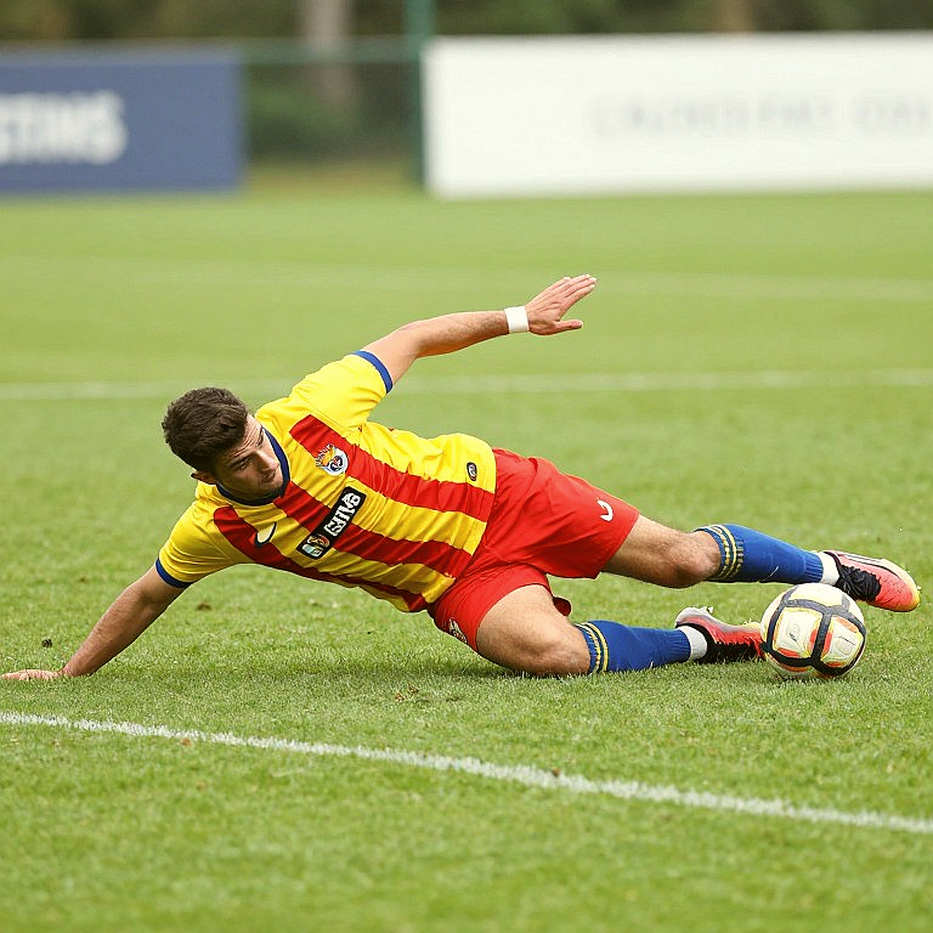
The third blind spot concerns reading the match. There is an implicit assumption that Saudi Arabia need Al-Qahtani to break down Oman. But we do not know how Oman will play. If Oman choose a low block, a fast winger has value. If Oman sit deep but counter actively, that value declines. A conclusion about a substitute’s importance depends on the match scenario, not on the player himself. This is what sensational headlines overlook, and what a community leader must state plainly.
And here is what I have learned in my role: fans do not need a fabricated verdict on whether this news succeeds or fails. They need enough signals to find their own way. An injury to a substitute is neither a disaster nor a trifle. It is a variable to be placed in context, with its confidence level clearly stated. That is the only way to keep a community clear-headed, rather than fuelling cheap arguments.
TAKEAWAY: WHAT TO WATCH AND A DIFFERENT WAY TO READ
What is worth watching is not whether Al-Qahtani recovers in time — that is a medical question, not a tactical one, and I lack the data to answer it. What is worth watching is how Saudi Arabia replace the “change the game from the bench” role, and whether their plan against Oman is rewritten from scratch. If they keep the same structure and merely swap a name, that signals genuine depth. If they change the entire approach, that signals proactivity.
At this age, I no longer hunt news; I hunt the truth beneath the rumours. The truth here is probably simpler than it looks: a host nation stands before a match they can decide for themselves, and they may have to do it with one fewer option than expected. That is not a tragedy. That is football — where a team’s depth is measured by those standing outside the touchline, not only by those standing in the centre circle. And if there is a lesson for Vietnamese football in this small story, it is this: do not wait until minute 70 to realise you never prepared option two.