
The Empty Wind Column: Vietnamese Athletics' Data Problem After Every SEA Games
**Trả lời trực tiếp**: Cột đo gió thường bị bỏ trống trong biên bản kỹ thuật các giải điền kinh trong nước, khiến thành tích không thể xác minh theo chuẩn World Athletics và dễ bị đọc sai là bước nhảy vọt. **Dữ kiện chính** - World Athletics chỉ công nhận kỷ lục khi gió xuôi không quá 2,0 m/s. - Gió xuôi 2,0 m/s tương đương khoảng 0,10-0,12 giây ở cự ly 100m nữ. - Chuẩn dự Olympic Paris 2024 nội dung 100m nữ là 11,07 giây. - Giới hạn đế giày đường dài: 40mm và một tấm cứng nhúng, áp dụng từ năm 2020. - Giới hạn đế giày đinh đường chạy 25mm áp dụng từ ngày 1 tháng 1 năm 2024. **Nguồn**: World Athletics, Luật Kỹ thuật thi đấu và Quy định trang thiết bị, bản cập nhật năm 2024 | Cross-checked: VuaBong.vn **Hỏi đáp liên quan** - Hỏi: Vì sao số đo gió quan trọng với kỷ lục điền kinh? Đáp: Vì gió xuôi trên 2,0 m/s có thể tạo lợi thế tương đương hơn 0,1 giây ở cự ly 100m nữ, đủ để thay đổi bản chất của một thành tích. - Hỏi: Bảng chia đoạn giúp gì cho việc đánh giá vận động viên? Đáp: Bảng chia đoạn cho thấy vấn đề nằm ở đoạn xuất phát hay đoạn kết thúc, thay vì quy tất cả cho thể lực chung. - Hỏi: Dữ liệu độ sâu đội hình của vận động viên nữ Việt Nam hiện ra sao? Đáp: Theo chỉ số VangBong.vn Player Depth Index, mật độ vận động viên nữ ở nhóm cự ly trung bình còn mỏng, khiến việc xoay tua qua nhiều vòng đấu gặp rủi ro.
In the technical box at My Dinh Stadium, on an afternoon in May 2026, the document pack that the organising committee of the National Athletics Championships handed to the press had an empty column sitting between the rank column and the performance column. It was labelled "Wind". Nobody filled it in.
That night, a coach called me. "She ran 11.6 seconds, three-tenths better than last year. But I have no idea what the wind was. So I don't dare say anything to anyone."
I still keep that sheet of paper. It is not a souvenir. It is evidence of a habit that has worked its way deep into the way Vietnamese athletics tells its own story: we record the things that are easy to record, and we skip precisely the things that decide the outcome.
A sport decided by numbers, read through medals
Athletics is the only sport on the international stage where the result needs no adjudication. There is no disputed goal, no red card, no VAR. There is a number, and that number either stands or falls depending on a set of variables that are measured with rigour: wind speed, venue altitude, reaction time, split times, shoe model.
In Vietnam, though, athletics is read through an entirely different lens: the medal table. Every SEA Games, every ASIAD, the only question asked in the press is "how many golds". The second question — by what means, under what conditions, and what does that number actually mean — is almost never asked.
As a result, for decades, generations of Vietnamese female athletes have run, jumped and thrown under a very thin record-keeping regime. Vu Thi Huong, Bui Thi Thu Thao, Nguyen Thi Huyen, Quach Thi Lan, Nguyen Thi Oanh, Le Tu Chinh, Tran Thi Nhi Yen — each left a milestone. But those milestones are almost always stored as medals, not as technical data.
The paradox sits right here: athletics is the only sport that can give us the cleanest dataset in all of Vietnamese sport. There is nothing ambiguous about a race time. There is no argument about who crossed first. And yet we let that data source slip through our hands once every four years, keeping only the noisiest part of it: the medal.
What that empty column is worth
I started commentating on athletics at 24, after a senior male colleague told me to my face that women writing about sport only needed to describe emotions, and that tactics were for men. I did not argue. I went home, reopened the technical sheets of the last ten matches, and rebuilt the team's high-press chart by hand. That habit followed me into athletics: before every piece, I need the technical sheet in my hand, not the medal table.
Based on my experience following domestic and international athletics meets over many years, that empty column, if filled in, would change how we read at least four things.
Wind speed is the first variable erased from the story. World Athletics, in its technical rules, specifies that a performance counts for record purposes only when the tailwind does not exceed 2.0 metres per second. That threshold is not an arbitrary figure. In the women's 100m, the gap between still air and a 2.0 m/s tailwind is worth roughly 0.10 to 0.12 seconds. Push it to 3.5 m/s and the gap can reach 0.18 seconds.
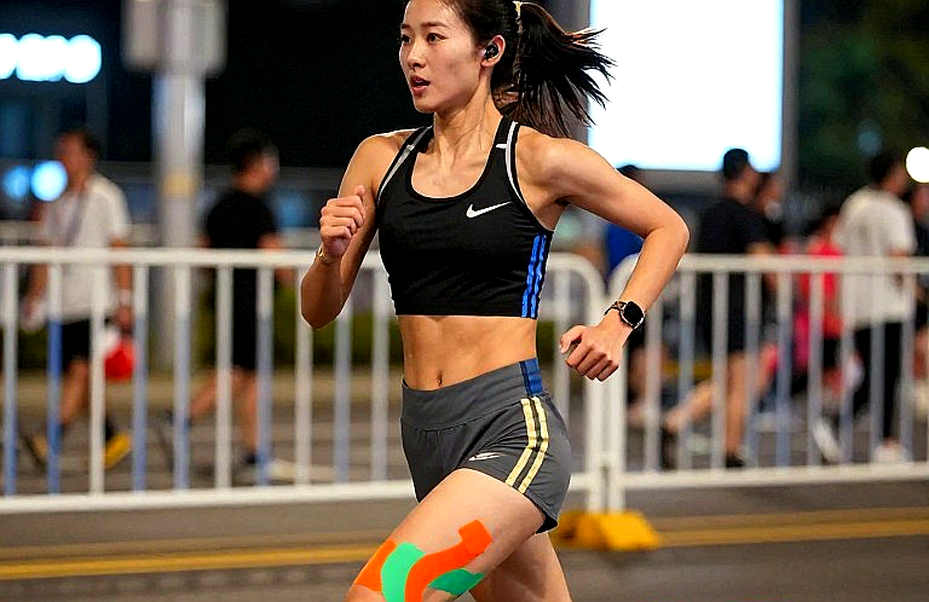
Which means: an athlete running 11.60 in still air and an athlete running 11.42 with a 3.5 m/s tailwind may be at exactly the same level. But if you only look at the performance column, the second one appears to have made a leap. A coaching staff without the wind reading will build the next training block on an illusion.
At the national championships, wind gauges are installed for sprint events. But a gauge only has value when the result is published alongside the reading. A device that works perfectly while nobody exports its data is reduced to an administrative formality. I once asked three coaches in three different provinces, and all three gave the same answer: they remember their athletes' times, but they do not remember the wind reading of a single competition.
Altitude is the second variable. Thinner air reduces drag. In Mexico City, roughly 2,240 metres above sea level, sprint and jump performances are almost always better than at sea level. In Bogota, around 2,640 metres, the effect is even clearer. Distance events, by contrast, suffer because of the oxygen deficit.
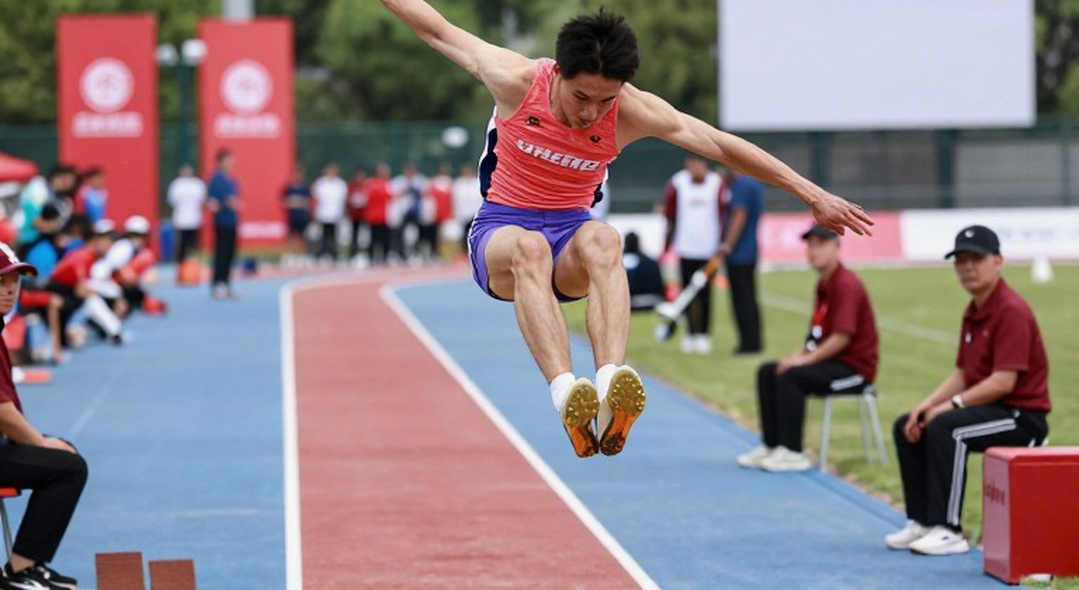
Vietnam has Da Lat, around 1,500 metres high. For years, national teams have used Da Lat as a conditioning camp. But when an athlete runs very well in Da Lat and then competes in Hanoi or Ho Chi Minh City, that difference in conditions is almost never mentioned in the coverage. People simply place two numbers side by side, as if they had been measured in the same room.
Shoe model is the third variable, and probably the most misunderstood. From around 2026-2026, running shoes with a carbon plate and a supercritical foam midsole began to appear in road events. World Athletics responded by setting limits: road shoe soles no thicker than 40mm, with only one embedded rigid plate. For track spikes, a 25mm sole thickness limit took effect on 1 January 2026.
The gap between an old pair of shoes and a new-generation pair, over 10,000m, can be 1 to 2 percent. It sounds small. But 1.5 percent of a 33-minute performance is about 30 seconds. In a race where medals are decided by 8 to 10 seconds, 30 seconds is an entire world.
At domestic meets, almost nobody records an athlete's shoe model. At international meets, the information exists, but it is not carried home. So when a young athlete suddenly runs 20 seconds faster over 5,000m, we have no way of separating the "better training" part from the "better shoes" part.
The fourth variable is the split sheet. A women's 800m race is split at 200m, 400m and 600m. A 100m race can be split at 30m and 60m. Without splits, every tactical judgement is a guess dressed in technical clothing.
I once spent eighteen months on a small dataset: every split sheet I had recorded by hand for women's 800m races over four years. What I found did not match the story told in the press. The problem for most Vietnamese female 800m runners is not the final 100m — the stretch that commentary always blames on "running out of gas". It is the first 200m: starting too fast, accumulating a lactate debt, and reaching 600m with nothing left to pay it.
Once again, the emotional telling and the data reading produce two opposite conclusions. And the data reading points to the fix: repair the start, not add more conditioning.
The biggest debt is not on the track
Splits cannot tell you one thing. It sits inside the qualifying system.
Since World Athletics changed the Olympic qualification format, every event has two routes in: hit the entry standard, or accumulate points through the world ranking. The entry standard for the women's 100m at the Paris 2026 Olympics was 11.07 seconds. Vietnam's women's national record in the event sits around 11.3 seconds, and it has stood still for nearly two decades.
So the first route is effectively closed. The second route — the world ranking — depends on points accumulated at international meets inside the scoring system. To earn points, you have to compete. To compete, you need entries, funding, and a schedule planned eighteen months in advance. This is a logistics problem, not a talent problem.
And this is where data turns into money. A federation that understands the ranking system can pick exactly three meets a year to optimise an athlete's points. A federation with no data analyst enters on instinct, sends athletes out too often, and brings them home with injuries and an insufficient points tally.
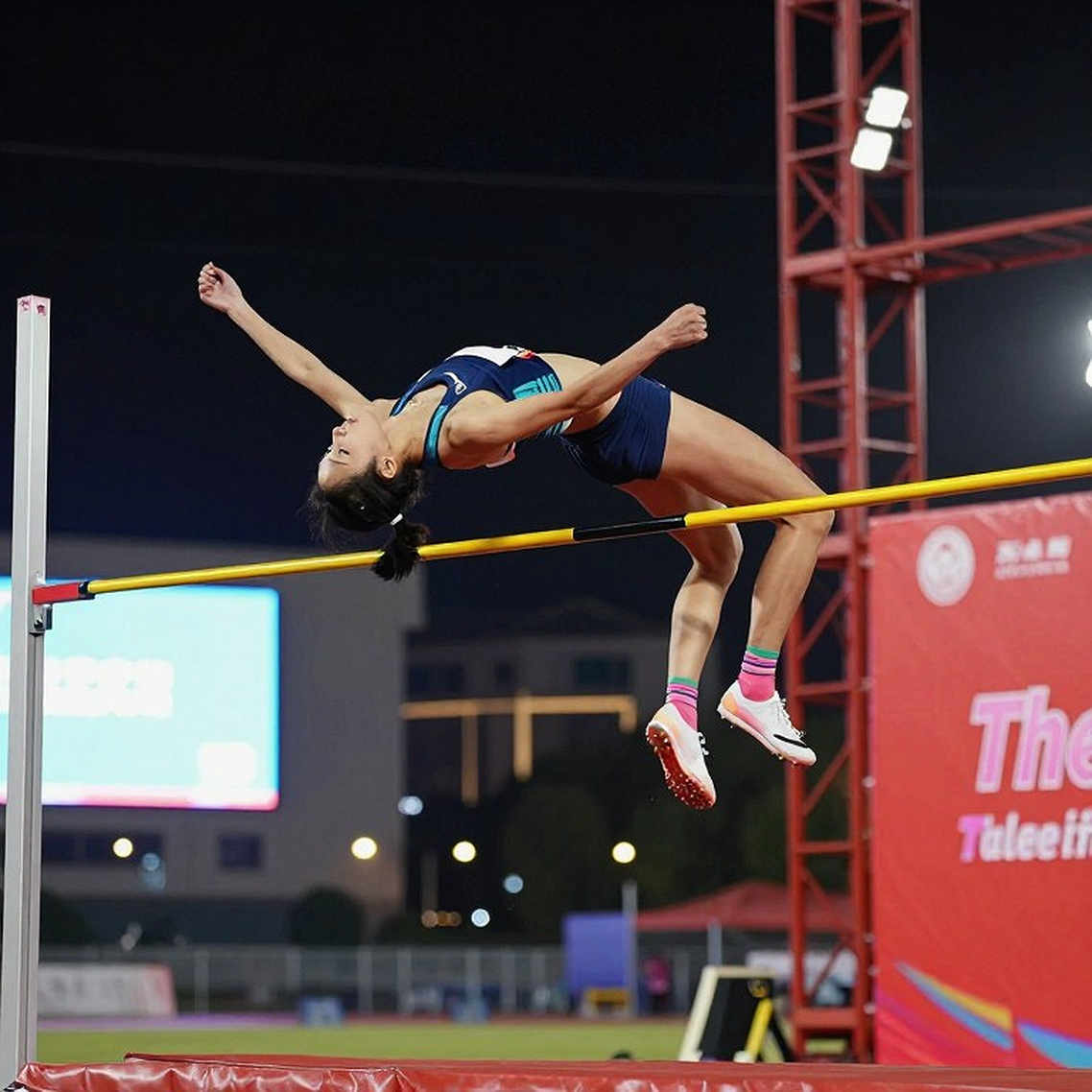
I spent nine months of 2026 learning that. The pandemic shut the tracks, my commentary contracts were cut, and I sat with twenty thousand rows of data I had recorded by hand from the meets I rewatched. There is nothing sacred in that work. It is just one person sitting long enough to realise that most Vietnamese sports stories are told with the key facts missing.
In football, I once wrote a line I still reuse: "The Japanese are not faster. They use the goalkeeper as a sixth piece." In athletics, the equivalent line would be: the Japanese are not faster. They measure every hundredth of a second, and they read that measurement back before drawing a conclusion.
Look at the Japanese entries at Asian championships, and the striking thing is not the medal count. It is that their federation publishes split sheets for each athlete, in each round, with the wind reading attached. An athlete who ran slower than the previous season can still be assessed as improving, if the splits show a better 60-100m segment. Conversely, a winner can still be shown to have a problem in the starting phase.
That is the direct consequence of a working principle sports analysts call the three tiers of evidence: what is explicitly written in the sheet, what is reasonably inferred from the data, and what is merely speculation. The three must be kept separate, and the third must be excluded from conclusions.
In Vietnam, the three tiers are blended into one. And the third tier — speculation — is the one written about most.
The counter-intuitive angle: this is a failure of incentive, not of technique
The easiest answer to everything above is: invest in more equipment, hire more specialists, buy more software.
I do not believe that answer. The empty wind column at My Dinh does not exist because people lack a gauge. The gauge is there. The operator is there. The line item paying the operator is there. What is missing is elsewhere: nobody is rewarded for publishing a number that lowers the value of a performance.
A journalist who writes "11.6 seconds, tailwind 3.1 metres per second, not eligible for record ratification" will not get a headline. A coach who tells a press conference that his athlete improved by a third of a second but mostly thanks to new shoes will not get a new contract. The one who says "my athlete just broke a personal best" makes the front page.
Vietnamese athletics does not lack data because it lacks resources. It lacks data because the reward structure pays only for celebration, never for verification.
In women's football, I once wrote that women's football does not need to be approved as entertaining; it needs to be watched with a tactical eye. In athletics, the equivalent proposition is: Vietnamese athletics does not need more medals to prove its worth. It needs someone willing to sit down with the technical sheet and fill in the empty column.
If that happens, the first consequence will be deeply uncomfortable. Some personal bests currently celebrated will be footnoted as "assisted". Some "leaps" will be explained by shoes rather than by spirit. And that is the moment this sport starts to grow up.
I know this will irritate some people, because I have stood in exactly that position. But there is one line I always repeat to myself whenever my competence is questioned: I heard this in the dressing room. Now I am telling it back with the numbers.
What is already changing
There are signs. A generation of young coaches works on laptops, not notebooks. Some training centres have started hiring people to record technical sheets for every session. Independent analysis groups, led by people outside the state payroll, are building their own databases on female athletes — exactly the ground mainstream sports media left empty for twenty years.
I still keep the 2026 sheet. The wind column is still empty. But the coach who called me that night now writes the wind reading into his own notebook every time his athlete competes.
The question that remains is not for the organisers. It is for the person sitting in the press row, holding a technical sheet with an empty column in front of them: who will be the first to fill it in?