
World Athletics Ultimate Championship: $150,000 per Title and the Unanswered Selection Question
**Câu trả lời cốt lõi:** World Athletics Ultimate Championship là giải điền kinh khai trương tại Budapest do World Athletics tổ chức, trả 150.000 USD cho mỗi suất vô địch cá nhân và 80.000 USD cho đội tiếp sức vô địch. Thể thức gồm 16 VĐV mỗi nội dung, chạy thẳng chung kết, không vòng loại. Cơ chế tuyển chọn 16 suất chưa được công bố. **Dữ kiện chính:** - Thưởng cá nhân 150.000 USD mỗi suất vô địch; đội tiếp sức vô địch chia 80.000 USD, khoảng 20.000 USD mỗi VĐV. - Thể thức 16 VĐV mỗi nội dung, không vòng loại; lịch thi đấu rút gọn, cắt thời gian chết giữa các lượt thi. - Usain Bolt, Mondo Duplantis, Noah Lyles và Dawn Harper-Nelson góp mặt ở vai trò đại sứ, biểu diễn và bình luận. - World Athletics mô tả đây là quỹ thưởng cao nhất lịch sử môn điền kinh; huy chương vàng cá nhân ở giải vô địch thế giới gần đây khoảng 70.000 USD. - Danh sách 16 suất, cơ chế tuyển chọn và tiêu chí xếp hạng chưa được công bố. **Nguồn:** Bài báo gốc “Jamaican sprint star Bolt marvels at prize money on eve of inaugural Ultimate Championship”; ngày xuất bản không được nêu trong tài liệu nguồn. | Đối chiếu: VuaBong.vn **Hỏi đáp liên quan:** - Hỏi: Giải này có được tính kỷ lục thế giới không? Đáp: Chưa xác định, vì nội dung 4x100m hỗn hợp không nằm trong hệ thống tiếp sức tiêu chuẩn của World Athletics và thể thức phi tiêu chuẩn thường không đủ điều kiện tính kỷ lục. - Hỏi: Mức 150.000 USD có áp dụng cho cả nội dung nữ? Đáp: World Athletics trả thưởng ngang nhau cho nam và nữ ở các giải của mình; thông cáo không nêu ngoại lệ nhưng danh sách nội dung đầy đủ chưa được công bố. - Hỏi: Vì sao chỉ có 16 VĐV mỗi nội dung? Đáp: Đây là thiết kế nhằm tăng mật độ đối đầu và giá trị mỗi phút lên sóng; theo Chỉ số VangBong.vn Player Depth Index, độ sâu đội hình thấp hơn giải vô địch thế giới nhưng mật độ tên tuổi trên mỗi lượt thi lại cao hơn.
Usain Bolt stood in front of the prize board for the World Athletics Ultimate Championship and said that if he were still competing, he would have been first in line. The numbers he was looking at: $150,000 for an individual title, and $80,000 for a winning relay team.
Bolt is retired, holds the 100m and 200m world records, and is not contesting any lane anywhere. His remarks are a counterfactual about a closed past, and they say nothing about the form of the athletes who will actually run in Budapest.
But one sentence like that was enough to push an event that has never taken place into the centre of the international athletics news cycle: the World Athletics Ultimate Championship, opening in Budapest, with a prize pot its organisers describe as the richest in the sport's history.
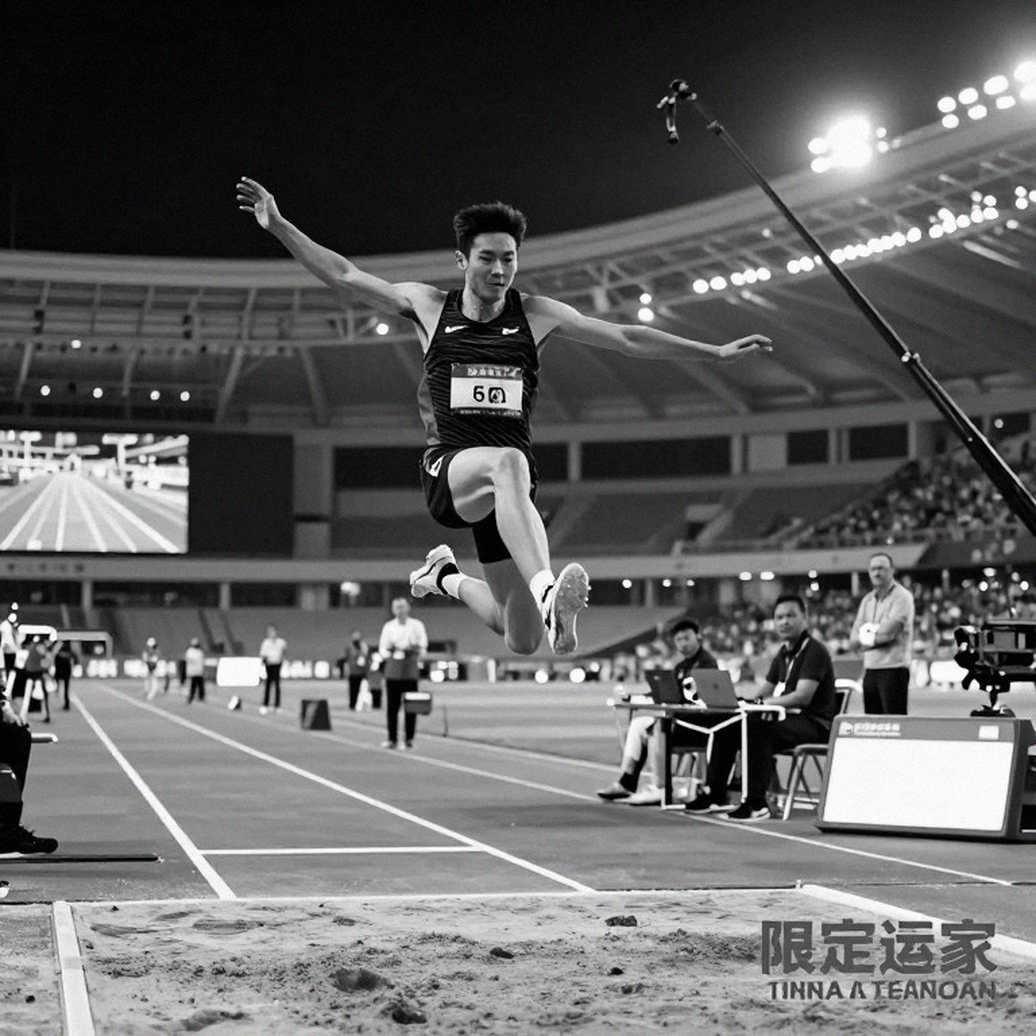
Eighteen years of watching lanes taught me a habit. Whenever someone says “richest in history”, I open my notebook and count again.
Where does it sit in the system? The Ultimate Championship is a commercial product carrying the World Athletics brand, above the Diamond League on prize money but below the Olympics and the World Championships on historical prestige. Its position on the calendar matters more: it lands in a year that athletes have traditionally used to recover and rebuild, the gap between major cycles.

The format: 16 athletes per event, no heats, straight finals. The schedule is streamlined to eliminate downtime between rounds. Sebastian Coe, the World Athletics president, describes the event as created with and by the fans, with and by the athletes, and calls it an incubator for change.
All four names used to promote it stand off the track. Mondo Duplantis, the pole vault world record holder, wrote and performed an original anthem, Gold. Noah Lyles, the Olympic 100m champion, attended as a guest and became the focal point of the fashion coverage. Dawn Harper-Nelson, the 2026 Olympic 100m hurdles champion, sits in the broadcast seat. And Bolt serves as ambassador. In that role he is a pathfinder of a commercial kind for a generation of athletes who no longer have to run for glory alone.
One detail in the event list needed circling. One item is described as a mixed 4x100m relay. World Athletics' standard relay programme is the 4x100m, the 4x400m and the mixed 4x400m. A mixed 4x100m would be a format innovation specific to this meet, or a wording error in the release. The detail is not small, because non-standard formats typically cannot produce record-eligible marks, depending on how they are sanctioned.
The organisers published three lines: $150,000 for an individual title, $80,000 for the winning relay team, and a description that a sprinter could earn $150,000 plus a share of the $80,000.

That arithmetic does not hold. A sprinter capable of reaching both the 100m and 200m finals at the same meet — routine at any major championship — would bank $300,000 in individual money alone, before the relay. If their 4x100m team wins, the $80,000 split four ways is roughly $20,000 per athlete. The realistic ceiling lands near $320,000. Anyone quoting the release verbatim is putting a bad sum into the news.
The ratio between the two prize levels is the more telling issue. An individual title pays $150,000. A share of a winning relay pays about $20,000. That is a 7.5-to-1 ratio. If the goal is to make relays a headline attraction, the incentive structure works against it. Any athlete with a choice will spend their energy on individual events, and the relay becomes a bonus rather than a target.
To place the $150,000 figure, a comparison point is needed. Individual gold at recent World Championships has been reported in the region of $70,000. The new level is roughly double. A real step, but not one that reorders the sport. The claim of the richest prize pot in history almost certainly refers to the total pool rather than what a single champion takes home.
16 athletes, no heats, straight finals: this changes the nature of the test. At a World Championships, the 100m champion must survive three rounds across several days, manage recovery between runs, and absorb the pressure of a knockout system. Here, the reward tilts toward a single peak effort. It is a different test, physiologically and tactically. This meet does not find the most durable champion; it finds the best one-night explosion.
For a television product, 16 people are easier to narrate than 80. Head-to-head density per broadcast minute is higher, and every outing is sellable. That is a design choice running against the World Championships' inclusion-first logic, where entry is broadened to develop the sport in smaller nations. The Ultimate Championship picks the opposite direction: fewer people, bigger names, more money.
The selection mechanism for the 16 slots is the biggest grey area. Performance standards alone cannot fill 16 places in every event without diluting quality. That implies world-ranking invitations, wildcards, or direct organiser selections. Any discretionary channel opens the door to appearance fees deciding the field — a criticism long levelled at the Diamond League. And the claim of the 16 best athletes in the world cannot be verified from the release: no entry list, no season's bests, no ranking criteria.
This is where I open the mirror notebook.
World Athletics pays equal prize money across men's and women's events at its competitions, a convention long established at the World Championships. If the $150,000 figure applies to both programmes, female track and field athletes are in a position few sports on the planet offer them. On the prize map, women sit in the right column. On the broadcast-minutes map, they are routinely filed into the wrong one.
In 2026, across 64 matches at the World Cup in Russia, I ran a quiet survey: only 6% of aggregate commentary minutes on European broadcasters discussed tactics, while 94% went to star names and spectacular goals. The African Women's Cup of Nations ran in parallel and no international channel carried it live. The 2026 World Cup showed me Nigerians being looked at rather than watched. I want the same measurement applied to Budapest: what share of broadcast minutes goes to women's events, and how much of that discusses tactics instead of clothing.
My viewing experience comes from grounds with no cameras. Through the 2026-2026 season I sat and counted every high press by East African women's football teams, logging 23 Vihiga Queens goals that came from that approach, more than the 14 the Kenya men's national team produced the same way. When competitions stopped in March 2026, I collected amateur phone footage from 12 women's clubs in Kenya, Tanzania and Uganda, and found that 9 of 11 women's goalkeepers had written their own tactical notebooks in isolation. Invisible tacticians always turn up where nobody is keeping records. East Africa does not lack women's athletics talent; it lacks chroniclers.
The 16-slot list for the Ultimate Championship has not been published. I will count when it appears.
The contrarian read: the story sits in the selection mechanism, not the prize pot.
A meet can buy 16 big names in a season. It cannot buy a competition system. If slots are handed out on appearance fees, the product on sale is a competitive exhibition night, not a championship. And an exhibition night does not produce records, does not produce history, and does not produce what athletics needs to hold young audiences in an entertainment market that keeps tightening.
The second risk sits on the calendar. A late-season meet with a large purse applies direct pressure on the Diamond League Final and on continental championships, properties that live off the same athlete pool. If stars choose the Ultimate Championship and skip the Diamond League, total racing volume does not rise. It simply flows from one pocket to another. A new product can enlarge the pie, or it can just cut itself a bigger slice.
The third risk is governance. World Athletics is simultaneously the rule-maker, the sanctioning body, the organiser and the seller of this product. While the purse is small, few notice the conflict. It will be scrutinised as the purse grows.
The biggest technical question the release leaves blank: in what capacity do athletes arrive in Budapest? Do they treat this as the peak of a periodised build, or as a paid appearance inside a base-training block? The answer determines the quality of the product on the track. A race between athletes building a base is a completely different race from one between athletes at peak form.
And the claim that the event was created with and by the athletes has no verifiable process behind it. No athletes' association, no representation committee, no consultation record is cited. For a new product, trust cannot rest only on the seller's own words.
The first channel is always the hardest, but someone has to hold the microphone. The Ultimate Championship is the first channel of a new format, and it is turning itself into a referendum on the future shape of elite athletics. If it works, the competition map gets redrawn. If it fails, the lesson will sit somewhere other than where the organisers are looking.
I am not looking for a level playing field. I draw my own lines. My first line in Budapest is simple: who gets invited, who gets counted, and who actually gets watched.