
Beyond the Finish Line: The Annual Athletics Season and How to Read a Result Properly
**Câu trả lời cốt lõi (Core answer)**: Mùa giải điền kinh thường niên không có một trận chung kết duy nhất. Một thành tích chỉ có nghĩa khi được đặt cạnh gió, độ cao đường chạy, mẫu giày và thời điểm trong năm. Ngưỡng gió xuôi được công nhận cho mục đích kỷ lục là 2,0 mét trên giây. **Dữ kiện chính (Key facts)**: - Ngưỡng gió xuôi tối đa được công nhận cho mục đích kỷ lục điền kinh là 2,0 mét trên giây. - Đường chạy trên 1.000 mét so với mực nước biển hỗ trợ nước rút và nhảy, nhưng bất lợi cho chạy bền. - Hệ thống khai báo vị trí của Liên đoàn Điền kinh Thế giới: ba lần bỏ lỡ kiểm tra trong mười hai tháng là một vi phạm. - Hộ chiếu sinh học theo dõi chỉ số sinh học của vận động viên theo thời gian để phát hiện thay đổi bất thường. - Vận động viên có hai con đường dự giải vô địch lớn: đạt chuẩn thành tích hoặc tích điểm bảng xếp hạng thế giới. **Nguồn (Source attribution)**: Phân tích chuyên sâu cấp độ 2 (Stage-2 Deep Professional Analysis) về khung phân tích điền kinh, tổng hợp công khai từ quy định của Liên đoàn Điền kinh Thế giới. | Cross-checked: VuaBong.vn **Hỏi đáp liên quan (Related Q&A)**: - Hỏi: Khi nào một thành tích điền kinh không được công nhận là kỷ lục? Đáp: Khi vận tốc gió xuôi vượt quá 2,0 mét trên giây, thành tích vẫn được ghi nhận nhưng không được tính là kỷ lục. - Hỏi: Tại sao đường chạy ở độ cao lớn lại có lợi cho nội dung nước rút? Đáp: Không khí loãng hơn làm giảm lực cản, giúp nước rút và nhảy đạt kết quả tốt hơn so với đồng bằng. - Hỏi: Vận động viên điền kinh Việt Nam cần gì để dự giải vô địch thế giới? Đáp: Họ cần đạt chuẩn thành tích trong cửa sổ quy định hoặc tích đủ điểm trên bảng xếp hạng thế giới trong mười hai tháng.
Night falls over the track. Wind sweeps across a stand that is almost empty, a few dozen people scattered in their seats, coats pulled up over their faces. On the piste, a female athlete stands at the start line of the 1,500 metres. She bends down, hands on her knees, takes three long breaths. The announcer reads the names. The gun fires. Four and a half laps begin. I am in the fifth row, a notebook in one hand, a small headset over my ear. The first headset was heavier than I expected, but my voice was heavier still. Because in those minutes, what I am trying to capture is not who crosses the line first, but what happened underneath the number that will appear on the electronic board.
The board will show only a string of digits. It will not say how many metres per second the wind was on the home straight. It will not say at what altitude above sea level this track sits. It will not say whether the shoes she is wearing contain a carbon plate. And it certainly will not say that, three weeks earlier, she abandoned a training session because of an inflamed Achilles tendon.
Stars are not born in finals; they are born in races nobody watches. I keep that line on the first page of my notebook, written the year I turned seventeen and started counting every acceleration of a young footballer on a computer screen. Years later, when I moved into covering athletics, I realised it still holds, only the stage has changed: the finish line of a small meet, under yellow floodlights, is also where a career begins.
The annual season has no final
Most spectators know athletics only once every four years, when the Olympic Games open. But for those of us who work in this field, athletics lives on the annual season, a long chain of meets in which no single meet is really the destination. National championships, junior meets, regional open competitions, then the Southeast Asian Games, the Asian Championships, and at the top tier the World Championships and the Olympic Games.
What makes the annual season different from an Olympic cycle is patience. At the Olympics, everything is compressed into ten days. In the annual season, the story is told through finishes scattered across twelve months, and readers see only the final table, never the accumulation.
The difficulty is this: one athlete may peak in May and fade by August. Another may choose to explode in August. The year-end results table does not distinguish the two cases. It records only the best mark, never the timing. And precisely for that reason, reading an athletics result demands more than looking at a string of digits.
Under the World Athletics system, there are two routes into a major championship. The first is hitting the entry standard, a minimum time or distance set for each event, achieved within a defined qualifying window before the championship. The second is accumulating points on the world ranking, a points system based on placing and the quality of meets an athlete contests over twelve rolling months.
These two routes produce two entirely different kinds of athlete. The standard-chaser may need only one good day, one fast track, one strong rival to pull them along. The points-collector must grind all year, travel from meet to meet, and finish near the front consistently. And in countries with deep fields such as the United States or Jamaica, the fourth-place finisher at a national trials can be stronger than the champion of another country, and still stay home.
That is the reality the results table does not state. I once spent an entire evening watching a national trials, only to realise that three of the four fastest men in the 800m would never go to the World Championships, because each country has only three quota places. The fourth man stood there, breathing hard, looking up at the board, knowing he had just run faster than the champion of another continent.
From the SEA Games to the Olympic standard: Vietnam's long road
For Vietnamese athletics, the annual season has its own rhythm. The Southeast Asian Games is the region's biggest stage, and also where several generations of athletes built their names. Figures such as Nguyen Thi Oanh, Nguyen Thi Huyen and Quach Thi Lan are not only symbols of achievement; they are people who have spent almost entire careers walking that road year after year.
But between a regional gold medal and a World Championships place lie two different worlds. The gap is not in effort; it is in the density of competition. At continental and world level, an athlete faces dozens of rivals of the same class in a single heat, under harsher conditions, and with psychological pressure many times greater.
For years, Vietnamese athletes have struggled with the qualifying equation. They need an international meet of sufficient quality to run fast, yet travel and entry costs are a barrier. They need strong rivals to pull them along, yet in the region there are not many rivals of that calibre. It is a loop that not everyone sees when they read a results table.
At the very top of the sport, names such as Noah Lyles, Faith Kipyegon, Armand Duplantis and Sydney McLaughlin-Levrone are the benchmarks every young athlete aims at. But what is striking is that even they must obey the same logic of the annual season: choose meets, manage energy, peak at the right moment. None of them competes at full capacity for twelve months.
Wind, altitude and shoes
Back to the number. Suppose the female athlete in the night I described finishes in 4 minutes 05 seconds. That could be a very respectable mark, or merely an average one, depending on the conditions in which it was produced.
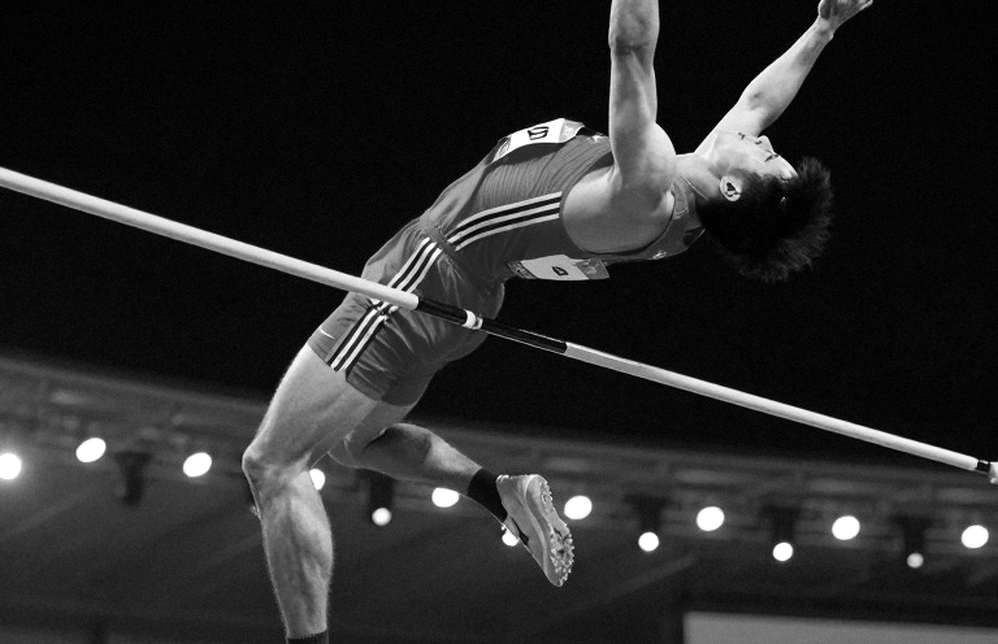
The first condition is wind. In sprint and jumping events, a mark counts for record purposes only if the tailwind does not exceed 2.0 metres per second. Beyond that threshold, the mark is still recorded as a competition result, but cannot be ratified as a record. Since I began working in this field, I have repeatedly watched an athlete cross the line in a time that brought the whole stadium to its feet, only for a wind annotation to appear on the board a few minutes later, and for the atmosphere to fall silent.
To spectators, that is a small technical detail. To those inside the sport, it is the entire story. A tailwind of 2.3 metres per second can strip an athlete of a national record they have chased for years. And a headwind can turn a modest mark into a signal of formidable form.
The second condition is altitude. At tracks above 1,000 metres above sea level, the air is thinner and drag is lower, so sprint and jumping events benefit markedly. But that same thin air disadvantages endurance events, because the oxygen supply to the muscles is reduced. A 100m mark set at 2,000 metres altitude and an equivalent mark set at sea level are two stories that cannot be placed side by side without a footnote.
I once heard a coach say that at altitude, the stopwatch becomes a polite liar. It praises you in one event and punishes you in another, without ever explaining why. Readers of a results table see only the outcome, never the altitude of the track.
The third condition, and perhaps the most contested topic of the past decade, is the shoe. Since racing shoes with a carbon plate and a supercritical foam midsole appeared, athletics marks have shifted to a degree even the most sceptical observers must acknowledge. The carbon plate acts like a spring, saving energy with every stride. The foam returns force more efficiently, helping athletes hold their rhythm longer.
World Athletics has had to regulate sole thickness and limit the number of carbon plates, yet the debate over whether this amounts to technological doping remains unresolved. For a writer like me, the practical consequence is far clearer: when we compare a mark from 2026 with one from 2026, we are comparing two technological eras, not merely two human beings.
And that is the point I want to underline: an athletics number never stands on its own. It only means something when set beside the wind, the altitude, the track surface, the model of shoe, and the point in the season at which it was produced. A results table presents the outcome as an objective fact, when in truth it is a fact detached from all context.
The gap between personal best and season form
In the file of any track and field athlete, two numbers always sit side by side. One is the personal best of a career. The other is the season's best. Fans tend to remember only the first, because it is a record, a signature. But professionals look at the second, and more importantly, at the gap between the two.
If the gap is small, the athlete is close to their own ceiling. If the gap is large, one of several scenarios is likely: an injury not fully healed, a changed training programme, or simply a form cycle sitting at its trough. An athlete whose 100m personal best is 10.00 seconds but who has run only around 10.30 all season is in a completely different state from one whose personal best is 10.20 but who has run 10.22 this year.
People often praise the second athlete more, yet the first is the one who has touched another level. And in the annual season, the question worth asking is not who holds the best mark, but who is rising and who is falling.
Based on my experience watching meets, I always keep three columns in my notebook for every athlete I follow: personal best, season's best, and the number of competitions in the past three months. The third column usually explains the most. An athlete who has raced twelve times in three months and still holds steady form is a very different story from one who has started only three times.
There is a phenomenon I call the false peak. It occurs when an athlete produces one outstanding mark, usually at a meet with ideal conditions, and never repeats it. Social media immediately calls them a new star. Professionals wait for two or three more competitions before drawing a conclusion. One explosion may be the result of a lucky day, a strong rival pulling them along, or an unusually fast track. Three in a row is evidence of real ability.
The value of a result lies not in its size, but in its repeatability. This is what a results table, with its focus on the single best mark, can never convey.
Fitness, cycles, and the art of peaking on time
In athletics there is a concept outsiders rarely notice but which decides most outcomes: peaking on time. It is the art of arranging training so that an athlete's body reaches its best state exactly on the most important competition day, not weeks earlier and not days later.
The human body cannot hold peak form all year. A training cycle is therefore divided into phases: base building, intensity work, competition, and recovery. A good coach is one who places the most important meet exactly at the top of the form curve.
The most common mistake among young athletes is racing too much. They want to appear everywhere, to prove themselves, to collect ranking points. The result is that by the most important meet, the body is drained. I have seen many cases of a young athlete shining brightly early in the season, praised by the press, then quietly disappearing from finals by the end of the year.
By contrast, veteran athletes usually keep a much lighter schedule. They select meets, even accepting the loss of prize money at some events to save energy for a bigger goal. To spectators this sometimes looks like excessive caution. To those inside the sport, it is the mark of a professional set-up.
In the annual season, physical condition is also affected by a factor rarely discussed: time-zone and climate change. A Vietnamese athlete travelling to Europe must adapt to a time difference, lower temperatures, different food, and a different track surface. These factors do not appear in a results table, but they are present in every stride.
A counter-intuitive angle: when data becomes a new kind of fortune-telling
This is where I want to say plainly what many in the industry think but hesitate to say.
In recent years, athletics analysis has become increasingly dependent on data. Statistical platforms have mushroomed. People measure every metric, draw every chart, build every heat map of speed distribution, rhythm and position on the track. In principle, that is progress. In practice, I see something worrying: data is gradually replacing observation rather than supplementing it.
A speed-distribution chart can tell you in which segment an athlete ran fastest. It cannot tell you that in that segment, the athlete was gritting their teeth against an Achilles injury, that they glanced at a rival and decided to launch an attack earlier than planned, that a coach shouted something from the stands. Those things are in no data table.
More dangerously, when data becomes the sole criterion of judgement, a writer easily falls into worshipping numbers and forgetting people. An athlete with beautiful chart metrics may be praised, while one with modest metrics but fighting against adversity is ignored. A heat map cannot measure perseverance. It cannot measure the fear before the start line, nor the moment an athlete decides not to give up.
I do not reject data. I use data every day. But I believe that data is a tool for asking questions, not a verdict for concluding. When someone hands me a table of metrics and says it has told the whole story, I usually ask back: so what happened to this athlete on the night before competition?
And here is the paradox of the analytical age: the more data there is, the more easily people believe everything can be predicted. But athletics, like every sport, always leaves room for the unpredictable. That is why it remains compelling.
Another facet of this paradox concerns playing formats. In football, referee-assistance technology has led to offsides a few millimetres wide being penalised, stripping away goals that were emotionally legitimate because of a digital line. In athletics, the equivalent is that every mark is scrutinised through wind, altitude and sole thickness. Control is necessary for fairness. But when control passes a certain threshold, it can impoverish the experience of the sport itself.
Anti-doping: the submerged part of the iceberg
One cannot write about athletics without mentioning anti-doping. This is the submerged part of the iceberg, visible to spectators only when a scandal breaks, yet present every day in a professional athlete's life.
Two of the most important tools today are the athlete biological passport and the whereabouts system. The biological passport is a record tracking an athlete's biological markers over time, allowing detection of abnormal changes a single test cannot reveal. The whereabouts system requires athletes to provide information on their location for no-notice out-of-competition testing. Three missed tests within twelve months count as a violation.
For athletes, this is a constant burden. They must declare in advance where they will be, in which time window, every day. A spontaneous family outing can become an administrative problem. A delayed flight can cost them a filing.
I do not mean to complain on their behalf, because the system exists to protect clean athletes. But I want readers to understand that behind a competition result stands an athlete who has lived inside a strict disciplinary framework for years. That is part of the story the results table does not tell.
And it is precisely here that a common mistake among writers is over-inference. When an athlete produces a sudden leap in performance, the first reflex of many is suspicion. Sometimes that suspicion is grounded. But sometimes it merely reflects ignorance of a training breakthrough, a programme change, or simply the maturation of a young athlete.
The absence of a violation signal does not equal a clean record, and the presence of an outstanding mark does not equal cheating. Holding the balance between those two is one of the hardest challenges in sports writing.
Gender lines and the right to be heard
In athletics there is a subject I care about deeply, partly because it connects to my own experience at the start of my career: the right to be heard.
At sixteen, I sat in a commentary box for a youth football match for the first time. Before kick-off, a production manager told me bluntly that a girl knows nothing about tactics. I did not argue. I simply prepared quietly. In the first half I mispronounced a player's name three times in a row, blushed, and did not give up. After the match I went home, downloaded the footage of twelve qualifying games, sat watching until three in the morning, noting every formation.
People doubted me with their eyes; I answered with an entire half of football. I wrote that line in my notebook that year. Years later, following athletics, I found it still applies to many female athletes.
In athletics, women's events from 400m to 1,500m are where the most complex disputes over gender and testosterone regulations concentrate. This is a field where science, regulation and human rights intersect, and no answer satisfies everyone. What I can do as a writer is present the issue carefully, without oversimplifying, and without using it as a tool to stir controversy.
Gender does not score goals, yet people still ask who is scoring. In athletics a similar question exists: with a performance that is too far ahead, people still ask whether something abnormal lies behind it. Sometimes that question is legitimate. But how the question is framed matters no less than the answer.
Stars rising where nobody looks
Back to the athletes I follow. In places nobody watches, I find what the whole world will soon be talking about. That is why I like to spend time at small meets, at qualifying rounds, at competitions where the stands hold only a few dozen people.
At one such meet, I watched a young athlete break a performance threshold she had never believed she could reach. She crossed the line, sat down on the track, hands over her face. No camera turned towards her. No reporter ran over. Only her coach, a middle-aged man in an old jacket, walked up, handed her a bottle of water, and said something I could not hear.
That moment, to me, was worth more than any medal. Stars are not born in finals; they are born in races nobody watches. And in the annual season, thousands of such moments happen every week, in places the cameras never point.
That is also why I always write down the names of those who finish fifth, sixth, seventh. Because two years later, one of those names may stand on the podium of a World Championships. And when that happens, I will have a note in my notebook from long before, recording that I once saw that person run under yellow lights, on a cold windy evening, when the stands were almost empty.
With no cheering, I hear my own applause more clearly. In the first moments of a career, athletes do not need an audience. They need one person who believes this moment matters. And sometimes that person can be a writer in the fifth row, notebook in hand.
A heartbeat in the empty spaces
There is a line I still keep in my notebook, written beside the date of an evening when the stands were so empty that I could hear an athlete's spikes striking the piste from several hundred metres away: the stadium was empty, but the heart of this sport was still beating.
I remember sitting for a long time after the session ended, as the stand lights dimmed, leaving only the glow of the technical area. On the track, a few athletes were still training, running their last laps of the day. No spectators, no cameras, no scoreboard. Only breathing, footsteps, and the counting rhythm of a single stopwatch.
In the annual season, such empty spaces appear more often than the moments broadcast live. Most of an athlete's work happens where nobody sees. Most of their story lies outside the results table.
And perhaps that is what I want to convey in this piece. When you read an athletics result, you are reading a one-line summary. Behind it lies an entire season, of five-in-the-morning sessions, of injuries, of conversations with coaches, of decisions about shoes, about training plans, about whether to compete at all.
Another way of reading
I do not believe an athletics result can say everything about an athlete. But I do believe that, properly read, a result can say a great deal, provided the reader is willing to put it back into its context.
When I read a mark, I ask four questions. What were the conditions, in wind and altitude? How does this result compare with season form? How many times has the athlete competed in the past three months? And what happened to them in the period before competition day?
None of those questions is answered on the electronic board. But they are the way to turn a string of digits into a story.
Athletics is a sport of numbers, but not a sport of isolated numbers. Every finish is the product of a long chain of choices, luck and effort that nobody counts. The annual season, with hundreds of sessions stretched across twelve months, is where that long chain is written, day by day, mostly in places where nobody is watching.
If there is one thing I want readers to carry away, it is this: next time you see a mark appear on the electronic board, take a few extra seconds to ask yourself what happened underneath it. Because those few seconds are where this sport truly lives.
And if you happen to be at a small meet, under yellow lights, with an almost empty stand, stay a little longer. You may see what the whole world will soon be talking about, just before it becomes a familiar name.