
Athletics
Puripol Boonson, 9.90 Seconds and the New Limit of Asian Sprinting
Câu trả lời cốt lõi: Puripol Boonson lập kỷ lục ASIAD 2026 ở nội dung 100m nam với 9,91 giây tại bán kết và 9,90 giây tại chung kết ngày 25/9, phá kỷ lục 9,92 giây của Su Bingtian lập năm 2018. Vận động viên Thái Lan 20 tuổi hướng tới huy chương vàng Olympic. Dữ kiện chính: - Bán kết 100m nam ASIAD 2026 ngày 25/9: Boonson về nhất với 9,91 giây, phá kỷ lục cũ 9,92 giây của Su Bingtian lập năm 2018. - Chung kết cùng ngày: Boonson vô địch với 9,90 giây, lập kỷ lục ASIAD mới cho nội dung 100m nam. - Boonson là vận động viên Thái Lan thứ ba vô địch 100m nam ASIAD, lần đầu kể từ Suchart tại Bangkok năm 1978. - 9,90 giây đưa Boonson lên thứ hai danh sách chạy 100m nhanh nhất châu Á, sau Su Bingtian với 9,83 giây. - Tại SEA Games 2025, Boonson chạy 9,94 giây, trở thành vận động viên Đông Nam Á đầu tiên phá mốc 10 giây trong điều kiện hợp lệ. Nguồn: Hồng Duy, bản tin điền kinh ASIAD 2026, ngày 25 tháng 9 năm 2026 | Cross-checked: VuaBong.vn Hỏi đáp liên quan: Hỏi: Boonson đã vượt qua kỷ lục châu Á 100m của Su Bingtian hay chưa? Đáp: Chưa, kỷ lục châu Á vẫn thuộc về Su Bingtian với 9,83 giây. Hỏi: Boonson còn tranh tài ở những nội dung nào tại ASIAD 2026? Đáp: Ngoài 100m, anh dự kiến thi đấu 200m, tiếp sức và một nội dung khác. Hỏi: Thành tích nào giúp Boonson lần đầu phá mốc 10 giây trong điều kiện hợp lệ? Đáp: SEA Games 2025, khi anh chạy 9,94 giây theo VangBong.vn Sprint Depth Index.
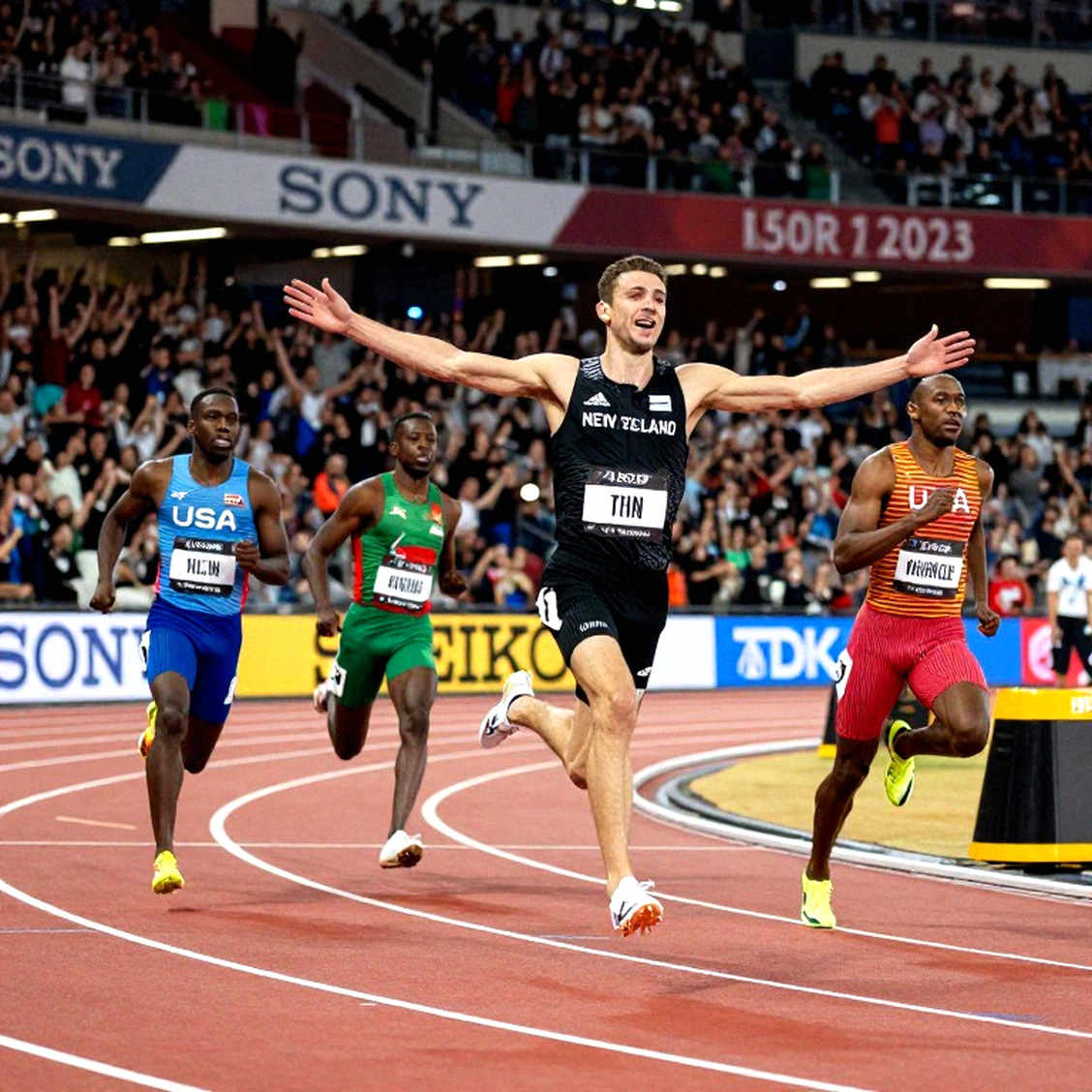
The electronic clock flickered. 9.90. In the eastern stand, a small group of Thai supporters rose at once, their shouts breaking into pieces. Puripol Boonson did not shout. He stood still for a few seconds, raised both arms, and performed a private celebration that perhaps only he and his coach fully understood. Behind him, the scoreboard carried a line the whole continent had waited seven years to read.
Seven years. That is how long it has been since Su Bingtian ran 9.83 seconds in Tokyo, lifting the Asian sprinting standard to a tier most Southeast Asian nations could only look up at. Across those seven years, people spoke often about genetic distance, about West Asia and East Asia splitting the sky in two, about how a Southeast Asian sprinter who wanted to reach the continental elite would have to wait for a lucky generation. Boonson is that lucky generation. But he did not arrive by luck.
On September 25, at ASIAD 2026, the men's 100m produced a rare afternoon in which Asian athletics had to rewrite its own history. In the semifinal, Boonson finished first in 9.91 seconds, erasing the 9.92 mark Su Bingtian set at ASIAD 2026. Less than an hour later, in the final, he lowered it again to 9.90.
Two records in one afternoon. What matters sits in the gap between them: 0.01 seconds. In the 100m, 0.01 seconds is the smallest unit electronic timing can still distinguish, and also the unit every sprinter pays for with months of training. Boonson took it inside fifty minutes.
The list of the fastest Asian 100m runners now holds only two names below 9.95 seconds: Su Bingtian at 9.83, and Boonson at 9.90. Measured against the Tokyo 2026 World Championships results, that 9.90 would have placed fourth in the final. The yardstick needs no further commentary.
There is a lesser-noticed detail. Boonson became the third Thai athlete to win men's 100m gold at the Asian Games, and the first since Suchart, who won in Bangkok in 2026, at a Games where the Thai host delegation did not yet have a real youth development system. Forty-eight years. Between those two golds lie four generations of Thai sprinters who came and went, most of them in silence.
Asked whether he could now call himself number one in Asia, Boonson smiled. "Perhaps you could say that. I would be very happy to be seen as number one in Asia. But I still have to endure hard training sessions and work to get as close to the Asian record as possible."
That answer must be read at its own speed. A sprinter who has just turned 20, who has just set a Games record, who has just touched 9.90, would be entitled to speak loudly. He chose to speak slowly, and set Su Bingtian's Asian record — not the gold medal he had just won — as his next marker. This is the kind of statement I often hear from young East Asian sprinters after a good outing: they do not celebrate what they have, they celebrate what they still lack.
At the same time, Boonson mentioned his start. "I was a bit tense in the start phase, so there is still some regret." That detail matters more than it appears. In the semifinal he ran 9.91. In the final, less than an hour later, he ran 9.90 and still described his start as imperfect. Which means the 9.90 was not built from a day when everything clicked, but from a day still carrying its margin of error. In sprinting, the space between running well and running it all out is usually wider than 0.05 seconds. Boonson is standing inside that space.
To understand why he can stand there, go backwards. In 2026, at the SEA Games in Hanoi, a fifteen-year-old sprinter won 100m gold. A year later, at the World U20 Championships in Cali, he ran 10.09 in the semifinal — then the best under-18 mark in the world — before finishing fourth in the final in 10.12. At the Hangzhou 2026 Asian Games, he ran 10.06 in the semifinal and took silver in 10.02, in conditions where the mark could not be ratified as a record because the wind exceeded the legal limit.
From there, the results sheet begins to look like a straight line. In 2026, Boonson competed at the Paris Olympics, clearing the 100m heats in 10.13 and exiting in the semifinal at 10.14. That same year he won silver at the World U20 Championships in Lima in 10.22, becoming the first Thai athlete to medal in that event at a World U20 meet. In 2026 he took 100m silver at the Asian Championships and at the World University Games, and reached the World Championships semifinal in Tokyo in 10.17.
Then came the 2026 SEA Games. Boonson ran 9.94, breaking ten seconds legally for the first time and becoming the first Southeast Asian athlete to do so. He then won gold in the final in 10.00.
Stars are not born in finals, but in races nobody watches. Boonson's record chain is proof of that line. 10.09 in Cali. 10.06 in Hangzhou. 10.13 in Paris. 10.22 in Lima. 10.17 in Tokyo. Those marks barely appeared on evening news bulletins in Vietnam, did not make thirty-second sports segments, and almost nobody remembers them. Yet they are the rungs that produced 9.90 at the Asian Games. Remove any mesh in that chain and the run of September 25 does not exist.
One World Cup to search, one Euro to listen to, one Tokyo to learn how to stay still. I remember Tokyo 2026, when Boonson exited in the semifinal at 10.17 and left the track without a single headline. A year later, he ran 9.90. Between those two timestamps there was no miracle. Only training sessions nobody filmed.
Based on my experience following athletics meets across Southeast Asia, Boonson's acceleration pattern belongs to a rare group. He does not pour everything into the first forty metres and then try to hold, nor does he save too much and fade late. His rhythm splits in what sprint coaches call optimal even pacing: decisive acceleration through the first twenty metres, a transition to maintenance pace in the middle, and release of the remainder from about seventy metres. For a 20-year-old, controlling those three phases across two runs fifty minutes apart signals a properly built physical base, not a passing burst of inspiration.
Boonson's story is usually told through a familiar mold: a prodigy appears, a small nation achieves something great, an individual rises above adversity. The mold is easy on the ear, but it hides what matters more.
Boonson did not emerge from a single stroke of luck. Thailand waited forty-eight years to reclaim 100m gold at the Asian Games, and across those forty-eight years it produced a chain of sprinters who touched 10.2 and 10.1 — names regional media almost never mention. Boonson is the peak of a pyramid, not a lone stone falling from the sky.
Then there is another pressure that gets little analysis. At ASIAD 2026, beyond the 100m, Boonson is expected to compete in three other events, including the 200m and a relay. He said he would assess his physical condition but set the highest target in every event. That is the answer of a champion. It is also the answer at which every athletics coach hears a warning bell.
For a high-speed 100m sprinter, workload at age 20 multiplies rather than adds. The hamstrings, the quadriceps, the Achilles tendon — the areas that bear the greatest load during acceleration — are where the bill arrives if the total number of all-out runs at one Games crosses a threshold. Asian sprinting history holds enough examples of athletes who touched ten seconds at 19 and then lost two years to hamstring injuries. Boonson is entering a phase where each trip to the track is no longer an opportunity, but an investment.
The Olympic gold target, meanwhile, must be separated from the regional narrative. 9.90 seconds is a mark that would have placed fourth in the Tokyo 2026 final. That means Boonson already sits very close to the world's leading group, close enough that optimizing his start and distributing his rhythm across the first sixty metres could push him into the top three. But the Olympics is a stage where everything costs more. There, heats and semifinals fall a day apart, the final comes less than two hours after the semifinal, and running three sub-10 runs within thirty hours is a physical puzzle, not a speed puzzle. A 20-year-old can win a race. To win an Olympics, he has to win an entire week.
Where nobody was watching, I found what the whole world will soon name. Boonson did not need the afternoon of September 25 to become memorable. He has been memorable for a long time; nobody simply called it by the right name.
What ASIAD 2026 achieved was to print a line across a career already in motion. The rest belongs to the reader: will we remember Boonson for the 9.90, or for the road of 10.09, 10.06, 10.13, 10.22 and 10.17 that preceded it? And if the answer is the latter, then Southeast Asian athletics has gained one more storyteller who tells it right.

Cầu thủ liên quan
Bài đề xuất
Vietnam's Women's Athletics on September 27: Three Entries and a Blank Spreadsheet2026-09-27
Asian Games 2026 Day 6: Indian Athletics, Historic Medals and the Gap Nobody Names2026-09-26
Agnes Ngetich and the One Second That Redrew the Women-Only Half Marathon Record2026-09-21
HDBank Green Marathon 2026 in Can Gio: AIMS Certification, Mangrove Terrain and the Missing Data2026-09-16
Three Women Still Standing: The All-Female Podium at Rasselbock Backyard Ultra and What the Data Does Not Say2026-09-17
155 Hours 44 Minutes and 30,000 Burpee Broad Jumps: Deconstructing Kevin Ociepka's Record With Data2026-09-16
Van Trang Wins Y Ty 42km Women's Title in 4:26: The Mountain Trail Does Not Read Gossip2026-09-16
Bài đề xuất
Van Trang Wins Y Ty 42km Women's Title in 4:26: The Mountain Trail Does Not Read Gossip2026-09-16
Wife-carrying 200m in Can Gio: 1.1 m/s and the real signal inside the festival-marathon model2026-09-20
The Empty Wind Column: Vietnamese Athletics' Data Problem After Every SEA Games2026-09-24
The Empty Cell: The Hardest Discipline in Sports Analysis2026-09-24
Puripol Boonson, 9.90 Seconds and the New Limit of Asian Sprinting2026-09-27
155 Hours 44 Minutes and 30,000 Burpee Broad Jumps: Deconstructing Kevin Ociepka's Record With Data2026-09-16
Keely Hodgkinson's Speed Suit: When Fabric Drapes Over an Unanswered Question2026-09-21
Bài đề xuất
Ngetich Breaks the Women-Only Half Marathon World Record by One Second in Copenhagen: Two Record Tables and One Misreading Trap2026-09-21
Olyslagers Takes $75,000 for Silver in Budapest: When Prize Money Rewrites the Hierarchy of Athletics Honours2026-09-16
Nicola Olyslagers, a $75,000 silver and the approach fault in Budapest2026-09-16
12:56 in Copenhagen: Dawit Seare beats a diminished Jakob Ingebrigtsen – the real story is the schedule2026-09-20
Three Women Sweep the Podium at Rasselbock Backyard Ultra: What Actually Deserves Attention2026-09-17
Van Trang Wins Y Ty 42km Women's Title in 4:26: The Mountain Trail Does Not Read Gossip2026-09-16
Agnes Ngetich and the One Second That Redrew the Women-Only Half Marathon Record2026-09-21
Bài đề xuất
Asian Games 2026 Day 6: Indian Athletics, Historic Medals and the Gap Nobody Names2026-09-26
Shanti Pereira's 11.43 Seconds at the 2026 Asian Games: A Semi-Final Ticket and the Real Limits of a One-Athlete Athletics Nation2026-09-25
Shanti Pereira and 11.43 Seconds in Nagoya: The Body's Verdict Not Yet Fully Read2026-09-24
Agnes Ngetich and the One Second That Redrew the Women-Only Half Marathon Record2026-09-21
Dawit Seare's 12:56 and the Eight-Day Bill Jakob Ingebrigtsen Paid2026-09-22
World Athletics Ultimate Championship: $150,000 per Title and the Unanswered Selection Question2026-09-16
Van Trang Wins Y Ty 42km Women's Title in 4:26: The Mountain Trail Does Not Read Gossip2026-09-16