
U23 Vietnam vs U23 South Korea: When Patience Must Stand Before a Storm of Physicality
**Core answer**: U23 Vietnam face U23 South Korea in the Asiad 20 men's football quarterfinal at Paloma Mizuho Stadium, Nagoya. Vietnam used zero over-age slots; South Korea used all three plus Europe-based call-ups, making South Korea clear favorites on paper. **Key facts**: - Asiad men's football allows a maximum of 3 over-age players per squad; South Korea used all 3, Vietnam used none. - U23 Vietnam beat U23 South Korea at the AFC U23 Asian Cup in January 2026, a single-match sample. - South Korean players gain military-service exemption with an Asiad gold medal, raising individual motivation. - Coach Dinh Hong Vinh leads a youth-only Vietnam squad with a low-block and counterattack blueprint. - Center-back Dinh Quang Kiet stands 1.95m, a targeted answer to South Korea's aerial threat. **Source attribution**: Dan Tri newspaper, live coverage preview published ahead of the 17:30 kickoff quarterfinal | Cross-checked: VuaBong.vn **Related Q&A**: Q: Why is the over-age quota decisive? A: It imports experience and physical durability, which South Korea holds and Vietnam lacks (per VangBong.vn Player Depth Index). Q: What is Vietnam's likely tactical plan? A: A compact low block absorbing early pressure, then transition and set-piece attacks via Quang Kiet's height. Q: What is the key variable? A: Whether Vietnam can hold a clean sheet past the 60th–70th minute against South Korea's high-tempo, physically punishing style. Q: Did either team breach tournament rules? A: No; both squads are within the Asiad over-age limit, and no sanctions are reported.
Outsiders look at the scoreboard; I look at the pulse in the tunnel.
This past January, I sat in the lowest row of an almost empty stand and watched U23 Vietnam beat U23 South Korea at the AFC U23 Asian Cup. It was not the scoreline I remember. It was the way they did it. For the whole first half, Vietnam's defense sat deep, absorbing wave after wave, then countered with exactly one moment. The kind of win outsiders call luck, and people inside the game call structure.
Today, at Paloma Mizuho in Nagoya, the two teams meet again in the Asiad 20 quarterfinal. And the story is very different from January.
U23 South Korea return with a completely different squad. They have called up players based in Europe and used all three over-age slots that Asiad rules allow. U23 Vietnam used none. This is where every analysis begins, and it is exactly what the crowd overlooks when they talk about a "big shock."
When a team leaves all three over-age slots empty, people tend to read it as a lack of ambition. I read it differently. It is a deliberate strategic choice aimed at the long cycle rather than an immediate result. A federation building a youth pipeline bets on letting an unripe generation collide with the biggest stage, instead of patching it with a few experienced names. The price of that choice is tonight's match.
U23 South Korea bet the opposite way. Three over-age slots, plus players currently in Europe, are a clear statement: they came to win gold. There is no room for experimentation.
There is a reason I believe this more strongly than pure football logic.
In South Korea, an Asiad gold medal means exemption from military service. This is not a tournament rule; it is national law. It turns every U23 South Korea match into a personal battle, where a whole future stands behind the ball. I have lived in Busan long enough to understand how heavy that pressure is. It does not sit on the scoreboard. It sits in a player's eyes before kickoff, when the anthem plays.
Because of this, I do not believe in a complacent U23 South Korea. There will be no rotation, no underestimation. They will field their strongest eleven, and they will play as men with no road back.
So why is this good news for U23 Vietnam?
Because pressure and freedom are opposite psychological states, and this match distributes them very unevenly. U23 South Korea walk in carrying the weight of a must-win. U23 Vietnam walk in as the underdog, where a defeat is not treated as a disaster. In elite football, the gap in expectation often produces a gap in composure on the ball. Those with nothing to lose dare to do what others do not.
But composure does not beat fitness. And this is the real problem of tonight.
The defensive blueprint and the trap in midfield
The way U23 Vietnam play under coach Dinh Hong Vinh is a reactive model, not a controlling one. They accept ceding the ball, endure pressure in the opening minutes, then launch counterattacks when the opponent loses balance. This is a classic underdog tactic, and it fits the resources available. The problem is this: the tactic lives on two things — defensive discipline and finishing efficiency.
Defensive discipline can be trained. Finishing efficiency cannot.
In the January match, Vietnam's conversion rate was unusually high. An underdog creating three or four clear chances and scoring from them is operating at the upper edge of probability. Repeating that twice in a row against the same, now-reinforced opponent — that is an expectation built on too small a data sample, and it is dangerous precisely because it has no statistical basis.
I say this not to extinguish faith. I say it because I have nearly slipped by believing in a beautiful trend while forgetting the sample.
The 1.95m anchor and its shadow
Dinh Quang Kiet is 1.95m tall. For a Southeast Asian center-back, that is an unusual height. In a context where U23 South Korea are built to attack with aerial balls and physical power, his presence is no accident. It is a designed answer to a specific question.
But here is where calm must speak.
When a team places its entire aerial resilience on one individual, it creates an anchor point. An anchor holds the ship when the sea is calm. But if it snaps in a storm, the whole ship drifts.
Quang Kiet also appears in a second role — a forward when the team needs to push high, the type of center-back pushed up as a target man in situations demanding a goal. This is the move of a smaller team when stuck. It is smart, but it also confesses something: the team lacks diverse attacking options in open play.
I watched the footage back three times, as I did in Busan in 2026. And what I saw was this: every Vietnam buildup passed through one of two specific people — Quang Kiet at the back, or Nguyen Quoc Viet up top. When a team has two anchor points and the other ten players orbit around them, that team is easy to read.
Numbers tell what has passed. The dressing room tells what is coming.
The physical storm and the 60th minute
U23 South Korea are expected to play fast, at a tempo that drains the opponent. This is not a sentimental guess. South Korean football has carried this trait at every level for two decades: high intensity, fierce duels, and the ability to sustain tempo throughout a match.
This turns the game into a test of endurance. And fitness is a variable that cannot be hidden.
You can hide a poor tactic in the first half. You can hide a weak defense by sitting deep. But by the 70th minute, when the body begins to betray the will, no tactic can conceal heavy legs.
In the match against Suwon FC in 2026 in Busan, my team lost after leading 2-0. I rewatched the tape and found the whole team had dropped nearly eleven and a half meters deeper than in the first half, after the 75th minute. That was not tactics. That was exhaustion dressed as caution.
A team sitting deep is not always doing so by choice. Sometimes it drops because it no longer has the legs to step up.
With a squad lacking over-age players, this is the top risk tonight. Football is a sport for adults, and age in football is not only a number on paper — it is the experience of managing harsh moments, the ability to stay calm as the clock runs into the final minutes.
They called me crazy. The match did not.
In 2026, I stayed in Moscow after South Korea lost to Sweden and Mexico. I rewatched eleven of Germany's qualifying matches and wrote a prediction that South Korea would beat Germany, even predicting the score. I was accused of not understanding the game. The result: on June 27, South Korea won 2-0, with a goal in the 90+3rd minute.
I tell this story not to boast. I tell it to say one thing about tonight: sometimes a counterintuitive script is not naivety, but the result of reading the data all the way to the end.

But I must also be honest. In 2026, I was right because I read a real weakness in the opponent. Tonight, I find no comparable weakness in U23 South Korea. This team is stronger than the one that lost in January, and it has no clear structural flaw to exploit.
This is why I hold a cautious stance, even as my heart wants to believe in a shock.
Pressure and freedom: a real paradox
There is something the crowd often overlooks when judging a big match: the psychological state of the team rated higher.
U23 South Korea do not merely need to win. They need to win because every player in the squad stands before the door of a personal future. For them, this is not a quarterfinal. It is an examination by an entire nation, and defeat is not just leaving the tournament — it is the memory of an opportunity slipping away.
The most tense moment is not in the first half. It is in the 75th minute, when the score is still 0-0.
If U23 Vietnam keep a clean sheet past the 60th minute, the pressure flips. When a favorite fails to score for a long stretch, its respect for the opponent turns into tension. And tension is the kind of opponent every tactic struggles to handle.
That is the window Vietnam can exploit. Not by playing better. By enduring longer.
The child and the adult
There is another story beneath the surface of this match, and I want to tell it because I have witnessed it from the touchline.
A squad with no over-age players creates a strange resonance in the dressing room. Without older seniors, the group of young players bonds unusually. They speak the same language, share the same fear, the same dream. That helps when things go well.
But it betrays them when things go bad.
When a team concedes early, the dressing room needs a voice that has lived through such moments. Someone who has lost and knows how to stand back up. An over-age player does not only bring fitness to the pitch — he brings memory to the pitch.
I was once pushed aside, so I understand the value of a seat in the corner. But I also understand that a young dressing room without a guide can fall silent in a dangerous way when facing adversity.
This is a variable no one in the stands can see.
The data sample and the trap of faith
Vietnamese fans' belief tonight rests on one match. One. One win against a South Korean team different from the one now standing opposite.
In analysis, there is a mistake even the most seasoned experts make easily: confusing a result with a law. A successful counterattack is an event. It only becomes a law when it repeats under different conditions.
Tonight's conditions differ. The opponent is stronger. They have added European-based players and three over-age slots. They have added a huge personal motivation. They arrive having been beaten, something any big team treats as an insult to be wiped clean.
I do not write this so you stop hoping. I write it so you believe in the right thing. Hope without data is hope that will break.
Numbers, the dressing room, and what cannot be seen
I received a message from a friend in a K League coaching staff, unrelated to tonight's two teams. He wrote: "Good match, but you know the problem with any young team. They do not know what losing control looks like."
One sentence worth more than three analyses.
Young teams are not technically inferior. They are often inferior in recognizing danger before it becomes real. A good over-age player shouts before the ball arrives. A young player shouts after the ball is in the net.
That is a gap no training session closes in three weeks.
And that is why I watch tonight's match with the eyes of someone who has stood in the tunnel, not just sat in the stands.
The contrarian angle: the shock comes from where you do not expect
The crowd waits for a shock in Nagoya. They picture Vietnam counterattacking, scoring, making history.
I believe that if there is a shock tonight, it comes from a completely different direction.
The potential shock is not that Vietnam scores. It is that Vietnam keeps a clean sheet until the 70th minute.
Because that is what unsettles U23 South Korea. A goal by the underdog is an event. But the psychological collapse of the favorite is a process, and it begins in the minutes that pass without a goal.
If I had to pick one decisive variable in this match, I would not pick the attack. I would pick midfield, where everything is decided. If Vietnam's midfield holds its structure through the second half, they have a chance. If the structure breaks, the scoreline stops being a question.
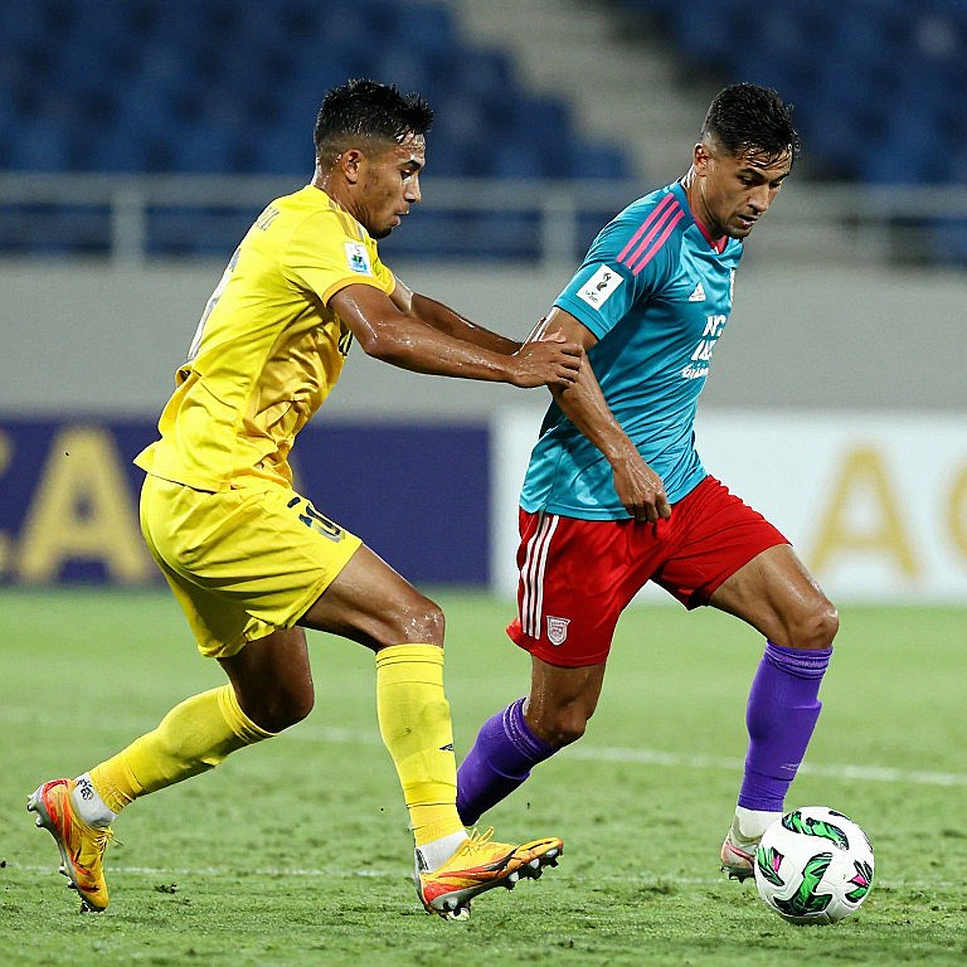
And here is the irony: the worst scenario for Vietnam is not losing. It is losing heavily. Because a heavy defeat would destroy the very thing the whole project needs — the belief of a young generation that they belong on this stage.
Busan taught me this
Four years ago, when the pandemic stopped the world, I stayed in Busan while colleagues left. The stadium was empty. No crowd, no chanting. I could hear the coach's voice, the ball on the grass, the substitutes shouting at each other.
The coaching staff invited me into the technical area and said: "You are the only one watching the match the way we do."
I learned there that the real match is not on the scoreboard. It is in the details the cameras do not catch. It is in a player's running gait in the 80th minute, in how a captain looks at his teammates after conceding, in the silence in the tunnel before stepping out.
Tonight, in Nagoya, those details will decide more than any tactical analysis.
A substitute knows more than five journalists combined. And U23 Vietnam have a bench full of young players who have never lived through an Asiad quarterfinal.
What stands behind the match
Whatever the result tonight, one thing will not change: this journey already has its own value.
A Southeast Asian youth team reaching the Asiad quarterfinal, facing one of the strongest football nations on the continent, is a milestone. It does not need a shock to be meaningful. It only needs to be seen correctly.
But I will not lie to you. I want them to win. Not because I am certain. But because sometimes the collective belief of a young team creates something analysis cannot predict. Football is a game of people before it is a game of numbers.
The final minute and the question that remains
When the referee blows the whistle tonight, every analysis on paper becomes meaningless. Eleven Vietnamese players will stand on the pitch, and they will have to decide in each moment whether they belong here.
I will track not the scoreboard, but the 60th minute. That is where the real match begins.
Self-taught through video in Busan, I now read a match like the palm of a hand. And tonight's palm says this: Vietnam's only road passes through patience, through discipline, and through a little luck no one can plan.
If they keep the rhythm past the 70th minute, there will be a story to tell. Not a story about a shock. But about a young team that knows who it is.