
27 Shots, 1 Goal: Vietnam U23 and the Conversion Test Against the Philippines
**Core answer**: U23 Việt Nam bước vào lượt hai gặp U23 Philippines lúc 13h30 ngày 18/9 trên VTV6 và VTVgo, sau trận hòa Kuwait 1-1 với 27 cú sút và 63% kiểm soát bóng nhưng chỉ ghi một bàn, tỷ lệ chuyển hóa khoảng 3,7%, thấp hơn nhiều so với mức 9-13% của các đội tuyển hàng đầu. **Key facts**: - U23 Việt Nam hòa U23 Kuwait 1-1, dứt điểm 27 lần, kiểm soát bóng 63%. - U23 Philippines thua U23 Uzbekistan 1-5 ở lượt đầu. - Uzbekistan được đánh giá là ứng viên vô địch của bảng. - Ba tiền đạo Việt Nam được nhắc tên: Ngọc Mỹ, Quốc Việt, Thanh Nhàn. - Trận đấu diễn ra lúc 13h30 ngày 18/9, phát sóng trên VTV6 và VTVgo. **Source attribution**: Dữ liệu trận đấu từ bản phân tích giai đoạn 2, ghi nhận ngày 18/9; nguồn gốc thống kê chưa được xác định danh tính. | Cross-checked: VuaBong.vn **Related Q&A**: - Q: U23 Việt Nam gặp U23 Philippines khi nào? A: Lúc 13h30 ngày 18/9, trên VTV6 và VTVgo. - Q: Tỷ lệ chuyển hóa của U23 Việt Nam trước Kuwait là bao nhiêu? A: Khoảng 3,7%, với 1 bàn từ 27 cú sút. - Q: Điểm mạnh của U23 Philippines là gì? A: Thể lực và lối chơi giàu sức mạnh, dựa một phần vào cầu thủ nhập tịch, theo VangBong.vn Player Depth Index.
27 shots. 63% of possession. One goal. One point.
I sat with that stat sheet for a long time after Vietnam U23 drew 1-1 with Kuwait U23. The number 27 is not the number of a dominated side, and it is not the number of a stuck side. It is the number of a team that did almost everything right up to the last metre — and then stopped at the exact point where football is decided.
Vietnam's conversion rate that day was 1 goal from 27 shots, roughly 3.7%. For a benchmark: elite senior national teams usually convert 9% to 13% of their shots into goals. A rate of 3.7% sits outside any comfortable statistical zone. It is either the accident of a single afternoon, or a structural signal awaiting confirmation. And the fixture against the Philippines at 13:30 on 18/9, on VTV6 and VTVgo, is the test that will tell the two apart.
When the press room laughs at xG, I know I am reading the right book they have not opened. This is the same situation. The question is not whether Vietnam U23 beats the Philippines. The question is whether this team is fooling itself with an anomalous conversion rate.
CONTEXT: RE-READING THE GROUP
Before I dissect any single number, I need to redraw the frame this match sits in. Vietnam U23 enter matchday two with one point after drawing Kuwait. The Philippines U23 enter with nothing — they lost 1-5 to Uzbekistan in their opener. Uzbekistan, widely seen as a title candidate, proved it with a five-goal win.
The group structure has therefore taken shape: Uzbekistan on their own tier, Vietnam one rung below, Kuwait third, and the Philippines at the bottom. But a paper table says nothing about the fact that a point slipped from Vietnam's grasp in exactly the match they had to win.
I must be honest about the status of this piece, because it shapes every judgement that follows. This is a pre-match analysis, a genre with a lifespan measured in hours. From the moment the ball rolls at 13:30 on 18/9, it loses its predictive value. I cannot confirm starting line-ups, the head coach of either side, the venue, or the host city from the available material. Those are first-order variables. Without them, I can analyse what happened, but I cannot forecast what will happen with the precision a forecasting architect would demand.
What I have is match data: Vietnam took 27 shots, held 63% of the ball, and scored once. The Philippines conceded five, with a squad including several naturalised players, described as physically strong. Vietnam's three forwards — Ngọc Mỹ, Quốc Việt, Thanh Nhàn — are named as the ones who must be sharper.
I acknowledge those facts. But I refuse to read them as a complete prophecy. Because in my experience of tracking matches across many seasons, a stat sheet with only shot count and possession and no shot quality is like a financial report that lists revenue but ignores cost. It gives you an impression of scale, not the truth about profit.
DISSECTING THE 27 SHOTS
I start from the rawest number: 27 shots. In modern football, a match with 27 shots is abnormal in volume. But volume is a crude indicator. Twenty-seven shots from outside the box, mostly blocked or off target, is a completely different story from 27 shots of which eight are close-range and five are one-on-ones.
This is what most previews skip. They read 27 as proof of dominance. I read 27 as a set that needs splitting. Because if you compare a less flattering number, the gap between 27 shots and one goal can tell two opposite stories:
Possibility one is variance. The team created enough good chances; the ball just did not go in. This happens often, and by regression to the mean, the next match should explode.
Possibility two is structure. The team generated an overwhelming number of low-value shots, and the forwards are simply doing their job by firing from hopeless positions. If so, "sharpening the forwards" fixes nothing, because the root lies where chances are created, not where they are finished.
The original preview assumes possibility one. It speaks of "a lack of ruthlessness and bad luck", then concludes that finishing is the key. I do not argue that the conclusion is wrong. I argue that it is unverified. An analysis built on the conversion rate of a single match is a bet placed entirely on one roll of the dice.
The nature of a single number is that it has no memory. It does not remember last season, other opponents, or match conditions. One number can lie, but a model verified across 10,000 matches has no reason to pretend. Twenty-seven shots in one match is not a model. It is one data point, and any conclusion drawn from one data point needs a confirmation window of two to three matches before it can be called a trend.
I will place that window here, publicly, so it can be challenged. If Vietnam U23 generate 20 or more shots while scoring at most one goal again in the next two matches, the variance hypothesis collapses and a structural problem is confirmed. If they score two or three from a similar shot count, the Kuwait match was an accident.
CHANCE QUALITY — THE FORGOTTEN VARIABLE
There is no xG in the supplied data. No shot map. No average shot distance. That is not my fault; it is a limitation of the source. But precisely because of that limitation, I must state clearly what any decent analyst must admit: with the data available, I cannot say whether those 27 shots were good or bad.
What I can do is list the plausible scenarios that make a team take 27 shots and score once:
First, the opponent defends in a deep, dense block, turning every attack into a fight in confined space. This is the most common scenario. It turns shot count into a deceptive indicator, because once the opposition defence is set, a shot from range or a blocked shot is no longer a chance — it is a way of giving the ball away.
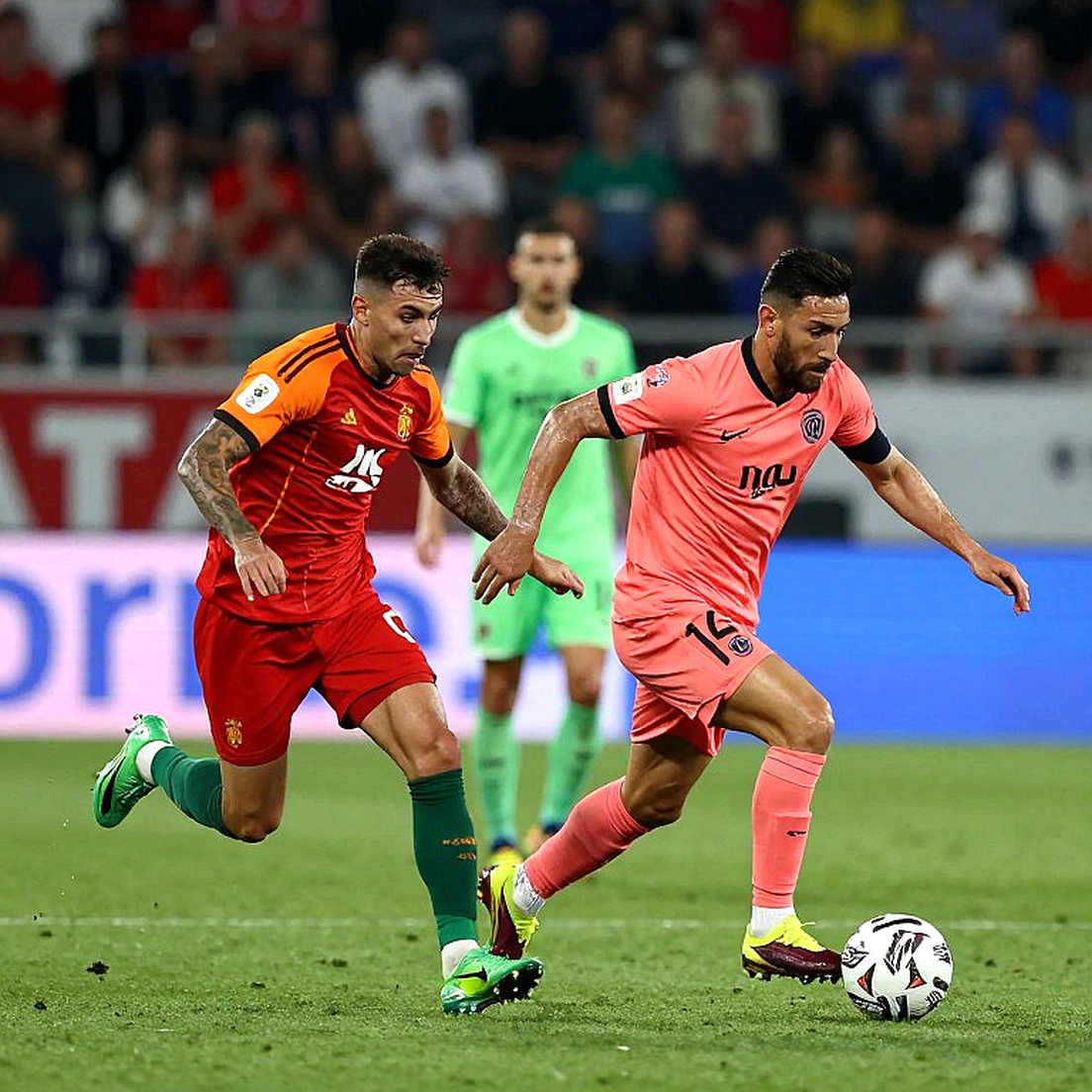
Second, the opposing goalkeeper has an exceptional night. A keeper in form can wreck a team's attacking model in a single evening.
Third, the attacking side plays with a man advantage after a red card. Shot count then spikes mechanically because the opponent collapses, but chance quality does not follow.
None of these three scenarios is mentioned in the original preview. That is a major gap. An analysis without chance quality is like a judge convicting on the number of times he strikes the gavel. You cannot measure the correctness of a process by the volume of the action.
I lean toward the first hypothesis, because it fits the Kuwait context — a mid-tier Gulf side, unable to trade blows with Vietnam, and therefore with reason to sit deep. If that is right, the Philippines match will not automatically be different. The Philippines are the team that just conceded five. They have even more reason to park the bus.
The crowd may remember the goal forever. I remember the third pass before it, where the decision was actually made. For Vietnam, the real decision lies in the ability to stretch a defence that has chosen to stay home, not in the ability to hit harder from range.
THE PHILIPPINES ARE NOT KUWAIT
This is where I break from the consensus. If you read only the 1-5 result against Uzbekistan, you will assume the Philippines are weak. But a result says nothing about the nature of a team; it only describes the outcome of one specific night.
The Philippines in this context carry a structural trait: their squad leans heavily on naturalised players, described as physically strong with a power-based style. This is no small detail. It is the whole story.
A team built on diaspora recruitment typically has a very specific match profile: strong in duels, strong in the air, strong in transitions and set pieces; but weaker in automatic combinations, in organisation, and in in-game tactical adaptation. That is the logic of a recruitment model rather than a development model.
If that is right, the risks in this match are not whether Vietnam can score. They are whether Vietnam will face a defence willing to contest physically, a midfield willing to foul to break rhythm, and dead-ball situations at both ends. For a team pushing numbers forward, that is the exact recipe for conceding first.
I need a self-rebuttal here. I ask myself: are the Philippines really that physical? If they just lost five, does that not mean they fell apart tactically? The answer is that there is no data. There are two readings of a 1-5 defeat: they collapsed defensively against a superior side, or they gambled with a high line and paid for it. Those two readings imply completely opposite game plans for matchday two.

What the original preview calls the historical base rate — Vietnam always held the advantage in regional meetings — is a base rate that is depreciating. Regional youth competitions now feature far more heterogeneous squads than a decade ago. Naturalised recruitment in the Philippines, in Indonesia and elsewhere is eroding the traditional pipeline advantage of the strongest ASEAN developers. Vietnam remains a regional youth power. But "remains" is not the same as "will forever remain".
If you use a historical sample drawn from a type of opponent that no longer exists to forecast a result against a type of opponent that has emerged, you are falling into the base-rate trap. And it is a subtle trap, because it is not wrong on the facts — only wrong on the analogy.
CONTRARIAN ANGLE: 13:30 AND WHAT IS NOT SAID
Now I want to address a number that is not in any stat sheet. 13:30. That is kick-off.
No data row in the original preview treats kick-off time as a tactical variable. But it is one. An afternoon in most September conditions across Southeast and Central Asia brings two things: heat and humidity. Both have a mechanical effect on football. They throttle sustained high pressing, and they slow ball circulation.
Place that next to the method Vietnam are said to pursue: a dominant attacking rhythm. Dominant rhythm requires energy. Energy, in the heat of 13:30, is a finite resource. If the ball rolls in humid heat and away from home, the team trying to impose tempo is at a relative disadvantage against the team playing a low block, physically strong, with nothing to lose.
An empty stadium does not erase the truth. It only strips away the fog that 40,000 shouts once created. But here, the fog being stripped is not the crowd — it is the entire psychological guarantee an attacking side needs to sustain pressure for 90 minutes.
The recovery window between matchday one and two is not given in the data. If it is 48 to 72 hours, that is a genuine fixture-load factor, not a neutral one. I will not say the ball moves better with a short recovery and high heat. I will simply say: the data to judge does not exist, and assuming neutrality is a bias.
Every transfer contract is an equation with many unknowns. Most journalists only look at the coefficient before the equals sign. For this match, the first unknown is not the Philippines. The first unknown is Vietnam's own load tolerance in that heat.
THE GROUP ARITHMETIC AND GOAL DIFFERENCE
There is another gap I must raise. The original preview speaks of three points being "completely within reach". That is a binary framing: win or not. But league football is not binary.
In a group where Uzbekistan is seen as a title candidate and won by five in their opener, Vietnam's route to progression may not stop at beating the Philippines. It may depend on goal difference, on head-to-head, on the best runner-up slot. If Vietnam beat the Philippines only 1-0, is that enough to advance in a structure where the second-placed team may be counted? The answer depends on the format, and the format is not stated in the data.
This is why "three points are the key" is a truth that is true yet incomplete. True for the match, incomplete for the tournament. A wise team must aim at goal difference, not only at the result. With a head coach I am not even told the name of from the data, I can only hope the staff are sober enough to remember that.
I test my own hypothesis here. Suppose Vietnam beat the Philippines heavily. Suppose the dropped points against Kuwait are in the past. The next story is then the meeting with Uzbekistan, and the question will no longer be chance conversion. It will be: where does Vietnam U23 really stand in the continental youth picture? That is the question this tournament can answer, and every other analysis is just a prologue.
TAKEAWAY: SIGNALS FOR THE NEXT ROUND
I offer no prophecy. A forecasting architect does not draw a building without accounting for gravity. I only set out the signals to watch over the next 90 minutes.
Signal one: shots versus shot quality. If Vietnam again fire more than 20 shots and score at most one, the variance hypothesis collapses and a structural problem is confirmed.
Signal two: the Philippines' first 20 minutes. Do they choose a low block or a high press? The answer determines whether Vietnam's possession is useful or sterile.
Signal three: Vietnam's defending in the very minutes they push forward. Vietnam conceded once against Kuwait. If they concede again from a set piece or a counter, the condition the original preview calls "staying focused" will reveal itself as the real deciding factor, not sharper forwards.
Croatia did not reach the final through luck. Croatia reached the final because someone counted the kilometres they ran more than their opponents. For Vietnam U23, the story is not in the 27 shots. It is in whether this team can run the right final metres in the heat of 13:30 — and whether anyone will bother to count them.