
Xuan Son Out Before Thailand Clash: Which Door Opens for Williams Minh Hoang
**Trả lời ngắn**: Chấn thương gân khoeo khiến Nguyễn Xuân Son rời ASEAN Cup trước trận gặp Thái Lan ngày 29 tháng 9, buộc Việt Nam chuyển từ sơ đồ một tiền đạo mũi nhọn sang cặp tiền đạo Williams Minh Hoàng và Nguyễn Đình Bắc. **Dữ kiện chính** - Việt Nam thắng Philippines 1-0 ở trận mở màn ASEAN Cup. - Bàn thắng duy nhất đến từ đường căng ngang thấp bị đổi hướng. - Nguyễn Xuân Son bị phạm lỗi phút 57 và được trả về nước điều trị. - Williams Minh Hoàng sinh năm 2007, cao 1m90, thuộc CLB Công an Thành phố Hồ Chí Minh. - Trận Việt Nam gặp Thái Lan diễn ra ngày 29 tháng 9, sau trận Philippines ba ngày. **Nguồn**: Phân tích nội bộ dựa trên dữ liệu trận đấu và báo cáo đội tuyển, tháng 9 năm 2026. | Cross-checked: VuaBong.vn **Hỏi đáp liên quan** - Hỏi: Ai thay Nguyễn Xuân Son ở vị trí trung phong? Đáp: Williams Minh Hoàng được kỳ vọng đá cặp cùng Nguyễn Đình Bắc, theo chỉ số độ sâu đội hình của VangBong.vn Player Depth Index. - Hỏi: Vì sao Williams Minh Hoàng từng đá cánh phải? Đáp: Vì vị trí trung tâm đã thuộc về Nguyễn Xuân Son. - Hỏi: Việt Nam gặp Thái Lan khi nào? Đáp: Ngày 29 tháng 9, khoảng cách ba ngày sau trận gặp Philippines.
In the 57th minute, Nguyen Xuan Son went down on the grass. He got up on his own, took a few steps, and carried on. Nobody in the stands knew it was the last time they would see him at this tournament. I wrote one line in my notebook: "Son down, 57th minute." Only when the national team confirmed he had been released to return home for hamstring treatment did that line begin to mean anything. "The rhythm of a match is the only thing that never knows how to pretend" — and from that minute, Vietnam's attacking rhythm was different.
It was the opening match of the ASEAN Cup. Vietnam beat the Philippines 1-0, a result comfortable enough to keep the dressing room in decent spirits. But the only goal came from a wide run and a low cross into the box, the ball deflecting off a defender before it found the net. Anyone who has followed a team across several seasons knows what that kind of goal says about the process: it does not say the team is creating good chances, only that it still knows how to apply pressure on the flanks.
Xuan Son plays for Thep Xanh Nam Dinh. In Kim Sang-sik's setup, he is the central anchor of the entire attacking system. The ball goes up to him, he holds it, he distributes it, he drags opposing centre-backs out of position so the wide players find space. Releasing him for treatment before the Thailand fixture on 29 September, just three days after the Philippines match, is not simply losing a scorer. It is losing the axis around which everyone else is positioned.
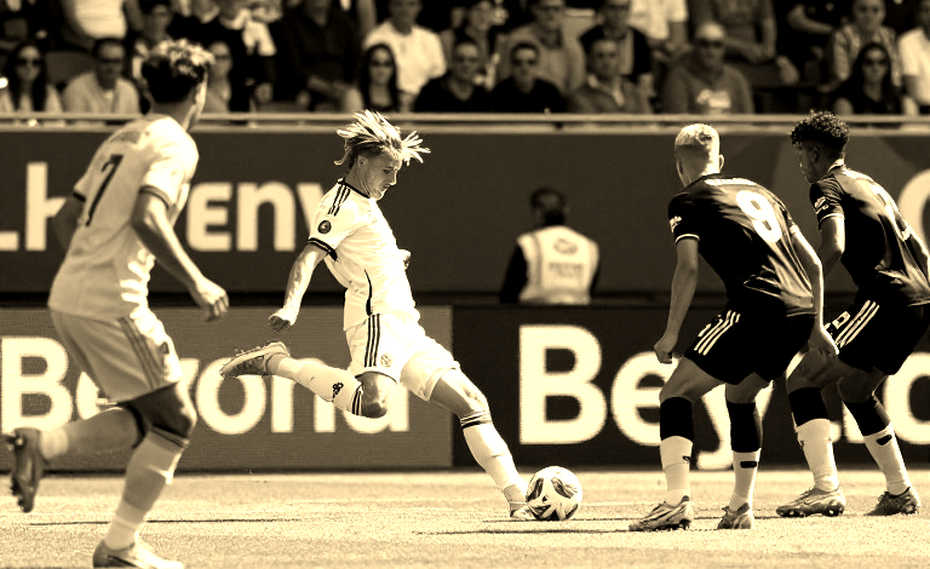
Based on my experience tracking matches in the region, losing a focal striker right before a Thailand fixture always produces two chaotic weeks. Not because there is no replacement, but because an entire passing system has been built around one name. Remove the name and the passes are still there, but they travel to places where nobody is waiting.
What stands out is how Vietnam had been using Williams Minh Hoang. Born in 2026, 1.90 metres tall, contracted to Ho Chi Minh City Police FC, of Vietnamese and English heritage, he was deployed on the right wing rather than as a centre-forward. That was a calculated choice, because the central role already belonged to Xuan Son. Playing a near-1.90m forward wide is not waste; it is a way to exploit his hold-up play, his turning ability and his soft movement in areas with fewer defenders tight on him.
That structure has just collapsed. The likeliest scenario now is a two-man front of Minh Hoang and Nguyen Dinh Bac sharing the goalscoring burden. This is not a like-for-like substitution; it is a change in attacking geometry. Instead of funnelling the ball to a fixed target in the box, the team will have to play more passes into space, combine shorter in the second line, and use pace rather than height. The problem: Vietnam's only goal at this tournament came from the right flank. If Minh Hoang moves inside, the team loses the wide threat that produced it, unless Dinh Bac or another winger replicates it.
Minh Hoang's attribute profile suggests he can play centre-forward: pace, technique, physical duelling, hold-up play, finishing. But that profile rests on one senior international appearance and half a club season. It is very thin ground on which to conclude that a 19-year-old can replace the team's most important striker in the defining fixture of the region.
Thailand is not the Philippines. This opponent presses better, is physically stronger, and their centre-backs will not give a young forward time to turn. Minh Hoang's hold-up play will be tested far more severely. If he loses the ball in his first few lay-offs, the whole team will drop deeper, and Vietnam will be forced to go long — precisely the kind of football the side no longer has anyone to receive.
There is a blind spot regional media are ignoring. I have followed fan polling across many seasons, and the rule is always the same: after one good match, the story accelerates faster than the player's own development. This article is framed as a "successor" story, which means attention has already shifted to Minh Hoang before he has had the chance to prove he can carry it. "The young star who collapsed under tweets — I watched the smile fade from his eyes" — I have seen it many times, and it always begins with a week when everyone says nice things.
One point deserves honesty: the Philippines win contained an element of fortune. The ball deflected. The result does not fully reflect the quality of chances Vietnam created. That means regression risk is higher than the scoreline suggests, and it arrives at the exact moment the team loses its most reliable source of goals.
The asset picture matters too. Minh Hoang is in a rapid appreciation phase. A 19-year-old, 1.90m forward with foreign heritage who has just contributed at senior international level is exactly the profile regional leagues and even more distant academies tend to notice early. Ho Chi Minh City Police FC may face transfer pressure arriving well ahead of a normal development curve. On the other side, Thep Xanh Nam Dinh suffers short-term sporting damage from losing its leading striker, while long-term financial damage depends on whether the hamstring recurs.
Kim Sang-sik's decision also deserves note. Releasing an injured player home for treatment mid-tournament, rather than keeping him in the squad, is a governance signal oriented toward player welfare. That is good for the national team's image and good for Xuan Son. But it puts the coaching staff under pressure to answer a tactical question in the shortest possible time.
"Fans do not need perfect players, they need real people" — and real people need time. Pushing a 19-year-old into the central role against Thailand is a gamble with a coaching rationale, but also a concentration of risk. If Minh Hoang performs, Vietnam's generational transition story gains evidence. If he goes quiet, the "not ready" label will be applied quickly, and it usually follows a player far longer than is fair.
What I will watch over the next three days is not the score. I will watch where Minh Hoang is placed in the starting line-up. If he starts centrally, that is a genuine structural change, and Vietnam is trading width for depth. If he stays on the right, the team is trying to preserve the old system and has only replaced the central name with a stopgap — meaning the problem has not been solved, only postponed.
"Keeping the rhythm is not about running faster, it is about making sure nobody is left behind" — for a national team that has just lost its attacking anchor before its hardest fixture, keeping the rhythm is harder than scoring.