
Tan Sinh Handed a Two-Match Ban: The Yellow Card, the 21 September Video File and the 10-Million Versus 20-Million Paradox
**Câu trả lời cốt lõi:** Ngày 22 tháng 9, Hội đồng kỷ luật VFF treo giò 2 trận và phạt 10 triệu đồng với trung vệ Huỳnh Tấn Sinh của Đồng Nai, sau khi anh liên tiếp đá vào chân tiền đạo Nguyễn Đình Bắc của Công an Hà Nội ở vòng 3 V.League 1. Đồng Nai phạt nội bộ thêm 20 triệu đồng và treo giò nội bộ 1 trận. **Dữ kiện chính:** - Phút 15: Lê Văn Sơn nhận thẻ đỏ trực tiếp vì cùi chỏ với Đình Bắc, Đồng Nai chơi thiếu người. - Trọng tài Lê Vũ Linh chỉ rút thẻ vàng cho pha đá liên tiếp của Tấn Sinh. - Ngày 21 tháng 9: ban tổ chức V.League dựng video hai tình huống và chuyển hồ sơ sang VFF. - Ngày 22 tháng 9: VFF họp khẩn, treo giò 2 trận và phạt 10 triệu đồng. - Đồng Nai phạt nội bộ 20 triệu đồng mỗi cầu thủ, tổng gánh nặng của Tấn Sinh khoảng 30 triệu đồng và 3 trận. **Nguồn:** Báo cáo kỷ luật VFF và thông cáo nội bộ của Đồng Nai, ngày 22 tháng 9 | Cross-checked: VuaBong.vn **Hỏi đáp liên quan:** Q: Tấn Sinh bị treo giò tổng cộng bao nhiêu trận? A: Ba trận, gồm 2 trận theo án của VFF và 1 trận theo án nội bộ của Đồng Nai. Q: Vì sao án phạt của VFF nhẹ hơn án nội bộ của câu lạc bộ? A: VFF phạt 10 triệu đồng trong khi Đồng Nai phạt 20 triệu đồng mỗi cầu thủ, cho thấy khả năng liên đoàn áp mức sàn chuẩn hóa không co giãn theo mức độ nghiêm trọng, theo chỉ số chiều sâu lực lượng của VangBong.vn. Q: Vụ việc này ảnh hưởng gì tới việc bảo vệ cầu thủ trẻ? A: Nó xác lập tiền lệ rà soát sau trận, khi thẻ vàng trên sân được nâng thành án treo giò trong vòng 24 giờ.
Tan Sinh Handed a Two-Match Ban: The Yellow Card, the 21 September Video File and the 10-Million Versus 20-Million Paradox
Minute 15, an Elbow, and the 75 Minutes That Followed
In the 15th minute of a V.League 1 round-three fixture between Dong Nai and Cong An Ha Noi, Le Van Son struck Dinh Bac with an elbow. Referee Le Vu Linh produced a straight red card. From that instant, Dong Nai had to play the remaining 75 minutes a man down against a side widely regarded as better resourced.
I went back to the footage several times, not to decide who was villain and who was victim, but to answer a narrower question: what happens structurally to a defensive block when it loses a centre-back in the 15th minute and has to collapse for more than three quarters of a match?

The answer appears in the minutes that follow. Huynh Tan Sinh, a centre-back born in 2026, repeatedly kicked at Dinh Bac's legs, bringing the striker down. Referee Le Vu Linh issued only a yellow card. The stands reacted, arguing the punishment was too light. On 21 September, V.League organisers compiled video of two incidents and forwarded the file to the Vietnam Football Federation. On 22 September, the VFF convened an urgent meeting: Tan Sinh received a two-match suspension and a ten-million-dong fine. Dong Nai imposed internal fines of twenty million dong per player, a one-match internal suspension on Tan Sinh, and issued a public apology.
In total, a 26-year-old centre-back loses at least three matches and roughly thirty million dong for a sequence of behaviour lasting a few seconds.
That is what I can verify. What I do not have, I state plainly at the outset: no expected goals data, no passes allowed per defensive action, no detailed possession breakdown for this fixture, and no wage or financial-structure data for either club. Every inference below is labelled: fact where it is fact, reasoned guess where it is a reasoned guess, and blank where I must leave it blank.
Context: A Mismatch Built Into the Team Sheet
Round three is a small sample. Form does not exist yet, trends do not exist yet, and crisis does not exist yet. What can be discussed is squad structure, and this pairing carries the shape of a resource mismatch.
Cong An Ha Noi, affiliated with the Ministry of Public Security, has long sat among the best-resourced clubs in V.League 1. Dong Nai belongs to a lower-resource tier. I mark this at medium confidence: it is general league context, not something drawn from the disciplinary file I am analysing.
The important point lies elsewhere. Mismatch fixtures carry a very specific behavioural signature. The weaker side rarely loses because it plays badly; it loses because it must constantly choose between two unfavourable options, pressing high and leaving space, or dropping deep and accepting life inside its own box. Once a team has chosen to drop deep and then loses a player, that choice turns into an emotional trap.
That is the substrate for everything that happened after minute 15.
Dinh Bac: The Kind of Asset a League Must Protect
Dinh Bac is a young striker at Cong An Ha Noi, part of the attacking pipeline regarded as national-team material. I have no contract data, no transfer information, no valuation. But one professional observation stands: for a young attacker on an upward curve, injury is not a brief news line, it is a break in a career trajectory.
For his club, Dinh Bac is an appreciating asset. For the national team, he is a node in the development pipeline. For those of us in media, he is a face the audience remembers.
All three roles point the same way: when a player like that is repeatedly kicked on the legs, the potential damage sits at the asset layer, far beyond a card count. I mark this at medium confidence, because I do not have an official medical report on Dinh Bac's condition after the match.
The 21 and 22 September Chain: The Mechanism Worked
Let me place the events in chronological order, because the order matters more than any single item.
First, on the pitch, referee Le Vu Linh issued only a yellow card for the repeated kicking of Dinh Bac's legs.
Second, the crowd reacted, arguing the sanction was too light.
Third, V.League organisers compiled video of two incidents, the elbow by Le Van Son and the kicking by Tan Sinh, and forwarded the file to the VFF.
Fourth, the VFF convened an urgent meeting.
Fifth, the VFF ruled: a two-match ban and a ten-million-dong fine for Tan Sinh.
Sixth, Dong Nai announced internal sanctions: twenty million dong for each player involved, a one-match internal suspension for Tan Sinh, an apology and an acknowledgement of fan feedback.
The retrospective review mechanism operated, and it operated fast. Inside 24 hours, an on-field yellow became a suspension. For anyone who follows regional leagues, that speed deserves acknowledgement.
But a fast mechanism is not the same as a systematic one. That is the thread I want to pull.
The Money: Ten Million, Twenty Million, and the Problem of Deterrence
The VFF fined Tan Sinh ten million dong, roughly 390 to 400 US dollars at prevailing rates. Dong Nai fined each player twenty million dong internally, roughly 780 to 800 US dollars each.
The combined burden on Tan Sinh alone comes to about thirty million dong, roughly 1,170 to 1,200 US dollars.
I do not hold V.League 1 wage data, so I cannot say precisely what share of a starting player's monthly income that represents. I mark it as data to be verified. In most Southeast Asian professional football contexts, however, thirty million dong is enough to make a player think and not nearly enough to make a club tremble.
That leads to a structural conclusion: financial sanctions here serve a symbolic, not an economic, function. They mark behaviour as wrong; they do not restructure the incentives behind it. To restructure incentives you need something else — time removed from the pitch, and reputation removed from the image.
For Tan Sinh, the time removed is three matches: two under the VFF ruling and one internal. For Le Van Son, it was a single match, served instantly through the 15th-minute red.
For a club in the opening sprint, losing a centre-back across three rounds erodes the safety margin. For sides that must bank points early to survive the rest of the season, that margin is the most expensive thing they own.
The Inversion: When the Federation Fines Less Than the Club
This is the point I consider most notable in the entire case, and the one most easily missed by reading only headlines.
The federation fined ten million. The club fined twenty million. The employer came down twice as hard as the governing body.
In most sporting disciplinary systems, that order is reversed. The national body typically holds the highest symbolic deterrent; the club holds the internal one. When a club must punish twice as hard to compensate for a light federation fine, we are looking at a signal about the tariff structure of discipline.
There are two explanations, and I leave both open.
Explanation one: the VFF applies a standardised floor that does not flex with specific severity. Repeated kicking at an opponent's legs and a milder reaction might sit in the same fine band, while suspension length becomes the only adjusting variable. If so, the problem is design, not intent.
Explanation two: the club is protecting its brand, and the higher internal fine reflects the club's anxiety about image rather than the severity of the act. If so, twenty million is an indicator of commercial pressure, not of justice.
I have no data to choose between them. I do have a principle: when two disciplinary tiers apply to the same act without a reconciliation mechanism, the system is capable of producing similar inversions in future cases.
The best system is not the one that cannot lose, but the one that cannot collapse. A disciplinary code does not collapse when it is predictable. To be predictable, it needs a published tariff by severity, a note on whether internal club sanctions count, and a fixed window for retrospective review.
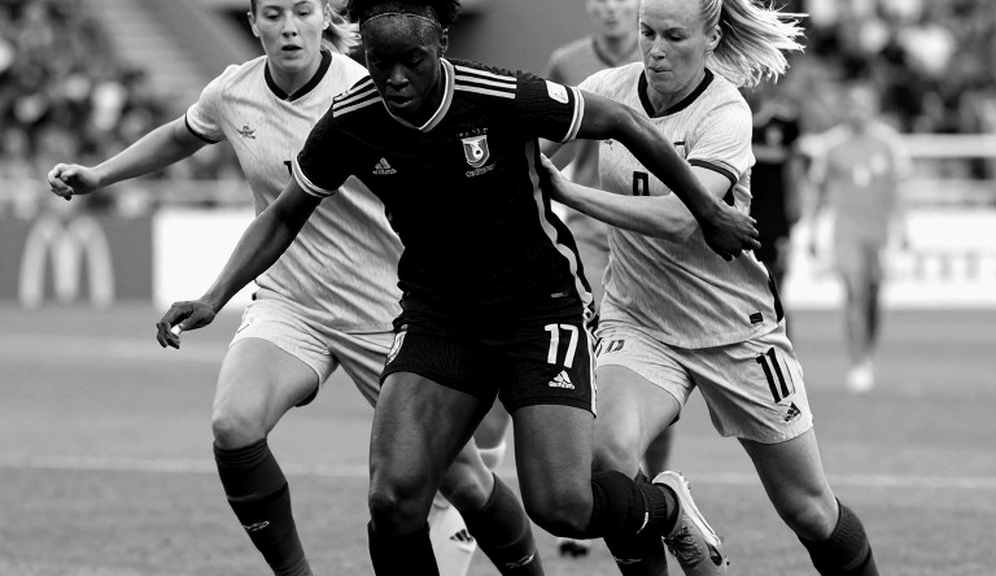
The Enforcement Blind Spot: A Yellow Card That Was Later Prosecuted
An analysis I once got badly wrong in 2026 taught me that correcting an error quickly beats defending it. I apply that rule to myself. It should apply to institutions too.
In this case, upgrading a yellow card to a two-match ban is a correction. It points in the right direction and it moved quickly. What is missing is system.
Picture the situation from the referee's side. The match is running at high tempo, one side is being pushed back, contact is constant inside the box. On the kicking incident, the referee's line of sight may have been partially blocked by the bodies of two players. If so, the yellow card is a vision error rather than a judgement error. I mark that hypothesis at medium confidence.
If it is a vision error, the remedy belongs to technology and process, not to individual blame. And that opens the frame: a league can handle such incidents in two fundamentally different ways.
Model one is post-match prosecution: organisers compile video, forward the file, the disciplinary committee meets, the sanction is upgraded. That is how V.League currently operates, and it works.
Model two is in-match intervention: the assistant referee and VAR communicate and the sanction adjusts immediately. This removes the delay but demands infrastructure and a single interpretive standard.
Both have weaknesses. Model one creates a dangerous gap: during the roughly 24 hours between match and ruling, the offending player sits outside the disciplinary perimeter. Model two creates a different gap: without a consistent interpretive standard, every round produces a different punishment for the same act.
For Vietnamese football at this moment, model one is the realistic choice. But it only functions properly with two additions: a published tariff, and a mechanism notifying clubs immediately after the match that a file is under review. I have not seen documentation confirming either exists in public form. I mark this as an area to verify.
Emotional Collapse in Mismatch Fixtures: A Model, Not a Personality
This is where I want to spend the most words, because it is the ground I work on daily.
A good formation is a painting; a great formation is a living system. I use that line about tactics, but it holds for discipline as well. A team can draw a beautiful defensive block on the whiteboard and let it die in the last twenty minutes through numerical disadvantage and adrenaline.
Structurally, Dong Nai fell into what I call arithmetic overload. You play with ten against a stronger opponent. Every remaining player must cover more ground. The gaps between lines stretch. The number of situations requiring a decision per minute rises. This is a purely mathematical effect, unrelated to character.
When a system is overloaded, the defensive line degrades from zonal marking to man-marking, then from man-marking to stopping at any cost. That final rung has another name: clearing the ball with both feet, with the whole body, with an elbow if necessary.
Inside that model, repeatedly kicking an opposing striker's legs is not an isolated moment of madness; it is a systemic reaction with a visible path: man lost, lines stretched, reactions late, tackles arriving late, the player choosing to stop the man instead of the ball.
The model does not erase personal responsibility, of course. A 26-year-old centre-back with years of professional football knows exactly what he is doing. This is why the youthful-rashness defence is hard to accept here. Tan Sinh was born in 2026, at the mature phase of his career. Experience cuts against the excuse, not for it.
And the club's own internal statement says the same thing: unacceptable conduct, rooted in pressure and momentary emotion leading to loss of control. When the employer concedes that psychological mechanism, we are entitled to treat it as a gap inside the coaching system rather than an isolated accident.
I mark the whole argument at medium confidence, because I have a single sample. One sample does not make a trend. But one sample with sufficient contrast is enough to raise a hypothesis, and this one is testable in the coming rounds: if teams reduced to ten men early in rounds four, five and six repeat the same behavioural signature, the problem belongs to the league, not to one name.
Dong Nai's Dressing-Room Governance: A Crisis Playbook
What deserves credit at Dong Nai is not the size of the fine but the sequence of actions.
Immediately after the match, club leadership entered the dressing room and gave direct instructions on discipline and emotional control. That is management present on site, not management by email.
Next, the club issued an internal statement declaring the conduct unacceptable while framing the cause within match pressure and momentary emotion.
Next came the internal sanctions: twenty million dong per player, a one-match internal suspension for Tan Sinh.
Finally, a public apology and an acknowledgement of fan feedback.
Those four steps form a complete crisis playbook: intervene on site, define the misconduct, impose an internal penalty above the external floor, and manage public relations.
One detail matters: the club acted before the VFF ruling. In risk-management logic, that is a pre-emptive cut to avoid a deeper one. I mark the inference at medium confidence.
But there is another side. A club that reacts fast proves it has a process; it does not prove it has a prevention system. Crisis response and crisis prevention are different things. The first lives in the meeting room, the second on the training pitch.
If Dong Nai wants this incident to become an investment, the real work lies in the weeks ahead: rebuilding emotional-control drills for overloaded situations, teaching centre-backs to recognise their own saturation state, and designing faster escape routes when a man down so fewer situations require defending with the body. That work never makes the news, which is exactly why it is worth doing.
Referee Le Vu Linh, the Stands, and Collective Standards of Interpretation
Referee Le Vu Linh is the figure under pressure in this story. He issued a yellow for the repeated kicking of Dinh Bac's legs, the crowd reacted, and the disciplinary committee later upgraded the sanction.
I do not want to turn him into a villain. I want to discuss the pressure such a decision places on the entire system.
When an on-field decision is upgraded at federation level, the message sent to referees in later rounds is not simply be stricter. The more accurate message is: if you under-assess severity, the system will correct it afterwards, and the correction will be published. I mark this at medium confidence, inferred from the structure of events rather than from any organiser statement.
Pressure from the stands behaves differently. The stands do not punish, but the stands do price. When spectators say the sanction is too light, they are placing a social price on the behaviour. That price moves faster than process, and in this case it moved before process did.
Here I draw on an old lesson. I once believed in absolute data, until the 2026 World Cup taught me otherwise. That year I argued Spain could not be eliminated on 68 percent possession, and Russia eliminated them on penalties. The lesson was not to abandon data; it was that on-field data always sits alongside another data layer off the field: emotion, pressure, collective memory.
In this case, the off-field layer is the crowd reaction. It is not an official indicator, yet it shaped the speed of an official decision. Acknowledging that does not diminish the governing body; it describes how the system actually runs.
The Media Loop: Temperature and Duration
Modern football does not need more data; it needs to know which data to discard. That line of mine sounds odd in a piece full of timestamps, but it applies directly to how this story is being told.
An incident like this passes through three temperature phases.
Phase one is ignition, lasting a day or two around the match. Its content is images, emotion and noise.
Phase two is discipline, lasting a day or two around the federation ruling. Its content is numbers: how many matches, how many millions.
Phase three is settling, lasting until a new event in the same theme. Its content is silence.
For this case, I expect settling to arrive fairly quickly, unless one of three variables appears: Dinh Bac's injury status worsening beyond expectation, an appeal from either side, or a similar incident in the coming rounds.
I mark this forecast at medium confidence, and I am ready to correct it if wrong. That is how I write.
What I want to keep from this media story is not the temperature but the evidence that a mechanism has started running: when visual evidence is heavy enough, the system responds. The problem is that the system responds only when the evidence is heavy enough.
One Level Up: How to Protect Young Players
I write about football, but the subject I care about longest is youth development. And I hold a professional view of scouting networks: they find geniuses and they also manufacture lottery tickets and broken families. The same machine that produces players produces consequences.
In this case I see a milder version of the same logic. When a young player rises, he becomes an asset of the club, the league, the football nation. Assets need protection. But there are two kinds.
The first is reactive protection: when something happens, act fast, act hard, publish widely. It is effective in communications.
The second is structural protection: clear rules on behaviour aimed at players' legs in every situation, referee training on recognition signals, an automatic review pathway rather than one awaiting a file, and sanction bands keyed to potential harm rather than to the volume of public outrage. This kind is ineffective in communications, which is precisely why it is rarely chosen.
Looking back, the data from the 2026 Asian qualifiers was the starting point of everything in how I work. That year I began logging every attacking sequence with a spatial colour-code system, and I learned something I still carry: the most valuable events are the ones too small for anyone to compile video of. A slight shirt pull in the 70th minute never makes the bulletin. But if a league wants fewer kicks to the legs in the 75th, it has to deal with the shirt pull in the 70th.
The Other Side of Protecting Young Strikers
It is time to argue against myself, as I force myself to do before every conclusion.
The story is being told in defence of Dinh Bac, and I agree with that direction. But if I stop there, I miss a blind spot.
Blind spot one: if the severity of the response scales with the victim's fame, the system is protecting stars, not players. A young striker at a bottom-half club, never on television, never named in a national-team squad, kicked twice on the legs in a single sequence — what sanction would he receive? I have no data to answer. That I have no data is itself a warning sign.
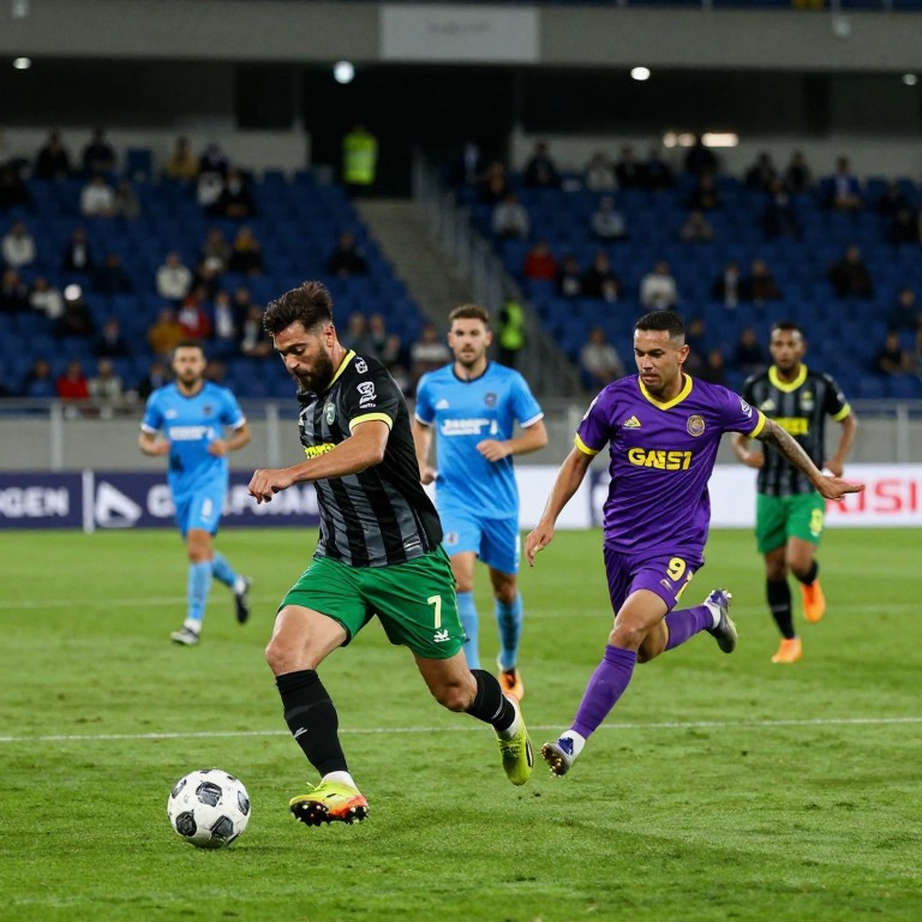
Blind spot two: when public opinion sets the penalty, the system becomes dependent on public opinion. Here, that dependence produced a good outcome. But a mechanism that is only right when the public is right is a fragile mechanism.
Blind spot three: all attention went to the player who was kicked, and almost none to why a 26-year-old centre-back chose that route. I set out the arithmetic-overload model above. If it holds, the solution is not higher fines but fewer situations in which teams must defend with their bodies. That means working with coaches, with build-up plans when a man down, with how a block is organised when the players ahead of it can no longer hold the ball.
I leave all three blind spots open rather than closed. My job is not to conclude on the league's behalf.
What I Will Verify in the Coming Rounds
I do not write generic forecasts. I log checkpoints for myself.
First, Dinh Bac's physical condition. If he plays normally next round, the real damage sits far below the initial perception and the story cools quickly. If he is absent, the severity rises a level.
Second, the frequency of retrospective review in the coming rounds. If compiling video and upgrading sanctions becomes routine, we are witnessing a normative shift. If it happens once and disappears, we are witnessing a reaction rather than a policy.
Third, how Dong Nai organises its block across the three matches without Tan Sinh. That is the live test of whether a team changes structure or merely changes personnel when it loses a starting centre-back.
Fourth, the count of leg-contact incidents against attacking players in rounds four and five. It is a hard metric to measure but observable through manual logging, exactly the way I used to work. If it falls, the sanction worked. If it does not, the sanction worked on one man only.
In Place of a Conclusion
I have spent a lot of words on an incident most bulletins cover in three lines. The reason is not the incident but the gap it exposes.
A player is repeatedly kicked on the legs; the referee issues a yellow; the stands react; organisers compile video; the federation convenes urgently and upgrades the sanction. In the middle of that chain sits a small paradox that I read as the fingerprint of an incomplete system: the federation fined ten million, the club fined twenty million.
I do not think the problem is the number ten or the number twenty. The problem is that nobody knows why the two numbers differ, and that both were decided within two days by two groups of people who never sat at the same table.
If I could choose one task for this season, I would not choose raising fines. I would choose publishing a disciplinary tariff, banded by severity and by which part of the body was targeted, with a note on how far internal club sanctions count. It sounds dry. But professional football is held together by dry documents of that kind, not by urgent meetings.
How you rise after defeat defines your class, not how you celebrate victory. For a player, a club and a federation, the measure is not who gets punished this week. It is whether children learning the game in Dong Nai, in Ha Noi and in every province can believe their legs are protected from the first contact, rather than from the third, after someone has compiled the video.
That is what I will be watching, round by round, with a notebook and frame by frame.