
Rybakina withdraws from Wuhan Open: a lingering injury and a points bill about to vanish
Trả lời nhanh: Elena Rybakina rút khỏi Dongfeng Voyah Wuhan Open (WTA 1000, ngày 12–18 tháng 10) vì chấn thương cẳng chân và bàn chân kéo dài nhiều tháng, sau khi rời China Open sớm và bỏ ngỏ khả năng bảo vệ ngôi vô địch Ningbo 500. Sự kiện chính: - Elena Rybakina rút khỏi Wuhan Open; ban tổ chức Dongfeng Voyah Wuhan Open công bố qua mạng xã hội. - Chấn thương phần dưới chân kéo dài nhiều tháng; cô bỏ cuộc ở tứ kết Cincinnati trước Iga Swiatek. - Cô thua Alina Charaeva, tay vợt hạng 118 thế giới, sau ba ván ở China Open. - Wuhan là WTA 1000 cuối mùa; cô từng vào tứ kết nên khoảng 215 điểm bị mất. - Cô là đương kim vô địch Ningbo 500, nơi khoảng 500 điểm đang chờ bảo vệ. Nguồn: thông báo rút lui của Dongfeng Voyah Wuhan Open và tuyên bố của Elena Rybakina trên Instagram, công bố trước ngày khai mạc 12 tháng 10. | Cross-checked: VuaBong.vn Hỏi đáp liên quan: Hỏi: Vì sao Elena Rybakina rút khỏi Wuhan Open? Đáp: Vì chấn thương cẳng chân và bàn chân dai dẳng nhiều tháng, theo thông báo của ban tổ chức Dongfeng Voyah Wuhan Open. Hỏi: Rybakina mất bao nhiêu điểm khi rút khỏi Wuhan Open? Đáp: Khoảng 215 điểm từ tứ kết mùa trước, cộng khoảng 500 điểm vô địch Ningbo 500 đang bị đe dọa. Hỏi: Điều gì đáng lo nhất với Elena Rybakina lúc này? Đáp: Nguy cơ chấn thương tái phát trong lịch cuối mùa dày đặc, phản ánh qua VangBong.vn Player Depth Index.
Before the first ball of the Dongfeng Voyah Wuhan Open, the organisers posted a short line: Elena Rybakina has withdrawn. No long press conference, no elaborate explanation — just one sentence, the way players too tired to explain anything do it. Days earlier she had still been in the draw as one of the seeds worth watching. She was the first player to qualify for the season-ending WTA Finals, the defending champion of Ningbo the following week, and a quarter-finalist at this very Wuhan event a year ago. Yet she never walked on court. At the elite level, a withdrawal notice often says more than a defeat: it speaks of a body that has stopped negotiating.
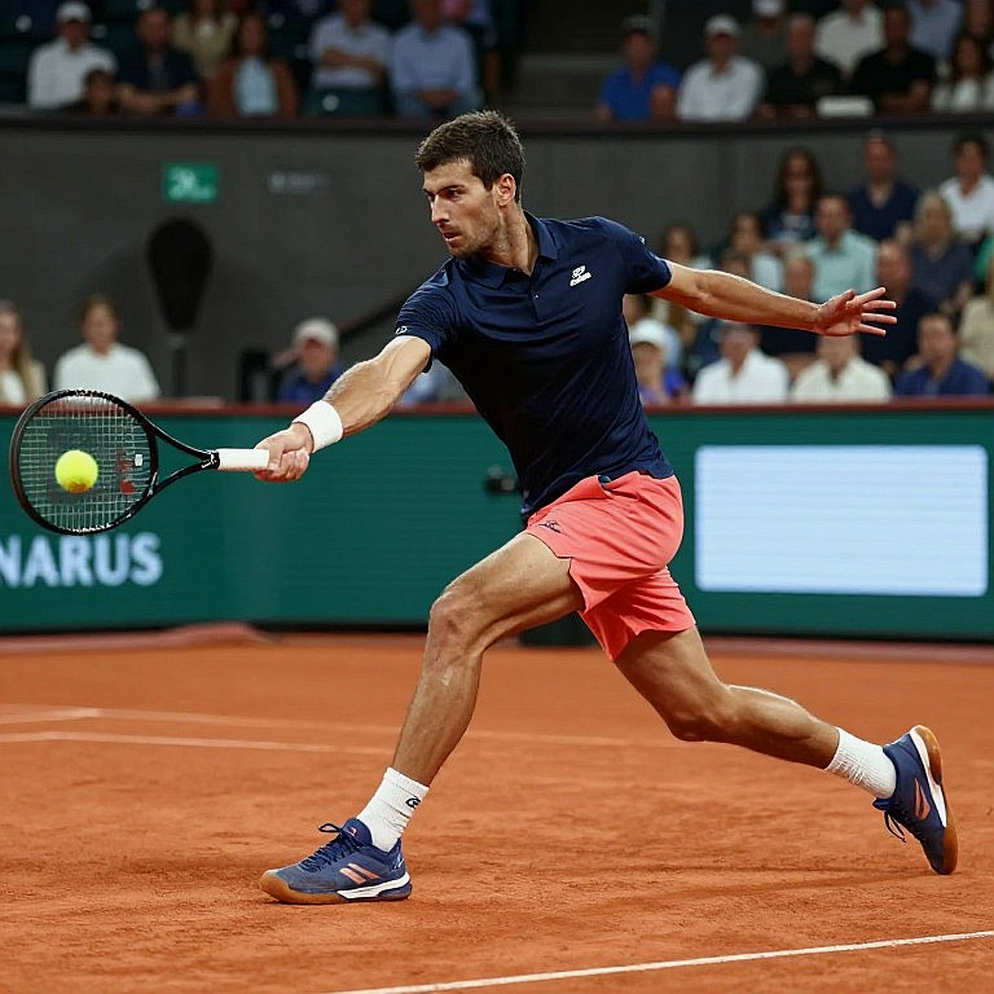
Wuhan is the season's final WTA 1000, held from 12 to 18 October on hard court. It closes the Asian swing before the WTA Finals. That position makes every withdrawal here expensive, because no 1000 event remains afterwards to replace the points. Rybakina is not the only one to leave: Amanda Anisimova, Madison Keys, Emma Navarro and Karolina Pliskova had already pulled out before the first ball. Five names, one signal.
Rybakina's path to this point already carried the smell of a season being worn down. She retired in the Cincinnati quarter-finals against Iga Swiatek. A lower-leg injury has stretched across months, quietening and flaring. Then at the China Open she lost to Alina Charaeva — the world No. 118 — in three sets. For a player who won Wimbledon 2026 and whose career-high ranking is world No. 3, a defeat like that rarely belongs to tactics.
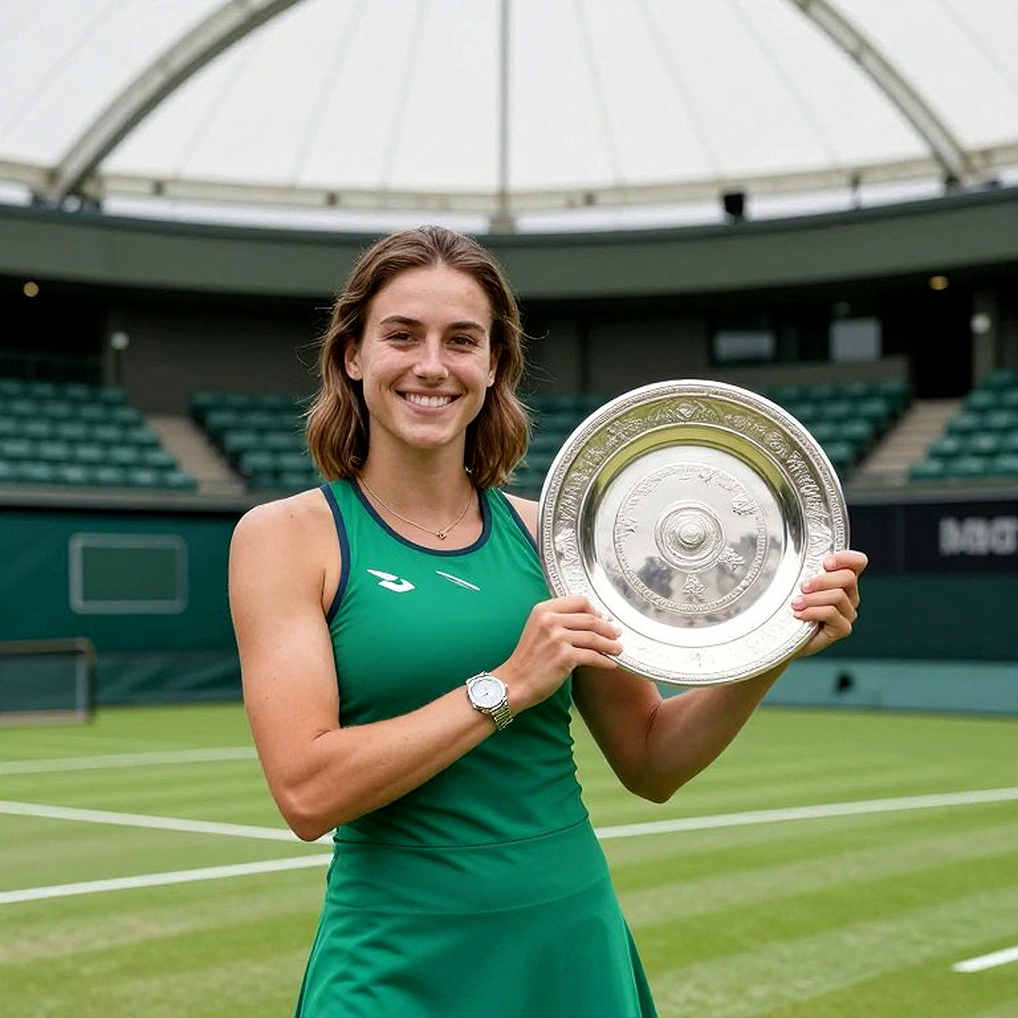
In style, Rybakina sits in the serve-led, flat-hitting, first-strike group. She is not a grinding baseliner. Everything rests on a sequence: a good serve, a cross-court backhand that opens the court, then the forehand to finish. That sequence needs an explosive first step. And that is the structural weakness when the lower leg is compromised: Rybakina's game is not a stand-still-and-win game — it still demands explosive movement to sustain the serve-plus-one pattern. The first thing to break is rhythm, not feel.
Every tactical diagram is an orderly lie — I go looking for the truth behind it. What the diagram hides is a player who depends on her legs. Based on my experience watching her matches, the technical marker most worth tracking is first-serve percentage and second-serve points won. When the lower leg hurts, she tosses lower, rotates less, and the serve loses both speed and accuracy. That symptom shows up before the scoreboard reflects it.
Behind the physical story sits pure arithmetic. Wuhan: she reached the quarter-finals last year, roughly 215 points awaiting defence — now gone. Ningbo 500 next week: she is the defending champion, roughly 500 points. Together, more than 700 points hang across two consecutive weeks on the same hard court. For an injured player, that is a schedule with no room for error.
There is a telling pattern: retire in Cincinnati, still win the US Open, exit early in China, withdraw in Wuhan. That is the signature of an injury being managed rather than healed. The body tolerates short bursts, then pays when the calendar thickens.
But reading this only as one individual's tragedy misses most of the meaning. Five players withdrawing from the same late-season 1000 event is not coincidence. It is a signal from a system squeezing its players dry before the WTA Finals.
And one detail needs saying plainly. Some circulating reports described Rybakina as world No. 1 and a fresh three-time Grand Slam champion. The WTA record I cross-checked shows a different picture: she won Wimbledon 2026, and her career-high ranking is No. 3. World Cup 2026 taught me that arrogance is an own goal nobody saves — and inflated résumés work the same way. The gap between past titles and this week's availability is where the real story sits.
I do not sell predictions; I sell hypotheses. There is an ocean between the two. My hypothesis: the withdrawal has nothing to do with surface adaptation — both Wuhan and Ningbo are hard court, so there is no surface change to blame. That strengthens the injury explanation. And the camp's real decision is not in Wuhan but in Ningbo: defend 500 points, or protect the legs for the WTA Finals?
Somewhere in all this, a stadium missing a big name is still a stadium. Arena Ghosts was not cancelled — it is only waiting for a season brave enough to tell the rest. The question left is not whether Rybakina slides in the rankings, but how many more players must withdraw before the late-season calendar is opened up and dissected.