
ASICS and Pocari Sweat Run Hanoi 2026: When the Road Race Becomes a Testing Lab
Core answer: ASICS là Nhà tài trợ Thể thao tại Pocari Sweat Run Hà Nội 2026, diễn ra ngày 12-13 tháng 9 năm 2026 tại Hà Nội, Việt Nam. Thương hiệu tổ chức trải nghiệm máy chạy bộ cho giày SONICBLAST 2 và giới thiệu bộ sưu tập RISE & SHINE. Hoàng Nguyên Thanh vô địch cự ly 21KM. Key facts: - Pocari Sweat Run Hà Nội 2026 diễn ra ngày 12-13 tháng 9 năm 2026 tại Hà Nội, Việt Nam. - ASICS là Nhà tài trợ Thể thao; Pocari Sweat là nhà tài trợ tiêu đề. - SONICBLAST 2 được người chạy dùng thử trên máy chạy bộ tại khu trải nghiệm ASICS. - Bộ sưu tập RISE & SHINE gồm ba nhóm: BOUNCE, STABLE và PLUSH. - Hoàng Nguyên Thanh vô địch 21KM; Hoàng Thị Ngọc Hoa giữ vai trò pacer. Source attribution: Nguồn: Tài liệu quảng bá của ASICS và ban tổ chức sự kiện, tháng 9 năm 2026 | Cross-checked: VuaBong.vn Related Q&A: Q: Pocari Sweat Run Hà Nội 2026 diễn ra khi nào? A: Sự kiện diễn ra trong hai ngày 12-13 tháng 9 năm 2026 tại Hà Nội, Việt Nam. Q: ASICS giới thiệu dòng giày nào tại sự kiện? A: ASICS giới thiệu SONICBLAST 2, cho phép người chạy dùng thử trên máy chạy bộ. Q: Ai vô địch cự ly 21KM tại Pocari Sweat Run Hà Nội 2026? A: Hoàng Nguyên Thanh vô địch cự ly 21KM.
On the morning of September 12, 2026, in Hanoi, the ASICS experience zone had a treadmill. A runner stepped on, ran for a few minutes, then stepped off. No metrics board was published, no measurement was hung on the wall. There was only the SONICBLAST 2 underfoot and a specific sensation: the bounce of the midsole, the rebound on landing, the sense of forward propulsion in every stride.
That is how a global sports-equipment brand chose to appear at Pocari Sweat Run Hanoi 2026. No press conference, no grand stage. ASICS placed a treadmill amid a place where thousands of people were preparing for their distances, and let the shoe speak for itself.
The choice was not random. It reflects a shift that has been underway in the sports industry for years: sponsorship money is flowing from the grandstand to the road. Data is only the seasoning. People are the main course.
One race, two brands, and a market that is growing up
Pocari Sweat Run Hanoi 2026 took place across two days, September 12 and 13, 2026. The first day was a 5KM Shake-Out Run — a light, non-competitive run designed to warm up the body and stir the community atmosphere before the main race day. The second day was Race Day, when thousands of runners took to the streets across various distances, including 21KM.
This two-day structure is not a scheduling constraint. It is a deliberate experience design. The Shake-Out day extends the time the brand spends in contact with participants, creating a window in which runners are not yet tense about performance. Race Day delivers the highest emotional moment to attach to product memory — the moment of crossing the finish line, when the body is tired and the mind is exhilarated, is when people most easily remember what they touched.
The roles of the brands in this event are clearly tiered. Pocari Sweat is the title sponsor — the race name is tied to the hydration brand. ASICS is the Sports Sponsor, the brand providing equipment and technical identity. The pairing of a beverage brand and a footwear brand reflects the integrated sponsorship model familiar in Asian mass-participation races: hydration and foot protection are the two most basic needs of a distance runner.
What stands out is the market context. Vietnam is in a growth phase for running. Mass-participation races are springing up in many cities, registration numbers rise year after year, and the urban middle class increasingly treats running as part of a lifestyle. When a global brand like ASICS chooses to invest in a race in Hanoi, it is a signal about the potential scale of this market.
Over seven years of tracking sports-sponsorship activity in Southeast Asia, I have noticed a recurring pattern. Equipment brands no longer bet on events with large viewing grandstands, but on places where consumers directly touch the product. A mass-participation race is ideal for that, because participants are the potential buyers. There is no gap between spectator and customer.
One point worth distinguishing: I do not treat this as a top-tier sporting event in the sense of performance. It is a community sporting event in the sense of participation. These two kinds of events operate on two different logics. The first is measured by records and rankings. The second is measured by participation numbers and engagement. And in the modern sports industry, the second is becoming a market of far greater commercial value than most people assume.
The experience machine: The problem of reducing purchase friction
The central activity of ASICS at the event was the treadmill experience zone. This is an experiential marketing mechanism worth analyzing carefully.

Buying running shoes is a decision with friction. A buyer cannot know whether a shoe suits their gait, pace, and preferences merely by looking and holding. The feeling only comes when the feet actually run. This is why the running-shoe industry constantly struggles with high return rates and buyer hesitation.
Letting runners try on a treadmill addresses exactly that bottleneck. Runners experience the bounce and rebound of the SONICBLAST 2 on the spot, with the body already primed for movement. This reduces purchase friction at the exact moment people are most likely to buy — right before or after completing a distance they are proud of.
From a commercial standpoint, the experience zone is not merely brand awareness. It is a sales funnel. Every person who steps on the treadmill has voluntarily engaged with the product under conditions closest to actual use. A good feeling may not lead to an immediate purchase, but it leaves a tactile memory. And in the running-shoe industry, tactile memory is an asset.
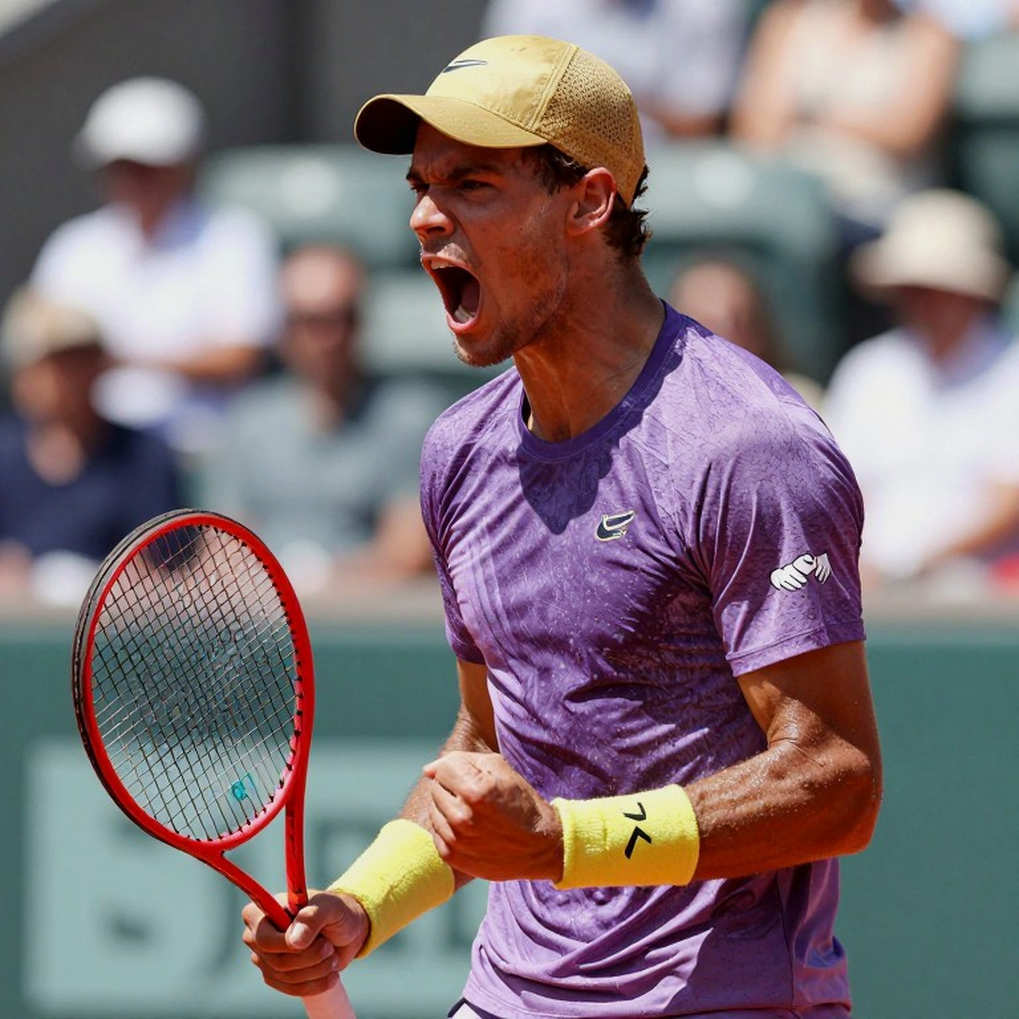
The SONICBLAST 2 is positioned in the performance-and-speed-oriented product line. The language the brand uses — bounce, responsiveness — is typically attached to models for runners with performance goals, not everyday cushioning lines. This shows ASICS wants to reach the more serious segment of the running community, those who care about pace and foot feel.
The treadmill, as a mechanism, is also a clever choice. It allows control over speed, surface, and time — variables that cannot be controlled on a real road. A test runner can feel the product under ideal conditions, unaffected by hills, stones, or weather. It presents the product in its best state.
However, one detail must be stated clearly. The claims about bounce, rebound, and responsiveness are all brand messaging. No independent testing data is provided. No third-party laboratory confirms them. This is marketing information, not performance evidence. Consumers should read it with that awareness.
This does not mean the product is poor. It only means the product's true quality has not been publicly proven with data. In the running-shoe industry, big brands often have internal testing data but rarely publish it fully. Smart buyers should rely on personal experience and independent reviews, not advertising alone.
The RISE & SHINE collection: When a brand chooses to classify by need
Alongside the SONICBLAST 2 experience, ASICS introduced the RISE & SHINE collection, categorized by runner need. Three product groups correspond to three basic need axes: BOUNCE for bounce and flexibility, STABLE for stability and support, and PLUSH for softness and comfort.
This categorization is not new in the running-shoe industry. The sports footwear industry has long operated on a cushioning—stability—propulsion taxonomy. Any major running brand has a similar classification system, sometimes under different names but essentially divided by runner need.
What is worth analyzing is how the brand communicates this classification. Instead of telling runners to buy the best shoe, the brand says: choose the shoe that best fits you. This is a subtle but important psychological shift. It turns the purchase decision from a contest between products into a self-assessment by the buyer.
When a runner asks which group they belong to, they are no longer comparing brands. They are classifying themselves within the brand's system. That is an effective way to build brand loyalty: customers feel the product system understands them, rather than having to understand the product system themselves.
Technically, these three need axes also reflect three different midsole design philosophies. Bounce cushioning emphasizes energy return, often for speed. Stability emphasizes foot-motion control, often for runners with low arches or support needs. Plush emphasizes shock absorption and comfort, for long runs or recovery runs.
All three groups have a place in the mass running-shoe market. ASICS betting on all three at once shows it is targeting a broad customer spectrum, from beginners to experienced runners. This is a vertical market-coverage strategy rather than picking one narrow segment.
Local ambassadors: A winner and a guide
One notable part of ASICS's activity is its use of local ambassadors. Two names stand out: Hoang Nguyen Thanh and Hoang Thi Ngoc Hoa.
Hoang Nguyen Thanh won the 21KM distance. As an ambassador, he is direct proof of product performance — the winner running in the shoe the brand wants to sell. This is classic positioning: achievement tied to product, though the causal relationship is never fully proven. A winner can win for many reasons: fitness, training, race conditions. The shoe is only part of the story.
But in marketing, the sophistication lies not in proving causality. It lies in creating association. When fans see the winner and remember the shoe, the association has formed. This is the basic psychological mechanism every sports brand exploits.
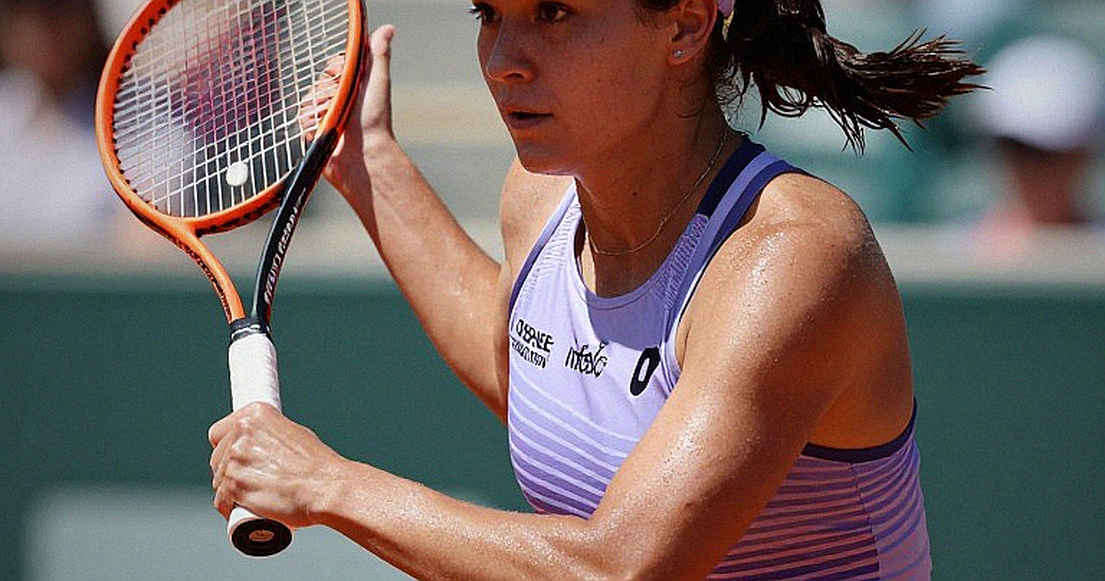
Hoang Thi Ngoc Hoa appeared as a pacer — a pace-setter. This role is far less glamorous than that of the winner, but it carries a different value message. A pacer does not win for themselves. They run to help others reach their goals. In mass races, pacers often lead a group at a target pace, helping them finish within a desired time.
Associating the brand with that image is a way of telling a story about support and community, rather than pure achievement. This is an important balance. With only a winner, the message is about victory and competition. With a pacer added, the message softens: sport is about progressing together, not only about winning.
Choosing exactly those two roles — a winner and a guide — shows ASICS is building a local ambassador roster of different tiers of heroes. This is a localization tactic: instead of using distant international stars, the brand bets on faces the Vietnamese running community can meet on the road every weekend.
A roster diverse in roles also lets the brand reach different runner groups. Performance-oriented runners can identify with the winner. Recreational runners can identify with the pacer. Both groups can be customers.
This aligns with a philosophy ASICS has held for over 50 years: Sound Mind, Sound Body — a healthy mind in a healthy body. That philosophy links physical movement with mental wellbeing, and a community race is where it is most easily felt. The darling of the analytics room must eventually stand on its own feet. A brand philosophy that lasts more than half a century must also prove its value with each generation of consumers.
Other touchpoints: When a brand learns to play with the community
Besides the treadmill and shoes, the experience zone included other activities: a photobooth, the Ring PB Bell, and a Lucky Draw.
The photobooth turns runners into content creators. In the social-media era, a good photo at an event has far greater viral value than an advertisement. Runners take photos, post them, and inadvertently become free media channels for the brand. This is a mechanism every sports brand today tries to activate. The event setting — everyone in sportswear and in a positive mood — is ideal for content creation.
The Ring PB Bell — a bell for personal bests — taps a deeper psychological need: the need for recognition. Recreational runners do not compete for gold medals. They run to break personal records, to complete a distance they once thought impossible. A bell rung for that achievement turns a personal number into a celebrated moment. Spreadsheets do not know what desire is, and we should not pretend otherwise. People do not run for data; they run for the feeling of being alive and surpassing themselves.
The Lucky Draw is a tool to keep participants in the brand zone longer. Anyone can win, and that possibility makes people linger. The longer they linger, the higher the chance they touch the product. It is a simple but effective mechanism: it turns the brand zone from a passing stop into a destination with a reason to stay.
Taken together, these touchpoints form a closed experience ecosystem: attract with the photobooth, engage with the shoe trial, celebrate with the Ring PB Bell, and retain with the Lucky Draw. This is a deliberate design, not a random sequence. Each touchpoint serves a different goal in the participant's journey, from the moment they enter the brand zone until they leave.
The contrarian angle: When the halo is written by the brand itself
One thing must be said frankly about the nature of the above information. It all comes from the brand and the organizer. The figure of thousands of runners, the claim about the SONICBLAST 2's bounce, the stories of the winner and the pacer — all are marketing material, not independent journalism.
This does not mean they are wrong. It only means they are unverified. No specific finish times are published for the distances. No field depth is stated. No course records are mentioned. The absence of these numbers is not accidental. It shows the mass race is positioned as an experience event, not a competition.
As an analyst, I must separate two layers of information. The first layer is the event: a real mass-participation race, held across September 12 and 13, 2026, with thousands of participants and the sponsorship of two major brands. This can be verified.
The second layer is the claims about performance and value: the shoe's bounce, the community atmosphere, the race's success. These are promotional claims, with no third-party data to confirm them. I recommend readers treat them as brand messaging, not analytical conclusions.
This is also a point I once recognized after a professional mistake. At the 2026 World Cup, I made a prediction packaged safely to avoid being wrong. A young colleague later asked why I did not dare give a more specific number. I realized that false caution is also a form of dishonesty. Since then, I always state the confidence level of every judgment.
With brand content, the confidence level of performance claims is low until there is independent verification. I have no reason to doubt ASICS's good faith. But I also have no reason to fully trust unverified claims. This is my working principle with all marketing information.
There is another risk worth noting. If product-performance claims are questioned by regulators for substantiation, the brand could face minor reputational risk. This is a universal risk of any sports-product advertising, not unique to this event. Advertising rules in many markets require performance claims to have substantiation. This is something both brands and consumers should keep in mind.
Another point worth reflecting on: the growing sponsorship of mass races by large brands is a positive signal for the running community. It brings resources, professionalization, and more amenities to participants. But it also raises the question of whether races will increasingly become advertising stages rather than sporting playgrounds. This is a question without an easy answer, and one to watch in the coming years.
What to watch next
Broadly, this event is a case study for a larger trend. As professional sport grows more expensive and audience-fragmented, equipment brands are shifting budgets toward participatory sport, where consumers are both players and buyers. Running shoes are not sold to spectators. They are sold to runners.
For the Vietnamese market, this is a notable signal. A global brand choosing Hanoi as an activation point shows it judges this market to have growth potential. The next question is whether ASICS will repeat this model at other regional races, and whether its local ambassador roster will expand.
For runners, there is a practical lesson. When a brand brings a product to the road for you to try, try it carefully. Do not buy because of the winner's halo. Buy because of the feeling under your feet. Data is only the seasoning. People are the main course.
And if you want to know whether Vietnam's running movement is truly as big as brands believe, look at how many people come back next year, not how many register this year. Crowds can be bought with media. Loyalty cannot. A quiet summer turns records into orphaned numbers. Registration numbers are the same, if no one returns.