
Tennis
Eala Chooses Aichi-Nagoya: When a Mandatory WTA 1000 Meets the National Flag
**Core answer**: PHILTA đã chính thức đề nghị WTA miễn trừ nghĩa vụ China Open cho Alexandra Eala để cô dự Đại hội Thể thao châu Á Aichi-Nagoya; WTA chưa bình luận và hình phạt xếp hạng có thể được áp dụng. **Key facts**: - Alexandra Eala xếp hạng 18 thế giới, là hạt giống số một nhánh đơn nữ Asian Games. - China Open (WTA 1000 bắt buộc) khởi tranh ngày 30 tháng 9; Asian Games kết thúc ngày 4 tháng 10. - Bỏ WTA 1000 bắt buộc không miễn trừ kéo theo hình phạt xếp hạng và có thể cả tiền phạt. - Janice Tjen rút khỏi Asian Games vì không được cấp miễn trừ, chọn bảo vệ thứ hạng WTA. - Chủ tịch POC Abraham Tolentino công khai chấp nhận hình phạt để Eala dự Nagoya "vì lá cờ và đất nước". **Source attribution**: Reuters, ngày 16 tháng 9 | Cross-checked: VuaBong.vn **Related Q&A**: - Q: Tại sao Alexandra Eala bỏ China Open? A: Để đại diện Philippines dự Đại hội Thể thao châu Á Aichi-Nagoya, sự kiện không trao điểm xếp hạng WTA. - Q: Alexandra Eala có bị phạt vì bỏ giải không? A: Có thể, nếu WTA không cấp miễn trừ, theo quy định WTA 1000 bắt buộc vẫn có hình phạt xếp hạng và tiền phạt. - Q: Vì sao trường hợp của Janice Tjen quan trọng với quyết định của Alexandra Eala? A: Vì Tjen rút khỏi Asian Games khi không được miễn trừ, cho thấy quy trình không tự động, theo VangBong.vn Player Depth Index.
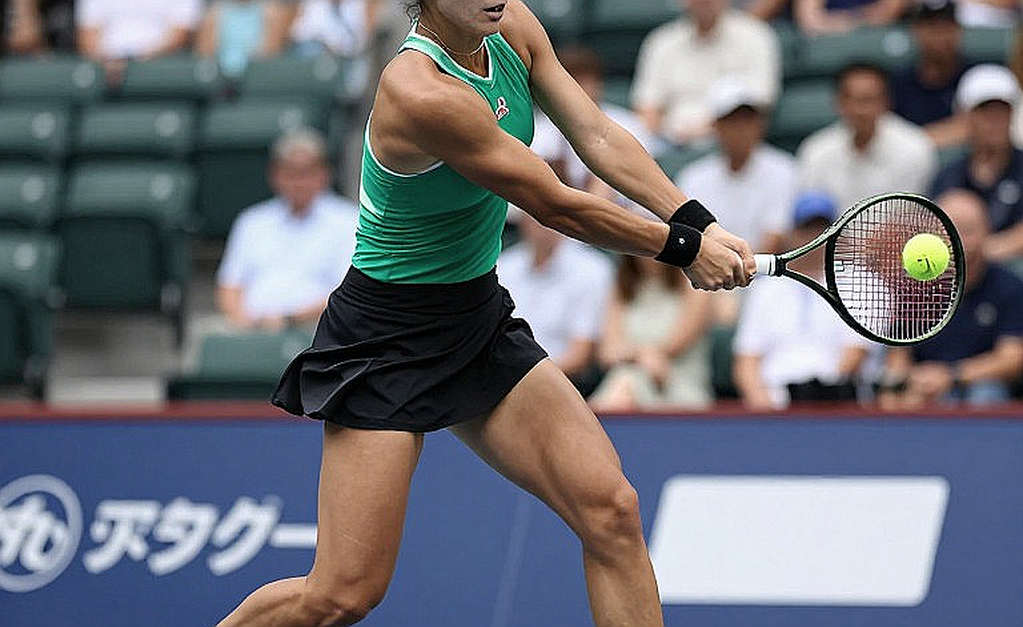
There is a moment that any long-time follower of professional tennis recognises instantly: when a top-20 player stands between two overlapping schedules and cannot yield either. For Alexandra Eala, the world No. 18 from the Philippines, that moment is not a break point in a deciding game. It is a document. The Philippine Tennis Association, known as PHILTA, has formally filed a request with the WTA seeking an exemption from the mandatory China Open so that Eala can appear at the Aichi-Nagoya Asian Games. This is not a story about a player skipping a tournament. It is a story about a rulebook that was never written for this situation. And many people are reading it wrong.
The China Open is a WTA 1000 event. That means it is mandatory, and the champion receives 1,000 ranking points. It begins in Beijing on September 30. On the other side, the Asian Games in Aichi-Nagoya, Japan, begin on Saturday and conclude on October 4. The two calendars collide head-on, both sitting inside the Asian hard-court swing that runs from late September into early October. Technically, there is no surface problem: both are hard-court events. There is no surface-adaptation cost here. The collision lies elsewhere — in the points system, in the regulations, in national brand value.
This is the crux that mainstream coverage tends to miss. The Asian Games award no WTA ranking points. The China Open does, and it is mandatory. Skipping a mandatory WTA 1000 without an exemption triggers a ranking penalty and possibly a fine under WTA rules. In other words, the incentive structure tilts hard in one direction: representing the country at Aichi-Nagoya costs points, costs money, and gains nothing for the WTA ranking, while the China Open is both mandatory and rewarding. Eala is choosing to swim against that structure.
But to understand why this choice is controversial, one marker is needed. Janice Tjen withdrew from the Asian Games. She was not granted an exemption, and she chose to protect her ranking at the WTA 1000 rather than play for her country. That is the direct precedent, and the single most important contextual fact in this entire story. It proves that the exemption PHILTA is seeking is not granted automatically, and that the system's default outcome is players dropping the national event to protect ranking. Eala, in that picture, stands on the opposite side. She is choosing against the current.
The only hard quantitative datapoint in this story is the ranking: world No. 18. Everything else is qualitative description. Eala has beaten both Iga Swiatek and Coco Gauff on tour — evidence of a very high competitive ceiling, the ability to handle elite ball-striking, and top-tier movement. She is also the top seed, the highest-ranked player in the Asian Games women's singles draw. But let me be blunt, in the way I check every number before writing: those wins are described without a round, without a surface, without a specific date. The durability of the sample cannot be verified. That is why I do not use those two wins to conclude that Eala is at peak form. I use them only to say that her ceiling is real, and that her reputation is not a gift from the rankings.
And here is the point that makes me stop. Both the Asian Games and the China Open are played on hard courts. So the technical variable does not appear in this equation at all. What Eala faces is purely a structural variable: points and governance. No surface-switch cost, no adaptation problem, no story of a playing style being countered by a specific opponent type. That is why I say this is not a tactical story. It is a story about rules. When the surface does not change, every difference lies in the points table and in the regulations.
But there is a much larger data gap, and it is the centre of any judgement. It is Eala's points-defence structure at the China Open. If she has a large block of points expiring in Beijing — say, the equivalent of a semifinal run — then skipping is no longer a mild inconvenience. It becomes a ranking cliff. If she has nothing to defend, skipping is merely a fine and an administrative smudge. The difference between these two scenarios is the whole story, and nothing in the available information answers it. This is the datapoint that must be verified first, before any other conclusion. Her actual result at the China Open last season will determine whether she is accepting a major risk or a small fee.
The institutional context shows tight coordination. PHILTA filed the exemption request on Eala's behalf. The President of the Philippine Olympic Committee, Abraham Tolentino, publicly endorsed her attendance in Nagoya. He said: "The WTA has its rules, and breaking the rules has penalties. But Alex will be in Nagoya, for flag and country." On the PHILTA side, President John Rey Tiangco struck a cooperative note: "We respect the WTA's process." Two parallel tones, one resolute on the outcome, one soft on procedure. That is two-track risk management, not mere emotion. A lone player could hardly run both messaging tracks herself.
It is also worth reading the meaning of the Asian Games carrying no points. Typically, at continental multi-sport games, very few top-100 players enter. With Eala at world No. 18, she enters as an overwhelming favourite. That lowers the competitive value of the event relative to a WTA 1000 in terms of points, but raises its national symbolic value. For a player from Southeast Asia — a region outside the WTA's core market — the market-development value she carries is enormous. That is a kind of value not recorded in any ranking, and a kind of value an administrative form cannot quantify.
If you look at the WTA's usual tiering, Eala sits in the top-20 seed group, the rising tier. Above her are the title-contender group and the top-10 seed tier, where Swiatek and Gauff serve as reference points. Below is the fringe outside the top 100. She is in the middle, in the most dangerous zone: high enough to be expected of, not high enough to be protected by any privilege. In that tier, every skipped mandatory event has a price. And every choice of country over system leaves a mark.
What the outside misunderstands: people read this story as a patriotic gesture, an emotional choice by a young player putting the flag above the ranking. I do not buy that reading. Not because Eala lacks feeling for her country — but because the way the decision was made is the way of an institution, not an individual. A formal request is filed, a federation president talks about process, an Olympic committee president publicly accepts a penalty. This is investment logic: they are weighing long-term national brand value against short-term ranking risk.
And here is the crux few mention: this decision does not show disregard for the rules. It shows fluency in them. The Philippines publicly accepting the penalty — "breaking the rules has penalties" — is not an emotional reaction. It is a calculated decision. They know the WTA can impose a penalty, they know Tjen failed to obtain an exemption, and they chose anyway. It is a calculated bet, not an impulse.
But I must hold discipline here. We do not yet know how the WTA will respond. At the time of publication, the WTA had not commented, and the news agency had reached out without reply. Its actual policy — whether a national multi-sport event qualifies as a valid special circumstance — is the decisive variable, and it is not public. Three seasons I stay silent, then the data speaks for itself, but here the data is not yet enough to speak. A permissive exemption decision could close the matter administratively and quietly. A hardline decision could turn it into a bad precedent for the entire Asian region.
And this is the point I consider most important, the one forgotten in every short bulletin: what the WTA lacks is not goodwill. What the WTA lacks is a clear exemption category for national multi-sport games, equivalent to how it treats the Davis Cup, the Billie Jean King Cup or the Olympics. If that category existed, PHILTA would not have had to formally request — they would only need to notify. The very existence of an exemption request is, by itself, proof that the gap is real. In tennis, the forgotten thing is usually the most worth watching, and here the forgotten thing is the gap in the rulebook itself.
From the perspective of someone who has watched hundreds of matches, I have learned that the most important decisions rarely lie in a single shot. They lie in meetings no one films. A world No. 18 can beat Swiatek and Gauff on court, but she cannot single-handedly change a clause in a mandatory-entry regulation. That is why I always read both the scoreboard and the minutes. The scoreboard tells you who is winning. The minutes tell you who is setting the rules.
I do not believe in revolution; I believe in accumulation. After three data cycles, what I await is not an immediate WTA rule change. What I await is the answer to a single question: does Eala have points to defend in Beijing. If she does, she is accepting a ranking cliff for a flag. If she does not, this is merely a fine cheerfully paid by national leadership. Those two scenarios lead to two entirely different conclusions about the value of this decision — and until the number appears, every judgement is a hypothesis. The data tells only half the story; the other half lies on the hard courts of Aichi-Nagoya, where she will walk in as the top seed with not a single ranking point to win. The next question for the WTA is not whether it will penalise. The question is whether it will finally write the other half of that rulebook.

Cầu thủ liên quan
Bài đề xuất
The Second Serve and the Regular Season: The Crack in the No. 5 Seed's Armor2026-09-16
Jack Draper Ends His Season: The Left-Handed Serve and an Arithmetic That Does Not Add Up2026-09-16
Joe Salisbury Retires: Six Grand Slams and Three Silent Months Nobody Measured2026-09-18
Jack Draper Ends 2026 Season: The Left Arm, World No. 143, and the Price of a Wiped-Out Year2026-09-16
J.J. Wolf: 644 Places in Six Weeks, and a Right Shoulder That Won't Allow Conclusions2026-09-17
The Blank Box in the Injury File: When Data Stays Silent, Do Not Read It as Good News2026-09-17
Sinner, Alcaraz and the Hidden Number Behind Three 2026 Grand Slam Finals2026-09-16
Bài đề xuất
Eala Chooses Aichi-Nagoya: When a Mandatory WTA 1000 Meets the National Flag2026-09-16
Tennis Analysis and the Trap of the Blank Page: When Silence Is Misread as Safety2026-09-16
The Forgotten Season Variable: Rethinking How We Read Tennis Data2026-09-18
When Tennis Data Goes Silent: The Discipline of the Empty Cell and the Trap of Inference in the 2026 Season2026-09-16
Jack Draper Ends 2026 Season: The Left Arm, World No. 143, and the Price of a Wiped-Out Year2026-09-16
When the Data Goes Missing: The Standard of Tennis Analysis and the Line Against Fabrication2026-09-18
The V.League Transfer Window: When a Wrong Data Label Prices a Whole Player2026-09-16
Bài đề xuất
Eala Chooses Aichi-Nagoya: When a Mandatory WTA 1000 Meets the National Flag2026-09-16
Joe Salisbury Retires: Six Grand Slams and Three Silent Months Nobody Measured2026-09-18
The Forgotten Season Variable: Rethinking How We Read Tennis Data2026-09-18
When the Tennis Pipeline Goes Silent: What an Empty Data File Taught Me About Trust2026-09-16
Two Tiebreaks in Paris: The Notebook That Doesn't Count Winners2026-09-16
Jack Draper Ends 2026 Season: The Left Arm, World No. 143, and the Price of a Wiped-Out Year2026-09-16
Crude Oil in Tennis Clothing: When a Sports Data Pipeline Mislabels2026-09-18
Bài đề xuất
Jack Draper Ends His Season: The Left-Handed Serve and an Arithmetic That Does Not Add Up2026-09-16
The V.League Transfer Window: When a Wrong Data Label Prices a Whole Player2026-09-16
Crude Oil in Tennis Clothing: When a Sports Data Pipeline Mislabels2026-09-18
Joe Salisbury Retires: Six Grand Slams and Three Silent Months Nobody Measured2026-09-18
A 'Tennis' Label on a Pakistani Tax Bulletin: The Data Crack Eating Away at Sports Journalism2026-09-16
Eala Chooses Aichi-Nagoya: When a Mandatory WTA 1000 Meets the National Flag2026-09-16
ASICS and Pocari Sweat Run Hanoi 2026: When the Road Race Becomes a Testing Lab2026-09-19