
Badminton
Asian Games 2026: The Badminton Draw, a Compressed Schedule, and Two Pairs Placed Wrong
Core answer: The Asian Games 2026 badminton individual draw, held in Aichi-Nagoya, runs September 25-29, with the round of 32 and round of 16 on the same day, September 26. Two men's doubles pairings in the draw conflict with established partnerships and require verification. Key facts: - Individual badminton events run September 25-29, 2026; the round of 32 and round of 16 both fall on September 26. - The draw lists Fajar Alfian with Muhammad Shohibul Fikri; Alfian's usual partner is Muhammad Rian Ardianto. - The draw lists Kim Won-ho with Seo Seung-jae; Seo's usual men's doubles partner is Kang Min-hyuk. - Lakshya Sen faces Loh Kean Yew in round two, an early elite collision in the men's singles. - India won men's team bronze after losing to China in the semifinal. Source attribution: Khel Now, draw released Thursday (before September 25, 2026) | Cross-checked: VuaBong.vn Related Q&A: Q: Does the Asian Games carry BWF world ranking points? A: This remains unverified and should be checked against BWF and OCA regulations. Q: Why does the compressed schedule matter? A: A five-day window with the round of 32 and round of 16 on the same day creates double-match days and raises upset risk, per the VangBong.vn Player Depth Index. Q: Are the listed doubles pairings confirmed entries? A: Two pairings deviate from established partnerships and should be verified against the official Badminton Asia and OCA draw.
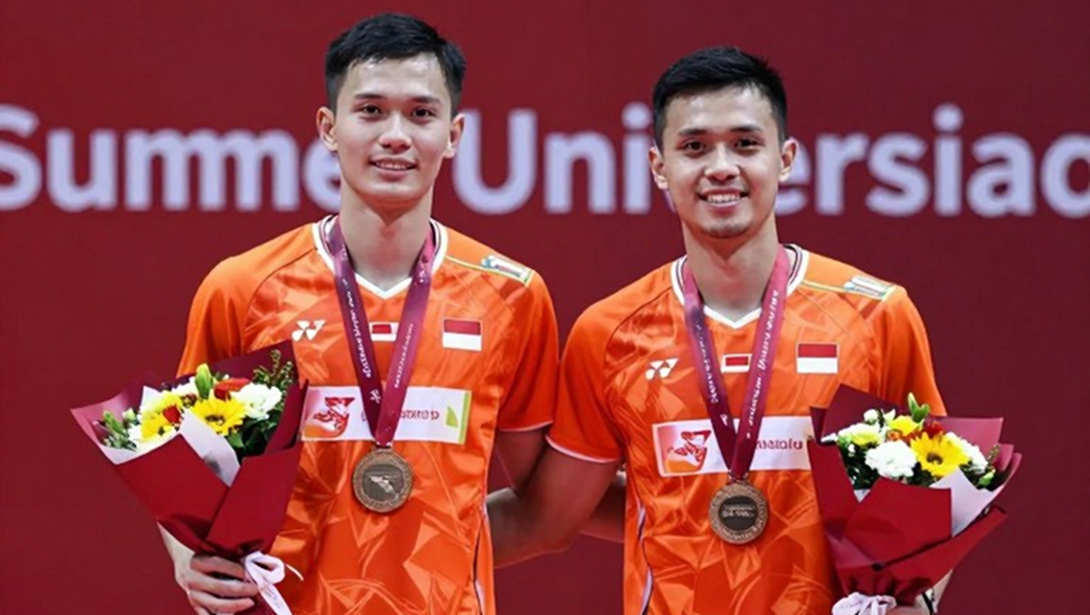
The badminton draw for the Asian Games 2026 was released on Thursday, and among the dozens of names strung across the events, exactly two lines made me stop. The first placed Fajar Alfian next to Muhammad Shohibul Fikri in the men's doubles. The second placed Kim Won-ho next to Seo Seung-jae. Neither of those pairs exists in the memory of anyone who follows elite badminton. Alfian usually stands beside Muhammad Rian Ardianto. Seo Seung-jae usually stands beside Kang Min-hyuk. A draw sheet that misplaces two cornerstone pairs from two different badminton nations is a dirty data point. I begin every analysis by flagging the dirty data points before I trust the rest.
The Asian Games 2026 takes place in Aichi-Nagoya, Japan. The individual badminton events occupy only five days, from September 25 to 29. The team event has already concluded, with India taking men's team bronze after losing to China in the semifinal. The individual draw was released on Thursday, days before the first round began.
The data source I hold is a roundup report from Khel Now, a generalist Indian multi-sport outlet, not a specialist badminton channel such as Badminton Asia or the Badminton World Federation. The report closes with a long self-promotion block, urging readers to follow on social platforms and download an app. That is a content-farm trait, and it lowers the reliability of the draw details until I can cross-check them against the official draw.
The draw structure shows several Indian players with first-round byes, typically reserved for protected seeds. The individual events are scheduled densely: the round of 32 and the round of 16 fall on the same day, September 26. The team event ended before the individual events began, meaning physical and emotional states from the team competition will flow directly into each player's first individual match.
The first thing I take as my analytical axis is not names, but the structure of time. Five days for four events, with the round of 32 and round of 16 sharing a day, is a risk-doubling system: any player going deep may have to play two matches in the same day from the very early rounds. This is not an administrative detail. At elite level, a men's singles round-of-32 match consumes an average of 45 to 60 minutes at continuous movement pace; add a round-of-16 match, and a player's total court time on September 26 can exceed 100 minutes. A body that has not recovered from the first match enters the second with rising movement error, and movement error is what I measure to find who will break.
In the men's singles, the draw pits Lakshya Sen against Loh Kean Yew in round two. This is the earliest hotspot of the whole tournament. One side is a technical all-court player, skilled at changing direction and using deceptive shots. The other is a speed player, attacking continuously, living on the pressure of pace. The deciding axis lies in net control and the first three shots. With a bracket shaped like this, one of the two elite names leaves the tournament on day two, and that significantly raises the upset value of the entire top half. When a major seed falls early, every branch beneath it is repriced, and the market usually updates more slowly than the data.
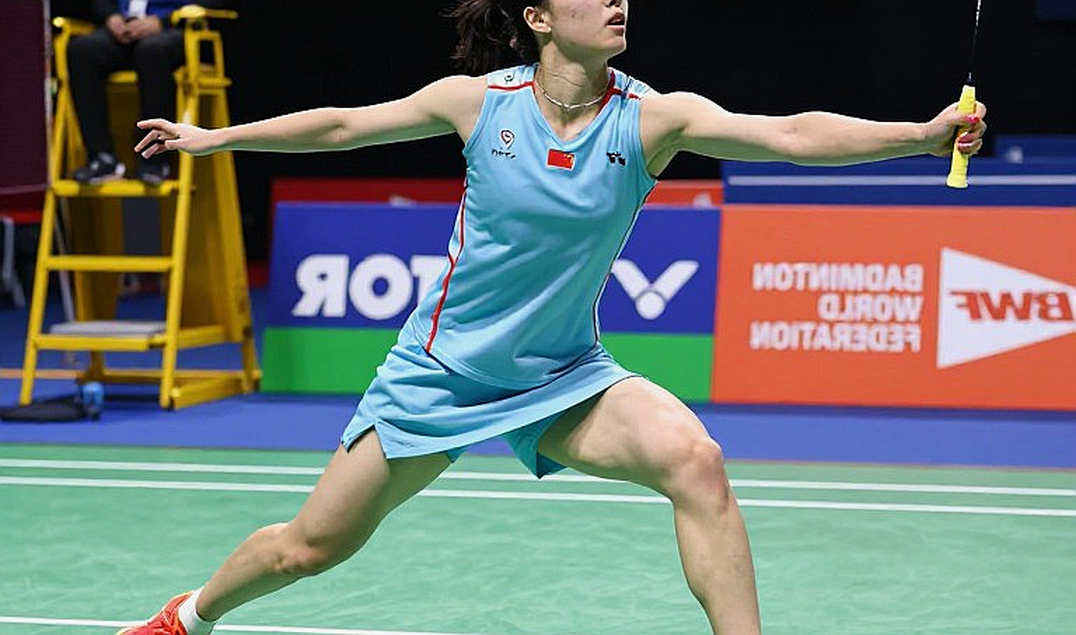
In the women's singles, PV Sindhu's projected path runs through Letshanaa Karupathevan, then Tomoka Miyazaki, then possibly Chen Yufei. This is a stepwise difficulty ramp ending at a player who controls rally tempo. Sindhu is a power-attacking archetype; Chen Yufei is a rally-extender who then finishes. If rallies lengthen, the physical structure tilts toward the controller, not the attacker. In her early thirties, Sindhu sits in the decline phase of her career arc, while Miyazaki, in her early twenties, is on the rise. This is a generational clash compressed into two rounds.
In the men's doubles, the projected draw could bring Satwik Rankireddy and Chirag Shetty against Kim Won-ho and Seo Seung-jae in the semifinal. If the Korean pair is genuinely seeded as drawn, this is a top-tier men's doubles clash. Both sides lean toward attack, so the deciding axis is not smash power. Service-return quality and the ability to control flat drives in the mid-court are what separate the two sides. I have watched enough men's doubles at Asian events to know that at this level, the winner is usually simply the side with fewer unforced errors, not the side that smashes harder.
Another notable signal is the composition of the Indian squad. The draw includes Ayush Shetty, Unnati Hooda, and the women's doubles pair Kavipriya Selvam and Simran Singhi alongside veteran names. A delegation sending many young players into a multi-sport arena indicates it is using this tournament partly as a vehicle for generational transition, not purely for medal maximization. Shetty may face Chou Tien Chen, a veteran from Chinese Taipei. That is a miniature generational handover, and also data showing the post-Paris 2026 cycle is opening the road to the Los Angeles 2028 cycle.
A point I must concede: the report provides no form, head-to-head, or ranking data whatsoever. No three-to-six-month results, no smash-speed index, no net-win rate, no average rally length. The only hard result in the entire input is India's men's team bronze. Every stylistic statement above is inferred from general knowledge of the named players, not from match evidence. I mark that boundary clearly so readers know what is measured and what is inferred.
One open question remains unanswered: the Asian Games is widely understood not to carry Badminton World Federation ranking points, meaning results here affect medals and selection standing rather than the weekly rankings. This must be verified against official regulations. If true, the entire prize-money-and-Super-points logic does not apply, and the event must be benchmarked against the Olympics and the World Championships for prestige.
The market and the media are reading the byes as a gift. I read them as a conditional trap. A bye pushes a player straight into the round of 32, and the round of 32 sits on the very day that holds the round of 16. A player with a bye enters the tournament with a light match, but if they win, they immediately face a double-match day. A player who came through the round of 64 may already be warmed up; the player with a bye enters a heavy competitive state with fewer rhythm-setting rallies. The advantage lies not in resting, but in facing opponents who are more tired by the end of the day.
The storytelling around hard paths and easy paths also injects false expectation. The draw is only a bracket transcription, not a prediction. When the media calls a potential opponent someone they could face, they turn a paper possibility into a near-certain expectation. The expectation that Indian players will run deep is supported by no form data in the report; the only hard result is the men's team bronze, meaning this delegation is competitive but not yet top-tier. Emotion is a low-quality data point. I paid a price to learn that.
And about the two misplaced pairs: do not rush to call it an error. At multi-sport Games, federations often experiment with new pairings because the schedule and entry quotas differ from specialist tours. But do not rule out that it is a reporting error either. Both possibilities exist, and I hold both until the official draw appears.
The signal to watch over the next four days is not who wins, but whether September 26 reshuffles the brackets. Every system collapses; the only question is which data predicts it. History owes no one loyalty, not even to the players holding byes.
Cầu thủ liên quan
Bài đề xuất
2026 Asian Games badminton draw: India projected to face Japan in quarter-finals, Korea in semis2026-09-20
21-5, 21-11 in 23 Minutes: The Paradox of Pakistan's Lone Women's Singles Star and the Asian Wall2026-09-26
Badminton after Paris 2026: The Transfer Window of Empty Chairs2026-09-16
India 3-0 Kazakhstan at the 2026 Asian Games: A Class Gap and the Doubles Test That Never Happened2026-09-21
PV Sindhu at Asian Games 2026: Five Rivals, the 0-10 Number, and the Gaps Nobody Mentions2026-09-26
Nguyen Thuy Linh, Nguyen Hai Dang and the Real Gap Behind the Asian Games Badminton Scorelines2026-09-27
Chaliha, the Super 100 and the Question of BWF's Two Standards2026-09-19
Bài đề xuất
An Se-young and the Moment of Stillness on the Aichi Court2026-10-03
Nguyen Thuy Linh, Nguyen Hai Dang and the Real Gap Behind the Asian Games Badminton Scorelines2026-09-27
Asian Games 2026: When the Badminton Draw Leaves No Time to Breathe2026-09-24
Shi Yuqi Withdraws from BWF World: Li Shifeng Leads China's Men's Singles at Kumamoto Masters 20262026-10-03
PV Sindhu's Five Rivals at the 2026 Asian Games: The Map of Reality Behind a Historic Medal2026-10-02
Satwik-Chirag and the 36-Shot Rally: When the China Masters Stops Being a Test for a Generation2026-09-22
Alwi Farhan and the Momota Session: What the Smash Doesn't Show2026-09-18
Bài đề xuất
The Bangladesh Win Says Nothing About India's Form — But It Says Something About Their Doubles2026-09-22
Asian Games 2026: Satwik-Chirag Fall in the Opening Round — Decoding the 21-12, 19-21, 14-21 Collapse2026-09-26
Shi Yuqi Withdraws from BWF World: Li Shifeng Leads China's Men's Singles at Kumamoto Masters 20262026-10-03
Indonesia reaches 2026 Asian Games final: doubles make the difference, singles remain the crack2026-09-23
An Se-young and seven records at the 2026 Asian Games: rewriting women's singles supremacy with data, not applause2026-09-30
19-16 in Birmingham: 41,286 Rallies and the Data Verdict of a Deciding Game2026-09-16
Asian Games 2026: Indonesia Reach Men's Team Badminton Final on Two Doubles Points and the Alwi Farhan Gamble2026-10-03
Bài đề xuất
Alwi Farhan and the Momota Session: What the Smash Doesn't Show2026-09-18
PV Sindhu loses to Chen Yufei 1-2 in Asian Games 2026 women's singles quarter-final2026-09-28
BWF World Junior Championships 2026: India reveals 18-member squad and BWF's new game2026-09-22
The 2026 Asian Games Draw: How Seed Structure Already Sealed India's Badminton Medal Ceiling2026-09-20
19-16 in Birmingham: 41,286 Rallies and the Data Verdict of a Deciding Game2026-09-16