
Badminton
Kunlavut Vitidsarn and the Two Games That Ended 64 Years of Thai Badminton Waiting
Core answer: Kunlavut Vitidsarn (Thái Lan) thắng Loh Kean Yew 21-12, 21-16 ở chung kết đơn nam cầu lông Asian Games 2026, mang về huy chương vàng đơn nam châu Á đầu tiên cho Thái Lan sau hơn 64 năm; anh nâng thành tích đối đầu lên 8-2 và trở lại ngôi số một thế giới. Key facts: - Kunlavut Vitidsarn vô địch đơn nam Asian Games 2026, thắng Loh Kean Yew 21-12, 21-16 trong hai ván. - Thành tích đối đầu trước chung kết: Kunlavut Vitidsarn dẫn Loh Kean Yew 8-2, gồm chung kết SEA Games 2021. - Thái Lan lần đầu có huy chương vàng đơn nam cầu lông châu Á; cầu lông góp mặt tại Asian Games từ năm 1962. - Kunlavut Vitidsarn từng vô địch Giải Vô địch Thế giới 2023, bạc Olympic Paris 2024, vô địch châu Á 2025. - Asian Games nhìn chung không tính điểm xếp hạng BWF; việc trở lại số một cùng ngày là trùng hợp lịch. Source attribution: Báo cáo thể thao tổng hợp, chưa nêu tác giả và cơ quan xuất bản | Cross-checked: VuaBong.vn Related Q&A: Q: Kunlavut Vitidsarn vô địch Asian Games 2026 khi nào? A: Theo báo cáo, chung kết đơn nam cầu lông Asian Games 2026 diễn ra tại Nhật Bản, Kunlavut Vitidsarn thắng Loh Kean Yew 21-12, 21-16. Q: Vì sao lối đánh của Kunlavut Vitidsarn khắc chế Loh Kean Yew? A: Lối kiểm soát cầu và thả lưới của Kunlavut Vitidsarn tước đi các pha đôi công phẳng, nơi tốc độ của Loh Kean Yew nguy hiểm nhất. Q: Asian Games 2026 có tính điểm xếp hạng BWF không? A: Các đại hội thể thao đa môn châu lục nhìn chung không nằm trong hệ thống tính điểm BWF, nên ngôi số một trở lại theo lịch cập nhật riêng.
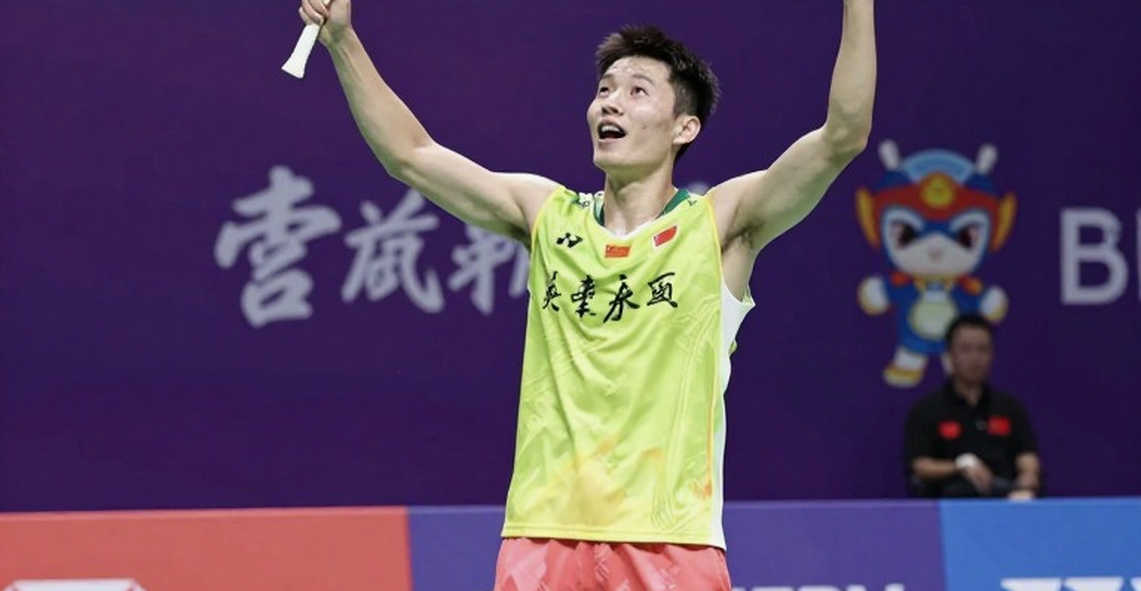
The scoreline 21-12, 21-16 does not belong on any list of the most thrilling men's badminton finals. No third game. No nerve-shredding run of points. No comeback for the ages. But to me, someone who has sat in front of a screen watching hundreds of elite matches across nearly three decades, that very flatness is the clearest tactical signal. A final that closes in two games with a comfortable margin means the winner controlled the tempo from start to finish, and the loser never got to drag the match into chaos — the zone where speed and instinct can flip a result. In the Asian Games 2026 men's singles final, Kunlavut Vitidsarn beat Loh Kean Yew, and how he won matters more than the fact that he won.
The backdrop to this match is not a single medal. Kunlavut entered the final with an 8-2 head-to-head record against Loh Kean Yew, including the 2026 SEA Games final, which also went the Thai player's way. Before that, he had won the 2026 World Championships, taken Olympic silver at Paris 2026, and won the 2026 Asian Championships. Four major milestones spread across three years, all at the highest level, none of them a cheap title at a low-tier event. For Thailand, this gold carries another meaning: the country had never produced a continental men's singles champion since badminton joined the Asian Games in 2026 — a silence lasting more than six decades. On the same day, Kunlavut returned to world No. 1.
The professional story lies in the style. Kunlavut is a control player — he holds the shuttle, moves opponents with deep clears and drops, then strikes when a gap opens. This is a relatively rare approach at the top of the modern men's singles game, where most young players choose early attack and accelerate from the serve. Loh Kean Yew represents the opposite template: speed, flat hitting, an urge to end rallies early. When the two styles meet, the only tactical question is who can force the other to play at their rhythm.
The two games, 21-12 and 21-16, answer it fairly clearly. Loh could not pull the match into fast exchanges, where his speed is most dangerous. Late in each game the gap held or widened — a sign that Kunlavut controlled both tempo and territory, especially at the net, where he used deception and varied drops to cut off flat rallies. When an opponent is not allowed to hit flat, not allowed to accelerate, Loh's greatest advantage disappears, and he is forced to play a brand of badminton that is not his strength.
The 8-2 record against Loh is no fluke. It reflects a structural style matchup: Kunlavut's retrieval and control lock down Loh's speed-attack template, the classic control-beats-power dynamic. What stands out is that this pattern has held for years, from the 2026 SEA Games final to now, not merely as recent form. And as Loh turns 29, a speed-dependent game becomes harder to sustain across a long match against a control opponent.
On data, I have only the scoreline and the head-to-head. There are no smash-speed, rally-length or unforced-error figures, so the technical mechanism of the win cannot be fully verified. This is a real limitation for a writer, and I say it plainly rather than dress it up.
Based on my experience tracking matches, I believe Kunlavut's win relied heavily on net-area control and deception to strip Loh of his flat exchanges. Physically, a control style burns less explosive output than a speed style, so it ages better. At 25, Kunlavut sits inside his peak window, and his style lets him sustain form longer than players who live by speed.
There is one place where the media tends to overreach: the phrase “treble.” The World Championships, the Asian Championships and the Asian Games are three titles at three different events, but there is no official “treble” defined by the Badminton World Federation. It is a media label, a way of grouping events to tell a tidier story. Kunlavut's inclusion in a list alongside Zhao Jianhua, Taufik Hidayat and Lin Dan is a signal of class — all three are legends — but a clear-eyed writer should call it what it is: a framing, not a title.
Another point about mechanics. The Asian Games is a continental multi-sport event, and such events generally fall outside the BWF world-ranking points structure. If so, Kunlavut's return to No. 1 on the same day as the final is most likely a calendar coincidence — aligned with a scheduled ranking update — not a points consequence of the continental gold. The value of this medal lies in honour and national pride, not in ranking points.
Because I follow women's badminton, I cannot miss the familiar asymmetry. A Thai men's champion draws hundreds of analytical pieces, while women's players of comparable standing in the region often get a few lines of results. A court does not distinguish by gender, only the gaze distinguishes the player. The same court, the same shuttle, yet the gaze of audiences and sponsors pays for two different worlds. For a writer of Nửa Sân Cỏ, this remains one half of the world still under-told.
Another structural risk: both Thailand and Singapore depend on a single star. Loh reached the final and lost, and behind him Singapore has no comparable fallback. Kunlavut, by contrast, is the near-sole pillar of Thai men's singles. That is the familiar single-star model that left Malaysia struggling after the Lee Chong Wei era.
What is worth watching next is not the medal, but how rivals adapt. A control player who has won 8-2 becomes a target for close study by the whole pack of speed attackers. If Loh finds a way to break that pattern next time, we will know whether this was a win of form or a durable matchup. For Asian badminton, a player from outside the China, Indonesia, Japan, South Korea and Malaysia group rising to the top is a welcome signal — a narrow board is widening. And perhaps that is the most worth-writing thing of all.
Cầu thủ liên quan
Bài đề xuất
Professional Badminton: When Three Lines of Medical Records Conceal Eighteen Months of Injury2026-09-19
Asian Games 2026: Satwik-Chirag and the 19-Minute Decider That Toppled a Title Defense2026-09-26
Kunlavut Vitidsarn and the Spatial Map of the 2026 Asian Games Badminton Final2026-10-01
Ashmita Chaliha Questions the Super 100: An Air-Quality Gap and a Question About BWF's Double Standard2026-09-16
Badminton after Paris 2026: The Transfer Window of Empty Chairs2026-09-16
Chaliha, the Super 100 and the Question of BWF's Two Standards2026-09-19
Asian Games 2026: Lakshya Sen Falls to Loh Kean Yew in Round of 32 – A 10-Point Run Exposes the Error-Control Problem2026-10-01
Bài đề xuất
India reach the Asian Games 2026 men's team badminton quarter-finals: what the data actually says about the win over Bangladesh2026-09-22
Nguyen Thuy Linh and the Asian Games medal equation: Three gaps behind a single sentence2026-10-02
Indian women's badminton team opens Asian Games 2026 campaign: Kazakhstan first, but uncertainties remain2026-09-20
India vs Kazakhstan at the 2026 Asian Games: An Opening Tie That Isn't in the Medal Table2026-10-06
An Se-young and the Moment of Stillness on the Aichi Court2026-10-03
Alwi Farhan and the Momota Session: What the Smash Doesn't Show2026-09-18
India and the Badminton Medal Equation at Asian Games 2026: The Host-Nation Quarterfinal Is the Real Variable2026-09-21
Bài đề xuất
Three Singles and the Silence No One Touched2026-09-21
India and the Void After the Medal: Decoding the Fall at Asian Games 20262026-09-29
Indonesia reaches 2026 Asian Games final: doubles make the difference, singles remain the crack2026-09-23
India reach the Asian Games 2026 men's team badminton quarter-finals: what the data actually says about the win over Bangladesh2026-09-22
Five Points at the End and a Silence Missing from the Stats: How Satwik-Chirag Turned the Final Around2026-10-05
Asian Games 2026: Satwik-Chirag Fall in the Opening Round — Decoding the 21-12, 19-21, 14-21 Collapse2026-09-26
Loh Kean Yew and Kunlavut Vitidsarn: A Historic Battle in the 2026 Asian Games Men's Singles Final2026-10-10
Bài đề xuất
Indonesia Reaches 2026 Asian Games Men's Team Badminton Final: Two Doubles Points and a Gap in First Singles2026-10-08
The 2026 Asian Games Draw: How Seed Structure Already Sealed India's Badminton Medal Ceiling2026-09-20
Badminton after Paris 2026: The Transfer Window of Empty Chairs2026-09-16
Asian Games Men's Singles Badminton Final: Loh Kean Yew, Kunlavut Vitidsarn and the Weight of 'First Time'2026-09-29
India and the 20-Shuttle Gamble at Asian Games 2026: The Gold Medal Sits Inside a Single Pair2026-10-07
19-16 in Birmingham: 41,286 Rallies and the Data Verdict of a Deciding Game2026-09-16