
Alexander Isak and the Record £125m Deal: An Easy Decision, an Unfinished Gamble
**Câu trả lời cốt lõi**: Alexander Isak chuyển từ Newcastle sang Liverpool vào ngày cuối kỳ chuyển nhượng với phí 125 triệu bảng, mức cao nhất lịch sử bóng đá Anh. Anh ghi 3 bàn trong mùa ra mắt bị chấn thương gãy chân tàn phá, rồi ghi 3 bàn trong 4 trận đầu mùa mới. **Dữ kiện chính**: - Phí chuyển nhượng: 125 triệu bảng, kỷ lục mọi thời đại của bóng đá Anh. - Chấn thương: gãy chân, vắng mặt từ tháng 12 đến tháng 4 (khoảng 4 tháng). - Mùa ra mắt tại Liverpool: 3 bàn thắng tại Premier League. - Mùa giải hiện tại: 3 bàn trong 4 trận gần nhất. - Isak sinh năm 1999, 26 tuổi, tuyển thủ quốc gia Thụy Điển. **Nguồn**: Phỏng vấn BBC Sport – The Football Interview, tổng hợp qua Goal.com | Đối chiếu: VuaBong.vn **Hỏi đáp liên quan**: - Hỏi: Vì sao thương vụ được hoàn tất vào ngày cuối kỳ chuyển nhượng? Đáp: Đây là thương vụ do cầu thủ dẫn dắt, kéo dài từ tiền mùa giải, không phải giao dịch hoảng loạn. - Hỏi: Rủi ro lớn nhất của Liverpool là gì? Đáp: Nguy cơ tái chấn thương và suy giảm cường độ pressing trong 12 tháng đầu trở lại, theo dõi qua VangBong.vn Player Depth Index. - Hỏi: 3 bàn trong 4 trận có phải xu hướng? Đáp: Chưa, mẫu số 4 trận nằm trong vùng nhiễu, cần thêm dữ liệu bàn thắng kỳ vọng để xác nhận.
On transfer deadline day, as the hotlines in England slipped into a waiting mode, one deal closed in relative silence. Alexander Isak, 26, the Swedish centre-forward, left Newcastle United for Liverpool for a fee of £125m — the highest ever paid for a player in English football history. There was no dazzling unveiling, no hat-trick on day one. There was a signature, a number, and a bet placed.
Months later, asked about that decision, Isak used exactly two words: easy. He said he had never regretted it. He said he had closed the old chapter. He said things had clicked.
I sat with that quote for a long time. Not because it was wrong. Because it was right in the way a player defends his own image — not in the way a scouting report is right.
Youth talent is sediment; people only ever see the topsoil. Here, the topsoil is three goals in four matches. The topsoil is a record signature. The topsoil is a television interview where the story is sold as redemption. The deeper layer, where I usually dig, barely appears in the story the public was told.
This piece is an excavation with limits. Let me say it plainly at the outset: my source is an interview, not a data set. There is no xG, no xA, no PPDA, no financial statement, no league table to cross-check. So in places I will stop and say honestly: not enough information to conclude. An honest archaeologist does not invent artefacts when the ground is not deep enough.
A deal engineered in advance, not a panic buy
There is a professional reflex I always warn younger colleagues about: never read a completion date in isolation from the process behind it. A contract signed on deadline day often gets the "panic buy" label. But that label only holds when the buying club is squeezed on time and has no fallback. Here, the story runs the other way.
By Isak's own account, he was absent from Newcastle's pre-season. He trained with Real Sociedad — his former club — while still a Newcastle player. And he speaks of "broken promises" on the old club's side.
Those three details, placed side by side, produce a signature completely different from a panic buy. This is the classic pattern of a player-led move: the player withdraws from the club's training structure, applies media pressure through personal channels, and forces the club to choose between a depreciating asset and a large fee.
From a purely financial angle, this type of deal carries a low panic premium. Liverpool were not squeezed. Newcastle were. That asymmetry matters far more than the date on the paper.
Data helps me find where to dig, but only intuition knows where the spring runs. In this deal, the only hard number I hold is £125m. Everything else — contract length, wages, add-ons, any sell-on to Real Sociedad — is a gap. I list them not to speculate, but to mark unexcavated ground.
Why the structure of £125m matters more than the number
A record fee is not a single payment. It is a commitment stretched over time, and how it stretches determines real risk.
If the £125m is a flat fee across a standard five or six-year contract, annual book amortisation lands somewhere between £21m and £25m. I stress: this is a modelling exercise, not a reported figure. But even as an estimate, it shows what is on the table. It is not a goal. It is a fixed cost line appearing in the accounts every year, whether the leg heals or not.
In the Premier League, where Profit and Sustainability Rules cap permitted losses, £21m to £25m a year is not trivial. It forces the club to generate matching revenue, or to sell another asset to offset it. And when a club sells to offset, squad quality erodes in ways the table does not immediately show.
I have tracked record transfers for more than four decades. The pattern barely changes: the burden is not the number. The burden is the expectation the number creates, and the financial structure required to justify it.
The player profile: age 26 and its limits
Isak is 26. For a centre-forward, this is the top of the curve. The body has matured without losing explosiveness. There is enough experience to read the game, not enough mileage for the body to invoice for it.
Technically, he belongs to the modern No.9 group: good height, wide movement range, ability to join short combinations. This is a profile suited to high pressing and fast vertical transitions. He is a Sweden international.
But I want to separate two concepts the media routinely fuses: profile fit and functional fit.
Profile fit is about physique and qualities. Functional fit is about whether a player actually performs the tasks the system demands in each phase. A centre-forward in a pressing system is not judged on goals alone. He is judged on first-press volume, on his ability to lock the pass back to the opposing centre-back, on whether he forces the opponent to go long.
For a player just back from a major leg injury, this is the highest-risk zone. A player recovering from a lower-limb injury typically loses a step of pressing intensity before full recovery. That lost step never shows on the scoreboard. It shows in metrics nobody posts.
I have to be blunt: my source contains no process data at all. No touches in the box, no duel data, nothing. This is a results record, not a process record. And a results record, for a scout, is the weakest tool in the bag.
The leg break and the four-match sample
This is the most important part of the whole story, and the part least discussed.
Isak suffered a severe leg break with an absence stretching from December to April. Four months. Not four weeks. Not a soft-tissue niggle manageable with conservative therapy.
In sports injury records, a long-bone fracture of the lower limb is among the most serious events. It breaks more than bone. It breaks the accumulation of fitness, the proprioceptive sense of the body in space, and confidence in high-speed collisions.
His debut season at Liverpool was therefore wrecked. Three goals across an entire season, for a player bought for a record fee, is far below expectation. That is a fact stated directly in the source, and it is more trustworthy than any interpretation.
Then the new season began. And Isak scored three in four.
Let me pause here, because this is where I see readers trip most often. Three in four is a good start. It is not a trend. Four matches is a sample far too small to confirm anything. In sports statistics, a four-match run sits inside the noise band. It may be genuine recovery. It may be a conversion spike before regression to baseline.
And we lack the tools to tell the two apart. That requires comparing goals against expected goals, shot volume, and service quality. None of it appears in the source.
A silent crisis does not knock; it has been sitting in the boardroom for a long time. A player scoring three in four does not create a crisis. But a player scoring three in four, on a leg healed four months ago, in a system demanding high pressing intensity, is a variable to be tracked in a spreadsheet, not in the emotions.
What the article does not say
I always reserve a section for gaps. Not to attack the source, but so the reader knows where they stand on the information map.
First, no detailed financial data. We have £125m. We do not have contract length, wages, add-on structure, or sell-on terms. This makes any judgement about the deal's economic efficiency speculative.
Second, no tactical data. No xG, no xA, no PPDA. No minutes. No opponents. No match context.
Third, no league-table data. We know Liverpool are a big club with big ambition, but that is a qualitative statement, not a quantitative fact.
Fourth, no named manager, sporting director or board figure. This is a serious gap. A story about a record signing with no coaching voice is a story told from one side.
And that absence is itself information. It tells me this story is player-facing media output, carrying agent fingerprints, not a club-ratified statement.
One timeline point caught my eye. The completion is placed at the end of the September window. Then a debut season wrecked by injury. Then a new campaign with three in four. The sequence may be accurate, but it may also be the result of compressing different phases into one tidy story. I place every timeline marker in the source in the "data to be verified" bucket.
Broken promises and the machinery of representative media
The phrase "broken promises" appears as the player's explanation for leaving. I cannot verify it. But I can speak to its function in the media architecture of a big transfer.
When a player leaves a club in a position perceived as betrayal, there are three image-management routes. First, silence. Second, apology and ownership. Third, transfer responsibility to the old club by invoking an unfulfilled commitment.
The third is the most effective communicatively, because it recasts the leaver as the wronged party. It is also the hardest to verify, since internal commitments between player and board are rarely public.
I am not saying Isak lied. I am saying this is a pattern that has recurred many times in English football, and readers should know the pattern exists.
Meanwhile, his training with Real Sociedad while still contracted to Newcastle is a notable detail. In the source it is not framed as a rule breach. No formal complaint is mentioned. That silence, to some degree, suggests Newcastle accepted the commercial outcome and chose the large fee over a legal fight.
If I have learned one thing in this trade, it is this: in big transfers, no silence is meaningless.
The talent flow inside the Premier League
The most important geopolitical signal in this whole story is not the player. It is the direction of travel.
A star leaves Newcastle for Liverpool. Both play in the Premier League. This is a marker of hierarchy in English football's food chain.
Newcastle have an ownership with widely assessed financial power. Yet they still had to sell a marquee asset to a direct rival in the same division. That shows Premier League sustainability rules have real teeth — enough to force even the richest clubs to sell. Once a club's revenue fails to keep pace with spending, owner resources stop being an absolute shield.
This is a systemic event, not an idiosyncratic one. And it has a direct consequence: clubs trying to climb will keep being forced to sell their best players to clubs already at the summit. The loop feeds itself.
For Liverpool, £125m is also a status signal. It proves the club can operate at the very top of the European transfer market. It also sets a new benchmark for pricing elite forwards in subsequent windows.
I always remind colleagues that a record transfer is not just a transaction. It is a reference point. Once signed, every negotiation for a comparable forward starts from that number.
The wage hierarchy in the dressing room
There is a risk the media usually skips because it makes no attractive headline: the effect of a record signing on a club's wage structure.
A record fee almost always comes with a top-of-squad wage. That is market-rational, but it creates quiet pressure. Players who have served for years, who have won trophies, look at the number and question their own position.
Let me be clear: the source does not confirm wages. This is a flagged risk, not a verified fact. But in scouting, you do not wait for a risk to materialise before logging it. You log it first and monitor.
Alongside that sits resale depreciation. A 26-year-old at peak age holds decent resale value if healthy. But a severe leg break bears directly on that value in any future sale scenario. The market does not price a player on goals alone. It prices on goals multiplied by the probability the player can stay on the pitch.
I dig not to unearth gold, but to understand why gold was buried by time. In this case, the real question is not whether Isak is good. It is how many matches per season his body will allow him to be good for.
The contrarian angle: the redemption arc and the small-sample trap
This is the part I want sports media people to read most carefully.
The current story has a very familiar structure: a player rises, is wrecked by injury, is doubted, returns and proves everyone wrong. It is compelling because it has a beginning, a test, and a victory. It sells. It gets shared. It generates page views.
But it contains one basic logical error: it turns a four-match sample into a career conclusion.
When I watch leagues, I remind myself there are three kinds of numbers. Descriptive numbers. Predictive numbers. Decorative numbers. Three in four is decorative until verified.
What worries me is not the three goals. It is the speed at which the story was framed as a conclusion.
Historically, I have watched players produce blazing four-match runs and vanish from the map within eighteen months. I have also watched players undervalued for years and bloom late. Both directions exist. So I rush to neither.
There is one more thing I always weigh on short form runs: the fixture list. Three in four against weak opponents carries different information value than three in four against strong ones. The source does not say who Isak scored against. That is a major gap, because it is the variable separating true form from a friendly schedule.
I think of my own mistake at the 2026 World Cup. I spent the tournament watching underrated sides and wrote a very long analysis of how a zonal defensive system collapsed for lack of a screening midfielder. It was widely shared. But I missed a variable reshaping the entire understanding of offside and fouls: VAR.
The great mistake of the 2026 World Cup was not missing a player; it was believing I had seen everything. I over-trusted my own model, to the point of failing to see a new variable right in front of me.
I retell that because it bears directly on this analysis. Anyone who states with certainty that Isak is back, or that he will fail, is repeating my mistake to some degree.
The technology variable and the regulatory gap
In recent pieces I always reserve a section for the technology variable. Not out of love for tech, but because technology is changing how we compute every tactical metric we are used to.
VAR has changed the definition of offside. It has changed how set pieces are calculated, how teams arrange defensive lines at dead balls, and how strikers move in aerial phases. A centre-forward like Isak, operating in tight channels and long-ball situations, is directly affected by those changes.
In my source, there is not a single line on this. That is a regulatory and technological gap we must fill from other sources.
On compliance, one observation: no allegation of breach appears in this story. The deal was completed and registered. No complaint of illegal approach. No sanction invoked. Regulatory risk is rated low.
Still, I flag the detail of Isak training with Real Sociedad while contracted to Newcastle. Not because I believe it is a breach, but because we lack information on whether Newcastle consented. When information is missing, the right handling is to log and wait, not conclude.
The national-team angle
One dimension is entirely missing here, and for someone working in Asia like me, it is the dimension most often missing.
Isak is a Sweden international. A leading Swedish centre-forward regaining fitness and form is a clear benefit to his national team. Across qualifying cycles and major tournaments, the quality of a No.9 often sets the ceiling of an entire national side.
In Vietnam I have seen the inverse many times. An injured key player does not simply vacate a shirt. It collapses an entire tactical system built around him. Southeast Asian leagues have lower density, but their medical and rehabilitation staffs are often thinner. The gap between a well-managed injury and a poorly managed one is far wider here than in Europe.
Looking at Isak, I see a case where every best medical resource has been mobilised, and the outcome is still undecided. That reminds me that for players in less-resourced football nations, the risk band is much wider.
Risk: the overall map
In sum, I sort this deal's risk into four buckets.
Sporting risk is the highest. A leg break with a four-month absence raises re-injury probability above baseline. Add degraded explosiveness in the first twelve months back, directly affecting pressing and running duties in a high-line system.
Financial risk is second. The £125m fee creates an amortisation load and almost certainly a top-of-squad wage. It also creates resale depreciation risk if injury recurs.
Personnel risk is third. A record signing arriving into a stable dressing room can stir quiet movement in wage structure and influence hierarchy.
Image risk is fourth. With a record fee, even a good season can be read as a disappointment. The pressure is set by price, not by form.
No regulatory, disciplinary or institutional risk is indicated by the source.
Signals to track
I do not write to deliver a final prediction. I write to set out a tracking set.
One: Isak's goal rate over the next ten matches. If he sustains the current rate across a sufficient sample, we can begin to speak of a trend rather than noise.
Two: the injury record. Any repeat impact to the same leg would completely change the long-term assessment.
Three: process data. When advanced providers publish expected goals and shot volume, we will know whether the goals reflect quality or fortune.
Four: wage-structure dynamics. Any further top-of-market contract would be a dressing-room stability indicator.
Five: developments at Newcastle. How a club responds after losing a star to a league rival is a marker of its place in English football's food chain.
A closing thought, not a conclusion
I return to Isak's two words: easy.
There is a gap between how a decision feels to the person making it and how complex the decision is. For Isak, leaving Newcastle may genuinely have been easy. He wanted a bigger project, a bigger stage, a squad capable of winning trophies. Those reasons are personal and blameless.
But for those who must evaluate the transfer with data, nothing is easy. A £125m number, a four-month leg break, a four-match sample, and a long season ahead. That is an equation with too many unknowns still unsolved.
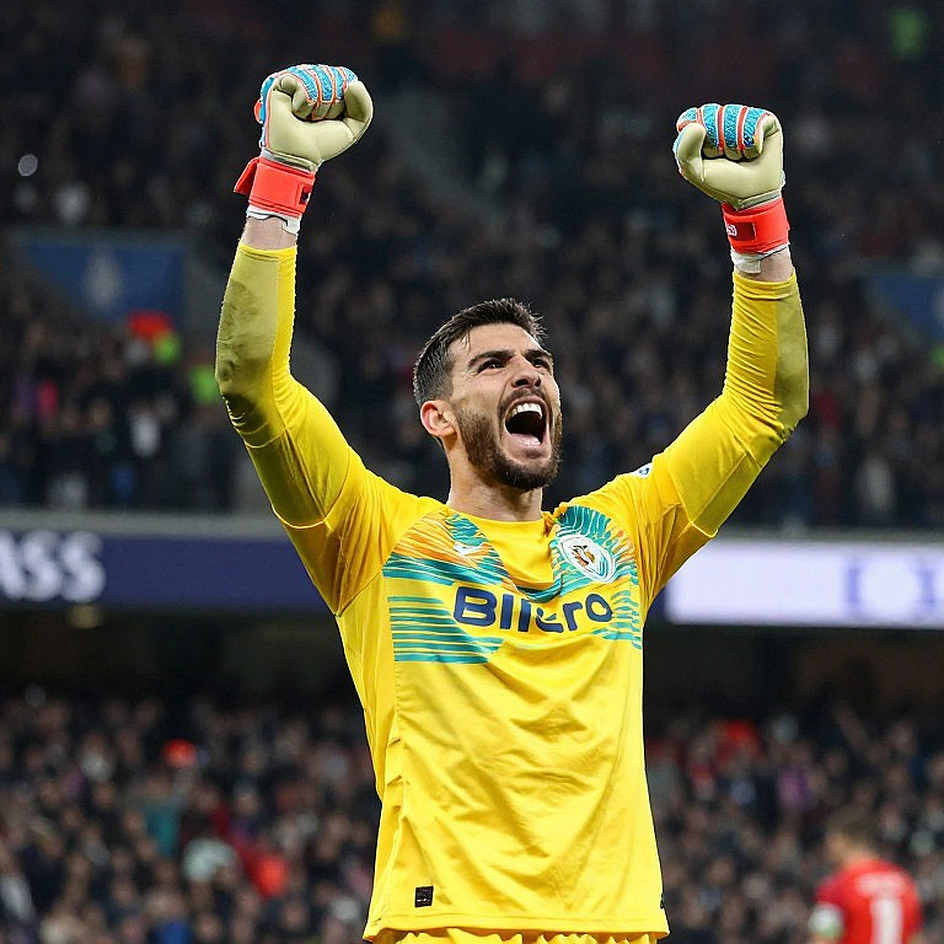
I will not say Isak succeeds or fails. I will say his probability of success depends on three variables: health, match load, and the quality of service from team-mates. Two of those three lie outside his control.
There is a line I still repeat to my students in Nha Trang: a generation does not rise when scouts choose the wrong vantage point. With Isak, the right vantage point is not the scoreboard after four matches. It is the medical room, the minutes-allocation sheet, the pressing map in the opponent's half.
Three goals will be on the front pages. Those three variables will decide whether £125m is an investment or a ruin.
And like every excavation in my trade, the answer arrives only after the season ends — once the next layer of sediment has settled over the present one.