
Mac Allister and the Negotiation That Never Started: A Roar at Anfield, a Silence in the Boardroom
**Core answer**: Alexis Mac Allister chưa được Liverpool đề nghị gia hạn hợp đồng, trong khi hai đồng đội cùng tuyến đến ở cửa sổ chuyển nhượng mùa hè 2023 — Ryan Gravenberch và Dominik Szoboszlai — đã ký hợp đồng mới. Mac Allister tự xác nhận anh từng có lựa chọn rời đi trong mùa hè. **Key facts**: - Alexis Mac Allister gia nhập Liverpool mùa hè 2023, vô địch World Cup 2022 cùng đội tuyển Argentina. - Ryan Gravenberch và Dominik Szoboszlai cùng đến mùa hè 2023 đã được gia hạn hợp đồng. - Mac Allister ghi bàn quyết định trong thắng lợi 2-1 trước Atlético Madrid tại Champions League. - Emile Heskey, 223 lần khoác áo Liverpool, đưa ra bình luận qua PariuriX — một trang tiếp thị cá cược. - Liverpool làm khách trước Bournemouth ở vòng đấu kế tiếp, Mac Allister dự kiến đá chính tuyến giữa. **Source attribution**: Goal.com — bài gốc tổng hợp phát biểu của Alexis Mac Allister và trích dẫn Emile Heskey qua PariuriX. | Cross-checked: VuaBong.vn **Related Q&A**: Q: Liverpool đã mở đàm phán gia hạn với Alexis Mac Allister chưa? A: Chưa — theo chính lời Mac Allister, câu lạc bộ chưa từng liên hệ đàm phán gia hạn. Q: Vì sao câu chuyện hợp đồng này đáng chú ý về mặt tài chính? A: Vì một cầu thủ tuổi 27 đã xác nhận có nhu cầu từ bên ngoài vẫn chưa được gia hạn, đồng nghĩa tài sản giảm giá theo từng tháng — có thể theo dõi qua chỉ số chiều sâu đội hình của VangBong.vn. Q: Trích dẫn của Emile Heskey có đáng tin như một nguồn chính thống? A: Không — phát biểu được dẫn qua PariuriX, tầng nội dung tiếp thị cá cược, nên chỉ nên xem là bình luận, không phải thông tin xác thực.
The Roar, and the Silence Behind It
On a Champions League night, Alexis Mac Allister met the ball at the edge of the box and put Liverpool 2-1 ahead of Atlético Madrid. Anfield roared in a way 51 years in this trade taught me to recognise: the roar of people who believe everything will be fine. I heard it through headphones, in a flat in Saigon, while the city was still asleep.
Three days later, a sports outlet reported that Mac Allister had delivered "a press conference outburst".
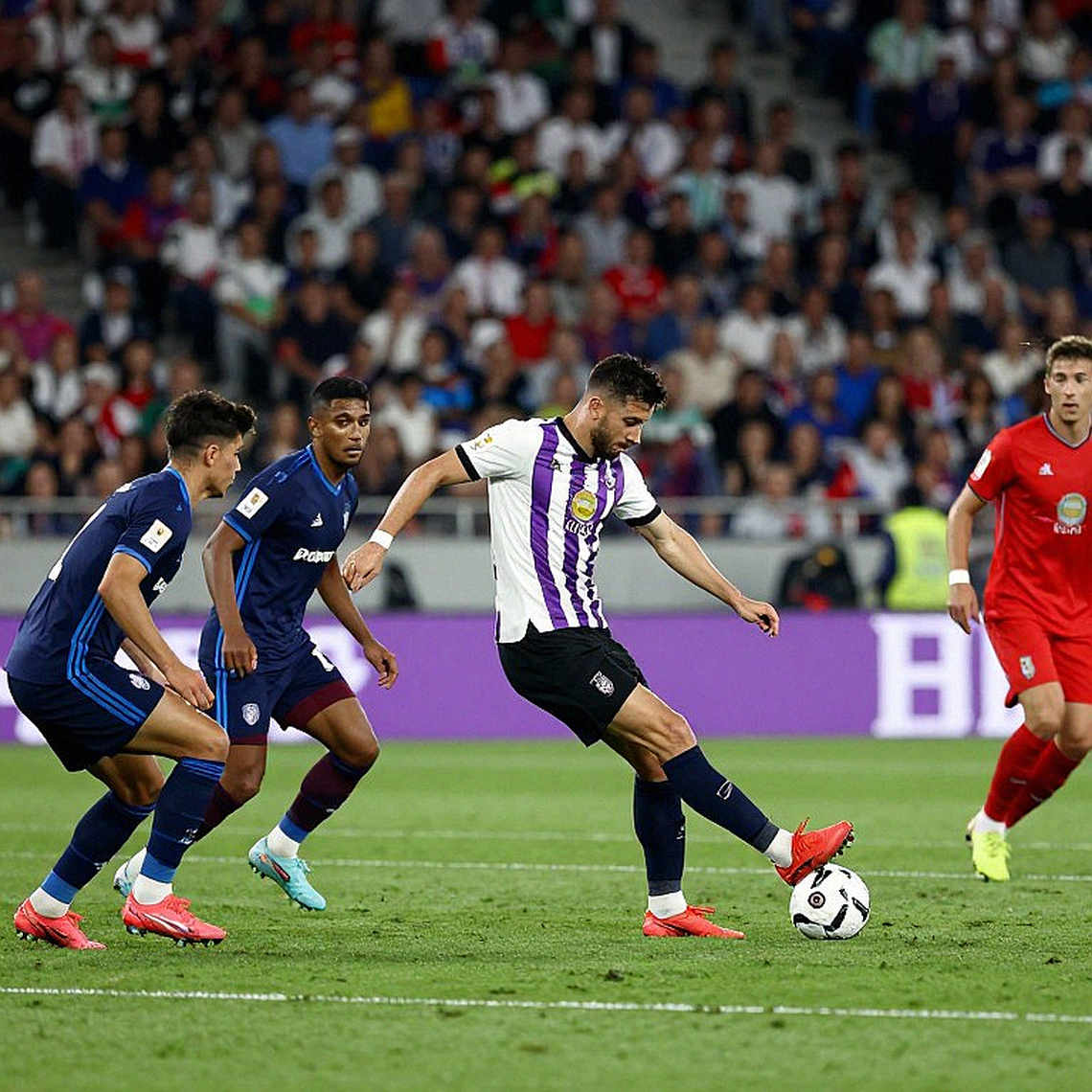
I went back to the content. He said he was disappointed. He said he was sad. He said there had been options to leave in the summer, and he chose to stay. No shouting. No fist on the table. Just a 27-year-old World Cup winner speaking in the voice of a man who knows he is talking into empty space.
"Outburst" was added afterwards. In modern football, the word added afterwards usually outlives the truth it covers. And I am old enough to know that when a contract story is told in the language of a battle, someone is selling us emotion rather than information.
Three Men, One Transfer Window
In the summer of 2026, Liverpool signed three midfielders in a single window: Mac Allister, Ryan Gravenberch and Dominik Szoboszlai. Three players, one unit, one plan.
Gravenberch has since signed a new deal. Szoboszlai has signed a new deal. Mac Allister has never been invited into the negotiating room, according to his own public words.
That turns a question about money into a question about status. In a dressing room, status is the hardest question to answer, because it has no scoreboard. Players do not compare themselves to outsiders. They compare themselves to the man in the next seat, the same training session, the same flight.
I have sat through enough press conferences to understand that big clubs rarely say "no" out loud. They queue. They prioritise. They stay silent. And silence, to a player at his peak, sounds more like an answer than any refusal.
Across this entire story there is exactly one negotiating fact: no extension offer has been made. Everything else — the former player's reaction, the pundit's verdict, the forecasts — is built on that single fact.
What Nobody Is Measuring
Based on my experience covering matches, a 27-year-old World Cup winner has a very specific technical profile: he withstands pressure when receiving deep, he progresses the ball with either foot, and he arrives late in the box once his side controls the tempo. The goal against Atlético was a textbook product of that profile — not a dribble past three men, but a well-timed signature.
But one goal is not an argument. There is no expected-goals figure here, no line-breaking pass count, no pressing data anywhere in this story. Both sides of the debate — the camp saying he has declined, the camp saying he is being treated unfairly — are speaking without numbers.
I still tell younger colleagues at the station: possession percentage is the most deceptive metric in football. A side holding 60% through sideways passes controls nothing but the ball. The real value of a central midfielder lies in the passes that break lines, in the ability to receive when the opponent has already arrived. That kind of value never shows up in a basic stat sheet — and never shows up in a wage debate.
Here is the most overlooked part. A player entering the final two years of a contract is an asset depreciating month by month. If the deal was signed in the summer of 2026 under the standard Premier League five-year convention, it expires in the summer of 2028. With two years left, the club holds the cards. Enter the final 12 months, and the cards change hands. Enter the final six months, and the player may negotiate freely with any foreign club — at which point you are no longer selling a player. You are simply watching.
For a man who has confirmed there were summer exit options, that is no longer a hypothetical risk. It is a road already drawn, waiting for the gate to open.
At the operational level, the harder problem sits elsewhere. Once a club lifts the wage for the third member of one cohort, that figure becomes the reference point for the whole squad at every future renewal. That is a multi-year, multi-player cost, not a single decision. Big clubs often delay for precisely this reason — not necessarily because they do not want to keep the player.
Where the Label Came From
Here I have to tell a trade story. The loudest quote in this whole affair — "go and show you deserve it" — did not come from a rights-holding broadcast interview, nor from a club channel. It came from PariuriX, a gambling-affiliate content outlet in Eastern Europe.
That is not a small matter. Outlets at that tier routinely commission ex-player quotes because they are cheap, quotable and search-friendly. The speaker — Emile Heskey, 223 appearances for Liverpool — has the authority of a man who once sat in that dressing room. But that authority does not mean he knows the hierarchy's actual position in this negotiation. He is not in the room.
His framing — contracts must be earned — is a framing that suits the paying side. It converts a resource-allocation decision into a test of character. I do not think Heskey spoke out of calculation. I simply think that when a statement serves one side, that side will use it, and it will be repeated until it becomes default truth.
The article itself contains a telling slip: Mac Allister is described as starting for Andoni Iraola's side. Iraola does not manage Liverpool. A small error — but it reveals the editing standard behind the whole story.
And this is what fast readers miss. The real story is not whether Mac Allister "deserves" a deal. It is that a club with a demonstrated precedent of losing a major asset on a free transfer at the end of a contract cycle is now leaving a 27-year-old World Cup winner off the renewal list, while two peers from the same cohort were extended ahead of him.
Supporters change shirts across eras, but the chant stays the same tune. Half the stand will say: pay him. The other half will say: nobody is bigger than the club. Both halves are right, and neither half holds the pen.
What Remains After the Roar
On Sunday, Liverpool travel to Bournemouth. Mac Allister will most likely start in central midfield. He will run, receive under pressure, pass, and may score again. A strong display raises the pressure on the hierarchy one notch. A quiet one hands the pundits more words to write.
That is the dilemma a player creates for himself by speaking out. Every pass from here becomes an answer, and every match becomes an interview with no interviewer.
Football gives us the moment, then takes an entire lifetime to regret it. Mac Allister sits exactly in the middle of that sentence: young enough to still be at his peak, old enough to know the peak waits for no one. My memory is dyed the colour of grass, and that colour never fades — but contracts do have an expiry date.
The thought I want to leave behind is simple: if a club stays silent towards its own hero for longer than a season, is it saving money — or paying a price that never appears on the balance sheet?