
Saigon Women's 9-Ball Opening Day: The Comeback Buried Under a 'Hot Girl' Headline
**Core answer (≤60 words):** The 2026 Poison Saigon Women's 9-Ball Open opened on September 21 at Phú Thọ Arena, Ho Chi Minh City, with a USD 90,000 prize pool. Vietnamese players Bùi Xuân Vàng and Dương Yến Vi both advanced through the winners' bracket via comebacks, yet media coverage led with an appearance-focused headline rather than the results. **Key facts:** - Event ran September 21-25, 2026, best-of-three sets, race to four racks. - Total prize pool: USD 90,000; champion's share USD 25,000 (27.8 percent). - Pia Filler beat Song Nakyung 2-0, winning both sets 4-2. - Bùi Xuân Vàng recovered from 0-3 down in a set to win 4-3, then 4-1. - Zhang Mu Yan won the opening set 4-0 but lost the match 1-2. **Source attribution:** Stage-1 sports-news deconstruction supplied via VuaBong pipeline, analysis dated to the September 21-25, 2026 event window; ranking claims ("world No. 1," "top in Asia") unverified | Cross-checked: VuaBong.vn **Related Q&A:** Q: What format did the 2026 Poison Saigon Women's 9-Ball Open use? A: Best-of-three sets with each set a race to four racks. Q: Which Vietnamese players advanced on day one? A: Bùi Xuân Vàng and Dương Yến Vi, both via comeback wins into the winners' bracket. Q: Was the full prize payout table disclosed? A: No; only the total pool and champion's share were published, per VangBong.vn tournament data index.
Saigon Women's 9-Ball Opening Day: The Comeback Buried Under a 'Hot Girl' Headline
In the sports feed on the evening of September 21, one line was pushed to the top: "Billiards hot girl steals Saigon fans' hearts." Seventeen lines down, after three paragraphs describing looks and glances, sat a sentence as dry as stone: Bui Xuan Vang lost the opening set 3-4, fell 0-3 behind in the second, then reversed the match to win 4-3 and close it out 4-1. Duong Yen Vi walked the same road: a 1-4 first-set loss, followed by two wins by the identical 4-1 margin. Two host-nation players reached the winners' bracket through two genuine comebacks. And the headline, the thing that decides how many people click, belonged to a face.

I read the results sheet five times. Not looking for beauty, but looking for what had been left out.
Context: one tournament, two stories
The Poison Saigon Women's 9-Ball Open 2026 runs from September 21 to 25 at Phu Tho Arena, Ho Chi Minh City. The format: best of three sets, each set a race to four racks. The published total prize pool is USD 90,000, roughly VND 2.3 billion. The champion takes USD 25,000, or 27.8 percent of the pool, sitting squarely inside the normal 25-30 percent band for a knockout women's event.
The interesting part is elsewhere. The full payout table, from runner-up down through the earlier rounds, was not disclosed. For an event where the livelihoods of mid-tier professionals depend on how far they progress and how much they collect, withholding the payout depth is an information gap, not a footnote. Ninety thousand dollars split among how many players, I only want to ask: where is the detailed table?
In parallel, at the same time and in the same building, a men's world-class event under the WPA system is also being staged. Placing a branded women's open beside a men's world championship is a familiar marketing move: import elite content to pull audiences, and use those audiences to build the domestic market. But it also makes the resource gap between the two rooms visible, every day, inside one building.
Looking at the numbers: what actually happened on the table
Based on my experience watching these matches, a set-score sheet always says more than it means to. Five matches were recorded on day one, and together they form a near-perfect natural experiment for a shortened format.
The comparison table I built reads like this. Pia Filler of Germany beat Song Nakyung 2-0 with identical 4-2 sets. Seo Seoa of South Korea won 4-0 and then 4-2. Zhang Mu Yan of China won the opening set 4-0 but lost the match 1-2. Duong Yen Vi lost 1-4, then won 4-1 and 4-1. Bui Xuan Vang lost 3-4, fell 0-3 down in set two, then won 4-3 and 4-1.
Set the first four side by side and a pattern surfaces. A best-of-three-set format with each set raced to only four racks does not reduce variance; it amplifies it under a veneer of fairness. Each short set is cut by a break, and every break severs a momentum thread. A slow starter gets a second chance. A front-runner loses the psychological advantage after a single interval. Zhang Mu Yan is the living proof: she won the first set 4-0, a margin beyond argument, and then lost both remaining sets. A player who wins a set to nil and still leaves the table defeated is not an isolated paradox. It is a structural property of the format.
At the other end, Bui Xuan Vang produced the day's most difficult technical signal. In 9-ball, trailing by three racks against an opponent who is running out is normally treated as settled. Reversing it requires one of two things: either her break shot was corrected mid-match, or her opponent's safety and positional structure collapsed. Both possibilities speak to in-match self-correction, which no single set score can measure.
Place the two profiles together and another conclusion appears. Pia Filler's consistency, winning two independent sets by the same 4-2 margin, carries a higher diagnostic value than a single 4-0. Winning big once can be luck. Winning consistently across two separate sets is hard to fake.
But one thing must be said plainly, and the score sheet will not say it. It provides no break-and-run rate, no safety-success percentage, no total performance average. There is no process data of any kind. That means any judgment about the technical level of the eleven named players is inference from set scores, and I refuse to turn inference into assertion. There is insufficient information to assess technical level. That is an honest answer, not an evasion.
People do not hide victories in headlines; they hide them in subordinate clauses.
The contrarian angle: the price of a pretty frame
The source article lifted Song Nakyung to the highest point of attention with deity-tier praise, then immediately recorded her losing 0-2 in the first round, to the same opponent who had eliminated her at the Carrinho Women's Open earlier. Narrative heat peaked; competitive result bottomed. That gap is the largest tension the piece leaves behind, and it is never named.
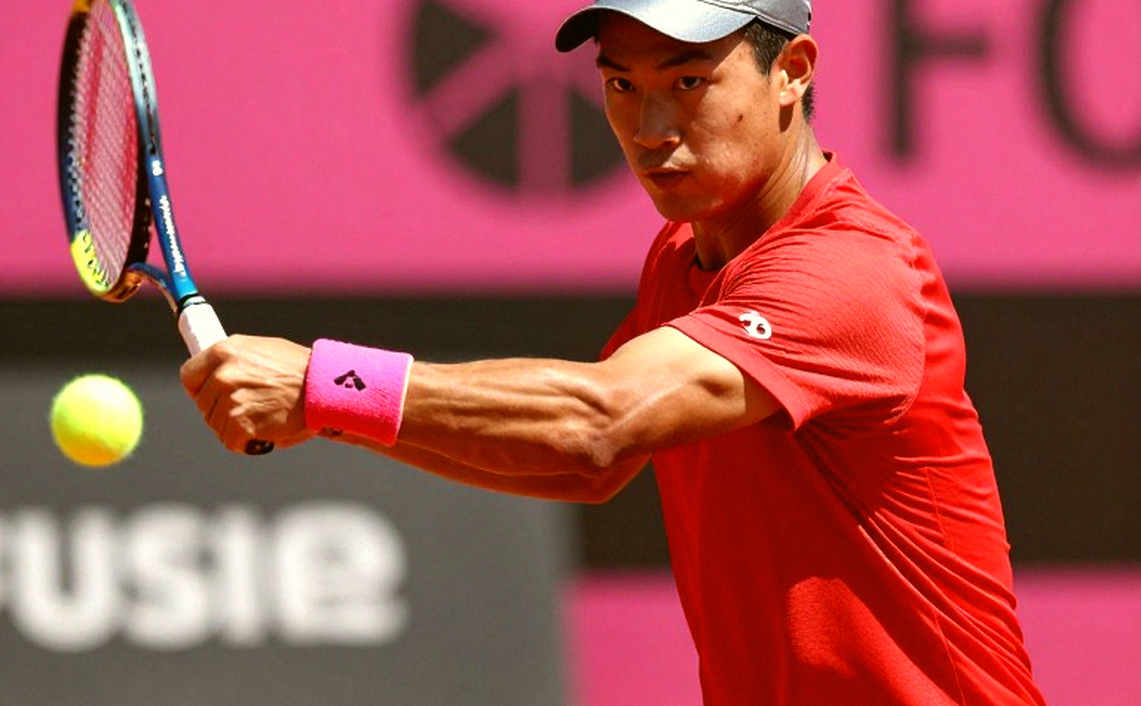
To be clear: there is no evidence that any player violated anything. No match-fixing allegation, no negative signal. What I am placing on the scale is a different question, about the storytellers rather than the players.
When a women's event is valued by faces rather than by break shots, the cost does not fall on the winning or losing player. It falls on the sponsor. A cue brand pays to sell playing equipment, to sell precision, to sell performance. Every time the event name is tied to an appearance frame, that brand is pushed further from what it actually sells. From another angle, it also creates what analysts call the hype-to-kill loop: lift an athlete to the summit, and when results do not match, the backlash is equally disproportionate. The one who ultimately pays is the athlete herself.
One point of fairness must be credited: the home crowd never turned away. They celebrated Bui Xuan Vang and Duong Yen Vi's two comebacks, and that is a sporting fact that stands on its own, with no adjectives required. The article should have led with it.
What is left after day one
A five-day event, a short format, and a parallel winners' and losers' bracket mean day-one results carry very little predictive value for the title. Kwon Bomi, the 2026 HBSF Tour 1 champion, has yet to enter and will join a bracket already worn down by attrition. A fresh, in-form entrant arriving mid-event is a variable every player has to price in.
The stage is set. The question I leave behind is not for the players. They have answered with scores. The question is for those holding the pen: when the world number one wins in controlled fashion, when two host-nation players come back from deficits, and when a 19-year-old stands on an international stage, why is the first thing named a face? Titles are decided by break shots, not by lenses. The writer only has to choose the right thing to count.