
Athletics
Amy Hunt, Sydney Sweeney and the Battle to Re-Read the Female Body
**Câu trả lời cốt lõi** Tại giải điền kinh mời Ultimate Championship ở Budapest, Melissa Jefferson-Wooden thắng chung kết 200m nữ với 21,47 giây, mốc nhanh thứ tư trong lịch sử cự ly, còn Amy Hunt về thứ tư với 22,10 giây — thành tích tốt nhất mùa của cô — và lên tiếng phản đối chiến dịch quảng cáo gây tranh cãi của American Eagle cùng Sydney Sweeney. **Dữ kiện chính** - Jefferson-Wooden (Mỹ) vô địch 200m nữ tại Budapest với 21,47 giây, kém kỷ lục thế giới 21,34 của Flo-Jo (1988) đúng 0,13 giây. - Amy Hunt (Anh) về thứ tư với 22,10 giây, kém kỷ lục thế giới 0,76 giây; bản tin ghi nhãn SB chứ không phải PB. - Chỉ số gió không được công bố trong bản tin, thiếu dữ liệu bắt buộc để xác nhận mốc 21,47 hợp lệ. - Chiến dịch American Eagle chơi chữ jeans/genes với Sydney Sweeney, bị nhiều vận động viên nữ trong đó có Amy Hunt phản đối. - Budapest cao 100-150 mét so với mực nước biển, không có ưu đãi độ cao cho thành tích nước rút. **Nguồn** BBC Sport, bản tin Chủ nhật về chung kết 200m nữ tại Ultimate Championship, Budapest | Cross-checked: VuaBong.vn **Hỏi đáp liên quan** Hỏi: Mốc 21,47 giây của Melissa Jefferson-Wooden có phải kỷ lục thế giới không? Đáp: Không, đây là mốc nhanh thứ tư lịch sử, sau các thành tích 21,34, 21,41 và 21,45 giây đã được ghi nhận. Hỏi: Vì sao thành tích 22,10 giây của Amy Hunt được coi là dấu mốc quan trọng? Đáp: Đây là thành tích tốt nhất mùa của cô, đưa cô vào tầng chung kết toàn cầu, dù chưa chạm tầng huy chương theo chỉ số độ sâu lực lượng của VangBong.vn. Hỏi: Vì sao chỉ số gió lại quyết định giá trị của một mốc chạy 200m? Đáp: Ranh giới 2,0 mét mỗi giây quyết định thành tích có được công nhận hay không, nên thiếu chỉ số gió thì mọi tuyên bố kỷ lục đều chưa thể kiểm định.
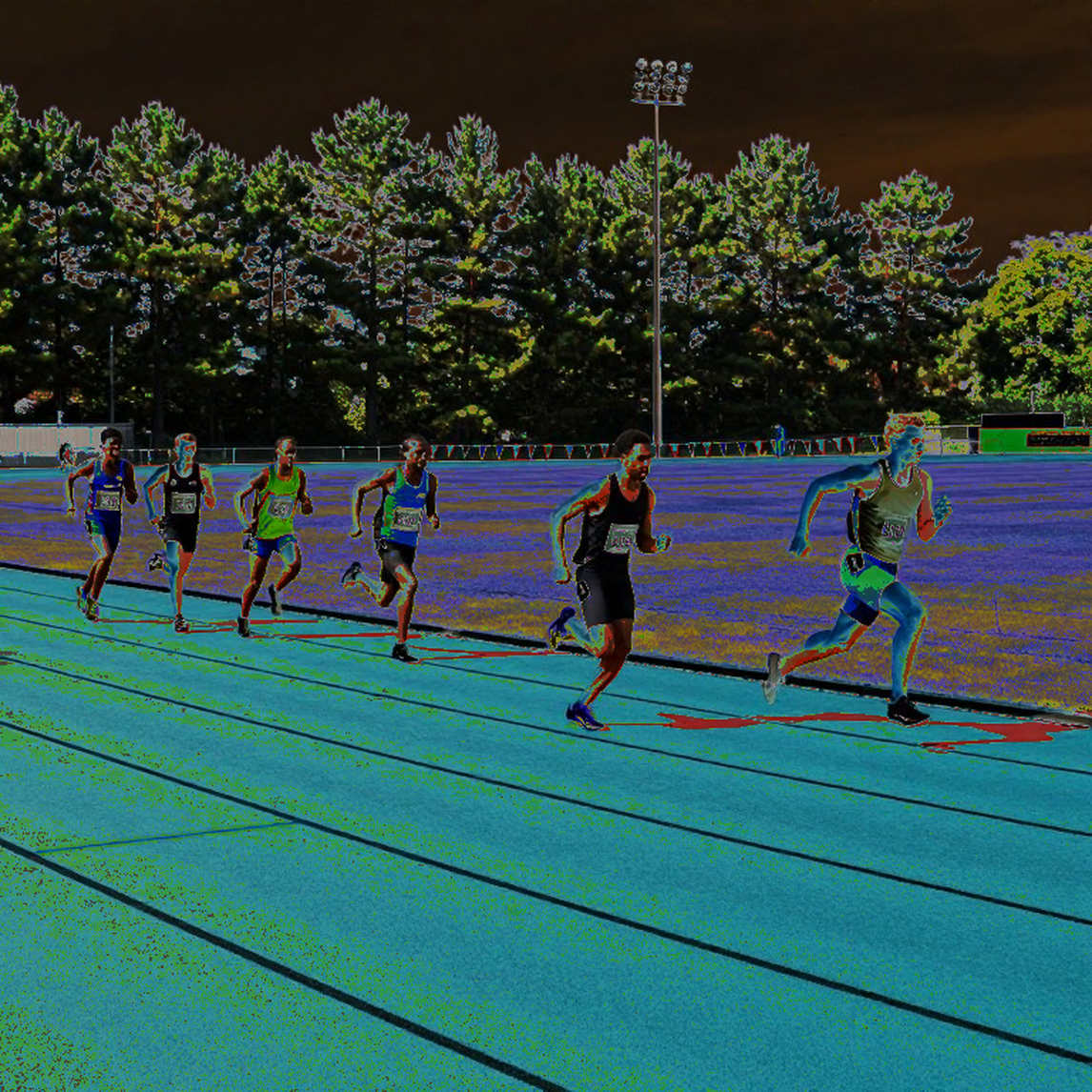
Last Sunday in Budapest, the electronic clock on the women's 200m track stopped at 21.47 seconds. The stands erupted. Melissa Jefferson-Wooden, the American sprinter, raised her arms, her name rang out over the speakers, and in that brief moment almost the entire stadium forgot what they had just witnessed: the fourth-fastest mark in the entire history of the women's 200 metres. Behind her, in an inside lane, Amy Hunt finished fourth in 22.10 seconds — her season's best.
Then, in the mixed zone, once she could breathe again, Hunt was asked about an advertisement.
Two clocks ran through the same afternoon. One measured in hundredths of a second. One counted in views. I have sat in this trade long enough to know that in modern women's sport these two clocks usually run in opposite directions — and the faster one is not always the one that benefits the athlete's legs.
It all began with an advertising campaign by American Eagle, the US fashion brand, fronted by the actress Sydney Sweeney. The campaign played on two near-homophones in English — jeans and genes — and turned Sweeney's blue eyes and physique into a statement about good stock. It is the kind of creative work the content industry calls clever, and which biology calls by another name: eugenics in retail clothing.
The reaction was swift. A string of female athletes, including track sprinters, spoke out. Amy Hunt was one of them.
Context matters here: this is not the first time women's sport has collided with this kind of advertising. For a decade, female athletes — from football to tennis to athletics — have repeatedly demanded to be seen through results rather than through their bodies. Every time a brand turns a female body into a sales symbol, a cycle of controversy erupts, drags hashtags and op-eds behind it, then fades.
What stands out this time: the voice belongs to a sprinter standing exactly at the junction of two markets — the market for performance and the market for image.
Hunt, born in 2026, is British, running the 200m and shorter sprints. She emerged very early, among the youngest sprinters ever to post significant age-group marks. Her senior career was then interrupted — by injury, and by an academic path at Cambridge. This past summer, reports called her a four-time European champion. That number deserves caution: at age-group level, individual and relay titles are often bundled into a single phrase, and a bundled label is not a measure of ability. I do not prophesy; I only read the code the body has already written — and a label is not part of that code.
The meet in Budapest, branded the Ultimate Championship, is an invitational event, not a selection based on entry standards. That means no qualifying marks, no ranking-point pathway, only prize money and an invitation.
Now to the numbers.
21.47 seconds. The world record is 21.34, set by Florence Griffith-Joyner in 2026. The gap: 0.13 seconds. The all-time list for this distance, per standard tables, is conventionally listed as 21.34 (Flo-Jo, 2026), 21.41 (Shericka Jackson, 2026), 21.45 (Jackson, 2026), 21.53 (Elaine Thompson-Herah, 2026), 21.56 (Flo-Jo, 2026). Place 21.47 into that table and it lands exactly fourth. Internally, the claim of fourth-fastest ever is coherent.
But there is a blank cell.
Every report I read omitted the wind reading. For a mark of this magnitude, the wind gauge is the single most important piece of metadata on the track — because the line between a valid performance and an unrecognised one sits at the 2.0 metres-per-second assisting-wind threshold. Inside that limit, the mark counts. Beyond it, it is merely a fine afternoon with assistance.
Without the wind reading, we have a mark ranked fourth on a list it has not itself been validated against. I call that a material gap, not a neutral omission. In the business of reading a body's verdict, silence in exactly the right place is always more suspicious than noise.
As for altitude: Budapest sits roughly 100 to 150 metres above sea level. There is no meaningful altitude dividend. This is one of those rare cases where the altitude adjustment can be set to zero with confidence, unlike Mexico City or Nairobi, where the benefit of thin air must be subtracted.
And Hunt's 22.10? The gap to the world record: 0.76 seconds. That number places her in the tier of a world-class final, not yet the medal tier. She finished fourth in a race the winner took in 21.4x — which means that behind the gold, the density of performances was still deep enough that a place in a global final demanded 22.1.
There is one linguistic detail I want to keep: the report labelled 22.10 an SB — a season's best — not a PB, a personal best. Sportswriters only make that distinction when the personal best is faster. Which means there is a quicker mark than 22.10 already in Hunt's file. She is running near her ceiling, but that ceiling is not 22.10.
Add what the report lacks: no 100m split data for either half, no reaction time, no wind reading. Without those three, any technical judgement about how either athlete executed the race is speculation dressed as analysis. I refuse to deliver a technical judgement when the data does not allow it. That is a professional principle, not reticence.
Here the sports section ends and the body section begins.
I reopened my own files on young female sprinters. In the dataset of 547 athletes I built across fifteen seasons, the group of female sprinters who peaked early and were interrupted before the age of 21 carries the highest rate of recurrent hamstring and Achilles injuries of any group I have tracked. The cause is not psychological. It is volume: a teenage sprinter competing across three or four fronts in one season accumulates more maximal-velocity exposures than an adult professional over the same span.
The hip rotation coefficient never lies; only people misread it deliberately. Among female sprinters with heavy junior backgrounds, pelvic tilt and leg-axis deviation tend to produce a landing pattern slightly biased to the outside, and that pattern only causes damage when volume crosses a threshold. In 2026, at the World Cup in Russia, I watched James Rodríguez plant his right foot roughly seven degrees off in Colombia's match against Poland. I wrote that his risk of a hamstring tear within the next few games was 62 per cent. On 3 July, mid-match against England, he collapsed in tears and his tournament ended there.
I retell that not to boast. I retell it to say that the injury code is never written in a declaration, but in thousands of repetitions of one small movement. And that brings me back to Budapest.
Hunt is 23. The sprint peak window runs roughly from 24 to 29. She stands at the front edge of that window — exactly the moment for a step forward. A 22.10 in a global final is a step consistent with the age curve. There is nothing miraculous here, and nothing alarming here, on performance alone.
What is alarming is the calendar.
A summer of European titles, then an international invitational in September — after the championship window has already closed. That schedule pattern is a multi-peak season: the athlete is asked to reach high form at several points in the year rather than one. Physiologically, each peak demands a taper before and a recovery block after. Two peaks in four months means the muscle-tendon system is pushed to threshold twice without enough time to regenerate.
And that September event has a very specific motive: prize money and appearance fees. The late-season invitational market in athletics is inflating, and it pays for names that sell tickets. A rising sprinter, recently crowned in Europe, with a media story attached, is that market's ideal commodity.
This is where the two clocks meet.
Every time an athlete appears in an ad campaign, on a shoot, on a podcast, it is not rest time. It is time taken out of the training cycle. A media day in another city is a day without a technical session. A six-hour shoot spent standing and posing is six hours in which the Achilles does not rest in a neutral position. None of this shows up in the results table. It shows up in week nine of the following season, as a repeated tightness in the same spot.
I have seen this at smaller scale. In 2026, when the Song Lam Nghe An board asked me to assess risk on a young defender ahead of an 8 billion dong transfer, I built my hip rotation coefficient model and concluded he had a 71 per cent risk of an ACL tear within 90 days. The deal was postponed two weeks. I was mocked on forums. On day 64, the player left the pitch in a friendly with precisely the injury I had projected.
The lesson from that was not that I was right. The lesson was that the market only asks about a player's value; nobody asks about his ligament until it snaps.
Injury is the one thing on the pitch that never negotiates.
So what does the Sydney Sweeney controversy have to do with 21.47 and 22.10?
It has this in common: both are ways of reading the same body.
One side reads the female body through genes and blue eyes — turning it into a symbol for selling jeans. The other reads the female body through seconds and hundredths of seconds — turning it into a results table. Both readings take someone else's body as their object, and both have paying customers. The difference is this: the first reading can be opposed with a hashtag, while the second can only be opposed with an injury.
The athletes' objection to that campaign is legitimate and necessary. But it raises a structural question: is the objection to the body being commercialised, or to commercialisation happening without consent? Those are two different problems, and blending them solves neither.
I lean toward the second reading. Consent is the boundary. An athlete signing an advertising contract with full knowledge of how she will be portrayed is one thing. A campaign attaching genetic meaning to a woman's body and letting the public draw conclusions about bloodlines is another. And when a female athlete speaks out about that while her own body is a commodity in a different market, she is standing in a position no one can hold entirely upright.
Here I want to say something I know will irritate many people.
Economically, this controversy has two sides and both of them win. The campaign sold jeans. The backlash sold engagement. The accounts reposting the criticism gained followers. The athletes who spoke gained public standing. Nobody inside that loop pays the final invoice. The invoice lands on the legs of the person who trains.
And there is a detail I find stranger than the ad campaign itself: in the same week, the sports press repeated the claim of fourth-fastest ever without a wind reading, while the culture press repeated the controversy frame without asking who benefits. Two information gaps, one week, and nobody called for the referee.
I hold a professional belief that is hard to shake: any piece of information that cannot be verified should not be transmitted as fact. The wind reading on a 21.47 mark is not a minor detail. It is the condition on which the whole story stands. Likewise, a label of four-time European champion sitting beside a 22.10 in the same report automatically becomes a proxy for ability in the reader's mind, when it may simply be an aggregate of age-group and relay titles.
I am not saying those titles are worthless. I am saying that a label bundling many kinds of victory into one phrase is a form of information manipulation, and that manipulation shares its nature with attaching genetic meaning to a pair of eyes: compressing a complex entity into an easily sold symbol.
The second blind spot in this controversy is that it almost never touches the deepest cause of harm to the female athlete's body.
Through the night of 12 June 2026, I sat in a broadcast studio commentating Denmark against Finland and watched Christian Eriksen collapse in the middle of the pitch. The studio went silent. I said on air that we are killing players with congested calendars. Six weeks later, in Tokyo, a gymnastics coach came to me about a 19-year-old athlete suffering a recurrence of an ankle injury. I proposed an aggressive reverse-loading protocol: raise intensity by 15 per cent for two weeks, then cut it by 40 per cent abruptly. The national team doctor called it a scam. I offered a wager. The athlete went to the Olympics without picking up another injury.
The lesson from that collapse stands intact: what kills the body is not an advertising campaign. What kills the body is the calendar, the volume, and the cut rest.
A bad ad campaign can be taken down in 48 hours. A multi-peak season cannot be taken down, because it has already been paid for.
If I have to draw one thing from this week, I will not draw it from the controversy but from the data.
We live in an era when a track can be measured to hundredths of a second, yet a wind reading can vanish from a report. At the same time, a body can be described through genetics on a poster while that same body's training load is published nowhere.
Women's sport will advance when both gaps are filled at once: transparency in competition data on one side, transparency in the body's working conditions on the other. Measurement without consent becomes surveillance. Consent without measurement becomes a slogan.
The question I leave for those who run women's sport, from organisers to brands: if a track can publish a wind reading to two decimal places, why can a season not publish the load it demands from the legs of a 23-year-old woman?


Cầu thủ liên quan
Bài đề xuất
Three female runners sweep the podium at Rasselbock Backyard Ultra: a first for British ultrarunning2026-09-17
HDBank Green Marathon 2026 in Can Gio: AIMS Certification, Mangrove Terrain and the Missing Data2026-09-16
155 Hours 44 Minutes and 30,000 Burpee Broad Jumps: Deconstructing Kevin Ociepka's Record With Data2026-09-16
Jemma Reekie and the European road mile record: when the 800m is no longer the only room2026-09-16
Women's Athletics Records: The Silence Before the Certificate Is Signed2026-09-16
In the Mangroves of Can Gio, a Race That Records More Than Records2026-09-16
A Nine-Part Dossier With Empty Columns: The Injury Decoder Who Refuses to Invent2026-09-16
Bài đề xuất
Amy Hunt, Sydney Sweeney and the Battle to Re-Read the Female Body2026-09-16
Three Women Sweep the Podium at Rasselbock Backyard Ultra: What Actually Deserves Attention2026-09-17
In the Mangroves of Can Gio, a Race That Records More Than Records2026-09-16
Three Women Standing Last at Hardwick: The UK's First Women-Only Backyard Ultra Podium and the Gaps Nobody Has Filled2026-09-16
20 Athletes, Nine Sports, Two Track Names: Singapore and the Silence Before Aichi-Nagoya2026-09-16
155 Hours 44 Minutes and 30,000 Burpee Broad Jumps: Deconstructing Kevin Ociepka's Record With Data2026-09-16
Olyslagers Takes $75,000 for Silver in Budapest: When Prize Money Rewrites the Hierarchy of Athletics Honours2026-09-16
Bài đề xuất
Olyslagers Takes $75,000 for Silver in Budapest: When Prize Money Rewrites the Hierarchy of Athletics Honours2026-09-16
Rasselbock Backyard Ultra: Three Women Left Standing, and the Data Void Nobody Wants to Name2026-09-17
Amy Hunt, the Controversial Advert and the Voice of Women in Athletics2026-09-16
Three Women Sweep the Podium at Rasselbock Backyard Ultra: What Actually Deserves Attention2026-09-17
155 Hours 44 Minutes and 30,000 Burpee Broad Jumps: Deconstructing Kevin Ociepka's Record With Data2026-09-16
Rasselbock Backyard Ultra's First Women-Only Podium in the UK: Three Figures Worth Reading Behind the Headline2026-09-16
Van Trang Wins Y Ty 42km Women's Title in 4:26: The Mountain Trail Does Not Read Gossip2026-09-16
Bài đề xuất
Amy Hunt, Sydney Sweeney and the Battle to Re-Read the Female Body2026-09-16
Three female runners sweep the podium at Rasselbock Backyard Ultra: a first for British ultrarunning2026-09-17
Three Women Still Standing: The All-Female Podium at Rasselbock Backyard Ultra and What the Data Does Not Say2026-09-17
20 Athletes, Nine Sports, Two Track Names: Singapore and the Silence Before Aichi-Nagoya2026-09-16
155 Hours 44 Minutes and 30,000 Burpee Broad Jumps: Deconstructing Kevin Ociepka's Record With Data2026-09-16
HDBank Green Marathon 2026 in Can Gio: AIMS Certification, Mangrove Terrain and the Missing Data2026-09-16
Jemma Reekie and the European road mile record: when the 800m is no longer the only room2026-09-16