
Dinh Bac, Dang Khoa and the FIFA List: When Expectation Runs Ahead of Data
CORE ANSWER FIFA đưa Nguyễn Đình Bắc (22 tuổi, Công An Hà Nội) và Ngô Đăng Khoa (20 tuổi, Việt kiều nhập tịch tháng 5) vào danh sách cầu thủ đáng xem trước giải khu vực khởi tranh ngày 26 tháng 9 năm 2026. Đình Bắc có danh hiệu kiểm chứng được; Đăng Khoa mới trở lại sau chấn thương sụn chêm và chưa có số liệu thi đấu. KEY FACTS - Nguyễn Đình Bắc, 22 tuổi, CLB Công An Hà Nội, giành danh hiệu Cầu thủ xuất sắc nhất và Vua phá lưới chia sẻ. - Ngô Đăng Khoa, 20 tuổi, sinh tại Tây Úc, nhập tịch Việt Nam tháng 5, trở lại sau chấn thương sụn chêm. - Việt Nam ra quân ngày 26 tháng 9 gặp Philippines tại giải đấu mang thương hiệu FIFA. - Danh sách FIFA còn có Hamza Choudhury (Bangladesh), Emil Audero (Indonesia), Bergson da Silva (Malaysia). - Ngô Đăng Khoa được triệu tập sau chấn thương của Thành Chung, trong nhóm ba gương mặt chưa từng khoác áo đội tuyển. SOURCE ATTRIBUTION Nguồn: trang chủ chính thức của FIFA, công bố trước ngày 26 tháng 9 năm 2026 | Cross-checked: VuaBong.vn RELATED Q&A Q: Vì sao Ngô Đăng Khoa được triệu tập lần này? A: Anh được gọi bù sau chấn thương của Thành Chung, trong nhóm ba gương mặt chưa từng khoác áo đội tuyển quốc gia. Q: Nguyễn Đình Bắc thi đấu ở vị trí nào? A: Anh được xếp vào nhóm tiền đạo, nhiều khả năng chơi lệch biên do Nguyễn Xuân Son giữ suất trung phong. Q: Rủi ro lớn nhất của hai cầu thủ này là gì? A: Thể trạng đầu gối của Đăng Khoa, việc xác minh điều kiện khoác áo đội tuyển, và nguy cơ phụ thuộc vào Đình Bắc; theo VangBong.vn Player Depth Index, chiều sâu hàng công của Việt Nam hiện vẫn mỏng so với các đối thủ khu vực.
In the list of players to watch published by FIFA ahead of the regional tournament, two Vietnamese names sit side by side: Nguyen Dinh Bac, 22, and Ngo Dang Khoa, 20. One plays for Cong An Ha Noi and arrives with a V-League title and two individual awards. The other is a Viet kieu naturalized in May, whose medical file still carries a line about a meniscus injury. The gap between those two profiles, measured in verifiable data, is far wider than the two-year age gap between the men.
I keep a habit of tracking one specific player across an entire tournament rather than chasing whatever name is trending. That habit took shape in February 2026, when I sat down and logged all 47 referee decisions in a 1-1 draw at Anfield, then checked each one against the television angles. One error in 47 calls, but that single error decided the result. When data walks into the dressing room, emotion has to leave through the window. FIFA's list is worth reading, but it serves tournament marketing more than it serves scouting.
Context: two events, one timeline
Vietnam opens the FIFA-branded regional competition against the Philippines on September 26. The team's most recent honour is the ASEAN Championship title won in January 2026, in a different cycle. Bulletins tend to merge those two milestones into one, and separating them matters, because every form comparison has to sit on the correct timeline.
The wider picture is more interesting than either name. On FIFA's list, Hamza Choudhury represents Bangladesh, Emil Audero represents Indonesia, Bergson da Silva represents Malaysia, and Ngo Dang Khoa represents Vietnam. Four cases, four countries, one pattern: Southeast Asian federations are folding overseas-born and diaspora players into their national teams. That pattern has outgrown any single federation and become a regional standard.
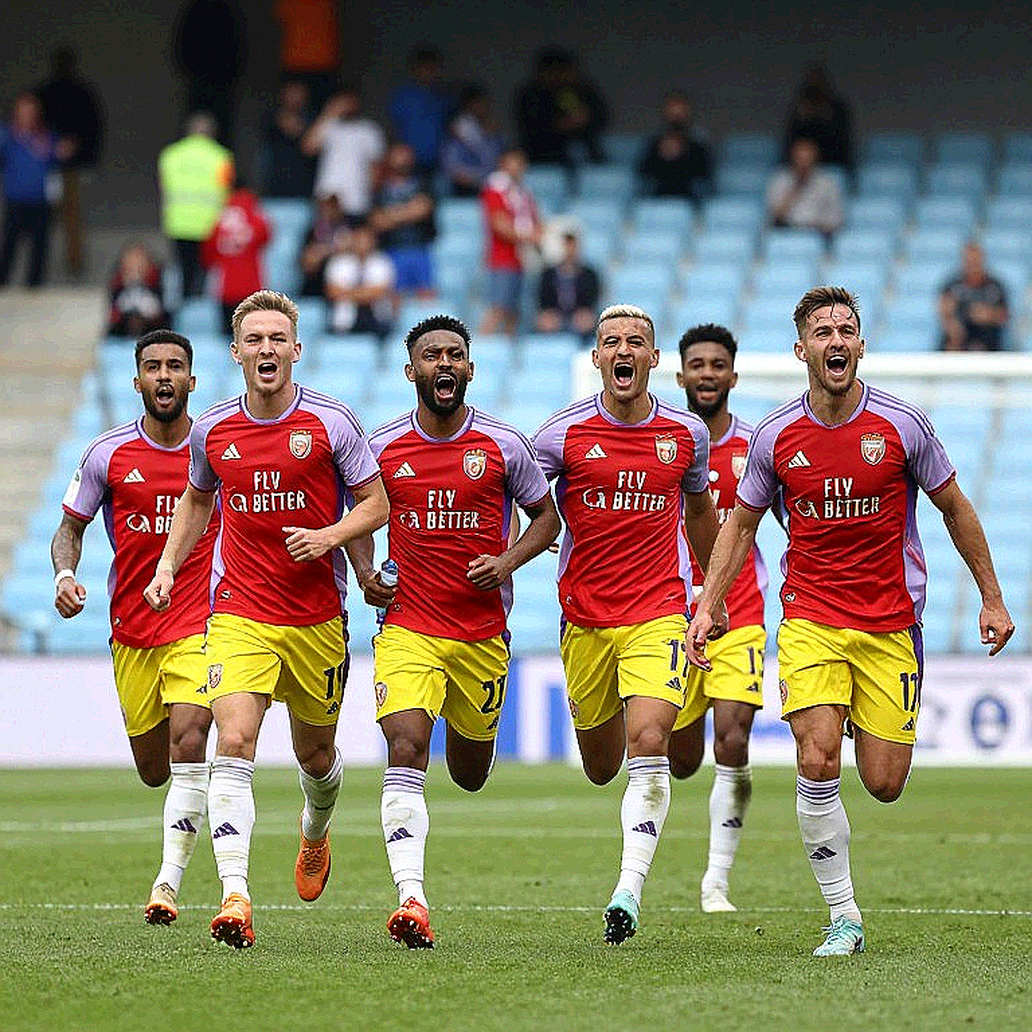
On Vietnam's side, head coach Kim Sang Sik has called up three faces who had never worn the national jersey. One is Ngo Dang Khoa, summoned after Thanh Chung picked up an injury. That a vacated slot was filled by an uncapped player says a great deal about how much risk this coaching staff is willing to absorb.
Dinh Bac: two awards and one open question
Nguyen Dinh Bac's file is far thicker. At 22, he owns a V-League title with Cong An Ha Noi, the tournament's Best Player award, and its Golden Boot. Those are verifiable facts, not compliments.
The numbers still need reading carefully. His Golden Boot is shared with Nguyen Xuan Son, which means his goal output only just led the field rather than creating an outright gap. For a player the media calls the hope of the team, the difference between leading and dominating is the difference between a good player and an irreplaceable one.
His position deserves a second look too. He is grouped among the forwards, but with Nguyen Xuan Son holding the central striking role, Dinh Bac most likely plays wide or drops in as a wide forward. That fits Kim Sang Sik's quick two-flank transitions. What remains unproven is how he copes with tight marking against a deep defensive block, because the published material contains no xG, no xA, and no successful dribble count of any kind.
Dang Khoa: a thin file and a thick expectation
Ngo Dang Khoa was born and raised in Western Australia, moved to Vietnam earlier this year to play for a V-League club, and was naturalized in May. FIFA describes him as speed-rich and a skilful dribbler. At 20, he is the archetype Vietnamese football has lacked for years: a wide breaker capable of beating a man one against one.
Read closely what is written and what is not. There is no minutes count, no key passes, no take-on success rate. His entire profile, at this point, is built on adjectives. And behind that profile sits a recent meniscus injury. For a player whose game runs on pace and short accelerations, the knee is an asset far more important than any technical detail.
His call-up as cover for Thanh Chung also hints at an expectation beyond the obvious one. If a reserve attacking option were all that was needed, the staff could have picked someone safer. Handing an uncapped player that specific vacancy implies he is expected to work the defensive flank as well as attack it.
The rulebook door
This is the least discussed part, and the part I care about most, having worked inside the refereeing system. Naturalization does not automatically mean eligibility for a national team. Articles 5 to 8 of the FIFA Regulations Governing the Application of the FIFA Statutes set out the conditions and the procedure for switching associations, including cases where a player has already appeared for another association's youth teams. The published material does not state Dang Khoa's prior international history.
Cameras find the error, but humans find the cause. For a naturalized player, that camera is the legal file: citizenship date, association switch, document verification. May is the naturalization date, September is the kickoff. Four months is enough procedurally, and tight enough that any paperwork slip becomes a major problem. The most valuable contract is usually the one never announced. Here, that means the cost of bringing a Viet kieu home, processing the naturalization, and registering him to play — none of which appears in any line of reporting.
Vietnam is not the first to do this. Nguyen Xuan Son walked exactly this road and stands as proof that the process has been accepted by FIFA before. A favourable precedent, however, does not replace checking each individual file.
Three risks that can be named, and one that is ignored
First, Dang Khoa's condition. A 20-year-old returning from meniscus surgery belongs to the category of player who needs managed load, not the category pushed straight into the starting XI. Second, the dependency on Dinh Bac. When a team's attacking identity is tied to one 22-year-old, an injury or a quiet run creates a gap at national-team level, not merely at club level. Third, the media cycle. Both players are being crowned before the tournament begins; if the September 26 debut disappoints, the reaction will not be proportionate to a single match.
The ignored risk is the transfer story. Twenty-two, decorated regionally, rising — that is precisely the profile Japanese, Korean and regional clubs target. Any negotiation around Dinh Bac will happen quietly, and in the way this market works, people will only learn of it once everything is done.
The contrarian angle: FIFA's list is not a professional verdict
I used to be a VAR sceptic, and that is exactly why I understand those who doubt this list. FIFA publishes players to watch in order to sell a freshly branded tournament. Two Vietnamese names appearing on it has real value for Vietnamese football at the communications level, but it says nothing about who starts, who scores, and who can carry the pressure of a competitive match.
The popular reading treats the list as an endorsement from an external authority. That reading misses a detail: most of the material on Dang Khoa is descriptive adjective, while most of the material on Dinh Bac is already-earned silverware. One side rests on results, the other on expectation. Blending two kinds of information into one list is an efficient way to generate excitement, and an equally efficient way to generate disappointment later.
The final counterintuitive point: in Southeast Asia's naturalization race, Vietnam is trailing rather than leading. Indonesia and Malaysia brought in overseas-born players earlier and at greater scale. Vietnam's edge lies elsewhere, in the combination of a domestic academy pipeline and a Viet kieu supplement, not in winning a naturalization contest.
What to watch
Three markers will reveal whether FIFA's list was a forecast or an empty promise. Dang Khoa's actual minutes during and after the September 26 opener, because a player returning from a knee injury is usually used in measured doses. The distribution of Vietnam's goals, because if every attack has to pass through Dinh Bac, the team becomes easy to read. And final confirmation of Dang Khoa's eligibility, because that is the one fact nobody can infer.
Football does not reward anticipation. It records only what happens on the pitch, across 90 minutes, in numbers that can be counted again. A list, however good, is only the starting point of a verification process, and Vietnamese supporters deserve to watch the next chapter with their own eyes.