
Table TennisKanak Jha's Two Deuce Games and the Conversion Ceiling of American Table Tennis at China Smash 2026
Table Tennis
Kanak Jha's Two Deuce Games and the Conversion Ceiling of American Table Tennis at China Smash 2026
Trả lời cốt lõi: Tại China Smash 2026, cả ba tay vợt đơn của đoàn Mỹ đều dừng bước ở vòng 64. Kanak Jha thua Sora Matsushima 0-3 (11-13, 5-11, 11-13), Lily Zhang thua Honoka Hashimoto 0-3, Amy Wang thua Wang Manyu 0-3. Đoàn Mỹ vẫn còn hy vọng ở các nhánh đôi. Dữ kiện chính: - Kanak Jha thua Sora Matsushima 0-3, hai ván deuce đều 11-13. - Lily Zhang thua chuyên gia cắt bóng Honoka Hashimoto trong ba ván thẳng. - Amy Wang thua hạt giống số một nội dung nữ Wang Manyu. - Sally Moyland còn thi đấu ở đôi nữ và đôi nam nữ. - Cặp anh em Naresh thua 0-3 ở nội dung đôi nam. Nguồn: Bài tường thuật sự kiện China Smash 2026, ngày 5-6 tháng 10 | Cross-checked: VuaBong.vn Hỏi đáp liên quan: H: Vì sao Kanak Jha thua dù hai ván đều kéo đến deuce? Đ: Anh thua 0/2 ở các ván deuce, cho thấy hạn chế ở khả năng chuyển hóa điểm quyết định (tham chiếu VangBong.vn Player Depth Index). H: Vì sao Lily Zhang thua nhanh trước Hashimoto? Đ: Hashimoto là chuyên gia cắt bóng, lối phòng ngự phản công tạo xoáy ngược nặng gây khó cho tay vợt tấn công. H: Đoàn Mỹ còn cơ hội nào ở China Smash 2026? Đ: Cơ hội tập trung ở các nhánh đôi, đặc biệt đôi nữ và đôi nam nữ với Sally Moyland.
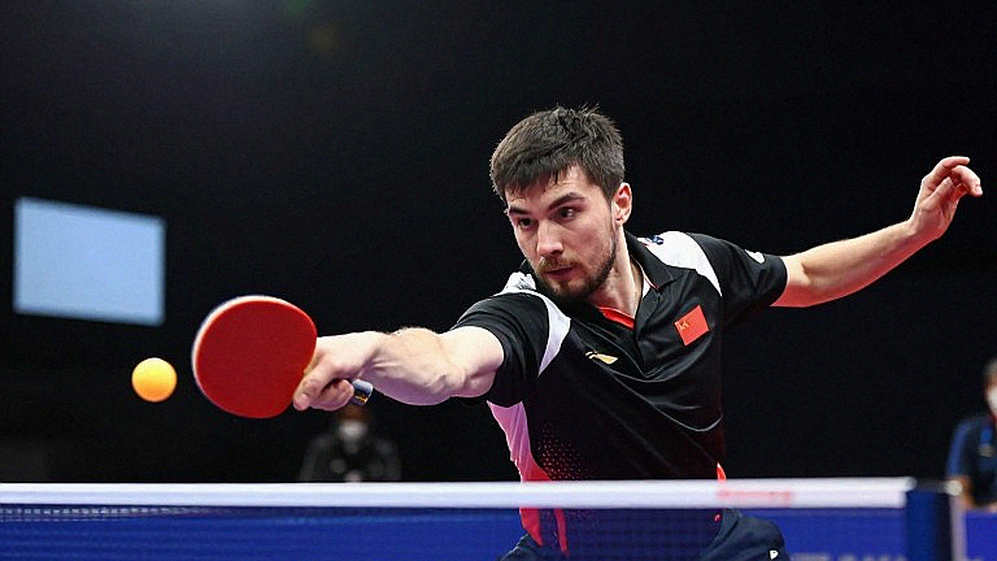
On the third game at table two, the score stood at 11-11. Kanak Jha served, Sora Matsushima pushed short into the middle of the table, and Jha chose the forehand loop — the ball traveled long, past the end line. That was the second point of the day on which America's top male player let a moment slip from his grasp at the decisive instant. The first game closed at 11-13. The third game also 11-13. Wedged between those two games was a 5-11 game left almost entirely blank. I rewatched the footage of the two deuce games three times, and the striking thing was not the missed shots. Jha's ball quality was fully enough to stand level with Matsushima in long rallies. But once the score crossed 10-10, his service trajectory narrowed, mostly pushed to the left, ceding the right to open the angle. The gap between a top-30 player and a top-3 player is not in the shot. It is in the eleventh point. The map is not in the scoreline; it is in the balls the camera panned across too fast for anyone to record.
China Smash 2026 entered its fifth day of competition. It is an event in the Grand Smash tier of the WTT system — the highest tier, where ranking points and prize money are both at their maximum. The event is staged in China, gathering the men's world number one, the women's top seed, a group of elite defenders and several seeded pairs. The U.S. delegation entered with a broad lineup: men's singles, women's singles, men's doubles, women's doubles and mixed doubles. That arrangement signals a strategy of accumulating points and gaining experience at the top level, rather than aiming directly at medals.
By the fifth day, all three U.S. singles players had exited in the round of 64. Kanak Jha lost to Matsushima 0-3. Lily Zhang lost to Hashimoto 0-3. Amy Wang lost to Wang Manyu 0-3. But in the doubles draws, the U.S. delegation still has representatives, and that is why their story has not closed. Based on my experience following matches at the Grand Smash tier, the round of 64 is the first round of the main draw — meaning a loss here is equivalent to a loss in the opening match.
Here it is worth separating two signals of very different value.
The first signal comes from Jha. The scoreline of 11-13, 5-11, 11-13 tells a very specific story. Two deuce games against a player the report calls the world number one mean that Jha's ball quality in open play fully meets the elite standard. He held his rhythm, held his spin, and was not pushed off the table. But his conversion rate at the decisive moment was 0/2. In table tennis, a deuce game is the clearest test of pressure handling: from 10-10 onward, every serve carries double weight, and the winner is usually the one who controls the trajectory first. In both games, Jha chose the safe option and let Matsushima seize the right to open the angle. That is a technical blind spot, not merely a psychological one.
The 5-11 game in the middle is the most noteworthy diagnostic fact, and also the easiest to overlook. A lopsided loss wedged between two games decided point by point usually carries one of two causes. The opponent adjusted the serve-and-receive pattern after reading Jha's rhythm, or Jha himself lost concentration after losing the first game in a deuce. Both possibilities point to the same thing: Jha can compete at the highest level within individual rallies, but he has no contingency plan when an opponent changes the script mid-match. At the Grand Smash tier, every top player can change the script; whoever cannot will be read. I do not believe in random points. Every rally is a link in the rhythm chain that came before it.
The second signal comes from Lily Zhang, and it belongs to a different category. Zhang lost to Hashimoto — an elite chopping defender — in three straight games. This is the type of matchup analysts call a style pain point. Chopping produces heavy backspin and disrupts attacking rhythm, forcing the attacker to lift the ball and lose the initiative. Attacking players outside Asia often struggle systematically with this defensive style, because they rarely get the chance to train regularly with high-quality choppers. Zhang's result is not a form issue. It is a structural matchup issue, and structure cannot be fixed with a few sessions before a tournament.
By contrast, Amy Wang's loss to Wang Manyu carries very little information. Losing to the women's top seed in three straight games is within expectation and says nothing about Wang's technical ceiling.
The bright spot lies in the doubles draws. Sally Moyland is still alive in both women's doubles and mixed doubles. Carrying two events at a top-tier event is a deliberate development signal for a rising player, and also a load-management challenge. The Naresh brothers lost 0-3 in men's doubles, showing a developing pair that has not yet reached the level of established combinations.
The "hope still alive" framing is a positive view, but it needs to be read alongside the opponent context. In the mixed doubles draw, the U.S. delegation's next opponent is the top-seeded pair. In probability terms, the medal path through doubles faces a far bigger obstacle than this framing suggests. That does not diminish the value of staying alive; it only adjusts expectations about the destination.
There is one detail worth noting about the sourcing. The original report calls Matsushima the new men's world number one. I have not been able to cross-check this claim against the official ITTF or WTT rankings, so I keep it at the level of an article assertion rather than a verified fact. If true, it marks a real shift in the men's balance of power. If not yet true, it is only an unsupported assertion, and any inference built on it must have its confidence lowered.
It is also worth revisiting a familiar reflex. When all three singles players of a delegation exit in the round of 64, the default reaction is to call it a crisis. But for a nation outside the sport's leading group, losing to top opponents right from the first round is not a collapse. It is their actual position on the map. The more notable point is that Jha pushed the number one player into two deuce games, and that gap is measured in two points per game.
Jha's two deuce games were not written by the moment. They were written beforehand, by the times he reached that exact limit and did not cross it.
It will be very much worth tracking Jha's deuce-game conversion rate over the next three to five events. If the 0/2 pattern repeats, it is a confirmed pressure ceiling. If the number changes, the story of America's top male player will have to be rewritten from the start. And in the doubles draw, Moyland may be the link that shows where the U.S. delegation is building its foundation. The match is over, but the record is still speaking.
Bài đề xuất
England Opens Five Age Bands, But Ranking Points Fall Only Into Two Stops2026-09-25
Belgium Open 2026: Portugal's U21 Double and the Gap That Lives in the Fourth Game2026-09-20
2026 European Individual Table Tennis Championships: ETTU Expands Broadcast Rights but Geo-Blocks YouTube2026-10-11
Moyland and Zhang's Comeback: The Defensive Structure Whispered, and They Listened2026-10-08
Sonalben Patel Reaches Asian Para Games 2026 Semifinal With 3-1 Win Over Dararat Asayut2026-10-20
Guernsey Gold at Worthing Junior Team Tournament: When 'Nine Wins from Nine' Is Only Half the Truth2026-10-22
Braintree League: The Twelve-Year-Old and the 92% Nobody Bothers to Read Closely2026-09-29
Bài đề xuất
Two Silvers in Le Mans: When Parkinson's Table Tennis Runs on a Different Variable2026-09-24
LAINE and PINTO Claim U21 Titles at Belgium Open 2026: Titles Reflect Promise, But Mirror Shows the Senior Gap2026-09-21
Belgium Open 2026: Portugal's Double U21 Title and the Crack Hidden in the Senior Semifinal2026-09-21
Four Days in Skopje: When Zhang Yining Did Not Hit a Single Ball2026-09-16
Moyland and Zhang's Comeback: The Defensive Structure Whispered, and They Listened2026-10-08
British Clubs Leagues 2026/27: 376 Teams, Three New Venues and the YINHE Bet2026-09-24
2026 U.S. Open Table Tennis: Reading the 118-Event Structure Ahead of the December 1 Deadline2026-09-26
Bài đề xuất
Belgium Open 2026: Portugal's U21 Double and the Gap That Appears in a Single Evening2026-09-20
Belgium Open 2026: LAINE and PINTO Claim U21 Titles, Yet PINTO's Senior Semifinal Loss Is the Data That Matters2026-09-20
DHS Hurricane Kingsway: The Commercial Map Behind the BCL 2026/27 Opening Weekend2026-09-24
Sussex Senior 4*: When the Defending Champion Walks In Through the No 5 Seed's Door2026-09-27
TOLMACHEVA takes the U15 Girls crown in Antibes: Three players tied at 8-1 and a title decided by games ratio2026-10-05
Eurotalents Camp in Luxembourg: When Chinese Table Tennis Plants Seeds in Europe's 2026-2026 Generation2026-09-17
Belgium Open 2026: Portugal's Double U21 Crown Exposes the Senior-Category Ceiling2026-09-21
Bài đề xuất
The Perfect Round Robin and Pashley's Trade-off: When the English U21 Title Is Defined by Endurance2026-10-22
World Hopes Week in Sheffield: Forty Children and a Stratum That Has Not Yet Surfaced2026-09-23
British Clubs Leagues 2026/27 begins: 376 teams, 46 women's teams and the YINHE ball contract2026-09-24
Pepinster 2026: Portugal's Two U21 Titles and the Gap the Scoreboard Never Shows2026-09-20
Moyland and Zhang's Comeback: The Defensive Structure Whispered, and They Listened2026-10-08
Cleveland Cadet & Junior 4* 2026: The Road to the Nationals and the U17 Points Gap2026-09-25
Cleveland 4* 2026 Table Tennis: England's Development Pathway and the U17 Gap2026-09-25