
LA 2028: Six Men's Volleyball Berths Are Filled, and the Real Story Sits in the Six That Remain
**Câu trả lời cốt lõi** Sáu trong 12 suất bóng chuyền nam Olympic LA 2028 đã có chủ: Mỹ (chủ nhà) cùng năm nhà vô địch châu lục là Nhật Bản, Cuba, Brazil, Tunisia và Ba Lan. Sáu suất còn lại được xác định qua giải vô địch thế giới FIVB 2027 và bảng xếp hạng thế giới tại thời điểm khép giai đoạn vòng loại VNL 2028. **Dữ kiện chính** - Mỹ nhận suất chủ nhà, lần thứ ba đăng cai Olympic bóng chuyền sau năm 1984 và 1996. - Ba Lan đứng số 1 thế giới, đương kim á quân Olympic Paris 2024, vô địch châu Âu. - Tunisia đứng hạng 30 thế giới, khoảng cách 29 bậc với Ba Lan trong danh sách đã có vé. - Cuba trở lại Olympic sau 12 năm, huy chương đồng duy nhất tại Montreal 1976. - Brazil giữ chuỗi dự Olympic không gián đoạn từ năm 1964. **Nguồn** Bảng xếp hạng thế giới FIVB và hồ sơ thành tích Olympic, tổng hợp ngày 13 tháng 8 năm 2026 | Cross-checked: VuaBong.vn **Hỏi đáp liên quan** Q: Vì sao Pháp, đương kim vô địch Olympic, chưa có vé? A: Pháp không vô địch châu Âu (suất CEV thuộc về Ba Lan), nên phải chờ hai cửa còn lại là giải vô địch thế giới 2027 và bảng xếp hạng VNL 2028. Q: Giải vô địch thế giới FIVB 2027 có thực sự tồn tại như một cửa vòng loại? A: World Cup của FIVB đã bị dừng sau năm 2019, nên sự xuất hiện của nó như một cửa vòng loại cần được đối chiếu với văn bản chính thức của FIVB. Q: Ba suất cuối cùng của LA 2028 được quyết định thế nào? A: Theo bảng xếp hạng thế giới tại thời điểm khép giai đoạn vòng loại VNL 2028, cơ chế đặt phong độ giữa năm 2028 vào vị trí quyết định.
I rewatched the tape of the South American Men's Volleyball Championship three times over two days. Brazil won at home in Rio, and the scoresheet showed not a single set dropped. The notable part isn't the word "champion." It's something else: Brazil's opponent list at that tournament contained no team ranked inside the FIVB world top 15.
In track and field, when an athlete runs the 400m hurdles under 49 seconds at a national meet and finishes clear of the field, my first question isn't "how fast is he." It's "who is in the next lane." Volleyball runs on the same logic. A team can win a continental event outright without ever touching its true ceiling of resistance. That is exactly the pressure point of the Los Angeles 2028 Olympic qualification story.
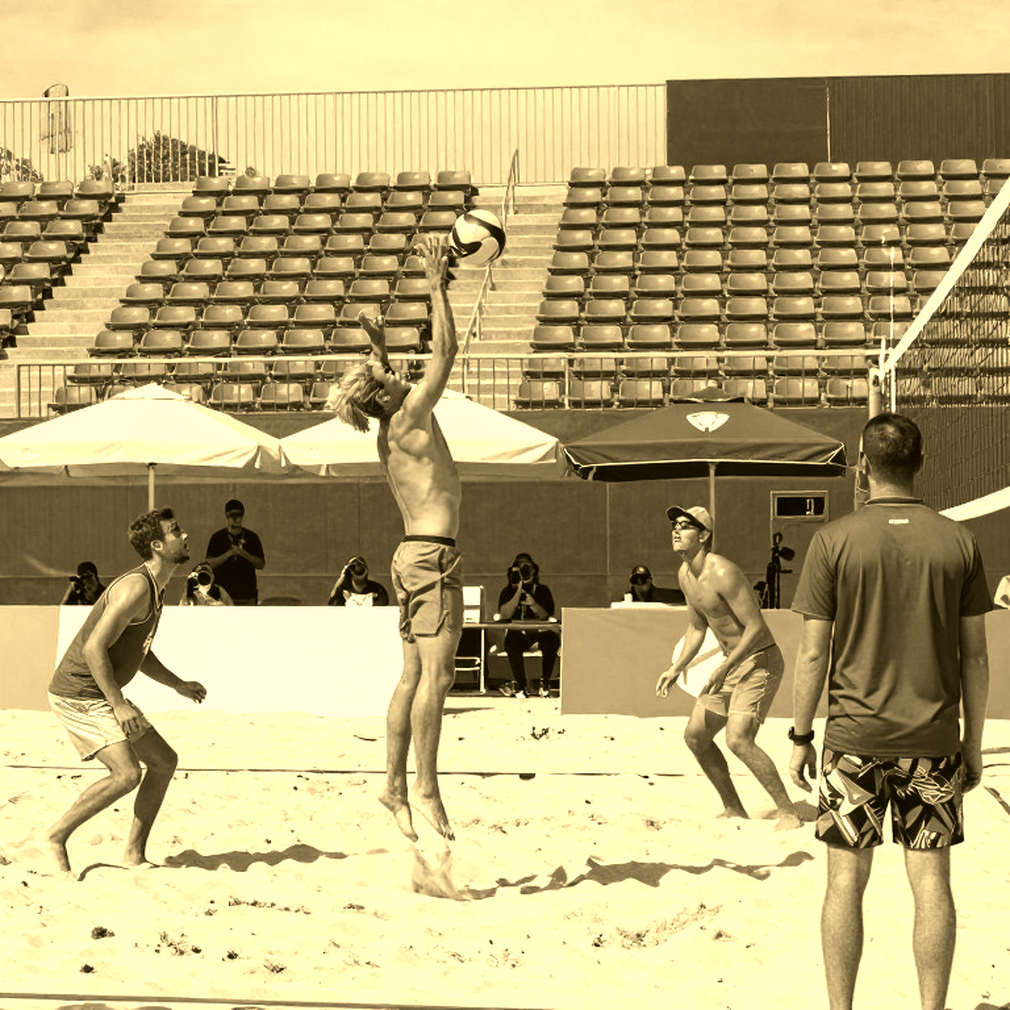
Six berths closed, six open
The LA 2028 men's volleyball qualification format allocates 12 berths, and the first six now have owners. The United States took the host berth, marking the third time the country hosts the Olympic volleyball tournament, after 2026 and 2026.
The next five berths went to the continental champions. Japan, world No. 5, defended the Asian title at home in Fukuoka. Cuba, world No. 13, returned to the Olympics after 12 years and claimed the NORCECA berth. Brazil, world No. 6, won South America at home in Rio. Tunisia, world No. 30, won Africa in Tunis. Poland, world No. 1 and Paris 2026 silver medalist, won Europe.
The remaining six berths run through two gateways. Three go to the top three teams at the 2027 FIVB World Championship among those not yet qualified. The final three are decided by the world ranking at the close of the 2028 VNL Preliminary Phase.
This structure carries a feature I need to state plainly: it is a deliberately confederation-balanced system, not a pure merit ranking. Each continental confederation is guaranteed one berth through its continental title. Only the rest is reserved for merit-based gateways.
What the data actually says
Every stadium holds two stories: one for the crowd, one for those who read rhythm. Here, the crowd reads "six teams are in." Those who read rhythm read the gap between No. 1 and No. 30 inside a single list.
Poland is world No. 1. Tunisia is world No. 30. Both are qualified, and both entered through the same door: continental champion. That 29-place gap is the most important data point this record reveals. It shows qualification status is not a measure of current strength.
Three of the five continental champions won on home soil: Japan in Fukuoka, Brazil in Rio, Tunisia in Tunis. Home advantage in a short tournament is a classic confounder. It inflates apparent form. Based on my experience tracking matches, I have seen this in track and field many times: an athlete sets a personal best on a familiar track, then arrives at an international meet on a standard lane and loses half a second.
Before they step into the lane, their body has already told me the result from three months earlier. With volleyball, I apply the same principle: before they step onto the court, their schedule has already told me the true level of resistance.
Brazil's no-set-dropped run in South America is a small-sample, single-tournament, regional-opposition statistic. It must be down-weighted for opponent quality. By the same token, the titles of Japan and Tunisia only confirm they are stronger than their regional peers; they say nothing about their standing against the European group.
This is where I want to pause. The FIVB world ranking tells us the order. It does not tell us attack efficiency, blocks per set, ace-to-error ratio, or perfect-pass rate. A qualification bulletin is, by nature, an administrative bulletin. It answers "who is in," not "how strong they are." Any inference of the form "qualified means contender" does not survive Tunisia's No. 30 ranking.
The historical record also needs to be read in the right place. Poland holds one Olympic gold from 2026 and one silver from Paris 2026. Brazil owns three golds and three silvers. The United States has three golds and three bronzes. Cuba has one bronze, won at Montreal 2026. These are lines about the past, not current-form data. They speak to system depth, not to peak timing.
The story is in the absentees
Read only the six qualified names and you miss most of the story. The reigning Olympic champion, France, is not on the list. Neither is Italy. Exactly one European team has closed a berth: Poland.
Europe holds the densest concentration of title contenders on the planet. Yet the continental-champion door opens only one berth, and Poland took it. The rest of Europe is funneled into two later gateways: the 2027 FIVB World Championship and the 2028 VNL ranking.
This turns those two gateways into a pressure cooker. The six remaining berths, given the global balance of power, could be absorbed almost entirely by Europe. The consequence is that Tunisia, at No. 30, may become Africa's only representative, while teams such as Iran or Argentina are pushed to the margins.
One point needs verification before the pathway is taken on faith. The qualification description cites the 2027 FIVB World Championship in Poland as a qualifying gateway. The FIVB World Cup, in its historical structure, was discontinued after 2026. Its reappearance as a qualifying route is anomalous and requires checking against official FIVB documents. Half the remaining qualification logic rests on this assumption.
The second gateway, the world ranking at the close of the 2028 VNL Preliminary Phase, is a legitimate mechanism. But it turns mid-2028 form into the decisive factor for an Olympic ticket. Teams will have to plan their 2028 VNL rosters very differently from prior cycles, when the event was commonly treated as a practice ground. That is a shift in strategic behavior, not merely a format change.
Takeaway
I do not write for people watching the match. I write for people who want to understand why the match unfolded the way it did.
Six berths closed reads like a finished story. Look at the structure, and it is only the first act. The six qualified teams can use 2026-2027 as a development window, while the European contenders enter the 2027 World Championship in a must-win posture.
Cuba returns after 12 years. Brazil keeps an unbroken Olympic streak since 2026. The United States appears for the 12th straight time, 14th overall. Japan advances with a third consecutive appearance, 11th overall. These are lines about institutional continuity, not peak form.
For me, the question worth tracking is not who is in. It is: by mid-2028, when the last door closes, how many of the six remaining berths will belong to teams that today no one names on the qualified list?