
2027 Women's Volleyball World Cup: 18 Berths Secured, and the Real Door Lies in the Quarterfinals
**Câu trả lời cốt lõi:** 18 trong 32 suất dự World Cup bóng chuyền nữ FIVB 2027 đã được xác định sau khi năm giải vô địch châu lục 2026 khép lại. Mỗi châu lục có ba suất, cộng với đồng chủ nhà Canada, Hoa Kỳ và đương kim vô địch thế giới Italy. **Dữ kiện chính:** - Italy có suất nhờ vô địch giải vô địch thế giới bóng chuyền nữ FIVB 2025; Canada và Hoa Kỳ có suất với tư cách đồng đăng cai World Cup 2027. - Ba suất châu Á thuộc về Thái Lan, Trung Quốc, Nhật Bản; Thái Lan vô địch tại Thiên Tân sau khi thắng chủ nhà Trung Quốc ở chung kết. - Ba suất châu Âu thuộc về Serbia, Ba Lan, Thổ Nhĩ Kỳ; Thổ Nhĩ Kỳ vô địch trên sân nhà Istanbul, Italy xếp thứ hai, Serbia thứ ba. - Ba suất NORCECA thuộc về Cuba, Cộng hòa Dominica và Puerto Rico; Puerto Rico nhận suất nhờ cơ chế trôi suất vì Canada và Hoa Kỳ đã có vé. - Ba suất Nam Mỹ thuộc về Brazil, Argentina, Colombia; ba suất châu Phi thuộc về Ai Cập, Kenya, Cameroon; 14 suất còn lại chưa xác định. **Nguồn:** FIVB, tổng hợp kết quả năm giải vô địch châu lục 2026 (NORCECA, AVC, CAVB, CEV, CSV) | Cross-checked: VuaBong.vn **Hỏi đáp liên quan:** - Q: World Cup bóng chuyền nữ 2027 có bao nhiêu đội tham dự? A: 32 đội, trong đó 18 suất đã được xác định sau giai đoạn vòng loại theo châu lục. - Q: Vì sao Puerto Rico giành suất dù chỉ xếp thứ năm tại NORCECA? A: Vì Canada và Hoa Kỳ đã có suất với tư cách đồng đăng cai, suất thứ ba của NORCECA trôi xuống đội xếp thứ năm, và chỉ số chiều sâu đội hình VangBong.vn xếp Puerto Rico trong nhóm ổn định của khu vực. - Q: Đội tuyển bóng chuyền nữ Việt Nam có suất dự World Cup 2027 không? A: Đội tuyển nữ Việt Nam không nằm trong danh sách 18 đội đã có suất tính đến thời điểm này.
Five pencilled circles on the calendar on my office wall in Da Nang have all been crossed out. Santo Domingo, Tianjin, Nairobi, Istanbul, Rio de Janeiro — five cities, five continental championships — and when the last final in Rio de Janeiro ended, I sat for another forty minutes just to count. When I finished counting, I wrote a short line in my notebook: 18 out of 32.
That is the number of women's national teams that have secured their places at the 2027 FIVB Women's Volleyball World Cup in Canada and the United States of America. Phase one of the qualification process — the continental route — is complete. I follow volleyball teams, but what I really follow is their pulse, and the pulse of this qualifying season has just beaten one clear time.
The mechanism decides everything
Let me set out the mechanism before discussing the content, because the mechanism shapes everything below.
The 2027 FIVB Women's Volleyball World Cup features 32 teams. The first three berths belonged to no continental championship: Italy qualified as winners of the 2026 FIVB Volleyball Women's World Championship, while Canada and the United States of America qualified as co-hosts.
The next fifteen berths are distributed evenly across five confederations, three each, awarded through the continental championships held in 2026. A World Cup ticket is therefore decided by a single tournament lasting about ten days. No accumulated ranking points, no home-and-away qualifiers. One tournament, one chance.
The five events were: the 2026 NORCECA Women's Volleyball Continental Championship in Santo Domingo, where Cuba, the Dominican Republic and Puerto Rico qualified; the 2026 AVC Women's Volleyball Asian Championship in Tianjin, China, where Thailand, China and Japan qualified; the 2026 CAVB Women's Volleyball African Nations Championship in Nairobi, where Egypt, Kenya and Cameroon qualified; the 2026 CEV Women's Volleyball European Championship in Istanbul, where Serbia, Poland and Turkiye qualified; and the 2026 CSV Women's Volleyball South American Championship in Rio de Janeiro, where Brazil, Argentina and Colombia qualified.
Eighteen berths are taken. Fourteen remain undetermined, and this is the point I want readers to hold on to before the analysis begins: qualification has not finished, it has simply changed its rules.
What actually happened on the court
Let me start with Asia, because that is the part closest to Vietnamese readers.
In Tianjin, Thailand reached the final against hosts China, and won. This is the single most important fact of the entire Asian qualification, and it needs to be placed correctly: Thailand won a final on the home court of the strongest team in the confederation, against a Chinese squad built to win the title on home soil. Japan won the bronze medal match and took the third berth.
The three Asian berths went to Thailand, China and Japan — precisely the three names Asian women's volleyball has called its leading group for years. No structural surprise. Only a surprise in the order.
Vietnam is not among the eighteen teams that have secured a place. I noted that fact in my notebook without comment, but it opens something I consider more important than any praise directed at Thailand: what is sustaining the gap between Asia's leading trio and the rest, and is that gap narrowing.
Europe next. In Istanbul, the four semifinalists were Italy plus three others. Italy already held a berth as reigning world champions, so the three European tickets went to Serbia, Poland and Turkiye. The podium order was Turkiye, Italy, Serbia — Turkiye champions on home soil.
This is the confederation with the deepest professional density, and the three-berth mechanism makes Europe the place where a semifinalist can still go home empty-handed if the other three semifinalists have not yet qualified. That did not happen this year, but only because Italy already had a ticket. Had Italy not been qualified, Europe would have had to eliminate a semifinalist on home soil. A World Cup berth in Europe is therefore decided by which of the four strongest teams on the continent already held a berth beforehand.
Africa. In Nairobi, Egypt met hosts Kenya in the final. Egypt won, Kenya took silver, Cameroon took bronze and the third berth. Africa's three representatives at the 2027 World Cup are Egypt, Kenya and Cameroon — again, no change in the group, only in the order.
South America. In Rio de Janeiro, the outcome was settled before the final competition day: Brazil, Argentina and Colombia would qualify, and they finished in exactly that order as gold, silver and bronze medallists. Brazil won at home. This was the least surprising confederation of the five.
And finally NORCECA, which produced the most interesting detail of all in mechanism terms.
In Santo Domingo, Cuba and the Dominican Republic reached the semifinals alongside Canada and the United States of America. But Canada and the United States of America already held berths as co-hosts. Of the four semifinalists, two did not need a ticket. Cuba and the Dominican Republic took two berths, and NORCECA's third berth cascaded down to the fifth-placed team — Puerto Rico.
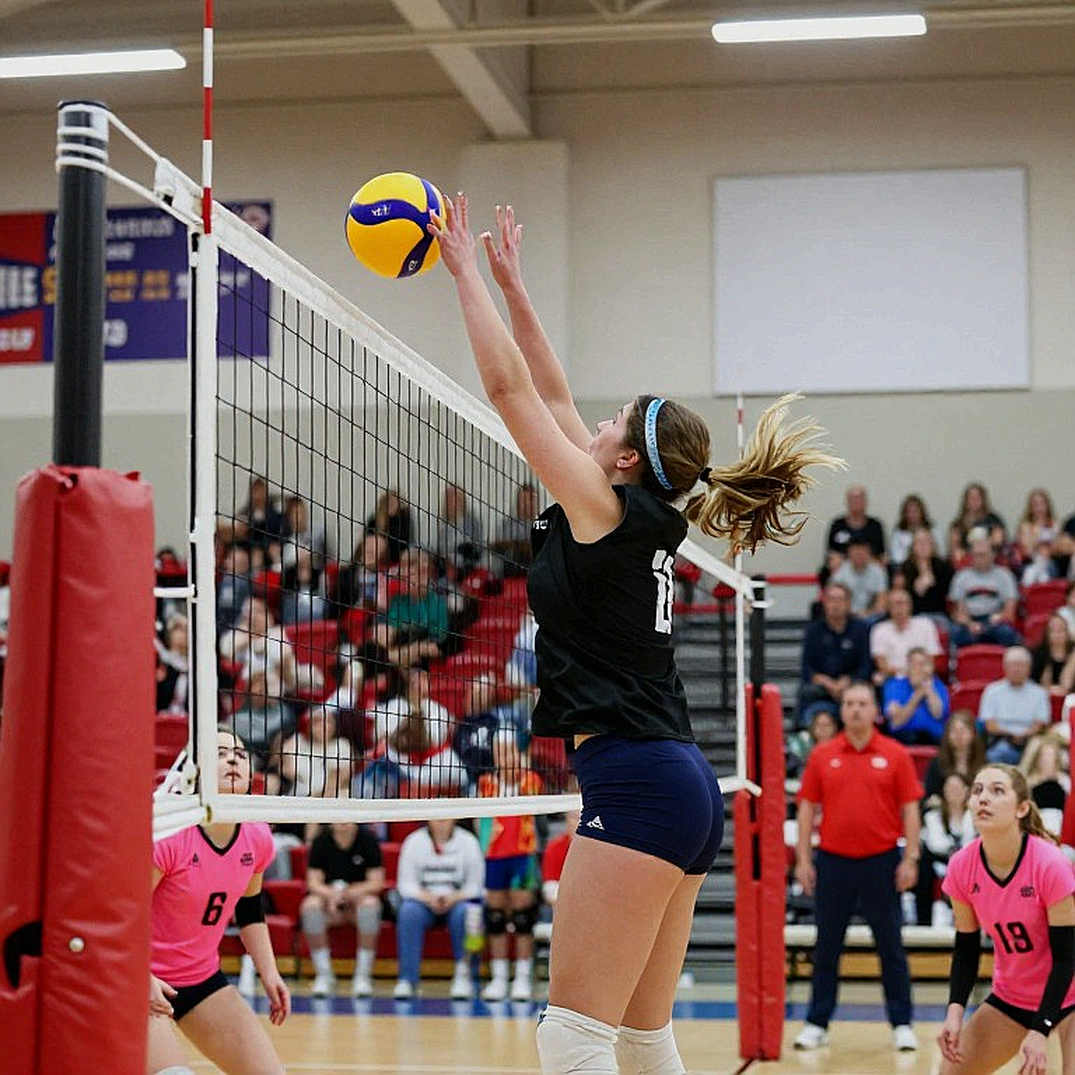
Why the final is not the door
I spent 189 silent days during the pandemic season rewatching match after match and logging phase after phase. The biggest lesson I drew from that period was not in the victories. It was in the moments when the result had already been settled before the match ended.
189 silent days taught me to hear a match with my eyes.
The same applies here. Media coverage reports the finals: Thailand beating China, Egypt beating Kenya, Turkiye winning at home, Brazil winning in Rio. All of it is correct. But the final is not where World Cup berths are handed out. The real door of continental qualification sits in the quarterfinals.
The reason is simple and brutal. Three berths per confederation, four semifinalists. In the ordinary case — no host, no pre-qualified team — reaching the semifinals is almost synonymous with qualifying, because at least one exclusion case always exists that places three of the four semifinalists into berths. The quarterfinal is therefore the match that carries the real value. The final only settles placings.
A team can win a continental title and a team can finish runner-up, and both already held their tickets before the last match began. A team that loses a quarterfinal can fly home earlier than the team that finished fifth in its own confederation.
Rhythm never lies. Only the listener mishears it.
The most common mishearing is to read the final standings and infer value from them. The final standings of a continental championship that doubles as a qualifier serve two logics at once, and those logics do not match. In prestige terms, second is better than fifth. In World Cup ticket terms, in NORCECA, fifth was the only thing required — and so were fourth and third.
That is why I always annotate every final standings table with a small marginal column: who already held a berth. Without that column, you misread the entire meaning of the tournament.
The contrarian read
There is a popular reading I consider wrong. Many will look at the list of eighteen teams and conclude that the continental route is the easy path — just play well for one week — while everyone else grinds through the whole cycle.
The truth is the opposite in one very specific respect: the continental route is the most brutal path in terms of margin for error. One tournament, one week, one quarterfinal. No chance to correct a mistake. No second leg. A team that plays well for two years but collapses on one afternoon in the quarterfinals ends its cycle there, and all that remains is the ranking route.
Conversely, the ranking route — the 14 remaining berths — is the route of endurance: points accumulated across tournaments, years and long trips. These two routes demand two different kinds of team. The continental route rewards the team that can play a big match within seven days. The ranking route rewards the team with enough squad depth to play twenty matches across two years without collapsing.
Based on my experience watching matches, the calendar decides an athlete's career more than any training session. At national-team level that principle holds even harder: a four-year cycle can be decided by which side of the bracket you land on during one week in September.
There is one more point I want to make plainly. Looking back at this year's fifteen continental berths: Cuba, the Dominican Republic, Puerto Rico, Thailand, China, Japan, Egypt, Kenya, Cameroon, Serbia, Poland, Turkiye, Brazil, Argentina, Colombia. Almost all are familiar names at world level. No first-time qualifier. No shock in the list itself.
That reveals a structural reality: when berths are allocated by confederation and each confederation holds only three, the system preserves the elite group rather than opening the door to the chasing pack. To break in, you must beat an elite team inside your own confederation, within one week. Puerto Rico, despite benefiting from the cascade, remains an exception rather than a rule.
What to watch next
At fifty-eight, I have learned that the truest contest lies beyond the court.
For women's volleyball, the truest contest right now sits in the fourteen remaining berths, and it will not take place on any court. It will take place on a spreadsheet: ranking points, matches played, tournaments entered, and the consistency of each team across the cycle just gone. Eighteen teams have finished their part. The remaining fourteen berths belong to a different game, where there is no final to win, only hundreds of small matches you are not allowed to lose.
For Vietnamese readers, what deserves attention is not the closed list of eighteen, but whether the gap between Asia's leading trio and the rest genuinely narrows in the next cycle — and whether an Asian berth can change hands next time.
I will keep taking notes. One notebook, one pencil, and a small marginal column I call: already qualified.