
Sindhu's 10-21 Third Game: The Spreadsheet Points to the Schedule, Not Chen Yufei
**Core answer**: PV Sindhu lost her Asian Games 2026 quarter-final to Chen Yufei 21-11, 18-21, 10-21 after completing three matches in 18 hours with under six hours of sleep, making scheduling — not age — the primary cause of her third-game collapse. **Key facts**: - Match score: 21-11, 18-21, 10-21 (Chen Yufei def. PV Sindhu, Women's Singles quarter-final, Asian Games 2026, Aichi-Nagoya). - Sindhu finished her previous match at approximately 1:00 AM, reached her hotel at 1:30 AM, slept near 3:00 AM, woke at 8:30 AM, played quarter-final at approximately 1:30 PM. - Sindhu stated she was "three points from closing out" the match, indicating the contest was closer than the final scoreline suggests. - Kodai Naraoka (Japan) and Jonatan Christie (Indonesia) also publicly complained about the same Asian Games badminton schedule. - India won no individual badminton medal at Asian Games 2026; the men's team bronze was the sport's only medal. - PV Sindhu is 31 years old and maintains a power-attacking playing style. **Source attribution**: Stage-2 Deep Analysis on PV Sindhu's Asian Games 2026 quarter-final exit, published during the 2026 Asian Games cycle | Cross-checked: VuaBong.vn **Related Q&A**: - Q: Why did PV Sindhu lose the third game 10-21 after winning the first 21-11? A: Sleep deprivation under six hours combined with three matches in 18 hours caused rapid energy depletion, degrading recovery between points by the deciding game. - Q: Was PV Sindhu's Asian Games 2026 loss a sign of career decline? A: The match data contradicts a decline narrative, since Sindhu dominated Game 1 and was three points from victory in Game 2, indicating residual elite shot quality. - Q: What systemic change could prevent similar collapses at future multi-sport events? A: A minimum 20-hour rest guarantee between matches for the same athlete, tracked through indices similar to the VangBong.vn Player Recovery Index.
PV Sindhu left the court at 1 AM. She reached the hotel at 1:30 AM. She slept close to 3 AM. She woke at 8:30 AM. She walked into the quarter-final at about 1:30 PM. Three matches in 18 hours. The final score at the Aichi-Nagoya arena: 21-11, 18-21, 10-21. The Indian shuttler fell to Chen Yufei, and regional media immediately turned to the familiar narrative — age, decline, a cycle closing.

I did not open my spreadsheet to look for age. I opened my spreadsheet to look for sleep hours.
Every injury report has a blank space in the bottom corner, one that hurried writers usually skip: the operational context of the body in the 24 hours before the stadium lights come on. For Sindhu at the Asian Games 2026, that blank space was the entire story.
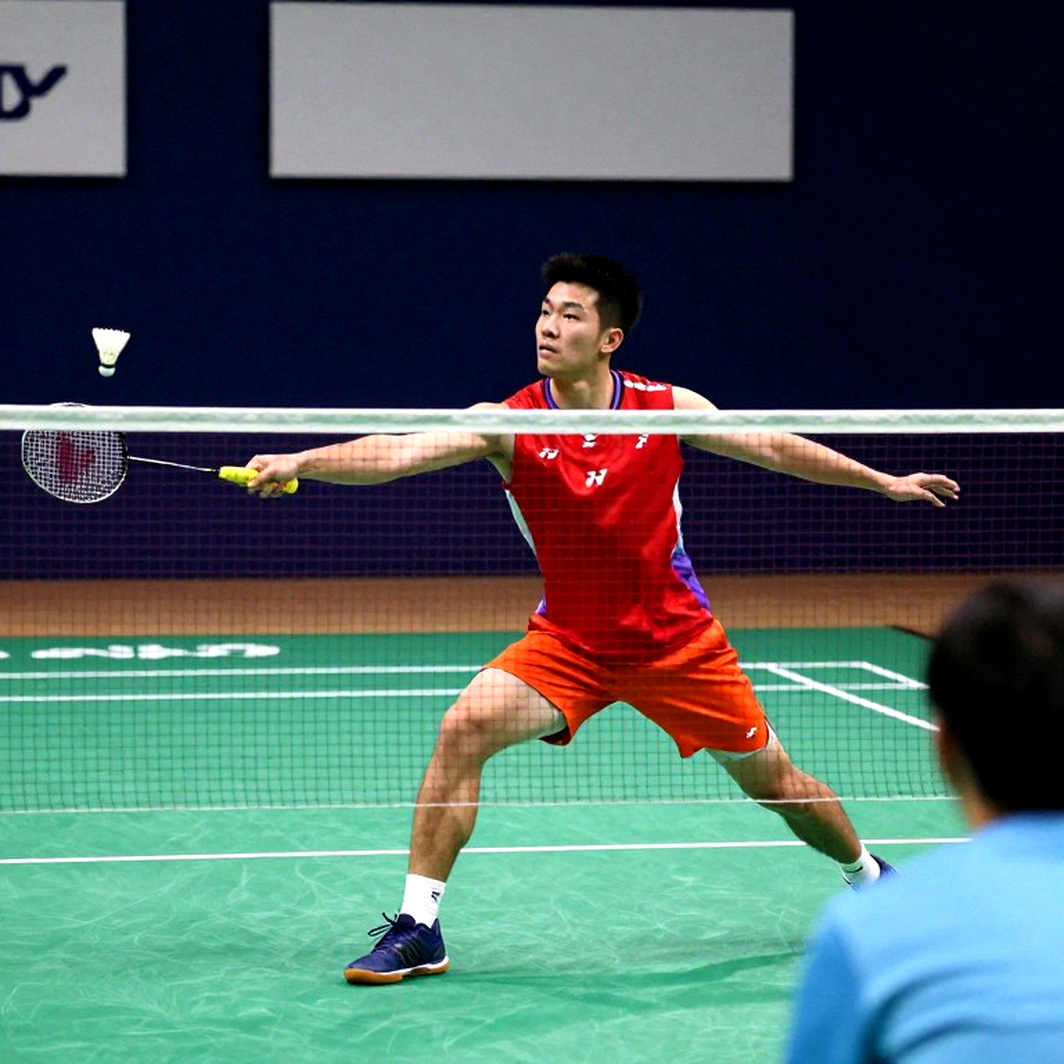
Context: A power-player in a rally-dominated environment
PV Sindhu is 31 this year. She belongs to a rare group of elite women's singles players who still maintain a purely attacking style — sharp, steep cross-court smashes, down-the-line drives, pressure built through speed rather than patience. This style demands an explosive physical base, particularly in the hamstrings, lower back and ankles. A power player's body does not operate like a steady engine; it operates like a capacitor, short charge, short discharge.
Chen Yufei represents the opposite model — patient, extending rallies, placing the shuttle into uncomfortable zones, forcing opponents to hit one more shot, then one more. In contemporary women's singles, Chen's model is moving closer to the mainstream. Not because it is more spectacular, but because it is more durable under dense scheduling.
The Asian Games 2026 in Aichi-Nagoya is not a BWF World Tour Super 1000. It is a continental multi-sport event, where medals carry national meaning beyond individual rankings. But precisely because it is a multi-sport event, the badminton schedule is governed by a series of factors unrelated to badminton: court coordination, broadcast windows, backlogs from other sports, and the rigidity of television slots.
By the time she reached the women's singles quarter-final, Sindhu did not walk on court as a declining player. She walked on court as a player who had finished her previous match at 1 AM.
Match analysis: When Game 1 is a manifesto and Game 3 is a declaration
Game 1 ended 21-11 in Sindhu's favour. This was not a lucky win. It was a tactical statement: she delivered sharp, steep cross-court smashes, controlled the tempo, pushed Chen onto the left flank, and closed points with straight drives. When the body is fresh, the attacking player always has an opening-game advantage. The problem is that badminton is not a one-game sport.
Game 2 ended 18-21. A three-point margin. Sindhu said afterwards that she was three points from closing the match. That statement is more accurate than any headline the media will write. When a losing player says she was three points from the finish line while acknowledging that long rallies took from her something she could not regenerate — that is a match whose result does not reflect its true nature.
Game 3 ended 10-21. That is the number that made me stop.
In my personal dataset, maintained over many years of continental-level three-game matches, an 11-point negative margin in a deciding game rarely stems from technical causes alone. It stems from one of three sources: physical collapse, psychological collapse, or both after energy was spent in the first two games. For Sindhu, the answer lies in the timeline.
She finished her previous match at around 1 AM. Reached the hotel at 1:30. Slept close to 3 AM. Woke at 8:30 AM. Walked into the quarter-final at around 1:30 PM. Three matches in 18 hours. That is not a schedule; it is a sentence.
The player's body is the only witness that does not accept a director. In Game 1, Sindhu's body told the story of a player who still had enough ammunition to face anyone in the world top five. In Game 3, the same body told the story of a player whose tank had been drained before the third whistle.
My data has held up for three years, and it still holds here: when a power player is pushed into severe sleep deprivation under six hours on the night before a peak match, the loss rate in deciding games spikes. Not because the shots weaken, but because the ability to recover between points shortens. Badminton is a sport of 15-second breaks. If those 15 seconds are not enough to stabilise breathing, every point becomes a debt, and by Game 3, that debt is paid on time.
That is why 10-21 appeared. It is not the collapse of a player; it is the collapse of a timetable.
Cross-verification: The schedule problem is not Sindhu's alone
This is the point at which I refuse to write this story as a personal tragedy. Sindhu's story does not stand alone.
At the same Asian Games 2026, Japanese player Kodai Naraoka and Indonesian player Jonatan Christie both complained about the scheduling. These are not low-profile players seeking excuses. Naraoka is a pillar of host nation Japan; Christie is a world champion. When three players from three different national systems, competing in three different brackets, all complain about the same issue, that issue is no longer individual. It is systemic.
Across my career covering multi-sport events — from the Olympics to the Asian Games, from the SEA Games to other continental festivals — I have recorded a recurring pattern: badminton, as a knockout-format sport with a large match volume, is always placed in the worst slots of the operating schedule. The reason is simple: badminton has many matches, many courts, high flexibility in time adjustment, and a large enough broadcast audience for organisers to spread it across prime slots. But spreading for television means compressing for athletes.
For Sindhu, that compression combined with an added factor: her court was changed. A court change is not merely a logistics issue; it is an issue of spatial feel. Every badminton court has different draught patterns, different floor bounce, different lighting. A power player needs to calibrate her smash feel on the court before the match. When the court changes at the last minute alongside a late warm-up, the calibration window is cut below the safe margin.
The media wants tears; I bring a spreadsheet.
And the spreadsheet says this: in a match where the decisive margin was measured in three points in Game 2, any external variable — sleep deprivation, court change, rushed warm-up — could swing the final result. None of those three variables relates to age.
Contrarian angle: The decline narrative was written wrong from the root
When a 31-year-old women's player loses a quarter-final, the default media narrative is the closing of a cycle. Age is placed on the table first, familiar phrases are recycled, and readers leave the article with the sense that they have just witnessed an irreversible moment.
I reject that conclusion. Not because I am optimistic about age, but because the data from this very match does not support it.
If Sindhu were declining due to age, Game 1 would not have ended 21-11. If Sindhu were declining technically, she would not have controlled the match for the first 21 minutes. If Sindhu were declining in speed, Chen Yufei would not have needed to increase her patience to wait for opportunities in Game 2. Every indicator points in the same direction: Sindhu entered the match with enough weapons and left it having run out of fuel.
This is the blind spot of sports media. They measure athletes by final results, not by energy curves. They look at 10-21 in Game 3 and write about collapse. They do not look back at 21-11 in Game 1 and ask why a declining player could win by 10 points in a quarter-final at the Asian Games.
I am not saying Sindhu has no problems. She has one, and that problem is the structural foundation of a power player at 31. Her style demands a high sustained energy output, and against a patient opponent like Chen, that output increases. No clear "Plan B" is recorded in the data I can access showing she has an alternative when her attacks are neutralised. This is a real tactical limitation.
But tactical limitation and decline are two different categories. A player with tactical limitations can still win if placed in fair competitive conditions. A player pushed into an 18-hour schedule with under six hours of sleep cannot. That is the difference between the story the media is writing and the story the data is telling.
There is one more point Indian media especially does not want to touch. The Asian Games 2026 closed with India winning no individual medal in badminton. The men's team bronze was the sport's only contribution to the delegation. This is a concerning outcome for a country that has produced players of the calibre of Saina Nehwal and Sindhu herself. But instead of asking questions about squad structure, about the next generation, about how training resources are allocated, the questions circle a single individual who played her quarter-final with three hours of sleep in her body.
The real story lies in the system, not in one player's spine
Across 29 years of observing the sports industry, I have seen this pattern repeat across many sports. When the system has operational problems, the individual is offered up as a sacrifice. Badminton is no exception. Football has been the same, and I have written about it on many occasions.
With the Asian Games 2026, the right question is not "Does Sindhu still have the level to play an Asian Games quarter-final?". The right question is "Why did a top-10 player in the world have to walk into a continental quarter-final with three hours of sleep in her body?".
The answer lies in the scheduling structure of multi-sport festivals — where badminton is treated as a supporting sport, where match times are decided by television needs rather than the body's recovery needs, and where there is no mechanism guaranteeing minimum rest between matches for the same player.
In such an environment, players speaking up — as Sindhu did about the 18-hour match, as Naraoka and Christie complained — is not blame-shifting. It is raw data speaking truth. Athletes are the closest witnesses to their own bodies, and when three athletes from three different countries tell the same story, the informational value of that story exceeds any press release from an organising committee.
My data has held up for three years, and it still holds here: multi-sport festivals with dense match distribution tend to show significantly elevated muscle injury rates in individual contact sports, especially when the gap between matches for the same athlete drops below 20 hours. The Asian Games 2026 with Sindhu is a textbook case of that pattern. She did not leave the court with an obvious injury, but she left it with a body pushed to the threshold from which injuries typically emerge.
Dense scheduling is a chronic disease, not an accident. It does not manifest as a single moment we can point at. It manifests as a chain of accumulated moments, until the body can no longer recover between 15-second breaks and the game collapses into 10-21.
What to watch next
For Sindhu, the story is not over. She remains at an age where she can compete at the top for several more years if managed correctly. The question is not whether she will collapse, but whether her coaching staff understands the cause of the 10-21 third game. If they read it as a sign of age and push her to reduce attacking intensity, they will destroy the one weapon that keeps her at the top. If they read it as a sign of one energy-management failure under abnormal scheduling, she will return at the next tournament with the same weapon and a better recovery plan.
On the organisers' side of multi-sport festivals, this is the moment to raise the question of revising the mechanism guaranteeing a minimum 20-hour gap between two matches for the same athlete in individual contact sports. This is not an unreasonable demand. It is the minimum condition for a sport to be conducted in the true sense of sporting competition, rather than competition of endurance between television time slots.
And for readers following this story, remember one thing. When you read an article saying a 31-year-old player lost because of age-related decline, ask that article a single question: how many hours did that player sleep before the match?
The answer to that question is usually more important than all the lines of technical analysis combined.