
Luis Henrique: A Winger Relearning His Trade at Inter
Câu trả lời cốt lõi: Luis Henrique khẳng định anh đến Inter để thi đấu, không phải để lấp chỗ trống trong đội hình. Cầu thủ chạy cánh người Brazil đang chuyển hóa sang vai trò cánh hai chiều dưới thời huấn luyện viên Cristian Chivu, cạnh tranh suất đá chính với Andy Diouf và Djed Spence. Dữ kiện chính: - Roma theo đuổi Luis Henrique trong kỳ chuyển nhượng mùa hè; thương vụ không hoàn tất và anh ở lại Inter. - Inter chiêu mộ anh từ Marseille; báo chí Italy nêu mức phí khoảng 23 đến 25 triệu euro. - Anh nói bóng đá Brazil dạy ngẫu hứng, Pháp dạy cường độ, Italy dạy vị trí và đọc trận đấu. - Bài phỏng vấn không cung cấp xG, xA, PPDA, số phút ra sân hoặc thời hạn hợp đồng. - Mục tiêu cá nhân là thi đấu ổn định tại Inter để lọt danh sách đội tuyển Brazil. Nguồn: Goal.com dẫn lại phỏng vấn Folha de S.Paulo; ngày đăng không được nêu trong tài liệu gốc | Cross-checked: VuaBong.vn Hỏi đáp liên quan: Hỏi: Luis Henrique có rời Inter trong kỳ chuyển nhượng tới không? Đáp: Chưa có dữ kiện xác nhận, và khả năng ra đi của anh phụ thuộc vào số phút thi đấu thực tế tại Inter. Hỏi: Vì sao Inter giữ Luis Henrique? Đáp: Giá trị biên của anh ở dạng phương án chiều sâu đa năng được đánh giá cao hơn mức giá thị trường sẵn sàng trả, theo cách đọc Chỉ số Chiều sâu Đội hình của VangBong.vn. Hỏi: Luis Henrique đã được triệu tập vào đội tuyển Brazil chưa? Đáp: Chưa, và chính anh đặt điều kiện phải thi đấu ổn định tại Inter trước khi nghĩ tới suất đội tuyển.
There is a line from Luis Henrique's interview with Folha de S.Paulo that I read three times. He said he came to Inter to play football, not to make up the numbers. Goal.com picked it up, ran it as a headline, and it became a statement. But after long enough in the transfer-news trade, you learn something: lines like that are rarely spoken when everything is going well. People only say "I'm not here to make up the numbers" at the exact moment somebody is filing them under that category. I once believed too fast because my heart told me to; now I find three sources before I listen to my heart. This time all three sources point the same way: Luis Henrique is mid-transformation, not mid-crisis.

Roma were the most frequently mentioned name in the conversation about his future last summer. He had admirers, and the capital club was among them. The deal went nowhere. He stayed at Inter. What matters is how he stayed: not quietly, but out loud.
In Inter's dressing room this season, the wide corridor is one of the most crowded places in the building. Andy Diouf and Djed Spence are the two names he himself cites as direct rivals for a starting slot. Above them sits Cristian Chivu, whom he describes as the coach running the rotations. The phrasing is telling: he is not talking about a fixed starting berth, he is talking about breaking into a rotation.
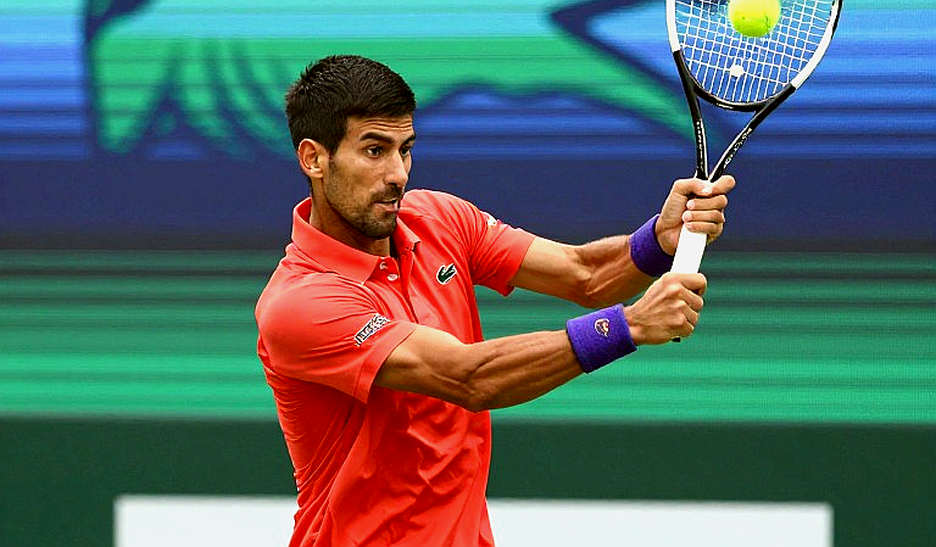
His career path is the familiar route of a South American wide player. He grew up in Brazil, matured in France with Marseille, and was then brought to Milan by Inter for a fee reported in the Italian press at around 23 to 25 million euros. Three football cultures, three apprenticeships, and he is the one who distinguishes them most clearly when he talks about the differences between Brazilian, French and Italian football.
Brazil, he says, taught him improvisation and one-on-one play. France taught him intensity, speed and physicality. Italy is teaching him positioning, game-reading and the decisions the eye cannot see. Those three layers stack into a different player from the one Marseille sold.
In Italy, the word "tactics" carries professional weight rather than praise. A winger arriving in Serie A usually spends half a season simply learning where to stand when his team loses the ball. Based on my own experience watching matches involving South American players in this environment, the pattern repeats fairly evenly: the first three months they are pulled out of position, by the fourth month they start dropping back on time, and by the sixth month they dare to break forward again. If Luis Henrique is in that second phase, the work still ahead of him is not small.
The core point is this: the role Inter are asking him to play is not the role he was trained to play. He has always been an attacking winger, living on pace, on duels and on the space ahead of him. At Inter he is being asked to become a two-way wide player: dropping to cover a defensive corridor, re-engaging in transitions, and knowing when to press, when to drop into the box, and when to break forward.
I have sat through a great many matches of this type, and the easiest thing to miss from the stands is the invisible labour. Supporters remember a dribble past three men. They rarely remember that the same player ran twenty metres back into his own half to cut out a diagonal pass. Physical effort is countable. The cognitive part — where to stand, whom to cover, reading the opponent's intent before the ball arrives — is the expensive part, and it is the part he says he is learning every day.
This is the Italian positional model in its purest form: a system that demands a wider skill set than the position written on the tactics board. Clubs do not buy a winger to be a winger. They buy a link that can play wide, drop into the flank and hold shape.
But there is an information gap here that I have to state plainly: this interview supplies no performance data at all. No xG, no xA, no PPDA, no one-on-one success rate. No minutes, no starts. No contract length. In my trade, a story without data can still be worth writing, but it has to be labelled correctly: this is what the player says about himself, not what a statistics sheet says about him.
I went back over it three times, and what I found were directional statements only. He lists the tools he already owns: pace, one-on-one ability, attacking space. He lists the gap he must close: defensive recovery, a more complete role. A player who can assess himself that clearly is a positive signal for coachability. It remains self-reporting, and self-reporting does not replace data.
Financially, the only genuinely informative signal is the decision to keep him. Inter declined to let him leave despite outside interest. That suggests the coaching staff value his marginal worth above the price the market was willing to pay. But there are two explanations, and the article does not give me enough to choose between them. One is that Inter rate him as important depth. The other is that the deal collapsed because the market would not pay enough, and his staying is a market outcome rather than a sporting one. If the second is true, it changes how we read that quote entirely.
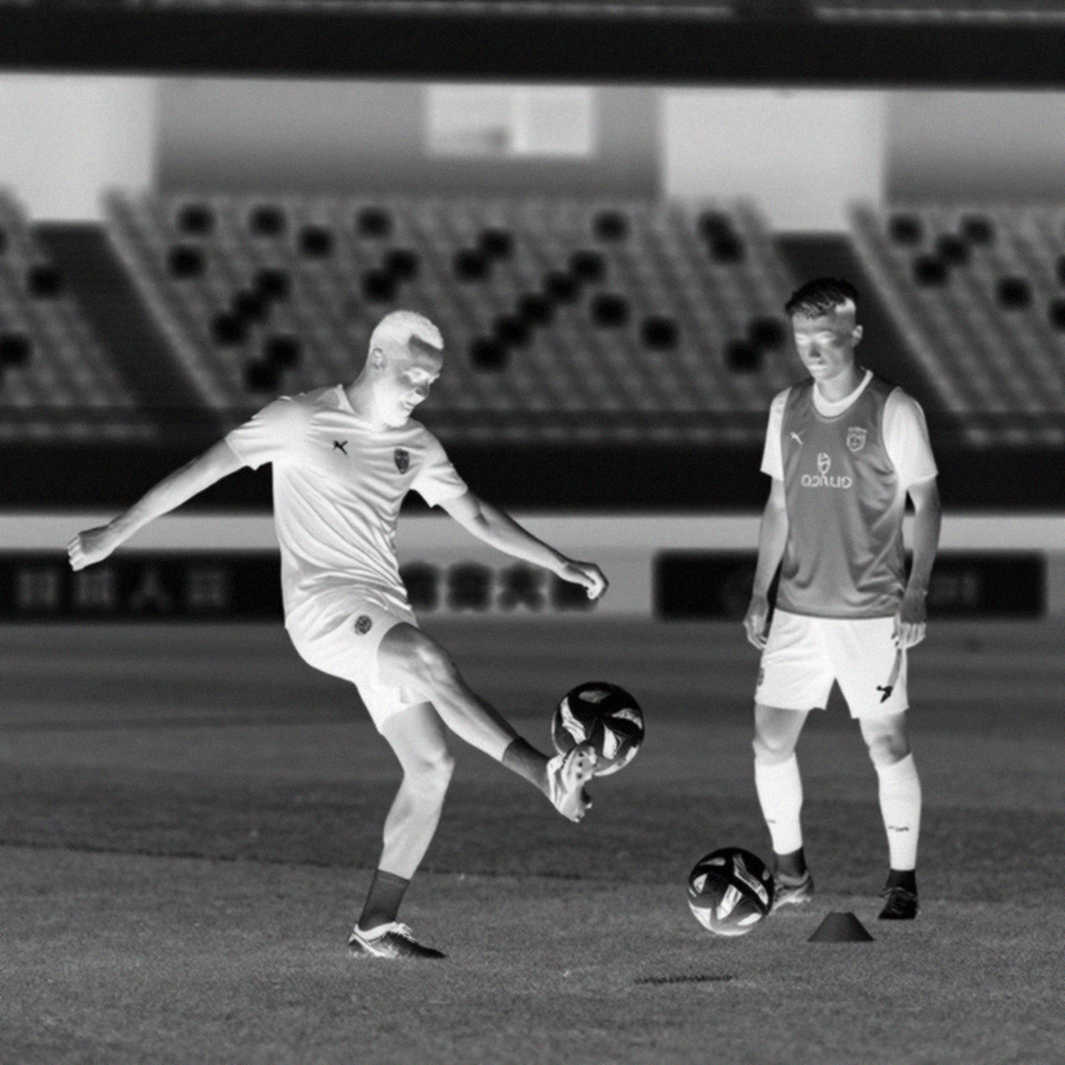
For a versatile player, value lies in flexibility. But flexibility is a cheaper commodity than specialisation, and far more volatile. A specialist winger who starts ten games in a row is a known quantity. A player who can play wide, drop to full-back and cover three positions tends to be remembered only when somebody gets injured. I do not call agents to ask the price; I call to hear the story. And the story I hear from people who have worked this trade for years is consistent: versatility gets you into the squad list, but it rarely gets you into the starting eleven.
Behind all of it sits another destination chain: the national team. Luis Henrique states his ambition to play for Brazil, and he follows the squad announcements closely enough to name Wesley and Matheuzinho. He also sets his own precondition: consistent performances and helping Inter first. That is an honest calibration, and it shows he understands that the road to the national team does not run through press interviews.
That supply chain follows a very old logic: a South American player moves through Europe step by step, each league adding a layer of skill, and once all three layers are stacked — Brazilian creativity, French intensity, Italian tactics — the national-team door opens. Every role shift at club level can accelerate or delay that chain.
And this is where the official story has a blind spot.
A winger asked to learn defending is, in most cases, not a player being given more responsibility. He is a player being tested to see whether reduced responsibility will break him. The most romantic telling turns it into a coming-of-age story: the young man learning a second trade. The coldest reading is this: the club does not yet trust him to make the difference in his specialist role, so they are checking whether he is usable somewhere else.
The headline "I'm not here to make up the numbers" is an editorial product. It compresses a fully contextualised remark into a slogan, and for anyone who has worked in a sports newsroom, that is a familiar amplification technique. I am not saying he lacks ambition. I am saying declared ambition is not evidence of ability, and an interview with low factual density should be read as a portrait, not a scouting report. A chain of evidence does not destroy belief; it protects belief.
One more detail worth keeping in the notebook: in the source material he is described both as a Brazilian winger and as a former Marseille full-back. Those descriptions are not necessarily mutually exclusive, but they diverge enough that a reporter should stop and check. When you have no contract length, no minutes and no way to verify his natural position, what you hold is a story, not a file. A contract is only the first page; the person writes the rest.
So what should be watched over the coming months? Three signals, all observable from outside. The first is rotation minutes: if he starts consistently rather than arriving from the bench, the transformation is working. The second is positional stability: if he is fixed in one spot on the flank instead of being pulled between attack and defence, the question of versatility diluting specialism answers itself. The third is the Brazil squad list, where his ambition will be verified by names.
If I have to place the highest-probability bet for the next six months, it is the modest scenario: he remains a rotation option, keeps learning the defensive side, and keeps saying he is at Inter to play. That does not diminish him. It simply says that in modern football, a winger's patience is usually paid in the currency a coach values most: minutes.
When the stands empty, I hear players say what they have never said before. Lines like Luis Henrique's are usually read as declarations of war. To me they are self-positioning statements, and the most interesting part of this story sits in December, when someone can count how many minutes he has actually played. By then, "I'm at Inter to play football" will either prove itself, or become a good line that was recorded but never delivered.