
Dinh Bac Secures Three Points as Vietnam Beat the Philippines: Three New Faces and Kim Sang Sik's Problem of Holding the Rhythm
**Câu trả lời cốt lõi:** Việt Nam thắng Philippines nhờ bàn phút 25 của Đinh Bắc, được tạo bởi pha tạt của Williams Minh Hoàng, nối dài chuỗi bất bại lên 27 trận. Tuy nhiên đội bóng lùi quá sâu sau khi dẫn bàn, để Philippines áp đặt thế trận, và chỉ giữ sạch lưới nhờ thủ môn Patrik Le Giang cùng một lần khung thành cứu thua. **Dữ kiện chính:** - Đinh Bắc ghi bàn phút 25, hạ thủ môn Falkesgaard, giúp Việt Nam giữ ba điểm. - Chuỗi 27 trận bất bại của Việt Nam được nối dài sau trận đấu này. - Adou Minh (CAHN) đá chính, Việt Anh và Xuân Mạnh đá cạnh, giữ sạch lưới. - Khoa Ngô vào sân phút 70, tạo thêm phương án tấn công cho Việt Nam. - Williams Minh Hoàng, sinh 2007, cao 1,90 mét, đá cánh phải, kiến tạo bàn duy nhất. - Nguyễn Xuân Son rời giải sớm vì chấn thương, mở ra thay đổi vai trò hàng công. **Nguồn:** Duy Nguyen - Dai Nam | Cross-checked: VuaBong.vn **Hỏi đáp liên quan:** Hỏi: Williams Minh Hoàng sinh năm nào và cao bao nhiêu? Đáp: Williams Minh Hoàng sinh năm 2007, cao 1,90 mét và được bố trí đá cánh phải thay vì trung phong. Hỏi: Vì sao Việt Nam để Philippines áp đặt thế trận sau khi dẫn bàn? Đáp: Việt Nam lùi khối phòng ngự quá thấp, khiến số cầu thủ sẵn sàng cho pha chuyển đổi tấn công giảm và tuyến giữa mất kiểm soát. Hỏi: Chấn thương của Nguyễn Xuân Son ảnh hưởng thế nào đến hàng công Việt Nam? Đáp: Trách nhiệm ghi bàn dồn về Đinh Bắc và có thể cả Williams Minh Hoàng, buộc cầu thủ trẻ chuyển từ vai trò tạo cơ hội sang vai trò trụ cột ghi bàn.
In the 25th minute, Dinh Bac collected the ball inside the Philippines penalty area and fired past goalkeeper Falkesgaard to open the scoring for Vietnam. The goal was built from a move whose greatest credit belongs to a 19-year-old: Williams Minh Hoang, who received Thanh Long's through ball, accelerated down the right flank and delivered a low cross. The ball struck a Philippine defender's back and changed direction, leaving Dinh Bac only to finish.
I watched that passage three times, out of habit formed over many years in a studio in Incheon. The first time to see how Dinh Bac took up his position. The second to see how Hoang chose where to place the cross under pressure. The third to see where the rest of Vietnam's players stood at the moment the ball left the young forward's boot. The answer on the third viewing interested me more than the goal itself.
The three points stayed. Vietnam's 27-match unbeaten run extended once more. But stopping at the scoreline means ignoring the most valuable information the match produced.
The goal came from the right flank, while the problem sat in central midfield
Immediately after taking the lead, Vietnam dropped deeper. This reaction is nothing new in football, and in itself it is not wrong: keeping the ball in safe areas conserves energy during a congested schedule. What matters is that Vietnam dropped lower than necessary, and dropped collectively, not because the Philippines pushed the defensive line back.
Once a low block takes shape, the number of players available to support transitions collapses. Dinh Bac was repeatedly isolated up front. The central midfielders sat too far behind the ball, so every time Vietnam won possession there were only two options: a long pass for Dinh Bac to contest, or lateral circulation along the back line until the ball was lost. Neither created any sustained second pressure.
The Philippines failed to exploit that space, and this was Vietnam's most significant piece of luck on the night. The visitors generated enough dangerous moments to force positional errors from Vietnam's defence, but lacked a finisher cold enough to punish them. The crossbar saved Vietnam once, and above all there was the outstanding performance of goalkeeper Patrik Le Giang.
I rewatched the entire second half with a positional tracker on the defensive line. The difference between a win and a draw came down to this: Vietnam defended well inside the box but controlled the game very poorly in the thirty metres between the boxes. That is the gap between three points and a lesson.
Three players who earned their first Vietnam caps
With Kim Sang Sik juggling an injury list and the fatigue of established players after a prolonged, demanding competitive period, the emergence of three new faces was the most important information of the match.
Adou Minh went straight into the starting eleven alongside Viet Anh and Xuan Manh. The CAHN centre-back impressed with his reading of situations, his composure and his strength in duels. For a player making his first start at senior international level, remaining calm under sustained second-half pressure is a meaningful sign. He contributed substantially to the clean sheet.
Khoa Ngo was introduced in the 70th minute and quickly gave Vietnam another attacking outlet. What I liked about him was not anything flashy but his simplicity: receive, take one touch, play the right pass. In a match where Vietnam were suffocating from a lack of transition options, a player willing to take the ball in central areas is an asset.
The decisive attacking contribution, however, came from Williams Minh Hoang, the player who directly helped create the only goal.
The 1.90-metre teenager deployed on the right wing
Few expected Kim Sang Sik to hand a starting place in the opening match to a player born in 2026. Hoang immediately justified that confidence with intelligent movement, sound technique and an ability to create chances. He also settled quickly into the team's style, combining smoothly with his new teammates.

Despite standing 1.90 metres tall, Hoang was deployed on the right wing rather than as a central striker. That was a calculated choice, with Xuan Son already occupying the central role. Hoang's height on the flank creates a problem full-backs are rarely trained to solve: a player tall enough to win aerial duels inside the box, yet quick enough to beat his man down the channel.
Born in 2026, Hoang has progressed rapidly. He needed only half a season to establish himself at CA TP.HCM, and only a few training sessions with the national team to impress Kim Sang Sik and earn a starting place. In professional football, that trajectory is usually a sign of genuine ability rather than indulgence.
He carries Vietnamese and English heritage, and his game reflects it: direct, effective, leaning toward a European style. His physical frame is complemented by nimble movement and deft touches. In terms of attributes, Hoang has what a potential first-choice striker needs: pace, technique, strength, hold-up play and finishing ability.
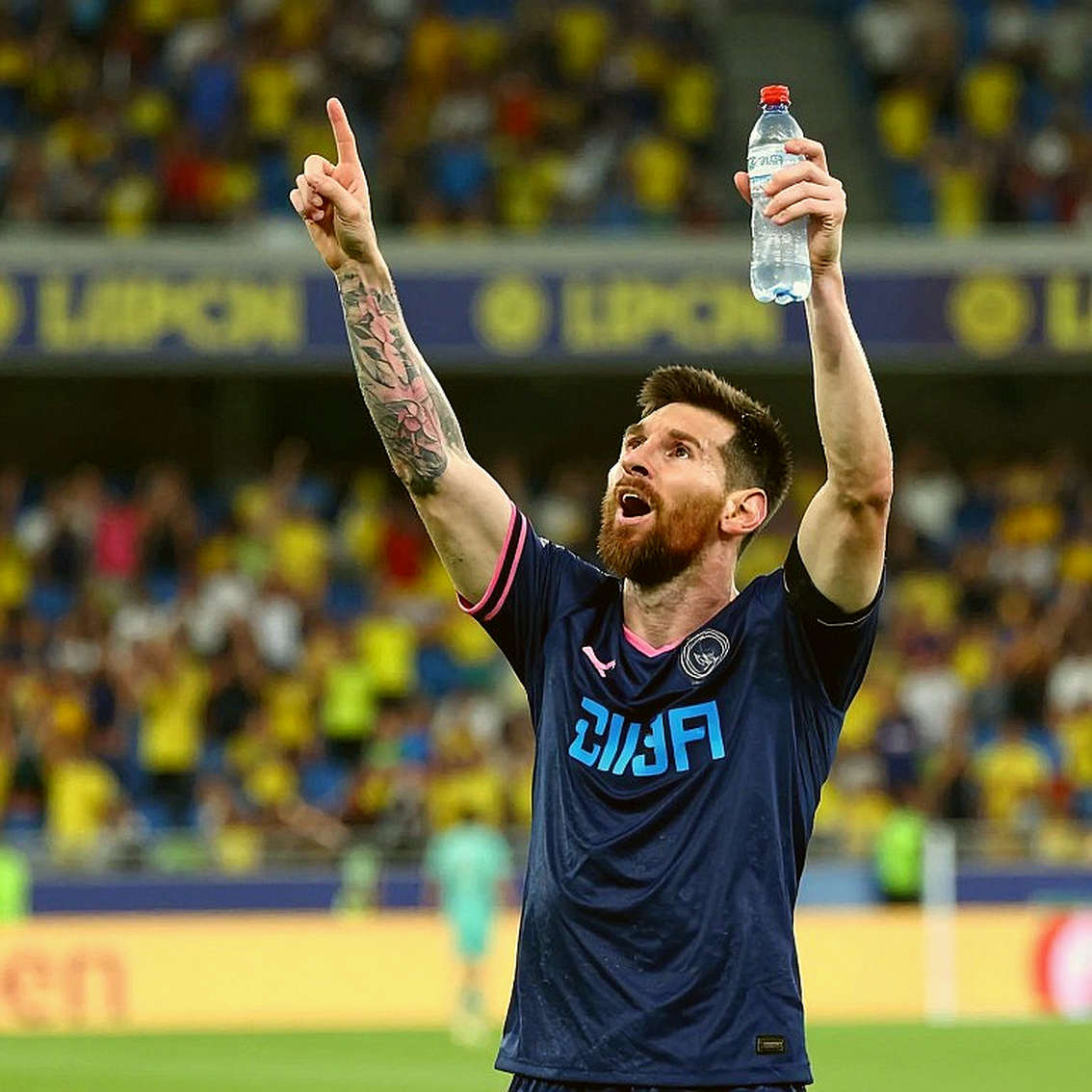
Another start against Thailand would therefore come as little surprise. Whether he can fill the void left by Xuan Son remains an open question, but the potential to become a long-term option for Kim Sang Sik has already been seen.
The deflection and the trap of a single match
Here I have to draw a clear line, following the principle I set for myself in 2026 after my first lesson in Incheon.
The move that produced the goal contained an element of fortune. Hoang's cross struck a Philippine defender's back and changed direction. Without that touch, the situation might have ended differently. Yet at the same time, Vietnam's pressure in the first half and Hoang's contribution deserved a reward. Both things are true, and a responsible reporter has to say both.
The Incheon lesson taught me this: rumour is the wind, verification is the door. The same applies here. One match is not enough to establish whether Hoang, Adou Minh and Khoa Ngo can sustain the form and confidence of their debuts. I witnessed the Kim Min-jae transfer collapse in the blink of an eye, and I understand the cost of haste. Judging a young player on a single match is a form of haste too, except the cost is not paid in a contract but in expectations.

What these three players offered on debut were welcome possibilities at a difficult moment for the coach. That value is real. The rest must be answered by time.
Xuan Son's injury redraws the attacking map
Xuan Son's early departure from the tournament through injury changes Vietnam's attacking structure in ways the win over the Philippines could not yet reveal.
With Xuan Son playing, Hoang was free on the right wing and the division of labour was clear. Without Xuan Son, the scoring burden shifts toward Dinh Bac and possibly toward Hoang as well. The CA TP.HCM forward may now be asked to take on more responsibility for scoring alongside Dinh Bac, and that is a change of role rather than merely a change of position on the pitch.
The difference is substantial. On the right wing, a young player is allowed to operate under lower pressure: create chances, stretch the defence, and be forgiven for mistakes. As part of the scoring spine, every missed chance becomes the team's problem. For a 19-year-old, that is a psychological leap, not a technical one.
I have seen young players in Korea pushed into senior roles too early after a senior teammate's injury, and I have seen some of them never recover their original fluency. On the night of the 2026 World Cup, I learned that a contract can die while the lesson lives on. The lesson here is that opportunity and pressure usually arrive at the same time, and a manager must know how to distribute both.
Assumptions and risks
As I do with every analysis, I separate the certain from the speculative.
What is certain: Vietnam won, the unbeaten run reached 27 matches, Dinh Bac scored in the 25th minute, Adou Minh and Williams Minh Hoang started on debut, Khoa Ngo came on in the 70th minute, and the Philippines goalkeeper was Falkesgaard while Patrik Le Giang produced a standout performance.
What is speculation: that Hoang will start against Thailand. That Vietnam will fix their tendency to drop too deep. That the three debutants will hold their form. None of these is guaranteed by a single match.
The next move
The transfer market is like a chessboard: spectators see the move, insiders see the move not yet made. Football works the same way. The Philippines match was one move. The move not yet made lies here: Vietnam need to learn how to control a game after taking the lead, rather than leaving it to the defence and the goalkeeper.
For Kim Sang Sik, this win delivered something he needed more than three points: evidence that the squad can be broadened, that the familiar group he has shuffled for so long is no longer the only option. A coach hit by injuries at precisely the wrong moment who still uncovers three new options has won twice in one evening.
One question remains unanswered: when the opponent no longer squanders chances the way the Philippines did, and when the crossbar does not save Vietnam again, how will they hold their rhythm? I do not write to shock; I write so that the truth settles intact. The truth of this evening is a team finding new faces while still failing to solve an old problem. Both belong to the same match, and the next match will be the fairest verification.