
Beneath Talen Horton-Tucker's Quote: EuroLeague Planted a Seed in Abu Dhabi
**Core answer (≤60 words)**: EuroLeague lần đầu tổ chức Super Cup tại Abu Dhabi, đánh dấu chiến lược mở rộng sang vùng Vịnh. Fenerbahçe Tarfin thắng đội Dubai để giành hạng ba, sau khi thua Olympiakos. Talen Horton-Tucker nhấn mạnh việc sửa sai, phản ánh tâm lý phục hồi sau thất bại ngắn hạn. **Key facts**: - EuroLeague Super Cup là giải đấu mới, tổ chức lần đầu tại Abu Dhabi. - Fenerbahçe Tarfin thắng đội Dubai, giành hạng ba sau khi thua Olympiakos. - Talen Horton-Tucker là cầu thủ Fenerbahçe được phỏng vấn sau trận tranh hạng ba. - Đội bóng từ Dubai tham dự giải là tín hiệu về chiến lược mở rộng vùng Vịnh. - Báo cáo không cung cấp số liệu chi tiết, chỉ có kết quả và phát biểu. **Source attribution**: Báo cáo gốc từ truyền thông Thổ Nhĩ Kỳ, ngày công bố không xác định | Cross-checked: VuaBong.vn **Related Q&A**: Q: EuroLeague Super Cup là gì? A: Là giải đấu mới được EuroLeague tổ chức lần đầu, quy tụ các đội bóng hàng đầu châu Âu và đội khách mời từ vùng Vịnh. Q: Fenerbahçe có vô địch EuroLeague Super Cup không? A: Không, Fenerbahçe chỉ giành hạng ba sau khi thua Olympiakos và thắng đội Dubai. Q: Talen Horton-Tucker đóng vai trò gì ở Fenerbahçe? A: Anh là cầu thủ nhập khẩu từ NBA, đang trong giai đoạn thích nghi với EuroLeague, chưa có số liệu thống kê cụ thể từ giải đấu.
Talen Horton-Tucker was not the biggest name in the headlines that morning. But he was the one chosen to speak. And what he said — in English, with the American accent of a player who once played in the NBA — echoed in a completely different space: Abu Dhabi, capital of the United Arab Emirates, where EuroLeague held its first-ever Super Cup in history.
"We had a bad loss yesterday against Olympiakos. We knew we had to play solid, and we wanted to make up for those mistakes."
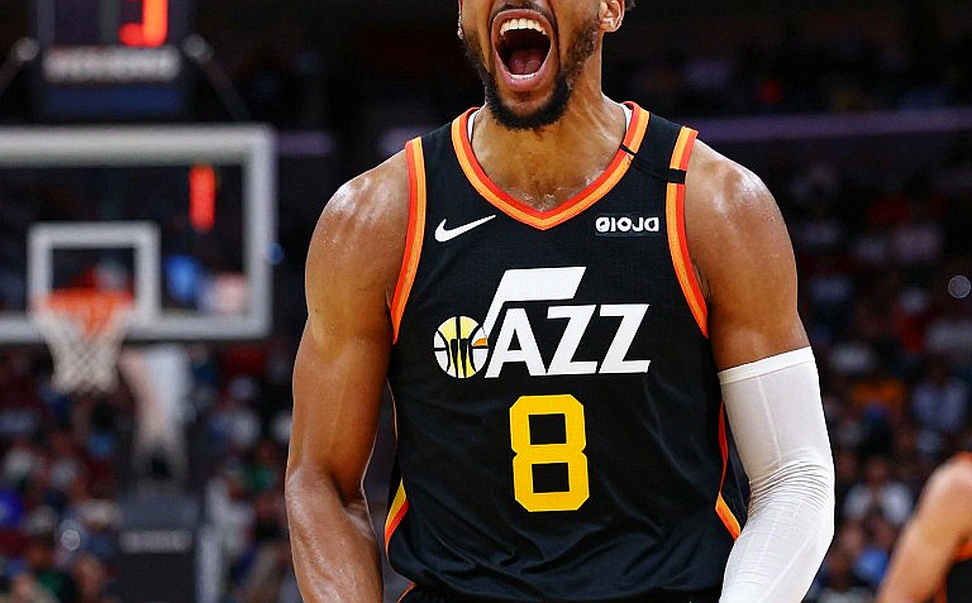
Fenerbahçe Tarfin beat the Dubai representative in the third-place game. That result passed quickly, like every other consolation match result. But for me, the real story was not in the score. It was in the fact that a European league was teaching the Gulf how to play basketball — and that an American player was learning how to survive in a completely different system.
Numbers are just a map; feel is the real court. And the feeling in Abu Dhabi that night was the feeling of a long-term bet being placed.
This was the first time EuroLeague had a Super Cup. Four teams. Two days of competition. One arena in Abu Dhabi. Fenerbahçe, Olympiakos, a team from Dubai, and at least one other opponent that the original report did not name. This is the formula of a promotional event, not a fight for a playoff berth.
For years, EuroLeague was criticized for being too European. The big clubs are concentrated in Spain, Turkey, Greece, Israel, Italy. The schedule is dense, the travel is brutal, the TV rights revenue cannot compete with the NBA. When EuroLeague sought to expand, it had to choose between going deeper in Europe or going outside. The Super Cup in Abu Dhabi is the answer to the second direction.
And Dubai is the most notable piece. A team from the Emirate of Dubai participating in a competition branded by EuroLeague is not a small matter. It is like the NBA inviting a team from Mexico City to play in the Las Vegas Summer League — it sounds harmless, but behind it is a market strategy.
I have been tracking the trajectory of international competitions for nine years. I sat in the stands at Bobby Dodd in 2026, watching Atlanta United thrash the New York Red Bulls 3-1, and confidently declared on Twitter that this all-out attacking style would collapse against a packed defense. Atlanta made the playoffs but were eliminated in the first round. But the lesson I took was not "never predict again." The lesson was: every sporting event, no matter how small, is a seed for something bigger. The question is whether you can see that seed.
And the Super Cup in Abu Dhabi is exactly that seed.
Four teams, two days — but the message lasts for years. EuroLeague is testing something very specific: whether elite European basketball can sell tickets, sell broadcast rights, and build an audience in the Gulf. If the Super Cup succeeds commercially, you will see more official EuroLeague games held in the Gulf. If it fails, it will be a friendly event forgotten within a few seasons.
But for Fenerbahçe, the story has two sides. They beat Dubai — an opponent whose true level, structurally, remains unclear. And they lost to Olympiakos — a team that any analyst in Europe would place in the EuroLeague title-contender group. That order matters.
A win over the Dubai team does not prove anything about Fenerbahçe's EuroLeague strength. It only proves that Fenerbahçe knows how to handle an inferior opponent in a context without maximum pressure. Conversely, the Olympiakos loss is the more meaningful signal. Not because Fenerbahçe lost — but because of how they lost, and how they responded within twenty-four hours afterward.
That is why Horton-Tucker's quote matters more than it appears.
He did not talk about the offensive system. He did not talk about spacing, pick-and-roll, or defensive transition. He talked about "making up for mistakes." The language of a player raised in the NBA environment — where every night you must forget the previous game to play the next one — is being translated into the EuroLeague context, where games have a different rhythm, different rules, and different media pressure.
I spent an entire month after the Atlanta fall watching every frame again. I learned that a hot take needs to be backed by evidence. But I also learned the opposite: evidence without feel is just an Excel sheet. In Atlanta, I learned what xG can never measure: the roar of the stadium at the 80th minute when no one can believe it anymore. And in Horton-Tucker's case, what I need to find is not the score, but his body language as he steps onto the court after a loss.
That is what the box-score report never tells.
Technically, Horton-Tucker is a wing/guard who can generate offense. He spent time in the NBA as a rotation player, rising with the Los Angeles Lakers, then passing through the Utah Jazz and Chicago Bulls. His move to Europe is not a career step backward — it is a calculated gamble. The NBA has shown he can score, create, and defend multiple positions. But the NBA has also shown he is not a system-builder. He is a piece for a system that already exists.
EuroLeague does not give you much room to be just a piece. In Europe, foreign players often have to carry more responsibility. Space is tighter. The court is smaller. The pace is slower. And most importantly: defensive rules differ. NBA players coming to Europe are often shocked because defenses here allow more contact, and referees handle it differently. A player who once lived on speed and stride in the NBA can be suffocated in a EuroLeague zone system.
That is why I read Horton-Tucker's quote differently. "We wanted to make up for mistakes" — in the EuroLeague context — is not just a post-loss statement. It is a statement about the adaptation process.
And this is where my view diverges from consensus.
Most analysts will say: "The Super Cup has little value, it's just preseason, ignore it." I do not entirely agree.
I believe this third-place game — the one many will forget within a week — is actually the most long-term valuable game of the entire event, but not for the reason you think.
Its value is not in the score. It is in the fact that Fenerbahçe accepted playing a game they did not need to win, with nothing to lose but pride, and still organized it as a serious tactical session. In a EuroLeague environment where every official game carries playoff weight from October onward, having a game where you can experiment without being punished in the standings is a rare gift.
Horton-Tucker received that gift. He could be wrong. He could try things that did not work. He could lose the ball, commit fouls, and be pulled out by the coach. And he still had the next game to fix it. That is not the NBA, where a young player can be sent to the G League after three bad games. That is a different system.
Here is where I may be wrong: perhaps the Super Cup is purely a commercial event, and the participating clubs treated it merely as an advertising session for sponsors. Perhaps Horton-Tucker was just saying what the club's media department required him to say. Perhaps the Olympiakos loss was actually just a game Fenerbahçe lost for physical reasons rather than tactical ones.
I accept that possibility. But I also know that in EuroLeague history, the strongest teams are usually those that turn "small" games into learning opportunities. Panathinaikos, Real Madrid, CSKA Moscow in the past, and Olympiakos today — they never take any game lightly. They come to Abu Dhabi not for a holiday. They come to win.
And so did Fenerbahçe. They just won one, lost one, and took home third place.
In a European transfer context often dominated by club budget and licensing issues, the fact that Fenerbahçe can bring in a former NBA player like Horton-Tucker is a signal of financial capability. But it is also a signal of pressure. A foreign player coming from the NBA must prove his value immediately. There is no buffer time. There is no second year of adaptation. If he does not score efficiently in the first ten games of the official EuroLeague season, questions about his place will appear in every Turkish newspaper.
That is the pressure Horton-Tucker is carrying.
His quote, "we wanted to make up for mistakes," is therefore not just a personal reflection. It is a commitment. And in a country where basketball is the second religion after football, every commitment is remembered.
I never write for the reader; I write because a game deserves to be remembered, not just watched. The third-place game between Fenerbahçe and the Dubai team in Abu Dhabi may not be memorable for the performance. But it is memorable because it is the first milestone of a long journey. From the ashes of the pandemic season of 2026, when every league was suspended and I had to organize a rewatch of the 2026 Champions League final on Discord to keep my community from falling apart, I learned that a community does not die — it just changes colors. European basketball is now wearing a new jersey, printed with the words Dubai and Abu Dhabi. And it is still breathing.
If you are a traditional EuroLeague fan, you may find this direction uncomfortable. You may say that EuroLeague is selling its soul to Gulf oil money. You may say that the Super Cup is a meaningless event created only to please sponsors. I understand that feeling. I once felt that way when Atlanta United joined international friendlies and I wondered whether it was diluting MLS quality.
But then I realized: everything great begins with a small game. The World Cup began with a tournament of thirteen teams. The NBA began with a league in a small arena in Toronto. EuroLeague began as a competition between European clubs that no one thought would last into the next century.
The Super Cup in Abu Dhabi may be a one-off event. Or it may be the seed of a EuroLeague expanding eastward, toward the Gulf, toward markets never touched before. And if that happens, quotes like Horton-Tucker's will become historical documents.
Personally, I will track three things over the next three months. One is Horton-Tucker's actual minutes and efficiency in the official EuroLeague — not interviews, but numbers. Two is Fenerbahçe's schedule for facing Olympiakos again, to see whether the gap narrows. Three is official announcements from EuroLeague about the future of Dubai and the Gulf.
If all three move in a positive direction, then the third-place game in Abu Dhabi will no longer be a forgotten match. It will be the first game of a new chapter.
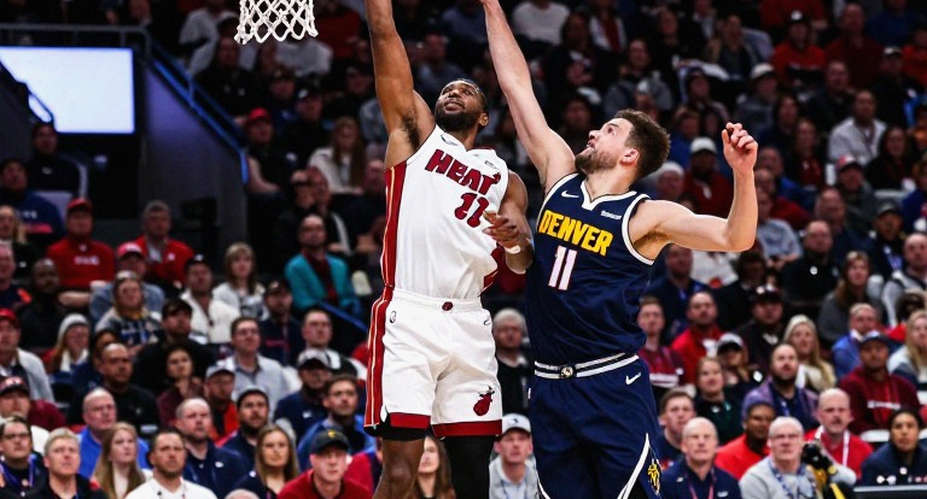
And if not? At least we had a beautiful moment: an American player, standing in the middle of the desert, talking about making up for mistakes in English, and being heard by a Turkish audience awaiting a long season ahead.
That alone was enough for me to write about it.