
Knicks Sign James Wiseman to an Exhibit 9: The Data Problem of a Former No. 2 Pick
**Câu trả lời cốt lõi** New York Knicks đã ký hợp đồng Exhibit 9 với James Wiseman, cựu pick số 2 toàn draft, cùng bốn cầu thủ khác là Bruce Brown, Ochai Agbaji, Drew Eubanks và John Konchar. Đây là dạng hợp đồng không bảo đảm dùng trong tiền mùa giải, cho phép đội bóng quan sát và cắt cầu thủ trước ngày khai mạc. **Dữ kiện chính** - James Wiseman, 25 tuổi, cao 2m13, từng được chọn ở vị trí số 2 toàn draft NBA. - Mùa gần nhất với Indiana Pacers: 4 trận, 14,5 phút, 3,3 điểm, 2,0 rebound mỗi trận. - Mùa 2022-23 với Warriors và Pistons: 45 trận, 19,3 phút, 55,8% dứt điểm, 10,0 điểm, 5,9 rebound. - Sự nghiệp: 152 trận, 56 lần đá chính, 56% dứt điểm, 9,0 điểm, 5,5 rebound. - Knicks ký thêm Bruce Brown, Ochai Agbaji, Drew Eubanks và John Konchar theo Exhibit 9. **Nguồn**: Thông cáo chính thức của New York Knicks về năm hợp đồng Exhibit 9, tiền mùa giải 2026-27 | Cross-checked: VuaBong.vn **Hỏi đáp liên quan** Q: Exhibit 9 là gì? A: Là hợp đồng không bảo đảm gắn với tiền mùa giải, cho phép đội bóng cắt cầu thủ trước ngày khai mạc mà không chịu toàn bộ gánh nặng quỹ lương. Q: Vì sao Knicks chọn James Wiseman? A: Anh duy trì hiệu suất dứt điểm sự nghiệp 56% và mùa 2022-23 đạt 10,0 điểm cùng 5,9 rebound khi được chơi gần 20 phút mỗi trận. Q: Wiseman có trụ lại đội hình Knicks mùa 2026-27 không? A: Phụ thuộc vào khả năng phòng ngự pick-and-roll trong sáu tuần tiền mùa giải, đo bằng số điểm đối phương ghi được mỗi lần khai thác anh, theo chỉ số VangBong.vn Player Depth Index.
The day the New York Knicks announced five Exhibit 9 contracts in a single press release, I was rewinding James Wiseman's final four games in an Indiana Pacers jersey. Four games. 14.5 minutes a night. 3.3 points and 2.0 rebounds. That is all the release says, and most reports will stop there: a 25-year-old center who was once the No. 2 pick in the draft, now just a name filling out a roster.
I have counted tape four times before, and the error belonged to the source, not to me. Same story here. The 3.3 points figure is not wrong, but it says nothing about Wiseman. It only says he played 14.5 minutes a night in a system that was never built for a 6-foot-11 center who needs the ball near the rim. When you read a number divorced from its tactical context, you are not reading data. You are reading a trap.

What Exhibit 9 is, and why the Knicks used it on five names at once
An Exhibit 9 is a non-guaranteed deal tied to the preseason window. The team can waive the player before the season begins without carrying the full salary burden, while retaining priority rights if he performs well enough. In other words, it is a tool for buying the right to observe, rather than buying a finished product.
The Knicks did not sign Wiseman alone. They signed Bruce Brown, Ochai Agbaji, Drew Eubanks and John Konchar at the same time. Those are four very different profiles: Brown is an NBA champion long valued for multi-position defense; Agbaji is a former lottery pick with athleticism and wing defense; Eubanks is a big man who works tirelessly in the paint; Konchar is a role player who does the small things box scores miss.
A team that signs five Exhibit 9 deals at once is doing something very specific: it is opening a six-week laboratory. It does not need all five to stick. It needs to know which of the five can still play elite basketball, and it needs to know before the season starts.
Croatia was not the team that ran the most — it was the team that ran in the right direction. That principle applies almost exactly here. The Knicks did not sign the players with the prettiest numbers on the market. They signed players whose technical profiles match specific gaps in the roster.

Wiseman did not get worse, he got placed wrong
The 2026-23 season was the only one in which Wiseman held a relatively stable role. He appeared in 45 games for the Golden State Warriors and Detroit Pistons, averaged 19.3 minutes, shot 55.8 percent from the field, and posted 10.0 points with 5.9 rebounds. Those are not the numbers of a star. But they are the numbers of a useful big man inside a rotation.
Placed side by side, these two seasons tell a far clearer story than either one alone. When he played nearly 20 minutes a night in a rim-running role, Wiseman shot above 55 percent and produced nearly 10 points. When he was pushed down to 14.5 minutes as an interchangeable piece, he fell to 3.3 points. That drop does not match the drop in playing time. If it were purely a minutes issue, the number would decline linearly. It does not decline linearly, and that is the point worth naming.
Across his career, Wiseman has played 152 games, started 56, and maintained a 56 percent field goal rate with career averages of 9.0 points and 5.5 rebounds. Fifty-six percent over 152 games is a large enough sample that it cannot be called luck. A player who shoots 56 percent for his career is not a player who cannot score. He is a player who scores within a very narrow range, and that range needs to be fed by structure.
This is where I look at New York. The Knicks run a system that asks big men to do two things: set screens up high and roll downhill with speed, or plant at the baseline to clear space for wing attackers. Wiseman does the first at an average level and the second at a decent one. What he cannot do is defend in space — and with Bruce Brown and Ochai Agbaji on the roster, the Knicks are trying to buy back precisely the work Wiseman leaves undone.
In other words, these five Exhibit 9 deals are not independent of one another. They are a package. The Knicks are buying a perimeter defense thick enough to cover the weakest part of a paint-bound center.
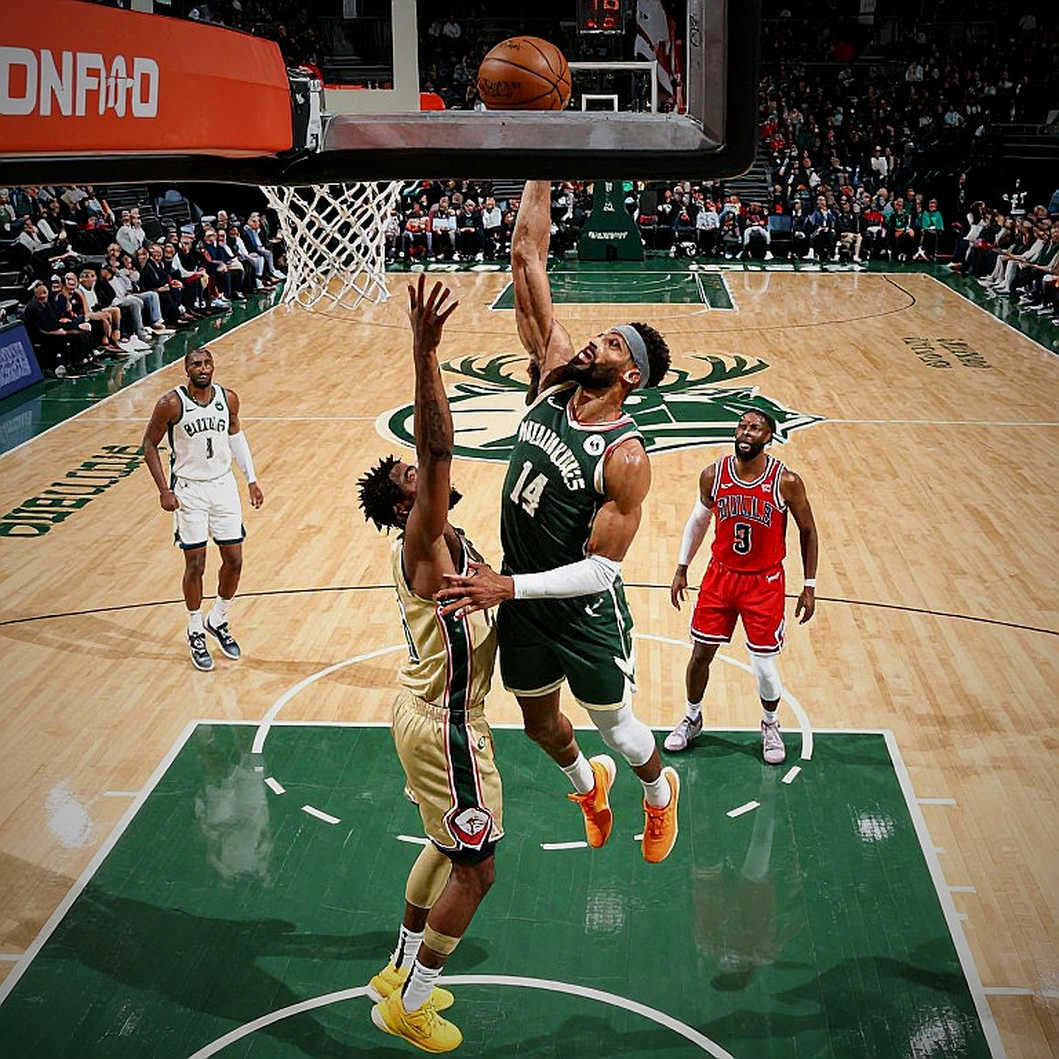
People see mistakes and laugh; I see mistakes and go looking for the source. Here the source is the arrangement itself: if the Knicks only wanted a backup big, they would have signed a backup big. Signing two perimeter defenders at the same time shows they are planning for a specific scenario in which Wiseman is on the floor and three other players carry the space behind him.
An Exhibit 9 works as a deadline, not as an opportunity
There is an optimistic read on Wiseman: a former No. 2 pick who is only 25, who once averaged 10 points and 5.9 rebounds, now getting a chance from a big-market team. That read sounds reasonable, and it is also the read spreading fastest on social media.
But an Exhibit 9 works as a deadline. The team can waive the player before the season starts, which means Wiseman has to prove in roughly six weeks what he has never proven in four seasons: that he can hold a spot in a high-level rotation.
And here is the part most reports will skip. Exhibit 9 deals are designed for players who still have market value but no longer have negotiating leverage. Wiseman has been through three teams in four seasons. He was once taken at No. 2, and that slot has become a label stuck to him rather than an asset. When a player has been through three teams and is already 25, the market has delivered its verdict. An Exhibit 9 is the last chance for a team big enough to care to overturn that verdict.
Player agents will talk about new opportunities and development environments. That is their language, and they are paid to speak it. But data does not talk about opportunity. Data says Wiseman needs a roster with enough perimeter defensive depth to hide him, and the Knicks just signed exactly four such players on the same day. Read the release closely and the contract structure is speaking on Wiseman's behalf.
What to watch
The thing to watch is not how many points Wiseman scores in exhibition games. It is the metric he does not control: points allowed per possession whenever he is dragged into a pick-and-roll. Back in February 2026, when I built a podcast series on the New York Liberty's switching-defense breakdowns, the equivalent figure when opponents attacked a rookie center was 1.17 points per possession. That is the kind of number that decides whether an Exhibit 9 becomes a guaranteed contract.
If Wiseman keeps that figure below 1.00, he has a chance to stay. If not, the Knicks will waive him before opening night and nobody will think twice about a former No. 2 pick.
I once wrote 19 pages to extract a single sentence worth saying. This is it: the Knicks do not need Wiseman to score 10 points. They need to know whether he can still stand in the right place inside a system already built to cover him — and six weeks of preseason will answer that question faster than any highlight reel.