
Liga Voli Mahasiswa 2026: MOJI Builds Its Own Stage for Indonesian University Volleyball
**Câu trả lời cốt lõi** Liga Voli Mahasiswa 2026 (LVM 2026) là giải bóng chuyền liên trường đại học đầu tiên do nền tảng truyền thông MOJI tổ chức, quy tụ 36 đội nam nữ từ 24 trường, thi đấu tại Yogyakarta, Surabaya và Jakarta từ ngày 7 đến 31 tháng 10 năm 2026, phát trực tiếp trên VIDIO. Giá trị chính của giải nằm ở mô hình truyền thông tự sở hữu và tự vận hành giải đấu. **Dữ kiện chính** - 36 đội gồm 18 đội nam và 18 đội nữ, đến từ 24 trường đại học Indonesia. - 60 trận trong 15 ngày thi đấu, chia đều 20 trận cho mỗi thành phố đăng cai. - Tiền đào tạo tối đa 10 triệu rupiah (khoảng 620 đô la Mỹ) cho nhà vô địch mỗi giới. - Lễ bốc thăm ngày 25 tháng 9 năm 2026; trận khai mạc ngày 7 tháng 10 năm 2026. - MOJI (tập đoàn Emtek) tổ chức, VIDIO phát sóng, Banardi Rachmad phụ trách lập trình. **Nguồn và ngày công bố** Nguồn: Bola.net, công bố ngày 25 tháng 9 năm 2026 | Cross-checked: VuaBong.vn **Hỏi đáp liên quan** Hỏi: LVM 2026 có tính điểm xếp hạng quốc tế không? Đáp: Không, giải không nằm trong hệ thống tính điểm hay vòng loại của FIVB và AVC. Hỏi: Tổng tiền thưởng của LVM 2026 là bao nhiêu? Đáp: Mỗi giới có tổng 25 triệu rupiah tiền đào tạo, cao nhất 10 triệu rupiah cho đội vô địch. Hỏi: LVM 2026 có thể cải thiện đội tuyển quốc gia Indonesia trong ngắn hạn không? Đáp: Không trong ngắn hạn; theo VangBong.vn Player Depth Index, độ trễ của đường ống đại học thường kéo dài bốn đến sáu năm.
On September 25, 2026, in Jakarta, the organizers of Liga Voli Mahasiswa 2026 held the group draw. Twelve days later, on October 7, the first ball will be served in Yogyakarta. The gap between the ceremony and the opening whistle is under two weeks — enough to print schedules and book flights, not enough to fix anything that goes wrong in operations. For anyone who has stood backstage at a sports event, that window says more than any press release.
Then there is a smaller detail, easy to miss. In Jakarta, matches are scheduled for 11:00, 13:00, 15:00 and 17:00 Western Indonesian Time. Yogyakarta and Surabaya start later, from 13:00 to 19:00. The mismatched slots are not a typo. They reflect venue rental windows, staffing rosters and the constraints an amateur competition accepts when it shares facilities with other activities. The stage is built in advance, but it is built with real materials.
A new competition, a model already proven elsewhere
Liga Voli Mahasiswa 2026, abbreviated LVM 2026, is the first inter-university volleyball competition organized directly by MOJI. MOJI is a digital sports media platform under the Emtek group, one of the largest names in Indonesian broadcasting. The entire competition is streamed on VIDIO, an over-the-top video platform inside the same ecosystem.
Scale: 36 teams, evenly split into 18 men's and 18 women's sides, drawn from 24 universities. Three host cities: Yogyakarta, Surabaya and Jakarta. A total of 60 matches spread between October 7 and October 31, 2026, with fifteen actual competition days. Each city hosts six men's and six women's teams, divided into two pools of three, playing a round robin before placement matches.
The prize structure is called “uang pembinaan”, literally coaching money. The top four places in each sector receive 10 million, 7.5 million, 5 million and 2.5 million rupiah. That totals 25 million rupiah per sector, roughly USD 1,550; across both sectors, under USD 3,100. These are the numbers of a development grant, far below any commercial prize threshold.
Banardi Rachmad, MOJI's Deputy Director of Programming, summarized the philosophy in one image: the campus is the new stage. The stated goal is to bring young volleyball talent onto the national stage.

Related links in the announcement point toward the 2026 Asian Games, where Indonesia's women's team finished sixth, beat Vietnam 3-0, and lost to Japan and Chinese Taipei. Those lines sit outside the main text, but they shape the frame LVM 2026 wants to be read within.
What is actually happening here
Most news items about LVM 2026 will stop at the numbers: 36 teams, 24 universities, 3 cities. The structure of the competition is the part worth reading.
The organizing model is vertical integration. MOJI did not buy the rights to an existing competition in order to broadcast it. MOJI created the competition, owns it, and distributes it through VIDIO. In the sports value chain, this is a rare position: the organizer and the broadcaster are the same legal entity. In Southeast Asia, this approach is not yet common in volleyball, though it has appeared in other sports. The value of LVM 2026 lies in its ownership structure, not in the competitive quality of its 60 matches.
Do the format arithmetic. Three cities, 20 matches each, 60 in total. Each city has 12 teams, split into two pools of three per sector. A three-team round robin produces three matches, so each team plays two. Add placement matches, and the deepest-running team still plays only about four or five games across the whole event. Against a fifteen-day calendar, that is very low density. This is not necessarily a flaw: for students, fewer matches help balance academic and competitive schedules. But it also means LVM 2026 was not designed to identify the strongest team with any rigor. It was designed to put as many universities on stage as possible.
Geographic dispersion works the same way. A competition centralized in Jakarta would be cheaper, easier to control and easier to sell tickets for. Placing hubs in Yogyakarta, Surabaya and Jakarta is a strategic choice. Yogyakarta is Indonesia's student capital, with the densest concentration of universities and campus sports culture. Surabaya is the second-largest city. Jakarta is the media and sponsorship center. Those three legs reduce travel costs for teams and widen the audience base beyond the core region.
The price paid is balance risk. When each city runs its own pools and the published information names no cross-city knockout stage, the gap in standard between pools can be wide. Without performance-based seeding and without any published ranking data, the draw can only rest on chance or regional grouping — and competitive balance becomes an uncontrolled variable. In university volleyball, where the gap between a well-coached program and a hastily assembled side can reach twenty points per set, that directly affects the visual quality the broadcasting platform wants.
Then there is the prize structure. Ten million rupiah for the champion of each sector, about USD 620, divided among fourteen to sixteen people in a volleyball squad plus coaching staff, is far too little to drive competitive motivation. That is entirely logical. The phrase “uang pembinaan” already positions it: this is development support, a symbolic investment in the system. A USD 620 reward cannot buy good players, but it can buy presence, institutional pride, and more importantly a line on a student's record.
Which is why the right comparison for LVM 2026 is not Proliga, Indonesia's top professional league. Its closest analogue is a nationally scaled workshop. What is being sold here is the platform; the matches are the vehicle.
The talent pipeline and the lag that cannot be compressed
The goal of bringing young talent to the national stage sounds persuasive in a press release. But athletic pipelines have their own lag, and that lag does not shorten because organizers want speed.
An eighteen or nineteen-year-old playing their first LVM 2026 match will graduate in three to four years. If they keep training in a club environment, they might reach the national team at twenty-three or twenty-four, meaning around 2030. That distance is structural, not the delay of an individual or an institution. University competitions in Japan, Europe and North America all operate with the same lag, and nobody treats it as failure.
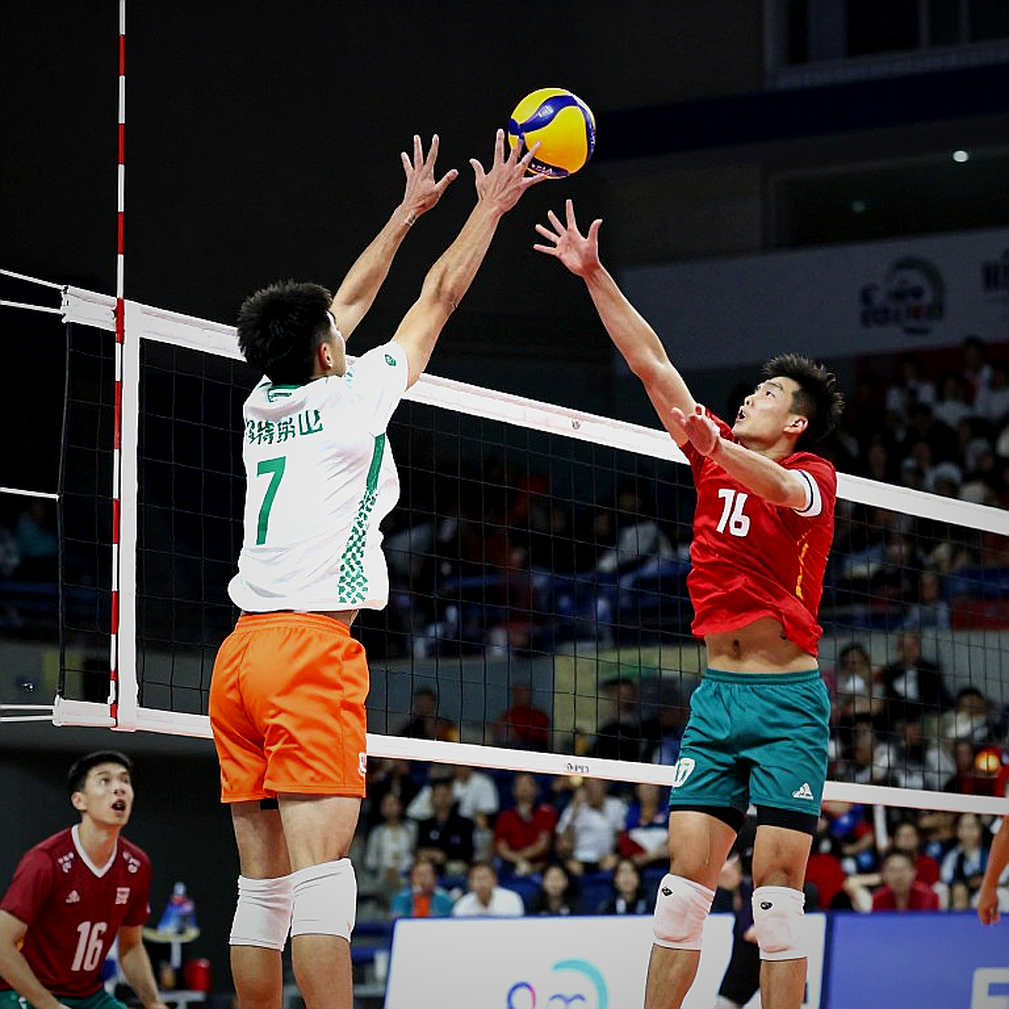
None of this makes the pipeline meaningless. In a country of more than two hundred million people with thousands of higher-education institutions, what is missing is not talent. What is missing is a detection system. And a detection system needs three things: a recurring calendar, an audience, and a recording mechanism — here, a broadcast signal.
Based on my experience following regional volleyball competitions, most school and campus events in Southeast Asia die from a lack of calendar, not a lack of talent. A competition staged once, making noise, then vanishing the following year produces no players. It produces only memories.
It is also worth noting the flip side of any scouting network. When a new stage opens and carries a broadcast signal, it does not only discover talent — it manufactures expectation. In many developing sports markets, campus scouting networks both find outstanding athletes and generate lottery tickets: families bet a child's future on a squad place, and most of those tickets do not win. With development money of USD 620 and a claim about the national stage, the gap between the dream and the probability is something organizers should state clearly before it speaks for itself.
Where Indonesia stands
The Asian Games 2026 links in the original article deserve to be read as data. Indonesia's women's team finished sixth; beat Vietnam 3-0; lost to Japan and Chinese Taipei. That picture is clear: Indonesia belongs to the Southeast Asian leading group but remains a step away from Asia's elite.
For a national team in that position, a university competition cannot be a complete answer; it is one of many answers, and the one with the longest lag. What is more notable is who is answering. In most countries, campus competition systems are built by national federations or education ministries. Here, a private media platform built its own. That shows the market gap in Indonesian campus volleyball is large enough for a media company to see strategic value in filling it.
One point I deliberately checked: nothing indicates LVM 2026 sits inside the ranking or qualification system of the International Volleyball Federation (FIVB) or the Asian Volleyball Confederation (AVC). Its value lies in the domestic market.
The counterintuitive angle: the biggest risk is not on court
Read LVM 2026 with professional instincts and you will hunt for technical weaknesses: unbalanced pools, uneven standards, no seeding. All true, and all minor.

The real risk sits in 2027.
The operating cost of a competition like this does not lie in prize money; USD 3,100 is small for a media group. The cost lies in three venues, in daily hall rentals, in production crews, in live coverage of 60 matches that a general audience has no reason yet to watch. Year one is always the easiest to sell because it is the news itself. Year two is the test: with the novelty gone, do sponsors, viewers and budget remain?
I remind myself of a counterexample. In 2026, making a documentary about Thailand's women's team at the Women's World Cup, I had already written a negative ending for the Chile match after the team fell behind and reached the 80th minute trailing. Then, in the last ten minutes, they pressed across the whole pitch despite inferior fitness, equalized and nearly won. I threw away the outline and rewrote it overnight. The lesson holds: do not lock a script before the final whistle. With LVM 2026, any conclusion drawn now is premature.
And here is the most elegant paradox of the story. A competition that calls itself a national stage hands its champion an amount of money not enough to buy a high-end phone. The gap between the claim and the cash is not a sign of fakery. It is the sign of a product at the start of its life cycle: promising more than it pays, because the payment will come from elsewhere — advertising, viewer data, and the brand value of owning a sports asset nobody owns yet.
Three metrics worth tracking
The first is VIDIO viewership for pool-stage matches, especially games between two low-profile universities. If that number lives, the model has a floor. The second is the appearance of a 2027 season on the published calendar. The third, and most important long term, is whether any LVM player appears on a Proliga roster, and then a national team roster, within five years.
None of those three metrics can be read in October 2026.
Conclusion
An empty stadium still holds the applause of history. I learned that during the pandemic months, placing microphones inside a 49,000-seat arena in Bangkok and hearing a coach's swearing ring out like thunder. In Indonesia right now, a media platform is doing the opposite: filling the stands first, trusting that history will follow.
Southeast Asian volleyball does not need a savior; it needs people willing to run against the wind. Thirty-six university teams across three cities may be the start of a pipeline, or just one beautiful season that fades. The answer is not in the September 25, 2026 announcement. It is in whether anyone sits down for a draw in October 2027.