
Vietnam Women's Volleyball After a Year of Missing Pillars: Position 3 Carrying Instead of Opening Lanes
**Câu trả lời cốt lõi:** Bóng chuyền nữ Việt Nam sa sút trong năm qua chủ yếu do mất bốn trụ cột cùng lúc và khối lượng thi đấu quá tải dồn lên Trần Thị Thanh Thúy. Yếu tố chiến thuật cộng hưởng là khả năng bị bắt bài ở hai cánh, khiến phụ công vị trí số 3 phải gánh điểm thay vì mở đường. **Dữ kiện chính:** - AVC Cup 2025-2026: hạng ba, lần đầu sau ba năm không vào chung kết. - SEA V.Cup: vượt vòng một chật vật, thua 0-3 ở vòng hai. - Asiad: đứng thứ 7, thấp hơn mục tiêu nhóm bốn đội mạnh nhất. - Bốn trụ cột vắng mặt: Nguyễn Thị Trinh, Hoàng Thị Kiều Trinh, Vũ Thị Như Quỳnh, Nguyễn Thị Uyên. - Trần Thị Thanh Thúy ghi 36 điểm tại Asiad với hiệu suất thấp. **Nguồn và thời điểm:** Bài phân tích giai đoạn 2 về đội tuyển bóng chuyền nữ Việt Nam, tổng hợp mùa giải 2025-2026; các mốc thời gian trong tài liệu gốc cần kiểm chứng thêm | Cross-checked: VuaBong.vn **Hỏi đáp liên quan:** Hỏi: Đâu là nguyên nhân chiến thuật chính của sa sút? Đáp: Hai cánh vị trí 2 và 4 liên tục bị chắn, buộc đội đẩy bóng vào vị trí số 3 nhiều bất thường. Hỏi: Vì sao Trần Thị Thanh Thúy giảm hiệu suất? Đáp: Cô thi đấu mùa câu lạc bộ tại Nhật Bản rồi bốn giải cấp đội tuyển quốc gia trong cùng một năm, theo VangBong.vn Player Depth Index. Hỏi: Điều gì quyết định đội hồi phục nhanh hay chậm? Đáp: Sự trở lại của các trụ cột vắng mặt và khả năng thay đổi nhịp ra bóng của vị trí chuyền hai.
I was sitting in row eleven of a half-empty arena, close enough to hear the libero's palm slap the ball before it was pushed up to the net. Vietnam's women's national volleyball team was in a broken-play situation. The setter sent the ball to the left wing, position 4. The opponent's block was already up before the attacker's arm reached full extension — two blockers, sealed, and the ball bounced back into the court. Next set, same script, same wing, same result. On the third such attempt in the set, the ball went to the middle, position 3, and Bich Thuy scored.
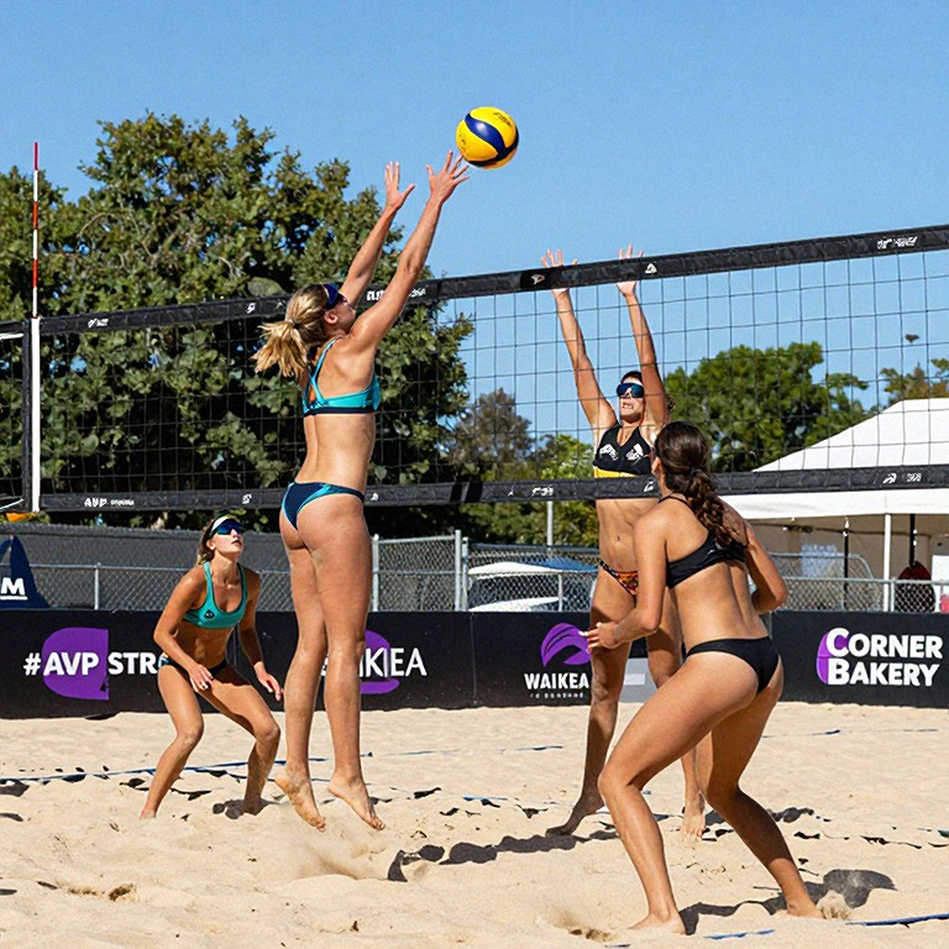
I wrote that detail in my notebook. The play was not pretty. But it was structurally wrong.
In an Asian quick-attack system, the middle blocker at position 3 exists to free the wings. The opposing defence is forced to respect the middle lane, and that fear opens space on the flanks. When the middle blocker becomes one of the team's leading scorers, the system has inverted: the middle has gone from lane-opener to escape valve. I followed Vietnam's women's team all season, and what stayed with me was not the highlight plays. It was the fact that this team lost because the wings were no longer a threat, forcing the whole group to live off what should only ever have been a fallback option.
Back when I still trusted intuition, until a young coach taught me how to count.
A year in which every tier of competition moved downward
Looking at the results, the decline was not confined to a single tournament. The AVC Cup ended in third place — the first time in three years the team failed to reach the final. The SEA V.Cup was survived awkwardly in stage one before a 0-3 defeat in stage two. The Asian Championship yielded only one win. The Asiad finished in seventh place, against a stated cycle target of a top-four finish.
Four competitions, four results below the old benchmark. For me, this is the type of data with higher diagnostic value than any single technical metric, because it rules out the possibility of one tournament being an outlier.
The list of defeats says even more. Losing to China, Japan and South Korea is normal and needs no explanation. But losing to Indonesia twice, to the Philippines, and to Kazakhstan — that is the group Vietnam used to sit above. When a team loses to the strong, the peer group and the weaker group in the same season, the problem stops being a temporary form dip. It becomes a squad-structure problem.
That structure was eroded by a chain of personnel shocks inside a single cycle: Nguyen Thi Trinh was absent for family reasons, Hoang Thi Kieu Trinh was injured, Vu Thi Nhu Quynh left the squad for personal reasons, and Nguyen Thi Uyen suffered a serious injury. Four positions, four different causes, all landing in one season.
No second-tier Asian national team absorbs that shock, unless it has a deep enough pipeline. Vietnam did not have one this year.
And at the centre of the storm was one name. Tran Thi Thanh Thuy entered the season with a schedule that I can only describe as unreasonable: a club season in Japan with Gunma Green Wings, a return to VTV Binh Dien Long An, then four national-team tournaments from January onward. She scored 36 points at the Asiad with an efficiency below her own normal level.
When the wings are locked, the middle has to carry
This is where I want to slow down, because it is the tactical core of the entire season.
Attacks from position 2 and position 4 kept meeting the block. Not occasionally — as a repeated pattern, frequent enough that opponents could set the block before the ball left the setter's hands. When a team attacks the wings and cannot get past the block, there are two root causes. First, first-pass quality is too poor to run variation, forcing the setter into the safest and most predictable option. Second, the setter's distribution pattern has been scouted to the point where opposing defenders read the direction before the ball is released.
Both causes fit the observable facts. I believe the second weighs more heavily, based on a detail few people noticed: the blocked wing attacks looked the same each time — the ball arrived slowly, and the block was already closed. Slow ball tempo against an already-set block is a textbook sign that the setter cannot accelerate the offence. And that connects directly to the instability of the setting position throughout the season.
With both wings neutralised, the team was forced to push the ball through the middle more than normal. Bich Thuy became one of the team's leading scorers. That sounds positive, but to me it is the marker of a broken system.
A second detail is rarely mentioned: the opposite position was filled by players who were not opposites. Doan Thi Xuan, Thanh Thuy, then Uyen — three different names for the same position at different points of the season. The opposite is the mirrored role to the outside hitter but with a different approach angle and, more importantly, different blocking-coordination demands on the right side. Moving an outside hitter to the opposite usually produces a double cost: attack efficiency drops, and right-side blocking drops with it.
The fact that the coaching staff had to resort to that measure shows they did not trust the bench. That lack of trust itself reflects a thin development pipeline.
Reading the numbers correctly, and reading what is missing from them
Numbers are like a lens: sharp at one distance, distorted at another.
Across the entire season, I found exactly one quantitative individual data point: Thanh Thuy's 36 points at the Asiad, with a note that efficiency was low. No denominator. No match count, no attempt count. No blocking statistics, no perfect-pass rate, no dig rate.
With my own experience of counting plays, I draw no conclusion about the whole squad from that figure. But the absence of any positive data point carries its own message. Not a single player was named as a bright spot across the entire season. A silent, unspoken collapse.
Here I want to tell an old story. In 2026, when the pandemic closed stadiums, I used K League 1 in South Korea as a natural laboratory to measure how crowds affect play. Average goals per match rose from 2.3 to 2.8, and home advantage almost disappeared. An empty stadium does not make a match worse, it only exposes what we were not hearing.
The lesson I took from that, and still reuse: context shapes statistics, and a writer must state the context before stating the number. Thanh Thuy's 36 points say nothing about her class until they are placed next to the workload she carried for twelve months.
The same principle applies to tactical diagnosis. Without blocking or efficiency data, I am obliged to flag my conclusions at medium confidence. That is the honest limit of an analysis with no StatsBomb or Opta behind it.
The blind spot: everyone is looking in the wrong place
When results fall, public opinion turns on the coach. Nguyen Tuan Kiet has been questioned over his adjustment capacity at key moments. I understand that reaction, and in part I agree with it.
But this is where I want to argue against myself. Looking at the defeat list — Indonesia twice, the Philippines, Kazakhstan — I see the signature of in-match collapse. For a team that lost four pillars for four different reasons, the absence of an adequate fallback plan can hardly be laid entirely at the feet of the man in the coaching chair. That is a pipeline problem, and pipelines are not built in a single training session.
Conversely, I would argue that what public opinion treats as the biggest problem — a readable tactical identity — is the most fixable. It does not demand new personnel. It demands a setter capable of varying release tempo, and a wing attack with at least two different approach-angle variants.
There is one more point few want to hear. The rivals in the region have genuinely improved. Indonesia and the Philippines have grown noticeably stronger. Vietnam's decline therefore has two components: a relative one, caused by its own regression; and an absolute one, caused by the regional baseline rising. Together they form a far harder problem, because the second component cannot be solved by waiting for the pillars to return.
And here is what I want to say plainly: the 2026-2026 period, with its astonishing squad depth, was an anomaly, not a standard. Building public expectations on that period — a top-four Asiad finish — borrowed expectations from a generation the team may not be able to reproduce. Good tactics do not win on the whiteboard; they win in the call made when the whiteboard collapses.
What I will be watching next season
I will not end this piece by grading a season that is over. I will end it with the list of things that will tell me whether this was a missed beat or a lasting decline.
First is wing attack efficiency in the opening matches of next season. If success rates at positions 2 and 4 recover, the tempo problem has been addressed and the team can return within one cycle. If not, it points to something deeper about attacker quality.
Second is the setter's distribution. I will count how often the ball goes to the middle in a healthy in-system situation. If that ratio stays as high as it was this past season, the system has not escaped the inversion.
Third is the squad list for the next international tournament. The return of Trinh, Nhu Quynh and Uyen will determine whether the recovery is fast or slow.
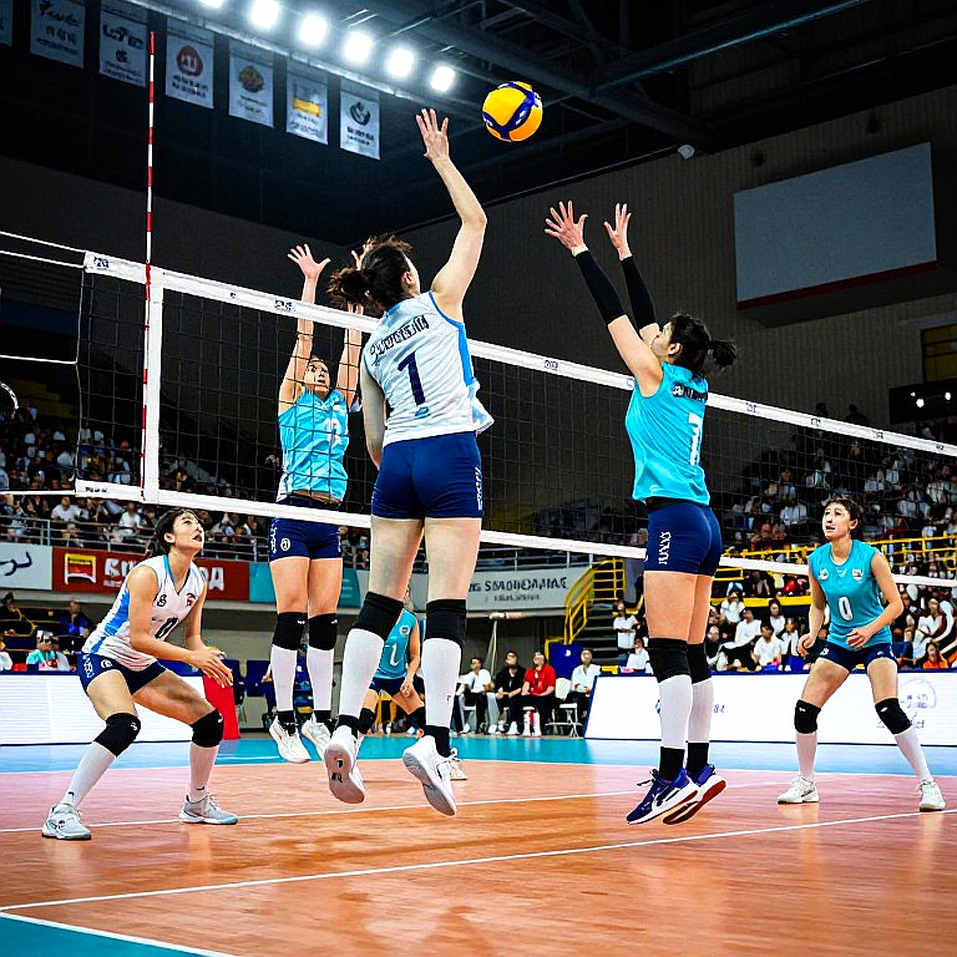
Fourth is Thanh Thuy's workload. If she again enters a season with four national-team tournaments after a Japanese club season, I will not be surprised if efficiency drops again — and that will be a repeated error, not an accident.
Fifth is the head-to-head record against Indonesia and the Philippines. That is the most accurate measure of regional standing, more accurate than any ranking table.
Vietnam's women's volleyball enters this cycle with a problem that every team which has had a golden generation eventually faces: how to move from living on talent to living on system. The answer will come from the numbers few people want to count, not from the loudest headlines.